Category
Manufacturer
Model
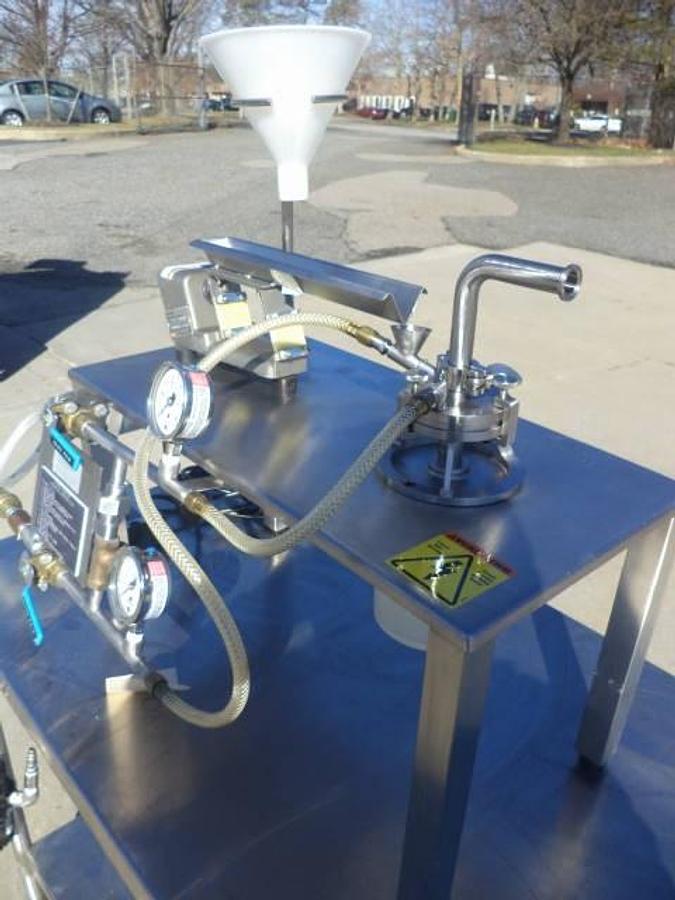
Jet Pulverizer
Jet Pulverizer specializes in the design and manufacturing of jet mills for particle size reduction. They serve a variety of industries, including pharmaceuticals and chemicals, and are known for their high-efficiency milling systems that produce ultra-fine powders.
FAQ:
What is a jet pulverizer and how does it work?
A jet pulverizer is a type of size reduction mill that uses high-velocity streams of compressed air or inert gas to grind materials into ultra-fine powders. Rather than relying on mechanical grinding media like balls or hammers, the process works by accelerating particles through nozzles positioned around a grinding chamber, causing them to collide with each other at high speed. This particle-on-particle collision is what does the actual grinding. Because there are no moving parts in the grinding zone itself, the process generates very little heat, which makes jet pulverizers particularly well-suited for materials that are sensitive to temperature changes.
The ground particles are separated by size using a built-in classifier, which can be adjusted to control the final particle size distribution. Finer particles exit the mill while oversized particles are recirculated for additional grinding passes. Jet pulverizers come in several configurations, including spiral (pancake) mills, fluidized bed jet mills, opposed jet mills, and loop or oval mills. Each design has its own advantages depending on the application, the material being processed, and the target particle size. The Jet Pulverizer Company is one of the best-known manufacturers in this space, producing the Micron-Master line of jet mills that are widely used in pharmaceutical and chemical applications.
What particle sizes can a jet pulverizer achieve?
Jet pulverizers are capable of producing particle sizes across a fairly wide range, typically from about 1 micron up to 200 microns, depending on the mill design, operating pressure, feed rate, and the physical properties of the material being processed. For most pharmaceutical and fine chemical applications, target particle sizes commonly fall in the 1 to 50 micron range. Some high-performance fluidized bed and opposed jet mill designs can push even closer to the sub-micron range under the right conditions.
The classifier built into the mill is the primary control point for final particle size. By adjusting classifier speed or air flow, operators can shift the cut point and tighten or broaden the particle size distribution. This level of control is one reason jet pulverizers are preferred in industries where consistent, reproducible particle size is critical, such as pharmaceutical manufacturing where particle size directly affects drug solubility, bioavailability, and inhalation delivery performance. When evaluating used jet pulverizer equipment, it is worth confirming the model specifications and classifier type, as these details determine the particle size range the machine can reliably achieve.
What industries commonly use jet pulverizers?
Jet pulverizers serve a broad range of industries, but they are most heavily used in pharmaceuticals, specialty chemicals, minerals processing, and food ingredients. In pharmaceutical manufacturing, jet mills are used to reduce active pharmaceutical ingredient (API) particle sizes to improve drug absorption and enable consistent dosing in tablets, capsules, and inhalable formulations. The heat-free grinding process is especially important here because many APIs are thermally sensitive and would degrade under the heat generated by conventional mechanical mills.
In the chemical industry, jet pulverizers process pigments, pesticides, catalysts, and specialty coatings where fine, uniform particle size affects product performance. Mineral processing applications include grinding of talc, calcium carbonate, silica, and kaolin. Food ingredient processors use jet mills for spices, starches, and nutritional powders. The common thread across all these applications is the need for fine, controlled particle size without contamination from grinding media and without heat-induced degradation of the material. Used jet pulverizer equipment, including lab-scale machines like the Micron-Master 2-inch models, is frequently sought by smaller producers, research labs, and pilot-scale operations that need pharmaceutical-grade milling capability without the cost of purchasing new equipment.
What are the different types of jet pulverizer configurations available?
There are four main jet pulverizer configurations, each designed around a different grinding chamber geometry and airflow pattern. The spiral jet mill, sometimes called a pancake mill, uses tangential nozzles to create a vortex inside a flat, disc-shaped chamber. Particles circulate in the vortex and grind through collision, with fines escaping through a central outlet. This design is one of the most common and is widely used for pharmaceutical applications. The Micron-Master series from the Jet Pulverizer Company is a well-known example of this configuration.
Fluidized bed jet mills use multiple nozzles positioned at the base of a vertical grinding chamber, creating a fluidized bed of particles that grind against each other in the center of the chamber. An integrated dynamic classifier wheel controls the particle size cutoff with high precision. Opposed jet mills use two or more horizontal nozzles aimed directly at each other, so particles collide head-on in the center of the chamber. Loop or oval mills move material through an elongated oval circuit where grinding occurs at specific impact points. Each configuration has trade-offs in terms of particle size range, throughput capacity, energy efficiency, and suitability for abrasive or fragile materials, so selecting the right mill type matters as much as selecting the right manufacturer or model.
What factors affect the price of used jet pulverizer equipment?
Pricing for used jet pulverizer equipment varies considerably based on several factors. Mill size and throughput capacity have the biggest impact, with small laboratory-scale units like 2-inch or 4-inch Micron-Master models selling for a fraction of the price of large production-scale mills. The manufacturer and model also matter, as well-known brands like Jet Pulverizer Company, Hosokawa Alpine, Fluid Energy, and Sturtevant tend to hold their value better due to parts availability and industry recognition. The physical condition of the machine, including wear on nozzles, classifier components, and chamber surfaces, directly affects price and usability.
Material of construction is another pricing factor. Stainless steel construction commands a premium over carbon steel, particularly for pharmaceutical and food-grade applications where material contact surfaces must meet specific standards. The presence of original documentation, spare parts, or ancillary equipment like feed systems and collection systems can also add to the value. Because used equipment is sold as-is, buyers should factor in the potential cost of reconditioning, replacement nozzles, or classifier maintenance when evaluating the total cost of acquisition. A thorough inspection before purchase is the most reliable way to assess whether the asking price reflects the actual condition and remaining service life of the equipment.
What should buyers look for when inspecting used jet pulverizer equipment before purchase?
A careful inspection is the most important step in buying used jet pulverizer equipment. The grinding nozzles are a primary wear point in any jet mill, so buyers should examine nozzle orifice geometry and surface condition closely, as worn or eroded nozzles reduce grinding efficiency and affect particle size consistency. The internal surfaces of the grinding chamber should be checked for pitting, erosion, or material buildup, especially if the previous application involved abrasive materials. For pharmaceutical or food-grade applications, stainless steel contact surfaces should be inspected for corrosion, pitting, or surface damage that could compromise product purity.
The classifier assembly, whether a static or dynamic type, should be examined for wear and verified to be complete with all components. Buyers should also check the condition of seals, gaskets, and any feed or discharge connections. Reputable used equipment dealers will typically accommodate in-person inspections at their facility or, in cases where equipment is still installed at a production site, can arrange access through the seller. Video inspections and detailed photo documentation are also commonly offered. Keep in mind that most dealers do not have the permitting or production infrastructure to run actual product through the machine during an inspection, so buyers should focus on visual condition assessment and request any available maintenance or operating history from the dealer.
Why are jet pulverizers preferred over mechanical mills for certain applications?
The primary advantage of jet pulverizers over mechanical mills is the absence of moving parts in the grinding zone. Mechanical mills, such as hammer mills, ball mills, and pin mills, generate significant heat through friction and impact, which can degrade heat-sensitive materials, cause chemical changes, or alter the physical properties of the product. Jet pulverizers grind entirely through particle-on-particle collision driven by compressed gas, so the process temperature stays very close to the temperature of the incoming gas stream. This makes them the preferred choice for pharmaceutical APIs, heat-sensitive chemicals, and materials that would oxidize or degrade under elevated temperatures.
Jet pulverizers also eliminate the risk of contamination from grinding media. Ball mills and similar equipment can introduce trace metal contamination from the grinding balls or liners, which is unacceptable in pharmaceutical and food applications. Because there is no media in a jet mill, the only material contact surfaces are the chamber walls and nozzles. Additionally, jet mills can achieve finer and more consistent particle size distributions than most mechanical mills at the same scale. The trade-off is higher energy consumption per unit of output compared to some mechanical options, and jet mills are generally better suited to processing relatively small quantities of high-value materials rather than bulk commodity grinding.
What maintenance does jet pulverizer equipment typically require?
Jet pulverizers have relatively low maintenance requirements compared to mechanical mills, largely because there are no rotating parts in the grinding zone. The main wear components are the grinding nozzles, which erode over time due to the high-velocity gas and particle flow passing through them. Nozzle replacement is a routine maintenance task, and the frequency depends on the abrasiveness of the material being processed and the operating pressure. For abrasive minerals, nozzle replacement may be needed after relatively short run times, while softer pharmaceutical materials cause much slower wear.
Other maintenance areas include the classifier assembly, which should be inspected periodically for wear on classifier wheels or vanes in dynamic classifier models, and the sealing systems at feed and discharge connections. The compressed air or gas supply system, including filters, dryers, and pressure regulators, should be maintained to ensure consistent inlet gas quality, as moisture or contamination in the gas stream can affect both grinding performance and product quality. When purchasing used jet pulverizer equipment, buyers should ask about the maintenance history and the condition of wear parts, since nozzle and classifier wear may not be visually obvious without disassembly. Consulting the equipment manufacturer is also advisable to understand parts availability for older models before committing to a purchase.
How does the availability of replacement parts and technical support work for used jet pulverizer equipment?
Parts availability for used jet pulverizer equipment depends heavily on the manufacturer, the age of the machine, and whether the model is still in active production. For established manufacturers like the Jet Pulverizer Company, Hosokawa Alpine, and Fluid Energy, many replacement parts, including nozzles, classifier components, and seals, remain available for machines that are decades old. Before purchasing used equipment, it is worth contacting the manufacturer directly to confirm what parts and support are available for the specific model and serial number being considered. Older or discontinued models may have limited factory support, which could affect long-term operating costs.
Technical support from the manufacturer can vary significantly based on the age and model of the equipment. Some manufacturers maintain detailed records and can provide documentation, spare parts diagrams, and application guidance even for older machines. Others may have limited records for equipment that is no longer in production. Buyers should treat this manufacturer consultation as a standard part of the due diligence process, not an afterthought. Used equipment dealers who specialize in size reduction and powder processing equipment are often a useful resource as well, since they frequently have knowledge of parts sources and service providers for the equipment they sell, even if they do not offer formal support services themselves.
What should buyers understand about shipping and payment when purchasing used jet pulverizer equipment?
Shipping costs for used jet pulverizer equipment can vary widely depending on the size and weight of the machine, the destination, and the level of packaging or crating required to protect the equipment in transit. Smaller laboratory-scale mills like 2-inch Micron-Master units are relatively compact and straightforward to ship with proper palletization. Larger production-scale mills may require custom crating, specialized rigging for loading and unloading, and freight carriers equipped for heavy industrial equipment. Buyers should request a detailed breakdown of packaging, rigging, and freight costs from the dealer before finalizing a purchase, since these costs can add meaningfully to the total landed price of the equipment.
Payment terms in the used equipment market are fairly standardized. Most dealers require full payment before the equipment is released for shipping. Some dealers may offer extended terms to repeat customers or established buyers, but this is not the norm for first-time transactions. Because used equipment is sold as-is without the protections that come with manufacturer-backed purchases, buyers are in the strongest position when they have completed a thorough inspection, confirmed parts availability with the manufacturer, and fully understood the total landed cost including shipping and any reconditioning that may be needed before the machine goes into service.