Category
Manufacturer
Model
Jabsco
Jabsco, a brand under Xylem Inc., is well-known for its pumps and fluid management equipment. They cater primarily to the marine, industrial, and food and beverage industries, with a strong reputation for their reliable and durable diaphragm pumps and centrifugal pumps.
FAQ:
What types of Jabsco pumps are available on the used market?
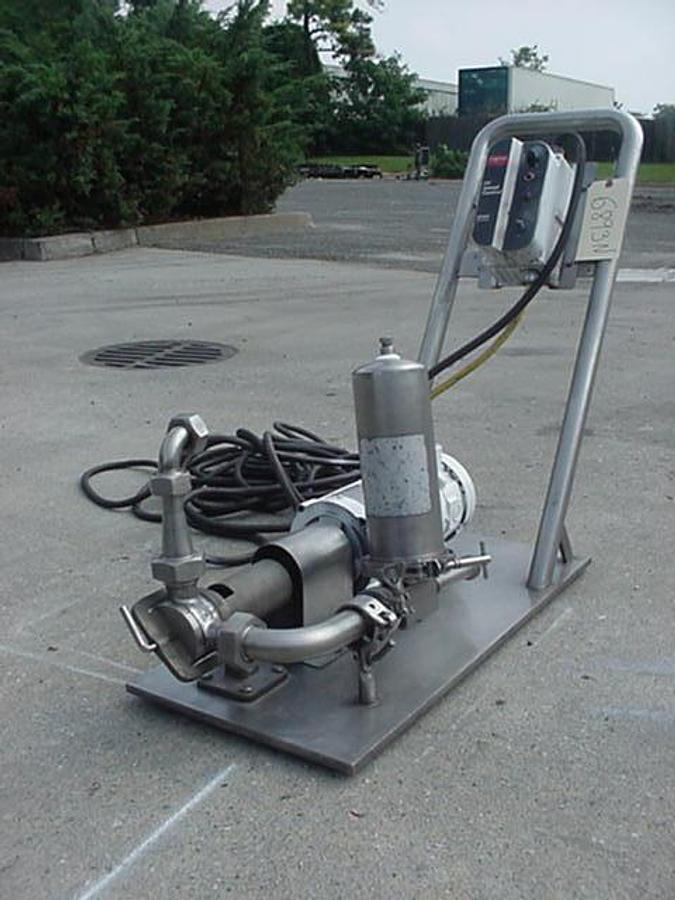
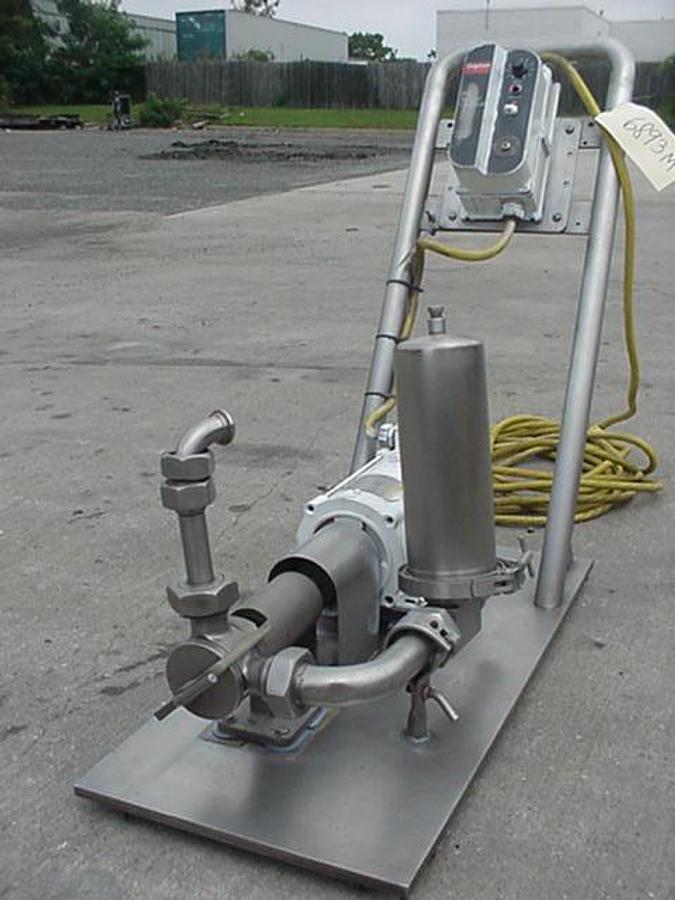
Jabsco produces a wide range of pump types, and all of these can be found through used equipment dealers. The most commonly available models include flexible impeller pumps, diaphragm pumps, centrifugal pumps, and rotary pumps. Jabsco's flexible impeller pump is arguably the brand's most recognized product, valued for its self-priming capability and ability to handle fluids that contain solids or particulates. Rotary pump models, such as the Jabsco Pureflo stainless steel rotary pump, are also frequently available on the used market in both standard and variable speed configurations.
Jabsco sits under the Xylem Inc. portfolio, and the brand has historically served marine, industrial, and food and beverage applications. This means used Jabsco pumps can turn up in a variety of conditions and configurations depending on their prior service environment. Buyers looking at used Jabsco equipment should pay close attention to the specific model and its intended application, since a pump decommissioned from a food processing facility will have different material specifications than one pulled from a marine or general industrial setting. Confirming the pump's construction materials, port sizes, and motor specs before purchase is always a good practice.
What industries commonly use Jabsco pumps?
Jabsco pumps have a strong presence across three primary industries: marine, industrial, and food and beverage. In the marine sector, Jabsco equipment is widely used for bilge pumping, raw water engine cooling, livewell systems, washdown applications, and onboard toilet systems. The brand's flexible impeller pumps are a go-to choice for boat builders and marine mechanics because of their self-priming ability and tolerance for handling raw water that may carry debris or sediment.
On the industrial and food processing side, Jabsco's stainless steel rotary and diaphragm pumps are used for transferring sanitary fluids, viscous liquids, and other process media where hygiene and material compatibility matter. The Pureflo line, for example, is built with stainless steel wetted parts suited for food-grade applications. Because Jabsco pumps appear in such a range of industries, the used market for these machines is active, and buyers can often find models that were previously deployed in controlled, well-maintained production environments.
What should buyers look for when purchasing a used Jabsco pump?
Buying a used Jabsco pump requires a more careful evaluation than purchasing from a manufacturer's catalog. The most important factors to assess are the condition of the impeller or diaphragm, the state of the seals and housing, any signs of corrosion or wear on wetted parts, and whether the motor (if included) runs properly. For flexible impeller pumps, the impeller itself is a consumable component and may need replacement even if the rest of the pump is in good shape. This is actually one of the advantages of the Jabsco platform: replacement impellers are widely available and relatively affordable, so a worn impeller does not necessarily make a used pump a poor investment.
Buyers should also verify the pump's voltage configuration (12V DC, 24V DC, or AC), port sizes, and flow rate specifications to confirm compatibility with their intended system. Requesting an inspection, either in person or via video, is strongly recommended before committing to a purchase. Reputable used equipment dealers will typically accommodate inspection requests and can provide detailed photos or video walkthroughs of the machine. Consulting the manufacturer's documentation for the specific model number can also help buyers understand what parts are still available and what level of technical support they can expect for that particular unit.
How do Jabsco flexible impeller pumps work, and why are they popular?
Jabsco flexible impeller pumps operate using a rubber impeller with flexible vanes that rotate inside a cam-shaped housing. As the impeller turns, the vanes flex and compress against the cam, creating chambers that draw fluid in on one side and push it out on the other. This design generates a strong self-priming action, meaning the pump can pull fluid up from below without needing to be pre-filled with liquid. It also allows the pump to handle fluids that carry small solids, which makes it practical for raw water intake, bilge applications, and certain industrial transfer tasks.
The popularity of Jabsco flexible impeller pumps comes down to a combination of reliability, simplicity, and serviceability. The pump has relatively few moving parts, which limits the number of things that can go wrong. When the impeller does wear out, replacing it is a straightforward process that most technically inclined users can handle without sending the pump out for service. This low ongoing maintenance cost, combined with the pump's versatility across marine and industrial settings, has made Jabsco flexible impeller pumps one of the most recognized and widely used pump types in both the boating world and light industrial applications.
What flow rates and pressure ratings do Jabsco pumps typically offer?
Jabsco pumps span a broad performance range depending on the model type and intended application. Smaller flexible impeller pumps designed for marine use may deliver flow rates in the range of a few gallons per minute, suited for raw water cooling or livewell circulation on smaller vessels. Larger industrial models, including centrifugal and rotary pump configurations, can handle significantly higher flow rates depending on impeller diameter, motor horsepower, and pump geometry. The Jabsco Pureflo stainless steel rotary pump, for example, is available in configurations ranging from standard fixed speed to variable speed, allowing the output to be adjusted based on process requirements.
Pressure ratings similarly vary across the product line. Diaphragm pumps in the Jabsco catalog are often used in applications requiring moderate pressure delivery, such as freshwater systems on boats or chemical dosing in industrial settings. Buyers evaluating a used Jabsco pump should always cross-reference the model number against the manufacturer's published specifications to confirm that the pump's rated flow and pressure match the demands of their system. Used pumps may have experienced some wear that affects peak performance, so an inspection or test run, where feasible, is a valuable step before finalizing a purchase.
Can Jabsco pumps handle chemicals, saltwater, or fluids other than freshwater?
Yes, many Jabsco pump models are designed to handle a variety of fluids beyond freshwater, but compatibility depends heavily on the specific model and its wetted materials. Jabsco flexible impeller pumps are commonly used in marine environments to pump raw saltwater for engine cooling, and the impellers and housings on these models are selected for corrosion resistance in that service. For chemical transfer or other aggressive fluids, buyers need to verify that the pump's seals, impeller material, and housing construction are rated for the specific chemical in question, as elastomer and metal compatibility varies significantly across the Jabsco product line.
For food and beverage or sanitary applications, Jabsco's stainless steel models, such as the Pureflo series, are built with materials suited for food-grade fluid contact. These pumps are a different category from the standard marine or industrial models and should not be confused with general-purpose units. When buying a used Jabsco pump for chemical or specialty fluid handling, it is worth researching the exact model's original specifications and, if possible, consulting with the manufacturer to confirm what fluids the pump was designed to handle and whether parts and seals for that configuration are still available.
Are replacement parts and impellers easy to find for used Jabsco pumps?
Replacement parts availability is one of the stronger arguments for choosing Jabsco equipment, even on the used market. Jabsco flexible impeller pumps have been in production for decades, and the impellers, seals, and wear plates for many models remain available through marine supply distributors, industrial parts suppliers, and directly through Xylem's service network. For common marine pump models, replacement impellers are stocked by a wide range of retailers and are considered a routine maintenance item rather than a specialty part. This broad parts availability reduces the long-term ownership risk associated with buying used equipment.
That said, parts availability can vary based on the age and model of the pump. Older or discontinued models may have limited support, and buyers should verify parts availability for a specific unit before purchasing. Contacting the manufacturer directly is a practical step: Xylem and Jabsco's technical support channels can often confirm whether a given model is still supported, what parts are available, and whether any superseding replacement models exist. For industrial models like the Pureflo rotary series, parts sourcing may require going through specialized industrial distributors rather than general marine supply channels, so it is worth understanding the supply chain for the specific pump before committing to a purchase.
What voltage options are available for Jabsco pumps?
Jabsco pumps are manufactured across a wide voltage range to serve different installation environments. Marine applications most commonly use 12V DC or 24V DC configurations, which are compatible with standard boat electrical systems. These DC-powered models cover a broad range of uses on vessels, from bilge pumps and washdown pumps to raw water cooling and livewell circulation. For shore power or land-based industrial applications, Jabsco also produces pumps designed for 110V AC or 220V AC operation, which are more typical in processing facilities, workshops, and fixed installations.
When evaluating a used Jabsco pump, confirming the voltage configuration early in the process is essential. A 12V marine pump cannot simply be swapped into a 220V industrial system without significant modification, and vice versa. The motor nameplate or the pump's model number documentation will typically specify the voltage rating. Buyers should also verify that the motor is in serviceable condition, since motor repair or replacement on a used pump can add meaningful cost to the total investment. If the motor is missing or damaged, checking with an electric motor rebuilder about compatibility and cost before purchasing the bare pump head is a sensible precaution.
What should buyers expect regarding shipping and logistics for a used Jabsco pump?
Shipping costs and logistics for used pumps depend on the size, weight, and configuration of the specific unit. Smaller Jabsco pump models can often be palletized and shipped via standard freight carriers at a relatively modest cost. Larger industrial pump assemblies, particularly those with heavy motors or integrated skid frames, may require heavier-duty rigging for loading and unloading, which adds to the overall cost. Buyers should ask the dealer for a detailed breakdown of packaging, rigging, and freight charges before finalizing a purchase, since the landed cost of the equipment can differ meaningfully from the listed price.
Used equipment dealers will typically require full payment before a pump is released for shipping. Packaging standards vary by dealer, but equipment should be properly palletized or crated to prevent damage in transit. Buyers with concerns about a particular pump's condition should arrange an inspection, either in person or via video, before the unit is packaged and shipped. Once a pump leaves the dealer's facility, identifying transit damage versus pre-existing wear becomes more complicated, so front-loading the inspection process protects both parties. Some dealers can also coordinate third-party inspection services if the buyer is not able to visit in person.
How should buyers approach inspecting a used Jabsco pump before purchase?
Inspecting a used Jabsco pump before purchase is one of the most important steps a buyer can take to avoid surprises. Reputable used equipment dealers will typically offer inspection options that include in-person visits, video calls, or recorded video walkthroughs of the machine. During an inspection, buyers should look for visible wear on the pump housing, corrosion on metal components, condition of the impeller or diaphragm, integrity of seals and gaskets, and the general state of any associated motor. For pumps that were still in service at a production facility at the time of sale, it may be possible to arrange an inspection while the equipment is still running, which provides the clearest picture of operating condition.
It is worth understanding that most used equipment dealers are not set up to run full production tests, since that would require process-specific permitting and infrastructure that a dealer's facility does not typically have. The inspection is therefore focused on visual and mechanical condition rather than a full operational trial under load. Buyers should come prepared with a list of specific questions about the pump's service history, the reason it was decommissioned, and any known issues. Cross-referencing the model number with the manufacturer's specifications during or after the inspection helps confirm that what you are seeing matches what the pump was originally designed to do, and whether it fits your application.