Category
Manufacturer
Model
FAQ:
What is a Jabez Burns and Sons coffee roaster?
Jabez Burns and Sons was one of the most influential coffee roaster manufacturers in American history. The company traces its roots to the mid-1800s, and Jabez Burns himself is widely credited with inventing the self-emptying coffee roaster around 1864, a development that fundamentally changed commercial coffee production by allowing roasted beans to be discharged automatically rather than manually scooped out. That single innovation made large-scale, consistent roasting practical for the first time, and it shaped the design of commercial drum roasters for generations afterward.
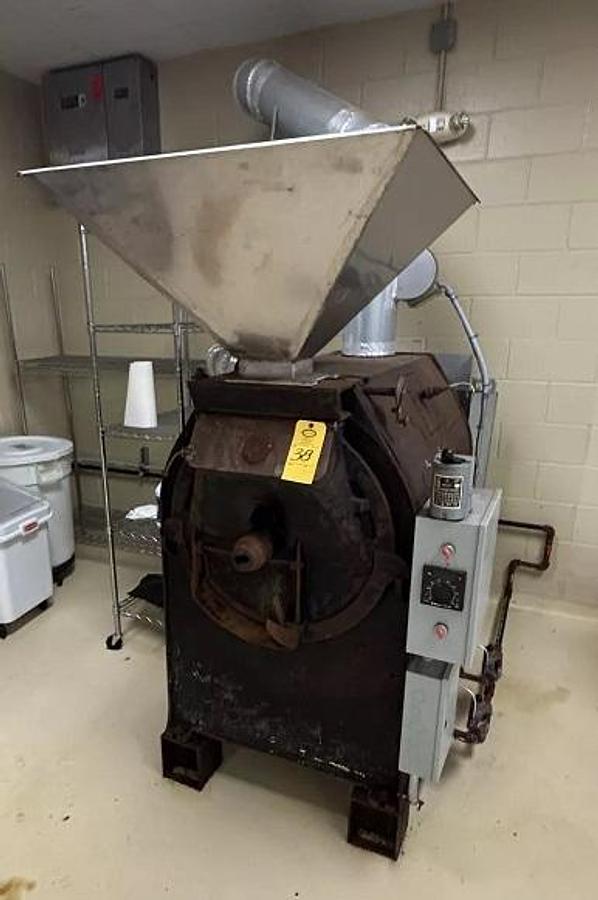
The machines produced under the Jabez Burns and Sons name were built with heavy cast iron and steel construction, which gave them exceptional durability. Many units that were manufactured decades ago are still mechanically sound today, which is a testament to the quality of materials and craftsmanship that went into each roaster. Because of their historical significance and proven longevity, these machines are sought after by specialty coffee roasters looking for reliable production equipment, by collectors interested in vintage industrial machinery, and by coffee businesses that want the heritage appeal of a storied American brand as part of their identity.
What models of Jabez Burns and Sons roasters were produced, and how do they differ?
Jabez Burns and Sons produced a wide range of roaster models over the company's long history, spanning from small sample roasters used for testing and cupping purposes all the way up to large industrial drum roasters capable of handling hundreds of pounds of green coffee per batch. The No. 6 Royal Roaster is one of the recognized models in the lineup and represents the kind of substantial commercial-grade machine that was designed for serious production environments. Each model number generally corresponded to a different batch capacity, so identifying the specific model is critical before making any purchasing decision.
Buyers should pay close attention to the model designation when evaluating any Jabez Burns machine on the used market, since capacity, footprint, fuel requirements, and available parts can vary considerably from one model to the next. A sample roaster and a full production drum roaster are entirely different pieces of equipment in terms of installation requirements, output, and price. Asking the seller for the complete model number, any visible serial numbers, and photographs of the data plate or nameplate will help establish exactly which machine is being offered and allow for more accurate research into its specifications.
What batch capacity does a Jabez Burns and Sons roaster typically handle?
Batch capacity across the Jabez Burns and Sons product line varied significantly depending on the model. Smaller models were designed for sample roasting or low-volume production, handling just a few pounds of green coffee at a time, while larger industrial models were built for high-output commercial facilities and could process batches measured in the hundreds of pounds. This wide range is one reason why the specific model number matters so much when researching a particular machine.
For buyers with specific production targets, it is worth calculating not just the raw batch size but also the roast cycle time and cooling time to arrive at an estimated hourly throughput. A roaster's rated capacity in pounds refers to the weight of green coffee loaded per batch, and the finished roasted weight will be somewhat lower due to moisture loss during the roast. Discussing these details with the seller, and if possible consulting technical documentation for the specific model, will give a clearer picture of whether a particular Jabez Burns machine can meet current or projected production needs.
Are Jabez Burns and Sons roasters gas-fired, and what fuel source do they use?
Most commercial Jabez Burns and Sons roasters were designed to operate on gas, with natural gas and propane being the common fuel sources for machines used in North American production facilities. The drum roaster design that Jabez Burns pioneered relies on a direct or indirect flame to heat the rotating drum, and gas burners provided the consistent, controllable heat that commercial roasting demands. Some older or specialized models may have originally used other heat sources, but gas-fired configurations are by far the most common on the used market.
Buyers should verify the specific fuel configuration of any used Jabez Burns roaster before purchase, since converting a machine from one fuel type to another can involve burner replacements, regulator changes, and potentially modifications to the gas train. It is also worth confirming the BTU rating of the burner system and whether the existing configuration meets local utility and fire code requirements. A qualified technician with experience in commercial roasting equipment should inspect the gas components as part of any pre-purchase evaluation, particularly given the age of many machines currently available.
What should a buyer inspect when evaluating a used Jabez Burns and Sons roaster?
Evaluating a used Jabez Burns roaster requires a thorough look at several key systems. The drum itself is the heart of the machine, and buyers should check for cracks, warping, or significant wear in the drum seams and end plates. The drive mechanism, including the motor, gearbox, and any chain or belt drive components, should turn freely without unusual noise or resistance. Burner components, thermocouples, and any control systems should be examined for corrosion, damage, or outdated configurations that may require updating to meet current safety standards. The chaff collection system and any ducting connected to the roaster should also be inspected for buildup or deterioration.
Reputable used equipment dealers will typically accommodate in-person inspections, video walkthroughs, or recorded video captures of the machine so buyers can assess its condition before committing to a purchase. If the roaster is still installed at a production facility, it may be possible to observe it in operation, though most equipment dealers do not have the permitting or infrastructure to run actual production roasts at their own locations. Buyers who cannot travel for an in-person inspection should request detailed photographs of all mechanical components, the control panel, the drum interior, and any areas showing visible wear or prior repair work.
Are replacement parts still available for Jabez Burns and Sons roasters?
Parts availability for Jabez Burns and Sons roasters is one of the more practical concerns for any buyer, and the answer depends heavily on the specific model and component in question. Because these machines were built with heavy cast iron and steel, many structural and mechanical parts have extremely long service lives and may not need replacement for years of continued use. Wear items like bearings, seals, drive belts, and burner components are often sourced from industrial supply channels rather than a dedicated Jabez Burns parts catalog, since many of these components are standard sizes that were common across industrial machinery of the era.
Buyers should contact the manufacturer directly, or reach out to specialists in vintage commercial roasting equipment, to get a realistic picture of parts support for the specific model they are considering. The age and model of the machine will significantly affect what level of support is available. Some buyers work with skilled machinists to fabricate replacement parts for components that are no longer commercially available, which is feasible given the straightforward mechanical design of most drum roasters. Before purchasing, it is worth identifying which components are most likely to need attention and confirming that a viable sourcing or fabrication path exists for those parts.
What is the typical price range for a used Jabez Burns and Sons roaster?
Pricing for used Jabez Burns and Sons roasters varies considerably based on model, capacity, condition, and how much restoration work has been done. Smaller or damaged units in need of significant repair can be found at the lower end of the market for a few thousand dollars, while large-capacity machines in good working condition, particularly those that have been professionally restored or recently serviced, can command prices in the tens of thousands of dollars. The relative scarcity of these machines on the open market also plays a role, since there are simply not many of them available at any given time, which can push prices higher when demand is strong.
Buyers should factor in costs beyond the purchase price when budgeting for a used Jabez Burns roaster. Rigging, crating, and freight for a heavy cast iron machine can be substantial, and installation costs including gas line work, electrical connections, ventilation ducting, and any required permits will add to the total landed cost. If the machine requires mechanical work or parts before it can be put into production, those costs should be estimated as part of the overall investment. Getting a clear picture of all these factors before finalizing a purchase decision will prevent surprises and allow for a more accurate return-on-investment calculation.
How are used Jabez Burns and Sons roasters typically shipped, and what should buyers expect for freight costs?
Shipping a used Jabez Burns and Sons roaster is a significant logistical undertaking given the size and weight of these cast iron machines. Proper packaging is essential to prevent damage in transit, and depending on the machine's dimensions, this typically means heavy-duty palletization or custom crating. Larger models may require professional rigging for loading at the origin point and unloading at the destination, which adds to the overall shipping cost. Buyers should ask the seller for a detailed breakdown of packaging, rigging, and freight charges to understand the full landed cost of the equipment before agreeing to a purchase.
Freight costs will vary based on the machine's weight and dimensions, the distance between origin and destination, and the level of service required, such as liftgate delivery or inside delivery to a specific floor. For very large industrial roasters, flatbed or specialized freight may be necessary rather than standard LTL shipping. It is also worth confirming who is responsible for coordinating the freight and whether the seller has experience shipping heavy industrial equipment, since improper loading or inadequate packaging can result in damage that is difficult to resolve after the fact. Buyers should also verify insurance coverage for the shipment and understand the claims process in the event that damage occurs during transit.
What payment terms do used equipment dealers typically require for a machine like a Jabez Burns roaster?
Most used equipment dealers require full payment prior to shipping, which is standard practice across the industry for transactions involving machinery of this value. This protects the seller from non-payment after a machine has been prepared for shipment or loaded onto a truck. For buyers, this means that due diligence, including inspection and any technical evaluation, should be completed before funds are transferred. Some dealers may offer payment terms to established repeat customers, but first-time buyers should expect to pay in full upfront.
Accepted payment methods vary by dealer but commonly include wire transfer, ACH, or other secure electronic payment methods. Credit card payments are less common for large machinery transactions due to processing fees and transaction limits. Buyers should confirm the accepted payment methods early in the negotiation process and ensure they have a clear receipt or sales agreement that documents the machine's described condition, the agreed price, and any representations made by the seller about the equipment's working order. Having a written record of the transaction details is an important protection for both parties.
Why do specialty coffee roasters seek out vintage Jabez Burns and Sons machines instead of purchasing modern roasting equipment?
There are several practical and business-driven reasons why specialty coffee roasters pursue vintage Jabez Burns and Sons equipment. On the mechanical side, these machines were built to a standard of durability that is difficult to find in modern production equipment. The heavy cast iron drums and robust drive systems were designed for continuous commercial use, and well-maintained units have proven capable of producing consistent, high-quality roasts for decades. Many experienced roasters also appreciate the straightforward mechanical design, which gives them direct control over the roast profile without the complexity of modern computerized systems.
Beyond the functional appeal, there is a genuine marketing and brand differentiation angle. A roastery operating a historic American machine from the 1800s or early 1900s has a tangible story to tell customers about craft, heritage, and dedication to the trade. In a market where specialty coffee consumers are increasingly interested in the story behind their cup, a Jabez Burns roaster is a visible, credible symbol of that commitment. For some buyers, the combination of mechanical reliability, production capability, and heritage value makes a well-maintained used Jabez Burns machine a more compelling investment than a comparable piece of modern equipment.