Category
Manufacturer
Model
Iqf Inc
Iqf Inc focuses on providing quick freezing solutions for the food industry. Their technologies are designed to enhance product quality and extend the shelf life of frozen goods.
FAQ:
What types of freezing equipment does IQF Inc manufacture?
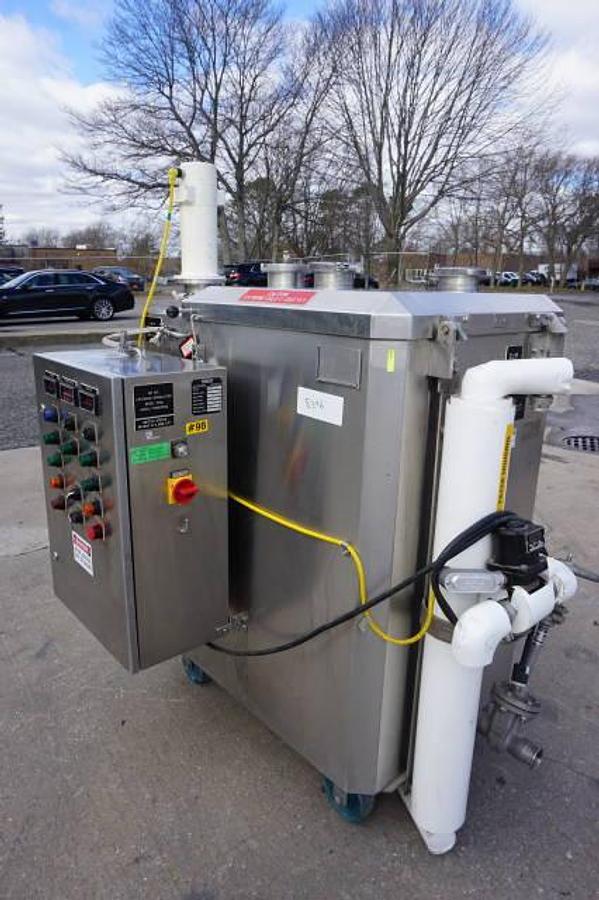
IQF Inc specializes in quick freezing solutions built for the food processing industry. Their equipment lineup includes tunnel belt freezers, fluidized bed freezers, and cryogenic granulators and pelletizers. The cryogenic granulator/pelletizer, for example, is constructed in stainless steel with sanitary design standards, making it suitable for direct food contact applications. Each machine category serves a distinct purpose depending on the product being frozen and the throughput required.
Tunnel freezers move product along a continuous belt through a refrigerated enclosure, which works well for items like fish fillets, chicken pieces, and vegetable portions. Fluidized bed freezers suspend individual pieces on a cushion of cold air, which is particularly effective for small, loose products like peas, diced vegetables, berries, and shrimp. The cryogenic granulator/pelletizer uses liquid nitrogen or CO2 to rapidly freeze and size-reduce materials into granules or pellets, which is common in applications involving sauces, purees, and other semi-liquid food products.
What does IQF technology actually do, and why does it matter for food processors?
IQF stands for Individually Quick Frozen. Unlike traditional block freezing, where a batch of product is frozen together into a solid mass, IQF technology freezes each individual piece separately and nearly simultaneously. The result is that pieces remain distinct, free-flowing, and easy to portion after freezing. This matters enormously for food processors because end consumers and food service buyers can take exactly the quantity they need without thawing an entire block.
Beyond convenience, the speed of the freezing process has a direct impact on product quality. When food freezes slowly, large ice crystals form inside the cell walls of the product, which ruptures those cells and causes texture degradation, moisture loss, and flavor changes upon thawing. Rapid freezing creates much smaller ice crystals, which preserves the cellular structure of the food. The practical outcome is a thawed product that more closely resembles fresh in texture, color, and nutritional content. For processors selling into premium retail, export, or food service markets, this quality difference is a significant competitive advantage.
What food industry sectors commonly use IQF Inc freezing equipment?
IQF Inc equipment is used across a wide range of food processing sectors. Seafood processors rely on IQF tunnel and fluidized bed freezers for shrimp, fish fillets, scallops, and other shellfish. Poultry and meat processors use them for individually frozen chicken breasts, nuggets, burger patties, and diced meat products. Fruit and vegetable processors are also major users, particularly for berries, peas, corn, diced peppers, and similar small or cut produce that benefits from free-flowing individual pieces after freezing.
Beyond those core sectors, bakery and ready-meal producers use IQF equipment to freeze par-baked goods, dough portions, and meal components. Dairy processors sometimes use cryogenic equipment for freezing cheese crumbles or butter portions. The common thread across all these applications is a need for high throughput, consistent product quality, and compliance with food safety sanitation standards. IQF Inc's stainless steel sanitary construction is a key reason the equipment is adaptable across such a broad range of food categories.
What throughput capacities are typical for IQF tunnel freezers?
Throughput capacity in IQF tunnel freezers is measured in kilograms per hour and varies considerably depending on the machine's size, belt width, freezing length, and the product being processed. Smaller, compact units designed for pilot-scale or lower-volume operations may handle a few hundred kilograms per hour. Mid-range industrial machines typically process between 500 kg/h and 2,000 kg/h, while large-scale continuous tunnel systems used in high-volume processing plants can exceed several tons per hour.
Capacity is not determined by the freezer alone. The product's starting temperature, moisture content, piece size, and target core temperature all affect how much product can be processed in a given time. A machine rated for 1,000 kg/h on diced carrots may yield significantly lower throughput on a denser, higher-moisture product like fish portions. Buyers evaluating used IQF equipment should review the original manufacturer's specifications for the specific product types the machine was designed for, and factor in any modifications made during the machine's operational life. Consulting with a dealer who specializes in food processing equipment can help match the right capacity class to a facility's production requirements.
What are the key physical and installation requirements for an IQF tunnel freezer?
IQF tunnel freezers are among the larger pieces of equipment in a food processing facility. Footprint varies by model, but even mid-sized units commonly require floor space in the range of 10 to 25 meters in length and 2 to 4 meters in width, with additional clearance needed on all sides for maintenance access, airflow, and sanitation. Ceiling height is also a factor, as some units require 4 meters or more of vertical clearance depending on the evaporator and fan configuration. Facilities should map out the full installation envelope before purchasing.
Beyond floor space, IQF freezers require connections to a refrigeration system (either an existing plant refrigeration loop or a dedicated compressor package), electrical supply at appropriate voltage and amperage, and drainage for defrost water and cleaning runoff. Insulated flooring under the unit is often recommended to prevent condensation issues and maintain energy efficiency. Larger machines require professional rigging for installation, which adds to the total landed cost. Buyers purchasing used equipment should confirm the machine's refrigerant compatibility with their existing plant refrigeration infrastructure, as this can affect installation cost and regulatory compliance depending on the refrigerant type involved.
What refrigerants are used in IQF freezing systems, and what should buyers check?
IQF freezing systems operate using either mechanical refrigeration or cryogenic refrigerants, depending on the equipment type. Mechanical tunnel freezers typically use ammonia (R-717) or HFC-based refrigerants such as R-404A or R-507. Ammonia is common in large-scale food processing because of its high thermodynamic efficiency and low operating cost, though it requires compliance with specific safety and handling regulations. HFC refrigerants have historically been used in smaller or self-contained systems, though regulatory pressure around high global-warming-potential refrigerants has been phasing many of them out in recent years. Cryogenic systems use liquid nitrogen (LIN) or liquid carbon dioxide (CO2) as the freezing medium, which are consumed during operation rather than recirculated.
For buyers evaluating used IQF equipment, refrigerant compatibility is a practical and regulatory concern. If a facility already operates an ammonia refrigeration system, purchasing a used ammonia-compatible freezer is straightforward from an integration standpoint. If the existing plant uses a different refrigerant, conversion may be possible but should be assessed by a qualified refrigeration engineer before purchase. Buyers should also verify whether the refrigerant used in the machine is still commercially available and compliant with current environmental regulations in their region, as some older refrigerant types have been restricted or phased out.
What should buyers inspect when evaluating used IQF Inc freezing equipment?
Buying used freezing equipment requires a more thorough evaluation process than purchasing capital goods with a manufacturer's backing. The most critical areas to inspect are the condition of the conveyor belt or fluidizing bed, the evaporator coils, the fan motors, the insulated enclosure panels, and the control system. Belt wear, tears, or deformation can affect product flow and freezing uniformity. Coil condition is important because damaged or corroded evaporator coils reduce thermal efficiency and can be expensive to repair or replace. Control systems on older machines may use obsolete components that are difficult to source.
Reputable used equipment dealers will typically offer in-person inspections, video walkthroughs, or photo documentation of machines before purchase. Some equipment may still be installed and operating at a food processing facility, which allows a buyer or their representative to observe the machine running under production conditions. Keep in mind that most equipment dealers do not have the permitting or infrastructure to run actual food production tests, so functional verification is generally limited to mechanical operation rather than output quality testing. Buyers should take advantage of every inspection option available, and if possible, engage a third-party equipment inspector or a refrigeration engineer familiar with IQF systems to accompany them or review documentation.
Are there warranties available on used IQF Inc freezing equipment?
Used freezing equipment is typically sold on an as-is basis, which is standard practice across the used industrial machinery market. Warranties in the traditional sense are generally only offered by original equipment manufacturers on machines sold through their authorized channels. When purchasing used equipment through a dealer, the responsibility for evaluating the machine's condition before purchase falls primarily on the buyer. This is why thorough pre-purchase inspection is so important.
To manage risk effectively, buyers should prioritize dealers with a long, verifiable track record in food processing equipment specifically. A dealer who specializes in the food industry will have deeper knowledge of IQF equipment condition, common failure points, and realistic assessments of remaining service life. Buyers should also contact the manufacturer directly to understand what level of technical support, spare parts availability, and documentation they can expect for a specific model and serial number. Older machines or discontinued models may have limited parts availability, which is a practical factor in assessing total cost of ownership. The combination of a careful pre-purchase inspection and a knowledgeable, industry-specific dealer provides the best protection when buying used freezing equipment.
What are typical shipping and rigging considerations for purchasing used IQF freezing equipment?
Shipping used IQF freezing equipment involves logistics that go well beyond standard freight. These machines are large, heavy, and often contain fragile components like evaporator coils, fan assemblies, and insulated panels that require careful protection during transit. Proper packaging typically involves custom crating or heavy-duty palletization, and the level of preparation required will directly affect shipping costs. Buyers should ask dealers specifically how the equipment will be packaged and what measures are taken to protect vulnerable components before agreeing to a purchase price.
For larger tunnel freezers, professional rigging is required both at the point of loading and at the destination. This involves specialized lifting equipment and experienced riggers who understand the weight distribution and structural characteristics of the machine. Rigging costs are separate from freight costs and can be substantial for larger units. Buyers should request a full breakdown of packaging, rigging, freight, and any unloading costs at their facility to understand the true landed cost of the equipment before committing to a purchase. In some cases, machines are still installed at an operating facility at the time of sale, which means coordination between the dealer, the selling facility, and the buyer's logistics team is required before the machine can be removed and shipped.
What payment terms should buyers expect when purchasing used IQF freezing equipment?
Payment terms in the used industrial equipment market are generally straightforward. Most dealers require full payment prior to releasing equipment for shipment. This protects the dealer from risk on high-value capital goods and is the standard expectation for first-time buyers. In some cases, dealers may extend terms to established repeat customers with whom they have an existing business relationship, but this is not the norm for buyers making their first purchase from a particular dealer.
Buyers should confirm payment terms, accepted payment methods, and the exact timing of payment relative to shipping well before finalizing a purchase. It is also worth clarifying at what point title to the equipment transfers, as this affects insurance responsibility during transit. For international purchases, currency, wire transfer fees, and any applicable import duties or customs clearance costs should be factored into the total acquisition budget. Asking these questions upfront avoids surprises and helps both parties move through the transaction efficiently.