Category
Manufacturer
Model
Ionics
Ionics specializes in providing equipment for the semiconductor and electronics industries. Their machinery focuses on precision and reliability, catering to the needs of high-tech manufacturing.
FAQ:
What types of Ionics equipment are typically available on the used market?
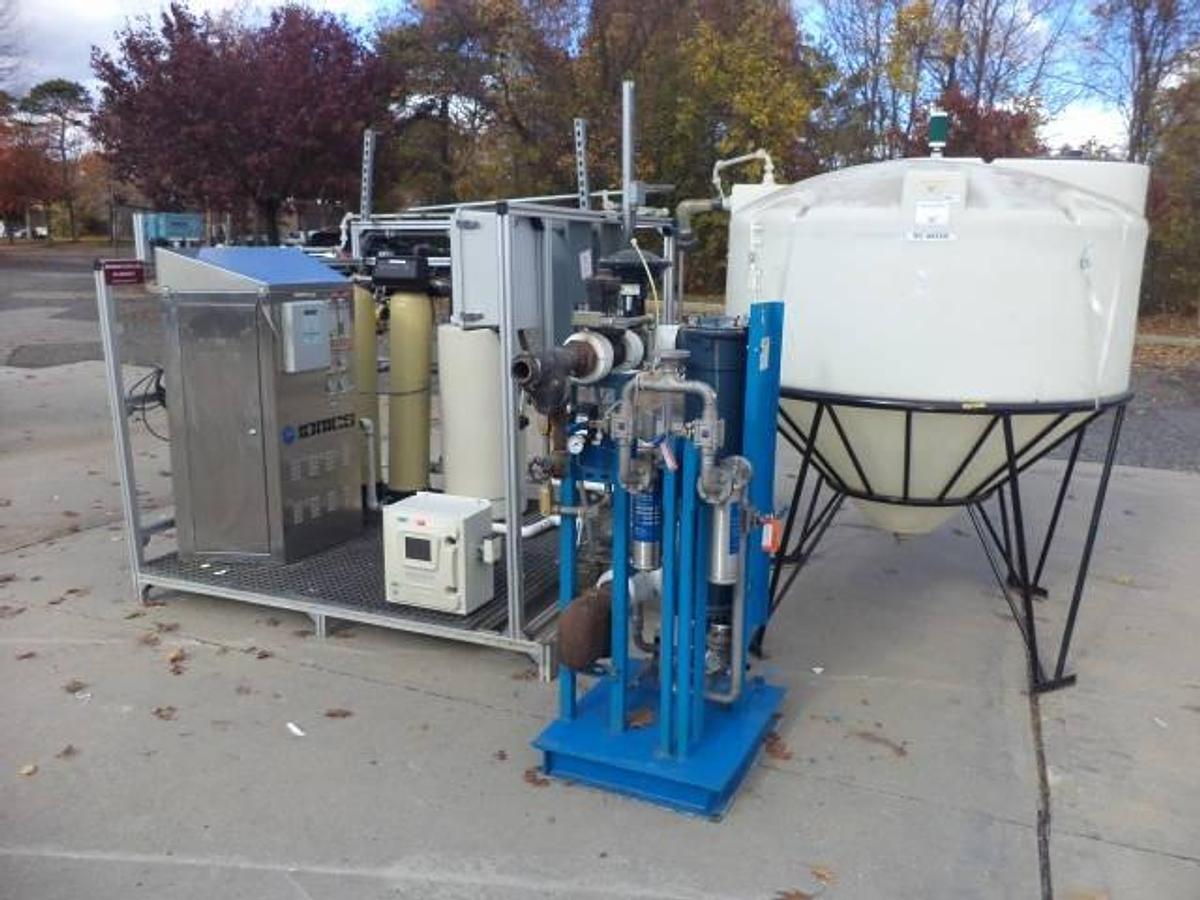
Ionics Incorporated built its reputation on a focused range of water treatment technologies, and the used equipment market reflects that specialization. The most commonly available units include reverse osmosis (RO) systems, electrodeionization (EDI) modules, and electrodialysis reversal (EDR) systems. These machines were designed primarily for high-purity water production in demanding industries such as semiconductors, pharmaceuticals, power generation, and industrial manufacturing. Because Ionics was acquired by GE Water & Process Technologies in 2005 (later folded into SUEZ Water Technologies), all equipment currently available through used machinery dealers is surplus or previously operated, not freshly manufactured under the Ionics brand name.
Among the available inventory, reverse osmosis filtration systems appear most frequently, as they were produced in large volumes and deployed widely across industrial facilities. EDI units are particularly sought after because they enable continuous deionization without chemical regeneration, which reduces operating costs and environmental impact compared to traditional ion exchange systems. Buyers researching the used Ionics market should clarify the specific model and generation of the equipment, as performance specifications and parts availability can vary significantly between older and more recent production runs.
What industries commonly use Ionics water purification systems?
Ionics water treatment systems were engineered for applications where water purity is critical to product quality and process reliability. The semiconductor and electronics industries were among the primary markets, where ultrapure water is essential for rinsing wafers and preventing contamination during fabrication. Pharmaceutical manufacturers also relied heavily on Ionics equipment to meet strict regulatory standards for purified water and water for injection (WFI). Power generation facilities used Ionics EDR and RO systems for boiler feedwater treatment, where mineral content must be tightly controlled to prevent scaling and corrosion.
Beyond those core markets, Ionics equipment found use in food and beverage processing, municipal water treatment, and general industrial applications requiring consistent removal of dissolved solids, ions, and organic contaminants. This broad applicability is one reason used Ionics systems remain in demand even decades after the brand ceased independent operation. Buyers from any of these industries should verify that the specific unit they are considering matches the flow rates, rejection rates, and purity output required for their process, since equipment originally configured for one industry may need modification or reconditioning before it performs optimally in another.
What should buyers know about parts and membrane availability for used Ionics systems?
Parts availability is one of the most practical concerns when purchasing any used water treatment equipment, and Ionics systems require careful evaluation on this front. Because GE Water & Process Technologies absorbed the Ionics product line after the 2005 acquisition, and that business subsequently transitioned to SUEZ Water Technologies, some components may be sourced through those successor organizations. However, availability depends heavily on the age and model of the specific unit. Older systems may have components that are no longer actively manufactured, which means buyers need to research parts compatibility before committing to a purchase.
Key consumable and wear components to investigate include ion exchange membranes, electrodes, O-rings, pressure vessels, and control system parts. For RO systems, membrane replacement is a routine maintenance requirement, and many standard membrane sizes accept compatible third-party alternatives from major membrane manufacturers. EDI modules are more proprietary in design, so confirming stack availability or compatible replacements is especially important. Prospective buyers are advised to consult directly with the equipment dealer about what documentation accompanies the unit, and to contact manufacturers or authorized service providers to assess the realistic support level available for a given model and serial number range.
How is the condition of used Ionics equipment assessed before purchase?
Assessing the condition of used industrial water treatment equipment requires a methodical approach, particularly because these systems involve membranes, electrodes, seals, and control components that degrade differently over time and usage patterns. Reputable used equipment dealers will typically offer inspection options that include in-person visits, live or recorded video walkthroughs, and detailed photographs of key components. For equipment still installed at an operating facility, some dealers can arrange access to view the machine running in its current production environment, which gives buyers the most accurate picture of mechanical condition.
Buyers should pay particular attention to the condition of pressure vessels, membrane housings, instrumentation, and electrical controls during any inspection. Signs of corrosion, scaling deposits, cracked seals, or outdated control panels can all affect the cost and feasibility of putting a unit back into service. It is worth noting that most used equipment dealers do not have the permitting or infrastructure to run actual product water through a system during inspection, so testing is generally limited to visual and mechanical assessment. Buyers with specific purity or flow requirements should factor in the cost of reconditioning, membrane replacement, and commissioning when evaluating the total investment.
What documentation should accompany a used Ionics system at the time of sale?
Documentation significantly affects the value and usability of used industrial equipment, and Ionics systems are no exception. Ideally, a used unit should come with the original operations and maintenance manual, process and instrumentation diagrams (P&IDs), electrical schematics, and any available service or calibration records. This paperwork helps the buyer's engineering team understand the system's design parameters, troubleshoot issues, and source compatible replacement parts. When service history is available, it can also provide insight into how the equipment was maintained and whether major components have been replaced.
In practice, documentation completeness varies widely in the used equipment market. Machines decommissioned from large industrial facilities may have thorough records, while others may have minimal paperwork. Buyers should ask dealers explicitly what documentation is included with a specific unit before finalizing a purchase. If manuals are missing, GE Water or SUEZ successor organizations may have archived documentation for certain Ionics models, and third-party service companies that specialize in water treatment equipment sometimes maintain technical libraries as well. Having even partial documentation is far better than none when planning a reinstallation or refurbishment project.
What is the typical price range for used Ionics water treatment equipment?
Pricing for used Ionics equipment varies considerably based on the type of system, its size and throughput capacity, overall condition, and how complete the unit is at the time of sale. Smaller reverse osmosis skids or individual EDI modules may be available at relatively modest price points, while larger, fully configured RO or EDR systems with intact instrumentation and controls can command significantly higher prices. The brand's strong reputation in high-purity water applications means that well-maintained Ionics equipment tends to hold its value better than generic industrial water treatment gear.
Buyers should approach pricing with the total cost of ownership in mind rather than focusing solely on the purchase price. Reconditioning costs, membrane replacement, shipping, rigging, and installation can add substantially to the initial acquisition price. A lower-priced unit in poor condition may ultimately cost more to bring into service than a higher-priced unit that is more complete and better maintained. Requesting detailed condition information and inspection access before negotiating price is the most reliable way to ensure the asking price reflects the actual state of the equipment.
What are the shipping and logistics considerations for purchasing used Ionics equipment?
Water treatment systems from Ionics range from compact skid-mounted units to large multi-stage systems with significant weight and dimensional footprints. Shipping logistics depend heavily on the size of the equipment, its current location, and the packaging or crating required to prevent damage in transit. Smaller units may ship on standard pallets, while larger systems often require custom wooden crating and professional rigging for safe loading and unloading. Buyers should ask the dealer specifically about how the equipment will be prepared for shipment and what level of packaging is included in the quoted price.
For heavy or oversized systems, specialized freight carriers with flatbed or lowboy trailers may be required, and forklift or crane services may be needed at both the origin and destination. These rigging and handling costs are typically separate from the base freight charge and should be factored into the total landed cost before finalizing the purchase. International shipments introduce additional considerations including export documentation, customs clearance, and compliance with import regulations in the destination country. Getting a fully itemized shipping and logistics quote from the dealer before committing to a purchase helps avoid unexpected costs and delays.
What are the payment terms typically used when buying used industrial water treatment equipment?
Payment practices in the used industrial equipment market are fairly consistent across reputable dealers. Full payment prior to shipment is the standard expectation for most transactions, particularly for buyers making a first-time purchase from a given dealer. This protects the seller from non-payment after equipment has been released, and it also gives the buyer a clear milestone: once payment is confirmed, the logistics and shipping process begins. Wire transfer is the most common payment method for transactions of this size, though dealers may accept other forms depending on the transaction amount and buyer relationship.
Some dealers extend more flexible terms to established customers with a history of repeat purchases, but this is not the norm for first-time buyers. Buyers should clarify payment expectations early in the negotiation process and confirm exactly what steps follow after payment is received, including the timeline for equipment preparation, documentation transfer, and shipment scheduling. Understanding the full payment and fulfillment sequence upfront prevents misunderstandings and helps both parties manage expectations around delivery timing.
Can used Ionics equipment be integrated with existing water treatment infrastructure?
Integration of used Ionics equipment into an existing water treatment system is entirely feasible, but it requires careful engineering review before purchase. Ionics systems were designed with standardized inlet and outlet connections, pressure ratings, and electrical specifications that align with common industrial standards, which generally makes integration straightforward for experienced process engineers. That said, the specific configuration of the used unit, including its flow rate capacity, operating pressure range, feed water quality requirements, and control system type, must be matched to the demands of the receiving facility.
Older Ionics systems may use analog controls or programmable logic controllers (PLCs) that differ from the modern distributed control systems (DCS) in use at many facilities today. Control system upgrades or interface adaptations may be necessary to allow the used equipment to communicate with existing plant automation. Similarly, pre-treatment requirements for RO or EDI systems are strict, and the feed water quality at the new installation site must meet the design parameters of the used unit to avoid premature membrane or stack degradation. Engaging a water treatment engineer or systems integrator to review the equipment specifications against the site conditions before purchase is a sound investment that can prevent costly surprises during commissioning.
How does electrodeionization (EDI) technology in Ionics systems differ from conventional deionization methods?
Electrodeionization is a continuous ion removal process that combines ion exchange resin beds with ion-selective membranes and a low-voltage direct current to produce high-purity water without the need for chemical regeneration. In a conventional deionization system, resin beds become exhausted over time and must be regenerated using acids and caustic chemicals, which creates operational downtime, chemical handling requirements, and waste disposal costs. Ionics was a pioneer in commercializing EDI technology, and their systems were widely adopted in industries where both water purity and operational simplicity were priorities.
The practical advantages of EDI over conventional deionization are significant in high-throughput industrial settings. Because the process is continuous rather than batch-based, there is no regeneration downtime and no need to store or handle hazardous regenerant chemicals on site. The output water quality is also highly consistent, which is critical in semiconductor fabrication and pharmaceutical manufacturing where even minor fluctuations in water purity can affect product quality. Used Ionics EDI units remain attractive on the secondary market precisely because of these operational characteristics, and buyers who understand the technology are often willing to invest in reconditioning a used unit rather than replacing it with a different technology type.