Category
Manufacturer
Model
Innovative Automation
Innovative Automation provides advanced automation solutions for manufacturing processes across various sectors. They focus on integrating robotics and smart technology to enhance production efficiency and reduce operational costs.
FAQ:
What types of automation equipment does Innovative Automation manufacture?
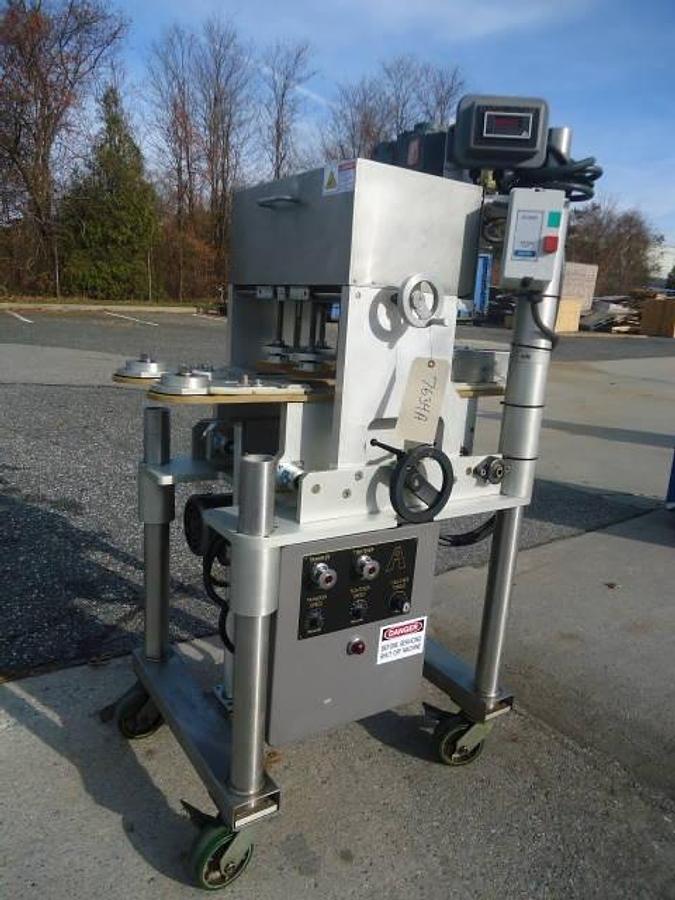
Innovative Automation specializes in advanced automation solutions designed for manufacturing processes across a wide range of industries. Their equipment focuses on integrating robotics and smart technology to improve production efficiency and reduce operational costs. Product examples include specialized cap tightening and retorquing systems, such as four-spindle cap tighteners with gap transport functionality, including explosion-proof configurations for environments where flammable materials are present.
Beyond capping and torquing equipment, Innovative Automation's broader product line addresses automated assembly, material handling, and process control applications. Their machines are typically built for high-volume production environments where consistency, speed, and reduced labor dependency are priorities. Buyers looking for used Innovative Automation equipment will find machines that were originally designed for demanding industrial settings, which speaks to the durability and engineering quality built into each unit.
What should I know before buying used automation equipment?
Purchasing used automation equipment requires more due diligence than buying off-the-shelf goods. The most important step is understanding the machine's current condition, its maintenance history, and whether replacement parts are still available from the manufacturer. Age and model generation can significantly affect parts availability and the level of technical support a manufacturer is willing to provide, so it is worth contacting the manufacturer directly before committing to a purchase.
Buyers should also think beyond the purchase price. Total cost of ownership includes shipping and rigging, installation, integration with existing systems, and ongoing maintenance. A machine priced attractively upfront can become expensive quickly if it requires hard-to-find components or specialized technicians to service it. Selecting a dealer who specializes in your industry and has a long track record of selling automation machinery is one of the most reliable ways to reduce risk when buying used equipment.
How do I evaluate whether a specific piece of used automation equipment is right for my application?
Start by mapping the machine's specifications against your production requirements. Key factors include throughput capacity, compatibility with your existing line layout, power requirements, and whether the machine's control system can communicate with your current PLC or ERP platform. Integration compatibility is one of the most common sticking points buyers encounter, especially when adding older equipment to a modernized facility.
Beyond specs on paper, the best way to evaluate a used machine is through a direct inspection. Reputable dealers will arrange in-person visits, live video walkthroughs, or recorded video demonstrations of the equipment. If the machine is still running at a production facility, you may be able to observe it operating under real conditions. Keep in mind that most dealers do not have the permitting or infrastructure to run full production tests, so the inspection is focused on mechanical condition, completeness, and observable function rather than a full production trial run.
What is the typical price range for used industrial automation equipment?
Pricing for used automation equipment varies widely depending on the type of machine, its age, condition, brand reputation, and how specialized the application is. Simple conveyors or single-function assembly aids might sell in the low thousands of dollars, while complex robotic cells, multi-station assembly systems, or explosion-proof machinery can reach well into the tens or hundreds of thousands. Specialized equipment from well-regarded manufacturers like Innovative Automation tends to hold value because of the engineering precision and industry-specific design built into each machine.
It is worth remembering that the purchase price is only part of the total cost. Shipping, rigging, any required refurbishment, installation, and integration work all contribute to the final landed cost. Getting a clear picture of all these costs before committing to a purchase helps avoid budget surprises and makes it easier to calculate a realistic return on investment. Buyers who take the time to document expected labor savings, throughput gains, and reduced scrap rates typically find it easier to justify the investment internally.
How does the inspection process work when buying used automation machinery?
Used automation equipment dealers typically offer three formats for inspection: in-person visits, live video calls where a technician walks through the machine on camera, and pre-recorded video documentation. Each option gives buyers a chance to assess the machine's physical condition, check for visible wear, verify that all major components are present, and ask questions about its history. In-person inspections are generally preferred for high-value purchases because they allow a buyer or their technician to physically examine the equipment and take measurements.
Some machines are still installed and running at the facility where they were used, which can allow for observation of the equipment in a working environment. Others have been decommissioned and moved to a dealer's warehouse. In either case, buyers should come prepared with a checklist covering electrical components, mechanical wear points, control systems, and any safety features relevant to the machine type. Bringing a qualified automation technician to the inspection, or having one participate via video, adds an important layer of technical assessment that a general visual review alone cannot provide.
What are explosion-proof automation machines, and when are they required?
Explosion-proof equipment is designed and certified to operate safely in environments where flammable gases, vapors, dust, or liquids may be present. The enclosures and electrical components are built to contain any internal sparks or arcs so they cannot ignite the surrounding atmosphere. Industries that commonly require explosion-proof machinery include pharmaceutical manufacturing, chemical processing, food and beverage production involving alcohol-based products, paint and coatings, and petrochemical operations.
When evaluating used explosion-proof equipment, buyers should verify that the machine's original certifications are documented and that no modifications have been made that could compromise the rated protection. Regulatory compliance in hazardous locations is governed by standards such as NEC Article 500 in the United States and ATEX directives in Europe. Confirming that a used machine still meets current applicable standards, or understanding what would be required to bring it into compliance, is an essential part of the due diligence process before installation in a classified area.
What payment terms are typical when purchasing used automation equipment?
Most used equipment dealers require payment in full before a machine is released for shipping. This is standard practice across the industry and reflects the fact that used machinery transactions do not carry the same financing infrastructure as new equipment purchases from large manufacturers. Some dealers may extend payment terms to buyers with whom they have an established relationship and a track record of completed transactions, but this is at the dealer's discretion rather than a standard offering.
Buyers who need financing should explore third-party equipment financing companies, which specialize in funding used machinery purchases and can often structure loans or leases around a specific machine's expected useful life. Having financing pre-arranged before approaching a dealer speeds up the transaction and puts buyers in a stronger negotiating position. It is also worth factoring in the full landed cost when arranging financing, since shipping, rigging, and installation costs can be substantial for larger automation systems.
How is used automation equipment typically shipped, and what should buyers expect to pay?
Shipping costs for automation equipment depend heavily on the machine's size, weight, and fragility, as well as the distance between the seller and the buyer. Smaller tabletop units may ship on standard pallets via LTL freight, while larger machines often require custom crating to prevent damage in transit. The level of packaging directly affects shipping cost, and buyers should ask dealers specifically what packaging is included in the quoted price and what additional crating charges might apply.
Heavy or awkwardly shaped machines typically require specialized rigging for both loading at the origin and unloading at the destination. Rigging costs are usually separate from freight charges and should be confirmed upfront to avoid unexpected expenses at delivery. Buyers receiving large equipment at their facility should also confirm in advance that they have the appropriate forklift capacity or overhead crane access to unload the machine safely. Getting a complete breakdown of packaging, rigging, freight, and any accessorial charges gives a clear picture of the total landed cost before finalizing a purchase.
What role does PLC compatibility play in selecting used automation equipment?
Programmable logic controllers are the brain of most automated manufacturing systems, and compatibility between a used machine's existing control platform and a buyer's current facility systems is one of the most consequential factors in a purchase decision. Machines running older PLC generations may require a controls upgrade to integrate with modern SCADA systems, ERP platforms, or IoT monitoring infrastructure. That upgrade adds cost and lead time that should be factored into the total investment.
Before purchasing, buyers should document the make, model, and firmware version of the machine's existing PLC and compare it against their facility's current control architecture. In some cases, a controls retrofit is straightforward and cost-effective. In others, particularly with very old or proprietary systems, the integration work can be complex enough to affect whether the purchase makes economic sense. Consulting with a controls engineer or automation integrator during the evaluation phase, rather than after the purchase, helps avoid costly surprises during installation.
How should buyers assess the availability of parts and manufacturer support for used automation equipment?
Parts availability is one of the most practical concerns with used automation equipment, and it varies significantly depending on the manufacturer, the machine's age, and how widely the model was adopted in the industry. A machine from a manufacturer that is still active and well-supported will generally have better parts availability than one from a company that has since been acquired, restructured, or discontinued the product line. Contacting the manufacturer directly before purchasing is the most reliable way to get a straight answer about what parts are stocked, what lead times look like, and whether technical support is still offered for that model.
Buyers should also ask the selling dealer whether any spare parts are included with the machine, as sellers sometimes have extra components from the same production line. Checking third-party parts suppliers and refurbishment specialists in the relevant equipment category is another way to assess parts availability independently. For highly specialized machines, it is worth identifying a qualified service technician familiar with the equipment before the purchase rather than searching for one after a breakdown occurs.