Category
Manufacturer
Model
Industrial Feeding Systems
Industrial Feeding Systems offers equipment designed to optimize the feeding and handling of materials in manufacturing settings. Their systems are widely used in food and beverage processing, enhancing efficiency and reducing waste.
FAQ:
What types of industrial feeding systems are commonly available on the used equipment market?
The most common types of industrial feeding systems available through used equipment dealers include vibratory bowl feeders, belt feeders, screw feeders, rotary feeders, and centrifugal feeders. Each type is designed for a specific range of materials and production environments. Vibratory bowl feeders, for example, are widely used to orient and deliver small parts or granular materials at controlled rates, making them popular in food processing, pharmaceutical packaging, and electronics assembly. Belt feeders handle bulk materials across longer distances, while screw feeders excel at moving powders, granules, and semi-solid materials through enclosed channels, which is especially useful in applications where dust containment matters.
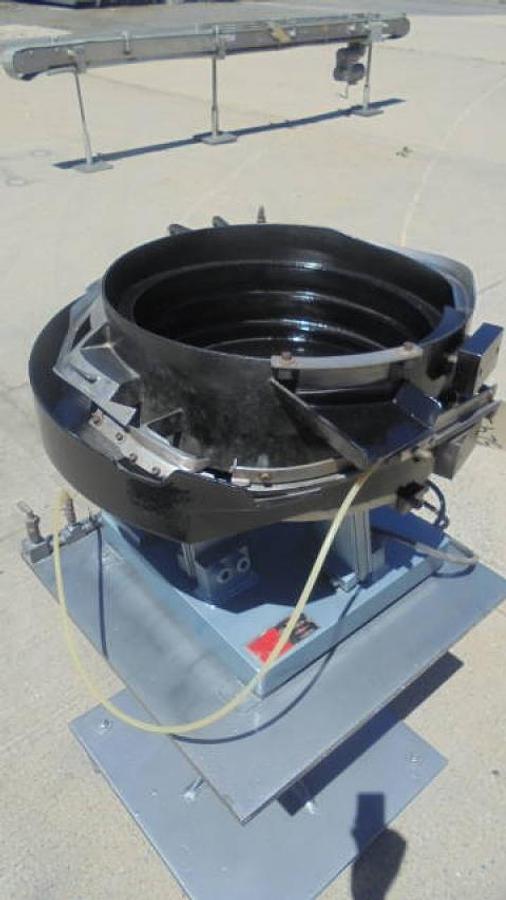
Rotary feeders are typically used as airlocks or metering devices between conveying systems and storage hoppers, and centrifugal feeders handle high-speed part orientation for lighter components. When shopping for used feeding systems, buyers often encounter vibratory bowl feeders in a range of bowl diameters, since bowl size directly affects throughput capacity. A 24-inch diameter vibratory bowl, for instance, is a mid-range size suited for moderate production volumes across food, beverage, and light manufacturing applications. Understanding which type fits your material characteristics, production speed requirements, and floor space constraints is the first step in evaluating any used feeding system.
What industries use industrial feeding systems, and what are they used for?
Industrial feeding systems are used across a broad range of manufacturing and processing industries, anywhere that materials, parts, or bulk ingredients need to be delivered at a controlled, consistent rate. Food and beverage processing is one of the heaviest users, where feeding systems meter ingredients like grains, powders, nuts, and snack pieces into mixers, packaging lines, or portioning equipment. Pharmaceutical manufacturers rely on feeding systems to deliver precise quantities of active ingredients or finished tablets into blister packaging or bottling lines. Agriculture, mining, plastics, electronics assembly, and chemical processing are also major application areas.
In each of these industries, the core function of a feeding system is the same: automate the controlled delivery of material to reduce human labor, improve consistency, and minimize waste. In food processing specifically, vibratory bowl feeders are valued for their ability to gently handle fragile products without causing breakage, while also being relatively easy to clean and sanitize between product runs. For buyers sourcing used feeding systems, knowing your industry and the specific material being handled is critical, since factors like moisture content, particle size, temperature sensitivity, and abrasiveness all affect which machine type and configuration will perform reliably in your application.
What is the difference between vibratory, belt, and screw feeding systems?
Vibratory feeders use controlled vibration to move and orient materials along a track or bowl surface. They are well-suited for small parts, granular materials, and fragile products that need gentle handling, and they can be tuned to deliver very precise feed rates. Vibratory bowl feeders in particular are designed to sort and orient parts automatically as they travel up a spiral track, making them a staple in assembly and packaging operations. Belt feeders, by contrast, use a moving conveyor belt to transport bulk materials horizontally or at a slight incline. They handle higher volumes of coarser, heavier materials and are common in mining, agriculture, and bulk food ingredient handling where gentle orientation is less important than throughput.
Screw feeders use a rotating helical screw inside an enclosed tube or trough to push material from one point to another. They are particularly effective for powders, fine granules, and sticky or semi-solid materials that would clump or segregate on a belt. Screw feeders also offer good dust containment, which matters in pharmaceutical and chemical applications. The right choice depends on the material's physical properties, the required feed rate accuracy, the distance material needs to travel, and the available floor space. When evaluating used equipment, buyers should confirm that the specific feeder type was designed for a material profile similar to their own, since a machine used for a dry granular product may not perform the same way with a moist or abrasive material.
What feed rate capacity should buyers consider when purchasing an industrial feeding system?
Feed rate capacity refers to how much material a feeding system can deliver per unit of time, typically expressed in pounds per hour, kilograms per minute, or parts per minute depending on the application. Getting this specification right is one of the most important decisions in selecting a feeding system, because a machine that is undersized will become a production bottleneck, while an oversized machine may sacrifice accuracy at lower operating speeds. Buyers should calculate their target throughput based on downstream equipment requirements, batch sizes, and shift schedules before evaluating any specific machine.
For used feeding systems, buyers should ask the dealer about the rated capacity of the machine and, where possible, compare it against the actual production data from its prior use. Keep in mind that feed rate performance can be affected by the type of material being handled. A vibratory bowl feeder rated for a specific parts-per-minute output with small plastic components may perform differently with a denser or differently shaped part. Bowl diameter is one indicator of capacity for vibratory systems, with larger bowls generally capable of higher throughput. Buyers should also verify that the drive unit, controls, and any variable-speed components are functional and capable of delivering the required range of feed rates, since these components affect the machine's ability to operate accurately across different production speeds.
How do I evaluate the condition of a used industrial feeding system before buying?
Evaluating a used feeding system requires looking beyond the basic mechanical structure to assess wear on the components that directly affect performance. For vibratory bowl feeders, key areas to inspect include the bowl surface for wear, cracks, or corrosion, the condition of the drive unit and springs, and the integrity of any tooling or tracks used to orient parts. For screw and belt feeders, buyers should examine the screw flights or belt surface for wear, check the condition of seals and bearings, and confirm that the drive motor and gearbox are functioning properly. Electrical components, including variable speed drives and control panels, should also be reviewed since these can be expensive to replace.
Most used equipment dealers will accommodate in-person inspections, virtual walkthroughs, or video captures of the machine so buyers can assess condition remotely. In some cases, the equipment may still be installed and running at a production facility, which allows for a live observation of the machine in operation. However, buyers should understand that dealers typically do not have the permitting or infrastructure to run actual production tests, so inspections focus on the mechanical and electrical condition of the machine rather than a full production trial. Consulting with the equipment manufacturer about the specific model's known wear points, parts availability, and support options for that age of machine is also a smart step before committing to a purchase.
Are used industrial feeding systems customizable or adaptable for different materials?
Many industrial feeding systems are designed with some degree of adjustability built in, particularly vibratory bowl feeders, which can often be re-tooled with different tracks, inserts, or bowl liners to handle different part geometries or material types. The drive amplitude and frequency on vibratory feeders can typically be adjusted to change the feed rate and material behavior on the bowl surface. Belt feeders may accommodate different belt widths or speeds through drive adjustments. These built-in flexibilities mean that a used feeding system originally configured for one product can sometimes be adapted for a different application with the right modifications.
That said, the degree of adaptability depends heavily on the specific machine, its age, and the difference between the prior application and the intended one. A vibratory bowl feeder tooled for a small plastic cap will require significant re-tooling to handle a different part shape or size. Material compatibility is another consideration: a feeder used in a dry, ambient-temperature application may need cleaning, coating changes, or component upgrades before it is suitable for a food-grade or high-moisture environment. Buyers should discuss their specific material and application requirements with the dealer and, where possible, reach out to the equipment manufacturer to understand what modifications are feasible and what replacement parts or tooling are still available for that model.
What should buyers know about integrating a used feeding system into an existing production line?
Integration is one of the more complex aspects of adding a used feeding system to an existing line, and it deserves careful planning before purchase. Most modern production environments rely on PLCs (programmable logic controllers) or SCADA systems to coordinate equipment across the line. A used feeding system needs to be compatible with these controls, either through its existing control interface or through modifications to connect it to the plant's automation infrastructure. Buyers should document their control system requirements and confirm with the dealer or a qualified integrator whether the machine's existing controls are compatible or whether upgrades will be needed.
Physical integration is equally important. The feeder's discharge height, footprint, and orientation need to align with the receiving equipment downstream, whether that is a conveyor, a filling machine, or a processing unit. For larger systems, structural supports, utility connections, and floor space all factor into the installation plan. Buyers should also account for the fact that a used machine may not come with full documentation, wiring diagrams, or operator manuals, which can complicate integration. Requesting any available documentation from the dealer at the time of purchase is worthwhile, and contacting the manufacturer directly to request technical resources for that model can save significant time during installation and commissioning.
What are typical price ranges for used industrial feeding systems?
Pricing for used industrial feeding systems varies considerably depending on the type of feeder, its size, age, condition, brand, and the complexity of any included controls or tooling. Small vibratory bowl feeders in the 6- to 12-inch diameter range can be found in the low hundreds to low thousands of dollars. Mid-size vibratory bowls, such as a 24-inch diameter unit, typically fall in a broader range depending on condition and included components, often from a few thousand dollars up to ten thousand or more for well-maintained units from recognized manufacturers. Large-scale screw feeders, belt feeders, or complete integrated feeding systems with controls can run significantly higher, sometimes into the tens of thousands of dollars.
Beyond the purchase price, buyers should factor in the total landed cost of the equipment. This includes freight and shipping, which varies based on the size and weight of the machine and the level of packaging or crating required. Larger machines may also require specialized rigging for loading and unloading, which adds to the overall cost. Depending on condition, buyers may also need to budget for replacement parts, re-tooling, or control upgrades before the machine is production-ready. Getting a clear picture of all these costs upfront helps avoid surprises and allows for a more accurate comparison between different machines or dealers.
Do used industrial feeding systems come with a warranty?
Warranties on used industrial equipment are handled differently than on machines sold directly by a manufacturer. Used equipment dealers typically sell machinery on an as-is basis, meaning the responsibility for verifying condition rests with the buyer rather than the seller. This is standard practice across the used machinery industry and reflects the fact that a dealer cannot fully certify the internal condition or remaining service life of a machine that has already been in production use.
Because of this, buyers should take the inspection process seriously. Request in-person, virtual, or video inspections to assess the machine's current condition as thoroughly as possible. Choosing a dealer with a long track record in the industry and specific experience with feeding and handling equipment adds a meaningful layer of confidence, since reputable dealers have reputations to protect and are more likely to represent the condition of equipment accurately. Buyers should also contact the equipment manufacturer directly to ask about parts availability, technical support, and any known issues with that specific model or production era. The manufacturer's level of ongoing support for an older machine can vary significantly by age and model, so getting that information before purchase helps set realistic expectations for long-term maintenance and serviceability.
What should buyers ask a dealer before purchasing a used industrial feeding system?
Going into a used equipment purchase with the right questions saves time, reduces risk, and helps ensure the machine will actually meet production requirements. Start with the basics: What is the machine's make, model, and approximate age? What application was it used for, and what material was it handling? Is it currently installed and operational, decommissioned, or in storage? Has it undergone any repairs or modifications, and if so, what was done? These questions give a clearer picture of the machine's history and help identify any red flags before investing in a deeper inspection.
Beyond history, buyers should ask about inspection options, including whether an in-person visit or a live video walkthrough is available. Request any documentation that exists for the machine, such as manuals, wiring diagrams, or maintenance records. Ask for a detailed breakdown of shipping costs, packaging methods, and whether rigging will be required for loading, since these costs can add up quickly for larger machines. Confirm payment terms, since most used equipment dealers require full payment before the machine ships. Finally, ask whether the dealer has experience with feeding and handling equipment specifically, since a dealer who specializes in this category is better positioned to answer technical questions and represent the machine's condition accurately than a general-purpose reseller.