Category
Manufacturer
Model
Index/Romaco
Index/Romaco specializes in providing pharmaceutical and cosmetic packaging solutions. They are well-regarded for their blister packaging machines and integrated systems that ensure high-quality and efficient packaging.
FAQ:
What types of pharmaceutical packaging equipment does Index Romaco manufacture?
Index Romaco produces a broad range of pharmaceutical and cosmetic packaging machinery, with particular strength in blister packaging systems, cartoning equipment, filling and sealing machines, and integrated packaging lines. The company is especially well-regarded for its blister packaging machines, which handle both thermoform and cold-form blister formats with high precision and low rejection rates. These machines are used by pharmaceutical manufacturers worldwide to package tablets, capsules, and other solid dosage forms.
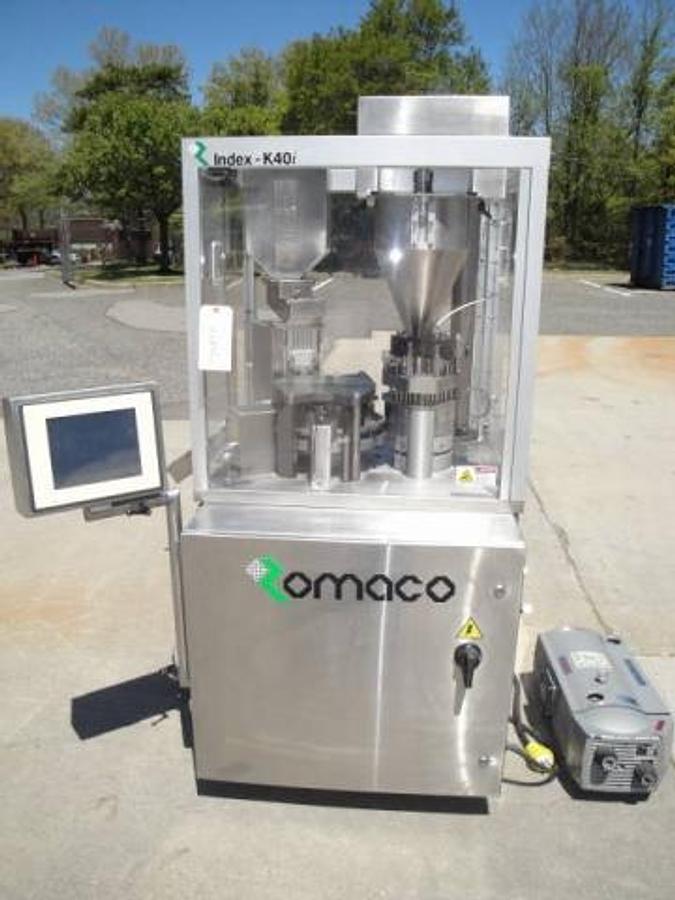
Beyond blister packaging, the Romaco Group includes several specialized sub-brands, each focused on different aspects of pharmaceutical packaging and processing. Noack and Siebler cover blister and strip packaging, Promatic handles cartoning, Macofar specializes in capsule filling, Pharmatec covers liquid filling and washing systems, and Innojet focuses on coating and granulation technology. This breadth means that used Index Romaco equipment covers a wide spectrum of packaging line functions, from primary packaging through secondary and serialization-ready systems. The K40i encapsulator is one example of the capsule-filling side of the product range, designed for size 0 capsules and suitable for pharmaceutical production environments.
What is the typical price range for used Index Romaco packaging equipment?
Pricing for used Index Romaco pharmaceutical packaging equipment varies considerably depending on the machine type, model, age, condition, and included tooling or accessories. Entry-level or older blister packaging machines and encapsulators can be found in the range of $20,000 to $80,000, while larger, more sophisticated integrated packaging lines or newer high-speed blister systems can run well into the $200,000 to $500,000+ range. Machines that include validated tooling sets, documentation, or recent service histories tend to command higher prices on the used market.
Buyers should also factor in additional costs beyond the listed machine price. Shipping, rigging, and crating fees can be significant for large pharmaceutical equipment, and these costs vary based on the origin location, destination, and the level of packaging required to protect the machine in transit. Any required reconfiguration, installation, or requalification at the buyer's facility adds further to the total acquisition cost. Getting a clear picture of the full landed cost before committing to a purchase is an important step in the buying process for used pharmaceutical machinery.
Are used Index Romaco machines compliant with FDA, GMP, and EU pharmaceutical regulations?
Index Romaco equipment is designed to meet strict international regulatory standards, including FDA 21 CFR Part 11 requirements for electronic records and signatures, EU GMP Annex 1 guidelines, and current Good Manufacturing Practice (cGMP) requirements. This regulatory alignment is one reason the brand is a preferred choice among pharmaceutical manufacturers operating in highly regulated markets. Many Index Romaco machines also support serialization and track-and-trace functionality, which is increasingly mandatory under regulations in the US, EU, and other jurisdictions requiring unique product identification on pharmaceutical packaging.
That said, when purchasing a used machine, buyers should carefully evaluate the specific model and its configuration to confirm it meets current regulatory requirements for their intended application. Older machines may require upgrades to software, controls, or mechanical components to achieve compliance with present-day standards. It is advisable to consult with the manufacturer directly to understand what level of support, software updates, or spare parts are available for a given model, as this can directly affect the machine's ability to pass qualification and validation in a regulated production environment. A thorough inspection and review of any existing documentation, including IQ/OQ/PQ records, is a valuable part of due diligence for used pharmaceutical equipment.
What production speeds and output capacities are typical for Index Romaco blister packaging machines?
Index Romaco blister packaging machines are built for a wide range of production scales, from smaller batch operations to high-speed continuous production lines. Depending on the model, output speeds for blister packaging machines in the Romaco and Noack range can vary from around 100 to over 600 blisters per minute, with some high-end configurations capable of even higher throughput. The actual output in units per minute depends on the blister format, the number of cavities per blister card, the product being packaged, and the specific machine model and configuration.
For encapsulation equipment such as the Index K40i, output capacity is measured in capsules per hour, with many mid-range pharmaceutical encapsulators producing between 40,000 and 150,000 capsules per hour depending on capsule size and machine settings. When evaluating a used Index Romaco machine, buyers should request detailed specifications for the specific model, including the rated speed, the formats it has been set up to run, and the tooling included. Actual achievable speeds on a used machine may differ from published ratings depending on the machine's condition and the age of wear parts, which is another reason a thorough pre-purchase inspection is strongly recommended.
Can Index Romaco equipment handle multiple packaging formats?
Index Romaco's product portfolio covers multiple packaging formats across its different machine lines and sub-brands. Blister packaging machines within the Romaco family handle both thermoform and cold-form blister formats, accommodating different film and foil combinations used for tablets, capsules, and other solid dosage forms. Cartoning equipment from the Promatic line handles folding carton packaging for a variety of primary container types. Liquid filling systems from Pharmatec handle vials, ampoules, and bottles. This range means that a pharmaceutical manufacturer can source multiple packaging stages from within the same equipment family.
For a single machine, format flexibility depends heavily on the specific model and the tooling sets purchased with it. Many blister packaging machines can be adapted to run different blister card sizes and configurations by changing format parts, but this requires the appropriate tooling to be available. When buying used Index Romaco equipment, buyers should confirm which tooling sets are included with the machine, as acquiring additional tooling separately can be a significant added expense. Discussing format requirements in detail with the equipment seller before purchase helps ensure the machine and its included tooling are a practical fit for the intended production needs.
What should buyers know about inspecting used Index Romaco equipment before purchasing?
Inspecting used pharmaceutical packaging equipment before purchase is one of the most important steps a buyer can take to assess the machine's actual condition and suitability for their application. Reputable used equipment dealers typically offer in-person inspections, virtual walkthroughs, or detailed video documentation of the machine. For some machines that are still in active production at a facility, it may be possible to arrange an inspection at the plant where the equipment is currently running, which gives a buyer the opportunity to observe the machine in operation. For decommissioned equipment, a physical inspection of mechanical condition, controls, and wear parts is still highly informative.
It is worth keeping in mind that most used equipment dealers do not have the permits or production infrastructure to run actual pharmaceutical product through a machine during an inspection. Testing is therefore generally limited to dry runs or mechanical checks rather than full production trials with active pharmaceutical ingredients. Buyers should use the inspection to evaluate the condition of key components such as sealing stations, forming stations, drive systems, and control interfaces. Reviewing any available maintenance records, service logs, or qualification documentation also adds valuable context. For high-value or technically complex machines, engaging a qualified pharmaceutical equipment engineer to assist with the inspection is a practical precaution.
How does the used Index Romaco equipment buying process typically work?
Purchasing used Index Romaco pharmaceutical packaging equipment generally follows a straightforward process, starting with identifying the specific machine or machine type needed, reviewing available listings, and requesting detailed specifications, photos, and condition information from the seller. Once a machine of interest is identified, buyers typically arrange an inspection, either in person or via video, to verify the machine's condition before committing to a purchase. Asking the seller detailed questions about the machine's history, the reason for decommissioning, and what tooling or documentation is included helps build a clearer picture of the asset.
Most used equipment dealers require full payment prior to shipping. Some dealers may offer payment terms to established repeat customers, but this is not standard practice across the industry. After payment is confirmed, the seller arranges packaging, crating, and shipping. Costs for rigging, crating, and freight are typically separate from the machine price and can vary significantly based on the machine's size and weight, the origin and destination locations, and the level of protective packaging required. Buyers should request a full breakdown of these costs upfront to understand the total landed cost of the equipment before finalizing the transaction.
What should buyers understand about spare parts and manufacturer support for used Index Romaco machines?
One practical consideration when purchasing used pharmaceutical packaging equipment is the availability of spare parts and the level of support that can be expected from the manufacturer. For Index Romaco machines, the level of support available from Romaco Group can vary depending on the age of the machine, the specific model, and whether that model is still within an active support lifecycle. Contacting Romaco directly before purchasing a used machine is a sensible step, as it allows buyers to gauge parts availability, software support, and whether the manufacturer still offers service contracts or technical assistance for that particular model.
Used equipment is typically sold on an as-is basis, which means the responsibility for verifying parts availability and support options rests with the buyer. Older or discontinued models may have limited manufacturer support, making it important to confirm whether critical wear parts and consumables are still available through the manufacturer, authorized distributors, or third-party suppliers. For machines with proprietary control systems or specialized tooling, this is especially worth investigating before purchase. Building a relationship with a reputable dealer who specializes in pharmaceutical packaging equipment can also be a useful resource for sourcing parts and connecting with qualified service technicians familiar with Index Romaco machinery.
What is the significance of serialization and track-and-trace compatibility in Index Romaco packaging lines?
Serialization and track-and-trace functionality has become a critical requirement for pharmaceutical packaging lines in many markets. Regulations such as the US Drug Supply Chain Security Act (DSCSA), the EU Falsified Medicines Directive (FMD), and similar frameworks in markets like Brazil, China, and India require that pharmaceutical products carry unique identifiers that can be tracked through the supply chain. Index Romaco packaging equipment, particularly in more recent model generations, has been designed with serialization compatibility in mind, supporting the integration of vision systems, inkjet coding, and aggregation modules that enable compliance with these requirements.
For buyers evaluating used Index Romaco equipment, the serialization capability of a specific machine depends heavily on its age and configuration. Machines produced before serialization regulations were widely implemented may require hardware or software upgrades to meet current requirements. Buyers operating in regulated markets should verify whether the machine they are considering supports the serialization standards applicable to their products and geography. This may involve consulting with the manufacturer about available upgrade paths or working with a systems integrator who specializes in pharmaceutical packaging line compliance. Confirming serialization readiness before purchase can prevent costly retrofitting down the line.
How should pharmaceutical companies evaluate whether used Index Romaco equipment is the right choice for their production needs?
Choosing used pharmaceutical packaging equipment is a decision that involves balancing cost savings against factors like machine condition, format compatibility, regulatory compliance, and long-term supportability. Index Romaco is a well-established brand with a strong reputation in the pharmaceutical packaging industry, which means used machines from this manufacturer tend to hold their value and are generally well-regarded by production teams familiar with the equipment. For companies that already have experience with Romaco machinery, adding a used machine of the same brand can simplify training, spare parts management, and maintenance.
For companies evaluating the brand for the first time, it is worth assessing the specific machine against production requirements in detail. Key questions include whether the machine's speed and format capabilities match current and projected production volumes, whether the control system and documentation support the company's validation requirements, and whether qualified service technicians are accessible in the buyer's region. Selecting a dealer with a track record in pharmaceutical equipment and a willingness to support the buyer through inspection and post-sale questions adds an important layer of confidence to the process. Taking the time to do thorough due diligence on both the machine and the seller is the most reliable way to make a sound purchasing decision in the used pharmaceutical equipment market.