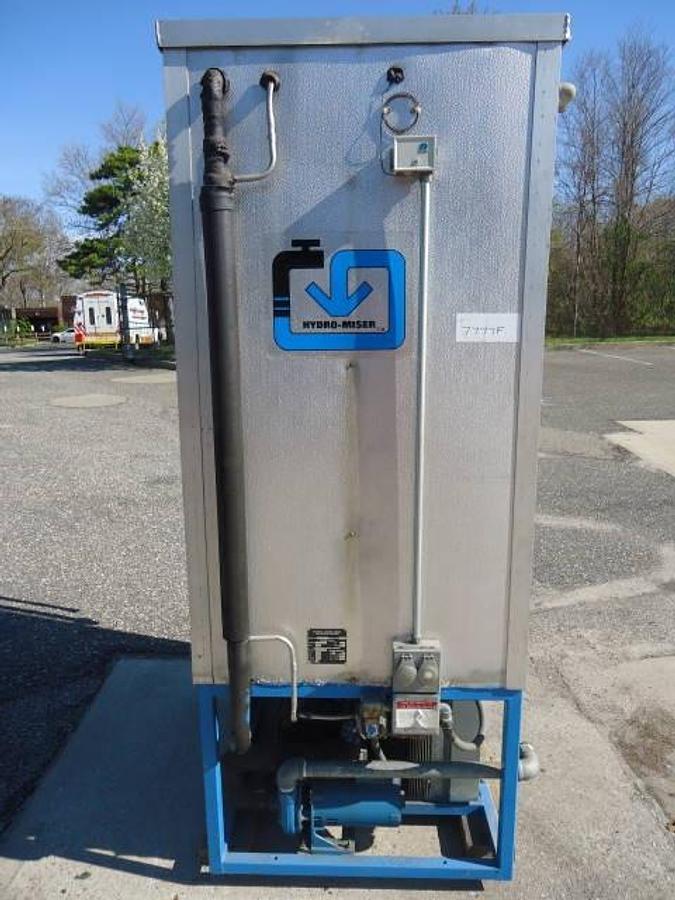
Category
Manufacturer
Model
Hydro-Miser
Hydro-Miser specializes in water conservation and management equipment for the manufacturing sector. Their systems are designed to optimize water usage and reduce waste, making them an essential partner for environmentally conscious manufacturers. Hydro-Miser’s focus on sustainability and efficiency positions them as a leader in water management solutions.
FAQ:
What is a Hydro-Miser water chiller and what is it used for?
Hydro-Miser water chillers are industrial process cooling systems designed for the manufacturing sector, with a particular focus on water conservation and efficient water management. The brand is built around the idea of reducing water waste while maintaining reliable cooling performance across demanding production environments. Their systems are commonly found in applications such as plastics processing, food and beverage production, injection molding, chemical processing, and general industrial cooling where consistent process temperatures are critical to product quality and equipment longevity.
The HM-3 Ice Bank Water Chiller is one of the specific models that appears in the used equipment market. Ice bank chillers work by building up a reserve of ice (or chilled water) during off-peak hours and then drawing on that stored cooling capacity during peak demand periods, which can significantly reduce energy costs and smooth out electrical load spikes. This makes Hydro-Miser equipment particularly attractive to manufacturers who run high-demand cooling cycles and want to reduce their peak energy consumption. Facilities with sustainability goals also tend to favor this brand given its focus on minimizing water usage compared to once-through cooling systems.
What should I know before buying a used Hydro-Miser water chiller?
Buying a used industrial water chiller requires a more thorough due diligence process than purchasing other types of used equipment, simply because chillers have many interconnected mechanical and refrigeration components that each carry their own wear history. Before committing to a purchase, buyers should request as much documentation as possible, including any available maintenance records, the model and serial number, refrigerant type, and the operating history of the unit. Knowing whether the machine was decommissioned from an active production line or has been sitting idle for an extended period can significantly affect how you evaluate its condition.
One of the most important steps is arranging an inspection, either in person or through a video walkthrough conducted by the dealer. Reputable used equipment dealers will typically accommodate both options. Keep in mind that most dealers operate under different permitting than production facilities, so they may not be able to run a full operational test with actual process fluid. However, a thorough visual inspection, review of refrigerant charge, and assessment of compressor, pump, and heat exchanger condition can still give a buyer a solid picture of what they are acquiring. It is also worth contacting the manufacturer directly to ask about parts availability and technical support for the specific model and age of the unit you are considering, since older models may have limited support resources.
What is an ice bank water chiller and how does it differ from a standard process chiller?
An ice bank chiller, sometimes called a thermal storage chiller, works by freezing water or a water-glycol solution in a storage tank during periods of low electrical demand, typically overnight or during off-peak hours. When cooling demand peaks during production hours, the system draws on that stored thermal energy rather than running the refrigeration compressor at full capacity in real time. This approach can significantly reduce peak electrical demand charges, which are often one of the largest line items on an industrial facility's utility bill. The Hydro-Miser HM-3 is an example of this type of system.
A standard process chiller, by contrast, produces chilled water or fluid on demand in real time, with the compressor running continuously to match the cooling load. Standard chillers are simpler in design and are well-suited to applications with relatively steady, predictable cooling loads. Ice bank systems are better suited to applications with sharp peaks in cooling demand, or facilities that want to take advantage of time-of-use electricity pricing. For food processing, dairy, beverage production, and certain plastics applications, the ability to pre-build cooling capacity overnight and deploy it during the production day can translate into meaningful operational savings over the life of the equipment.
How do I inspect a used water chiller before purchasing it?
The inspection process for a used water chiller should cover both the refrigeration circuit and the fluid-side components. On the refrigeration side, key items to assess include the condition of the compressor, refrigerant charge level, the state of the condenser and evaporator coils or heat exchangers, and whether any refrigerant leaks are visible or detectable. On the fluid side, you want to evaluate the pump condition, any signs of scale or corrosion inside the tank and piping, and the integrity of seals and fittings. Electrical panels, controls, and wiring condition should also be reviewed, especially on older machines.
Most used equipment dealers will accommodate in-person inspections or video inspections for buyers who cannot travel to the equipment's location. Some machines are still installed in active production facilities at the time of sale, which can actually be an advantage because it may be possible to observe the unit running under real operating conditions. In cases where the equipment has already been decommissioned and moved to a dealer's facility, a static inspection is more common. Buyers should also ask the dealer directly about the machine's history, including how long it was in service, what it was used for, and whether any major components were repaired or replaced. Consulting with a refrigeration technician or millwright who specializes in process cooling equipment is a reasonable step for high-value purchases.
What are the energy efficiency considerations for industrial water chillers like Hydro-Miser?
Energy efficiency in industrial water chillers is measured in several ways, with the most common being the coefficient of performance (COP) and, for larger systems, the integrated part-load value (IPLV). These figures describe how much cooling output the system delivers per unit of electrical energy consumed. Higher COP values indicate a more efficient machine. For ice bank systems specifically, efficiency is also evaluated in terms of how effectively the unit shifts electrical load away from peak demand periods, which directly affects utility costs even if the total kilowatt-hours consumed are similar to a conventional chiller.
Refrigerant type is another important efficiency and compliance consideration, particularly for used equipment. Older chillers may use refrigerants that are now restricted or phased out under environmental regulations, such as R-22. Buyers should confirm the refrigerant type of any used chiller they are evaluating and check whether that refrigerant is still commercially available and compliant with applicable regulations in their region. Transitioning a machine to a replacement refrigerant is sometimes possible but adds cost and complexity, so this is a factor worth understanding before finalizing a purchase. Hydro-Miser's brand positioning around water conservation also reflects a broader efficiency philosophy, as reducing water consumption in cooling systems lowers both operating costs and environmental impact.
Can I get replacement parts and technical support for a used Hydro-Miser chiller?
Parts availability and technical support are among the most important factors to research before purchasing any used industrial chiller, and this is especially true for older or discontinued models. The best starting point is to contact the manufacturer directly with the model number and serial number of the unit you are considering. Manufacturers can typically tell you whether a machine is still supported, which components are available through their parts network, and whether service documentation such as manuals and wiring diagrams can be obtained. The age of the unit plays a significant role here, as equipment that has been out of production for many years may have limited factory support.
Beyond the manufacturer, many of the major components inside industrial chillers, including compressors, pumps, expansion valves, and controls, are sourced from third-party suppliers and may be available through refrigeration parts distributors even if the chiller brand itself no longer has active support. Compressors from manufacturers like Copeland, Carlyle, or Bitzer, for example, are widely supported in the aftermarket. A qualified refrigeration technician can often identify the major sub-components and assess parts availability independently of the chiller brand. Buyers who are purchasing used equipment for a critical production application should factor the cost of a thorough inspection and any likely maintenance or refurbishment into their total acquisition budget.
What cooling capacity should I look for in a process water chiller?
Selecting the right cooling capacity for a process water chiller starts with calculating your actual process heat load, which is the amount of heat your production process generates that needs to be removed by the chiller. This is typically expressed in tons of refrigeration (TR) or kilowatts (kW) of cooling. One ton of refrigeration equals approximately 12,000 BTU per hour or 3.5 kW of cooling capacity. Process engineers and equipment manufacturers can usually provide heat load data for specific machines or processes, and this should be your baseline for sizing any chiller.
In practice, it is common to add a safety margin of 10 to 25 percent above the calculated heat load to account for process variability, future capacity needs, or ambient temperature effects on chiller performance. Undersizing a chiller leads to inadequate cooling, which can affect product quality and equipment life. Oversizing, while less damaging, increases upfront cost and can cause short-cycling in some chiller designs, which accelerates compressor wear. For ice bank systems like the Hydro-Miser HM-3, capacity planning also involves calculating how much thermal storage volume is needed to cover peak demand periods, which adds another dimension to the sizing exercise. Consulting with a process cooling specialist or the used equipment dealer can help buyers match available inventory to their specific application requirements.
How does water conservation factor into industrial process cooling system design?
Water conservation in industrial process cooling is driven by both regulatory pressure and operating cost reduction. Traditional once-through cooling systems, where water passes through the process once and is discharged, consume enormous volumes of water and are increasingly restricted by environmental regulations in many jurisdictions. Closed-loop chiller systems, which recirculate the same water through the process and reject heat through a refrigeration circuit rather than by discharging water, dramatically reduce water consumption compared to once-through designs. This is a fundamental design advantage of refrigerant-based process chillers.
Hydro-Miser's brand identity is built around this principle of water efficiency, making their equipment a natural fit for manufacturers who face water use restrictions, high municipal water costs, or sustainability reporting requirements. Beyond the chiller itself, the broader cooling system design, including cooling tower selection, makeup water treatment, and leak detection, all contribute to a facility's overall water footprint. Buyers evaluating used process cooling equipment with water conservation as a priority should look at the system's design flow rates, any built-in water monitoring or control features, and how the equipment integrates with existing water treatment infrastructure. These factors affect long-term operating costs as much as the initial purchase price.
What does the shipping and delivery process look like for a used industrial water chiller?
Shipping a used industrial water chiller involves more logistical planning than most standard freight shipments. These machines are heavy, often awkwardly shaped, and contain refrigerant circuits and internal components that can be damaged if the unit is not properly secured during transit. Dealers will typically palletize or crate the equipment depending on its size and fragility, and the level of packaging required directly affects the shipping cost. Buyers should ask the dealer specifically what packaging method will be used and whether the machine will be drained of fluid and refrigerant prior to shipment, as this affects both shipping weight and compliance with hazardous materials regulations.
For larger or heavier chillers, rigging services are required both at the point of origin for loading and at the destination for unloading. This means a forklift or crane may be needed, and those services carry additional costs that should be factored into the total landed price of the equipment. Buyers should request a complete breakdown of packaging, rigging, freight, and any accessorial charges before finalizing a purchase so there are no surprises at delivery. Transit times will vary based on origin, destination, and carrier availability, but buyers should generally plan for longer lead times than standard parcel freight. Coordinating delivery logistics with the dealer early in the purchasing process helps avoid delays and ensures the receiving facility is prepared to unload and position the equipment safely.
What are typical payment terms for purchasing used industrial equipment like water chillers?
Used industrial equipment transactions, including water chillers, are generally conducted on a payment-before-shipment basis. This is standard practice across the used machinery industry because dealers take on significant logistical and financial risk in sourcing, storing, and preparing equipment for sale. Most dealers will require full payment to be received and cleared before they arrange shipping or release the equipment for pickup. Accepted payment methods vary by dealer but commonly include wire transfer, ACH, or other verifiable electronic payment methods. Personal or business checks may be accepted but often require a clearing period before the equipment is released.
Buyers who have an established purchasing history with a particular dealer may sometimes be able to negotiate payment terms, but this is the exception rather than the rule and is typically reserved for repeat customers with a documented track record. For buyers making a significant capital equipment purchase for the first time through a dealer, the safest approach is to plan for full payment upfront and factor that into cash flow planning. Some buyers use equipment financing or leasing arrangements through third-party lenders to spread the cost over time, and many used equipment dealers are familiar with working alongside financing companies to facilitate these transactions. Buyers should confirm the dealer's accepted payment methods and any applicable terms early in the negotiation process to avoid delays at the point of sale.