Category
Manufacturer
Model
Husky
Husky is a well-known manufacturer of injection molding systems, primarily serving the plastic packaging industry. Their machines are recognized for their speed and efficiency, making them a preferred choice among manufacturers. Husky’s commitment to innovation and sustainability has solidified their position as a leader in the industry.
FAQ:
What types of industrial equipment does Husky manufacture?
Husky produces two distinct product lines that are often discussed under the same brand name, so it helps to clarify the difference. Husky Injection Molding Systems is a major manufacturer of injection molding equipment, primarily serving the plastic packaging industry. Their machines are recognized for high-speed, high-efficiency production and are widely used by manufacturers producing plastic caps, preforms, and containers at scale. This side of the Husky brand is considered a serious industrial player with a long track record in the packaging sector.
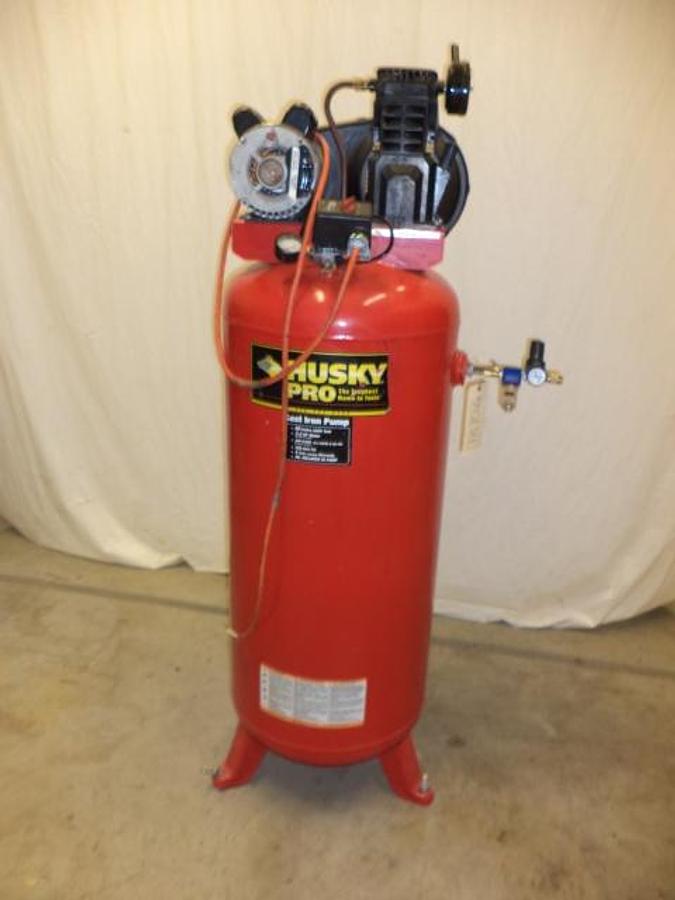
Separately, there is a Husky-branded line of tools and equipment that includes air compressors, hand tools, and tool storage products. This line covers everything from portable compressors for light shop work to larger stationary units with 80-gallon tanks and dual-stage compression suited for heavier commercial use. The two brands share a name but serve very different markets, so buyers searching for used Husky equipment should be clear about which product category they are looking for before starting their search.
What are Husky injection molding machines used for?
Husky injection molding systems are purpose-built for the plastic packaging industry, with a particularly strong presence in the production of PET preforms, closures, and thin-wall containers. PET preforms are the tube-shaped plastic blanks that are later blow-molded into beverage bottles, making Husky machines a foundational piece of equipment for bottled water, soft drink, and juice producers worldwide. Their systems are also used for producing plastic caps and closures at very high cycle speeds, which is critical for packaging lines running at industrial volumes.
The machines are engineered for speed and repeatability. High-cavitation molds, fast cycle times, and energy-efficient drive systems are hallmarks of Husky's injection molding platform. For manufacturers evaluating used Husky injection molding equipment, it is worth consulting directly with Husky as a manufacturer to understand what level of parts availability and technical support exists for the specific model and age of machine being considered, since older platforms may have more limited support than current-generation systems.
What should buyers look for when purchasing used Husky injection molding equipment?
Buying used injection molding equipment requires a more thorough evaluation process than purchasing simpler machinery, because the condition of the mold, the hot runner system, the hydraulic or electric drive, and the control system all affect whether the machine will perform reliably in production. Buyers should request a full inspection, either in person or via detailed video, before committing to a purchase. Reputable used equipment dealers will accommodate inspection requests, and in some cases the machine may still be running in a production facility where a live inspection can be arranged. Keep in mind that most dealers are not set up to run actual production runs during an inspection, since that requires production-level permitting and materials, but mechanical and electrical function checks are reasonable to request.
Beyond the physical inspection, buyers should research the specific model's history and contact Husky directly to ask about parts availability, software support, and whether the control platform is still serviceable. Older machines may have proprietary controls that are difficult to source replacement components for. Getting clarity on these points before purchase can prevent costly surprises after the equipment arrives. Choosing a dealer who specializes in plastics processing machinery, rather than a general industrial auction house, will also improve the odds of getting accurate condition information and relevant technical context.
How are used Husky machines typically priced compared to buying new equipment?
Used injection molding equipment, including Husky systems, is typically priced at a significant discount compared to buying a comparable machine from the manufacturer. The actual discount varies widely based on the machine's age, model generation, condition, number of operating hours, and how current the control system is. A well-maintained machine from a recent generation with a modern control platform will command a higher price than an older unit with an outdated or discontinued controller, even if both machines are mechanically sound.
For buyers working with a defined capital budget, used equipment can make it possible to access a higher-capacity or higher-quality machine than the budget would allow if purchasing a current-production unit. The trade-off is that used machines come without the support structure that accompanies a purchase directly from the manufacturer, so buyers take on more responsibility for evaluating condition and planning for maintenance. Working with a dealer who has deep experience in plastics machinery, and who can provide honest condition assessments, helps buyers make a realistic cost-of-ownership calculation rather than just comparing sticker prices.
What does 'sold as-is' mean when buying used industrial equipment?
Used industrial equipment is almost universally sold on an as-is basis, meaning the seller is not making representations about the machine's future performance or taking on liability for issues that emerge after the sale. This is the standard practice among used equipment dealers, and it is a meaningful distinction from buying directly from a manufacturer where support agreements and parts programs are part of the transaction. The as-is structure puts the responsibility of due diligence squarely on the buyer, which is why pre-purchase inspection is so important.
The practical implication for buyers is that they should treat the inspection process seriously rather than as a formality. Request as much documentation as the seller has available, including maintenance records, previous operating data, or any known issues with the machine. Ask whether the equipment was decommissioned or is still running, since a machine that has been sitting idle for an extended period may have hydraulic, electrical, or lubrication issues that would not be apparent from photos alone. Selecting a dealer with a long track record in the specific equipment category adds a layer of protection, since experienced specialists are more likely to accurately represent what they are selling and less likely to risk their reputation on misrepresented inventory.
Can used Husky air compressors handle commercial and industrial applications?
Husky air compressors span a fairly wide range of output and tank capacity, from compact portable units designed for occasional use to larger stationary models with 80-gallon tanks and dual-stage compression. The larger stationary units are capable of sustained operation in light commercial settings, such as small auto shops, fabrication shops, or facilities running pneumatic tools intermittently throughout the day. Dual-stage compressors, in particular, are better suited for applications requiring higher pressure and more consistent air delivery than a single-stage unit can provide.
That said, buyers evaluating used Husky compressors for demanding industrial applications should compare the machine's rated output, duty cycle, and tank size against the actual air demand of their equipment. A compressor that is undersized for the application will cycle constantly, wear out faster, and fail to maintain adequate pressure during peak demand. When buying used, inspecting the pump, motor, pressure switch, and tank for signs of wear, rust, or prior repairs is essential. A dealer specializing in compressed air equipment can provide more useful guidance on whether a specific used unit is appropriate for a given application than a general equipment reseller.
How does the inspection process work when buying used industrial machinery?
Most reputable used equipment dealers offer buyers the option to inspect machinery before finalizing a purchase. Inspections can take several forms depending on the situation. An in-person visit to the dealer's facility or the machine's current location is the most thorough option, allowing a buyer or their technician to physically examine the equipment, check electrical panels, review mechanical components, and assess overall condition directly. For buyers who cannot travel, video inspections have become a practical alternative, where the dealer walks through the machine on a live video call or provides a detailed recorded walkthrough covering all major systems.
Some machines are still installed and operating at a production facility at the time of sale. In these cases, the dealer can often arrange an in-person inspection at the plant, and the buyer may be able to observe the machine running under production conditions. This is one of the more valuable inspection scenarios because it provides real evidence of operating condition. Buyers should be aware, though, that even in a live-plant inspection, the dealer is typically not in a position to run test production using the buyer's materials or molds, since operating a production line requires the host facility's involvement and resources. The goal of any inspection is to get an accurate picture of the machine's current mechanical and electrical state, which is the foundation for making a sound purchasing decision.
What are the typical shipping and logistics considerations for used industrial equipment?
Shipping used industrial machinery involves more planning and cost than shipping standard freight, and buyers should factor these costs into their total budget before committing to a purchase. Smaller equipment like air compressors may be palletized and shipped via standard freight carriers, but the level of packaging matters significantly. Proper crating or custom palletization protects the machine during transit and reduces the risk of damage from shifting or impact. Dealers will typically quote packaging costs separately, and the level of protection required will affect that cost.
Larger machines, particularly injection molding systems, require professional rigging for loading and unloading. Rigging involves specialized equipment like forklifts, cranes, or skates to move heavy machinery safely, and rigging services are an added cost that buyers should confirm with the dealer before finalizing the purchase. Buyers should ask dealers for a complete breakdown of packaging, rigging, freight, and any destination handling charges to understand the full landed cost of the equipment. Surprises at the delivery end, like discovering that a machine requires a crane to unload and none was arranged, can cause costly delays and damage.
What payment terms are standard when purchasing used industrial equipment?
The standard practice among used equipment dealers is to require full payment before the equipment is released for shipping. This applies to most transactions, particularly for buyers who are purchasing from a dealer for the first time. The reasoning is straightforward: once a machine leaves the dealer's facility, the seller has limited recourse if payment issues arise, and the logistics of recovering large industrial equipment are complicated and expensive. Buyers should plan for this requirement and ensure their financing or capital is in place before making a formal offer.
Some dealers extend payment terms to established customers with a history of repeat purchases, but this is the exception rather than the rule and is not something a first-time buyer should count on. Buyers who need financing should arrange it independently through their bank or an equipment financing company before approaching a dealer, so they can move quickly when the right machine becomes available. Used equipment inventories move, and having financing already in place avoids losing a machine to another buyer while waiting for credit approval.
How can buyers verify that a used equipment dealer is reputable before making a purchase?
The used equipment market has a wide range of participants, from well-established specialty dealers with decades of experience to general liquidators who may have limited technical knowledge of what they are selling. For buyers making a significant capital investment in used machinery, vetting the dealer is just as important as evaluating the machine itself. A dealer's track record is one of the most reliable indicators of reliability. Look for companies that have been operating for many years, that specialize in the specific type of equipment being purchased, and that have verifiable customer references or a history of completed transactions in that equipment category.
Specialization matters particularly in complex equipment categories like injection molding. A dealer who focuses on plastics processing machinery will have more accurate condition assessments, better access to technical history on specific models, and more realistic pricing than a generalist liquidator. It is also worth asking how the dealer acquired the equipment, whether they can provide any documentation, and how they handle situations where a machine arrives in materially different condition than described. A dealer who is unwilling to accommodate a reasonable inspection request or who cannot answer basic technical questions about the equipment should be approached with caution.