Category
Manufacturer
Model
FAQ:
What is a Hurshili encapsulator and what is it used for?
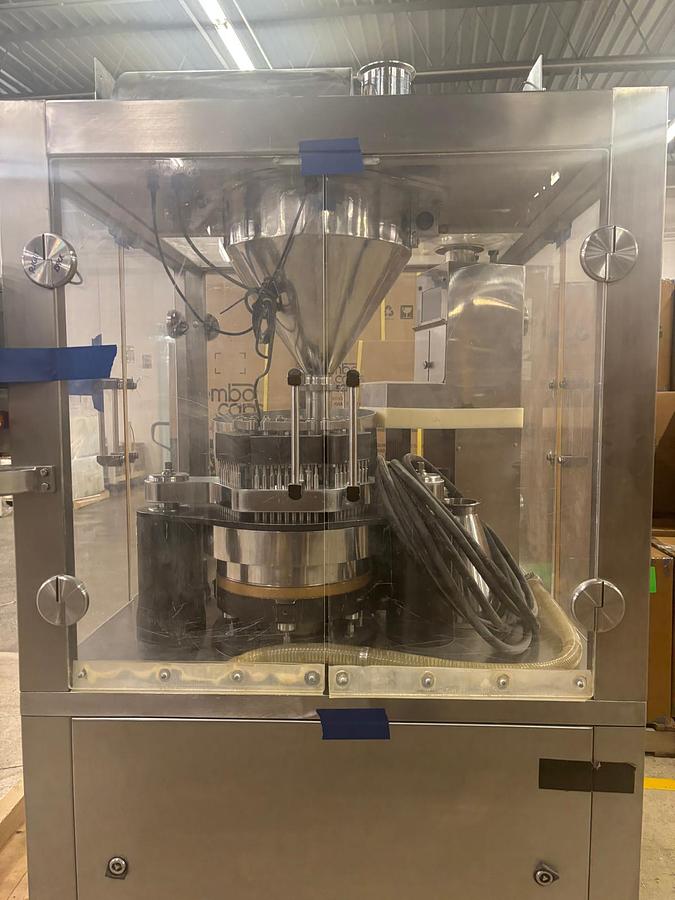
A Hurshili encapsulator is a pharmaceutical-grade capsule filling machine designed to automate the process of filling hard gelatin or vegetarian capsules with powders, granules, pellets, or other dry fill materials. These machines are used in supplement manufacturing, nutraceutical production, pharmaceutical compounding, and contract packaging operations where consistent fill weight and high output volume are required. The Hurshili NJP series, for example, is a fully automatic encapsulator capable of handling large production runs with minimal manual intervention.
Unlike manual or semi-automatic capsule fillers, automatic Hurshili encapsulators use precision dosing mechanisms to separate capsule bodies from caps, fill them to a specified weight, and rejoin them at high speed. This makes them a practical choice for mid-size to large-scale production facilities that need repeatability and throughput. Used Hurshili encapsulators are sought after by manufacturers looking to add capacity without the cost of purchasing a machine directly from the manufacturer, and they are commonly found in the secondary market through specialized pharmaceutical equipment dealers.
What model of Hurshili encapsulator is the NJP-1200D, and what are its key specifications?
The Hurshili NJP-1200D is a fully automatic hard capsule filling machine capable of producing up to 1,200 capsules per minute under optimal operating conditions. The "NJP" designation refers to the intermittent motion encapsulation platform that is widely used in pharmaceutical manufacturing, and the "1200" indicates the rated output capacity. This model is considered a high-output machine suitable for commercial supplement, pharmaceutical, and nutraceutical production environments rather than small-batch or laboratory settings.
The NJP-1200D typically supports multiple capsule sizes through interchangeable tooling sets, allowing operators to switch between capsule sizes such as 00, 0, 1, 2, and others depending on the tooling installed. Key mechanical features on machines in this class generally include automatic capsule orientation, vacuum-assisted cap and body separation, tamping pin dosing for powder fill, and a rejection system for improperly filled or unseated capsules. Buyers evaluating a used NJP-1200D should confirm which tooling sets are included with the machine, since tooling is a significant additional cost if it needs to be sourced separately.
What capsule sizes does the Hurshili NJP-1200D support?
Automatic encapsulators in the NJP class, including the Hurshili NJP-1200D, are designed to work with standard hard capsule sizes through interchangeable tooling sets. Common sizes supported include 000, 00, 0, 1, 2, 3, 4, and 5, covering the full range from large-fill-volume applications down to pediatric or low-dose formulations. Each capsule size requires a dedicated set of dies, tamping pins, and bushings, so the capsule sizes a specific machine can run depend entirely on which tooling sets are physically present with the unit.
When purchasing a used Hurshili encapsulator, it is important to ask the seller exactly which tooling sets are included. A machine listed for sale may come with tooling for only one capsule size, or it may include multiple sets. Sourcing tooling separately adds cost and lead time, so buyers should factor this into their total acquisition budget. Tooling compatibility between NJP-series machines from different manufacturers is sometimes interchangeable, but this should be verified with a qualified technician before assuming cross-compatibility.
What fill materials are compatible with the Hurshili encapsulator?
Hurshili automatic encapsulators in the NJP series are primarily designed for dry powder fills, which represent the most common application in dietary supplement and pharmaceutical manufacturing. Free-flowing powders with consistent particle size and bulk density perform best in tamping-pin style dosing systems. Granulated materials, pellets, and micro-tablets can also be filled using the appropriate tooling and dosing disk configurations, making these machines versatile across a range of solid dosage formulations.
Certain fill materials require additional consideration. Cohesive or hygroscopic powders that clump or absorb moisture can cause bridging in the dosing disk and inconsistent fill weights, sometimes requiring environmental controls like humidity management in the production room. Highly abrasive materials may cause accelerated wear on dosing components. Liquid or semi-solid fills are generally not compatible with standard NJP-class tamping pin machines without significant modification. Buyers with specialized fill requirements should review the machine's dosing mechanism and consult with a pharmaceutical equipment technician to confirm compatibility before purchase.
How does a fully automatic encapsulator like the Hurshili NJP-1200D differ from semi-automatic or manual capsule fillers?
A fully automatic encapsulator like the Hurshili NJP-1200D handles every step of the capsule filling process without operator intervention between cycles. The machine automatically feeds empty capsules from a hopper, orients and separates the cap from the body, doses the fill material into the capsule body, rejoins the cap, and ejects the finished capsule, all in a continuous motion at speeds of up to 1,200 capsules per minute. This level of automation is designed for sustained production runs measured in hours or shifts, not individual batches.
Semi-automatic machines require an operator to load capsule trays, initiate fill cycles, and transfer finished capsules manually, typically producing a few hundred to a few thousand capsules per hour depending on the design. Manual capsule fillers require hands-on involvement at every step and are generally limited to small batches of 24 to 100 capsules at a time. For a commercial supplement manufacturer or pharmaceutical compounder with consistent production volume, a fully automatic machine like the NJP-1200D offers dramatically higher throughput and fill weight consistency, though it also requires more technical expertise to operate, maintain, and troubleshoot.
What should buyers inspect when evaluating a used Hurshili encapsulator before purchasing?
Evaluating a used Hurshili encapsulator requires a systematic look at both mechanical condition and operational history. Key areas to inspect include the condition of the dosing disk and tamping pins, which are high-wear components that directly affect fill weight accuracy. The capsule feed hopper, rectification system, and seating mechanisms should be checked for wear, cracks, or missing parts. The drive system, including the motor, gearbox, and cam assemblies, should run smoothly without unusual noise or vibration. Electrical panels and control systems, particularly on older machines, should be reviewed for condition and whether replacement components are still available.
Reputable used equipment dealers will typically accommodate in-person or video inspections so buyers can get an accurate picture of the machine's current condition. Some machines may still be installed at a production facility where a live or decommissioned inspection can be arranged. Keep in mind that most equipment dealers do not have the permitting to run actual product through a machine during an inspection, so testing is generally limited to dry mechanical runs. Buyers should also ask which tooling sets, change parts, and spare components are included, and consult directly with Hurshili or a qualified service technician to assess the availability of parts and technical support for the specific model and production year being considered.
What are typical maintenance requirements for an automatic encapsulator like the Hurshili NJP-1200D?
Automatic encapsulators in the NJP class require regular preventive maintenance to sustain fill weight accuracy and mechanical reliability. Routine tasks include cleaning dosing disks, tamping pins, and capsule feed components after each production run to prevent cross-contamination and powder buildup. Lubrication of the cam system, drive components, and guide rails is typically performed on a scheduled basis according to the manufacturer's service intervals. Vacuum system filters, which support capsule separation and rejection functions, need periodic inspection and replacement.
Wear parts such as dosing disks, tamping pins, capsule rectifiers, and sealing components have finite service lives and will eventually need replacement. The availability of these parts for a used machine depends on the model's age and whether the manufacturer or third-party suppliers still stock compatible components. Before purchasing a used Hurshili encapsulator, buyers should contact the manufacturer to understand parts availability for the specific model under consideration, since older or discontinued models may have limited support. Factoring in the cost and lead time for replacement parts is an important part of calculating the true cost of ownership for a used machine.
How is a used Hurshili encapsulator typically shipped, and what should buyers expect regarding freight costs?
Automatic encapsulators like the Hurshili NJP-1200D are large, heavy pieces of pharmaceutical equipment that require careful preparation before transport. Proper packaging generally involves crating or heavy-duty palletization to protect the machine's precision components from vibration and impact during transit. The level of crating required, whether a simple pallet wrap or a full wooden crate with internal bracing, affects the overall shipping cost and should be clarified with the seller before finalizing a purchase.
Loading and unloading a machine of this size typically requires rigging equipment such as a forklift or crane, and rigging charges are usually an added cost on top of freight. Buyers should ask the seller for a detailed breakdown of packaging, rigging, and freight charges to understand the full landed cost of the equipment before committing. International shipments add customs clearance, import duties, and potentially additional crating requirements to the total. Most used equipment dealers require full payment prior to releasing a machine for shipment, so buyers should confirm payment terms and freight logistics early in the purchasing process.
What industries commonly use the Hurshili NJP-1200D encapsulator?
The Hurshili NJP-1200D is used across several industries where hard capsule filling at commercial volume is required. Dietary supplement and nutraceutical manufacturers are among the most common users, filling capsules with vitamins, herbal extracts, protein blends, and other wellness formulations. Pharmaceutical manufacturers and compounding pharmacies use NJP-class machines for solid oral dosage production, particularly for powders and granules that are not suited to tablet compression. Contract packaging organizations that produce capsule products for multiple brands also rely on high-output automatic encapsulators to meet varied client demands.
Beyond these primary markets, animal health product manufacturers, cannabis and hemp extract producers in applicable jurisdictions, and specialty chemical companies have also adopted automatic capsule filling equipment for encapsulating powders and pellets. The machine's ability to handle a range of capsule sizes through tooling changes makes it adaptable across product lines, which is one reason used NJP-series machines retain strong demand in the secondary market. Buyers from any of these industries should verify that the machine's output capacity and dosing mechanism match their specific formulation and production volume requirements.
What is the typical price range for a used Hurshili encapsulator, and what factors affect the price?
Used Hurshili encapsulators vary considerably in price depending on the model, production year, mechanical condition, and what tooling or accessories are included with the machine. A used NJP-1200D in good working condition with a complete set of tooling for one or more capsule sizes will generally command a higher price than a machine sold without tooling or one that requires significant refurbishment. Machines that have been recently serviced, have documented maintenance records, or come from a verifiable low-hours production environment tend to be priced at a premium compared to machines with unknown histories.
Buyers should also account for costs beyond the purchase price itself, including freight, rigging, any replacement parts needed to bring the machine to production-ready condition, and installation or commissioning support. The total landed and operational cost can differ substantially from the listed sale price. Consulting with a used pharmaceutical equipment specialist who focuses on encapsulation machinery is a practical way to assess whether a listed price reflects fair market value for the specific machine's condition and configuration. Requesting a thorough inspection, either in person or via video, before finalizing any purchase helps buyers avoid unexpected costs after the machine arrives.