Category
Manufacturer
Model
FAQ:
What is Hubert C. Stollenwerk and what kinds of tanks do they manufacture?
Hubert C. Stollenwerk is a German manufacturer with a long-standing reputation for producing high-quality stainless steel processing equipment. The company is particularly well known in the food, dairy, beverage, and chemical processing industries, where precision fabrication and hygienic design standards are non-negotiable. Their tanks are built to exacting European standards and are recognized for durability that holds up well over decades of industrial use.
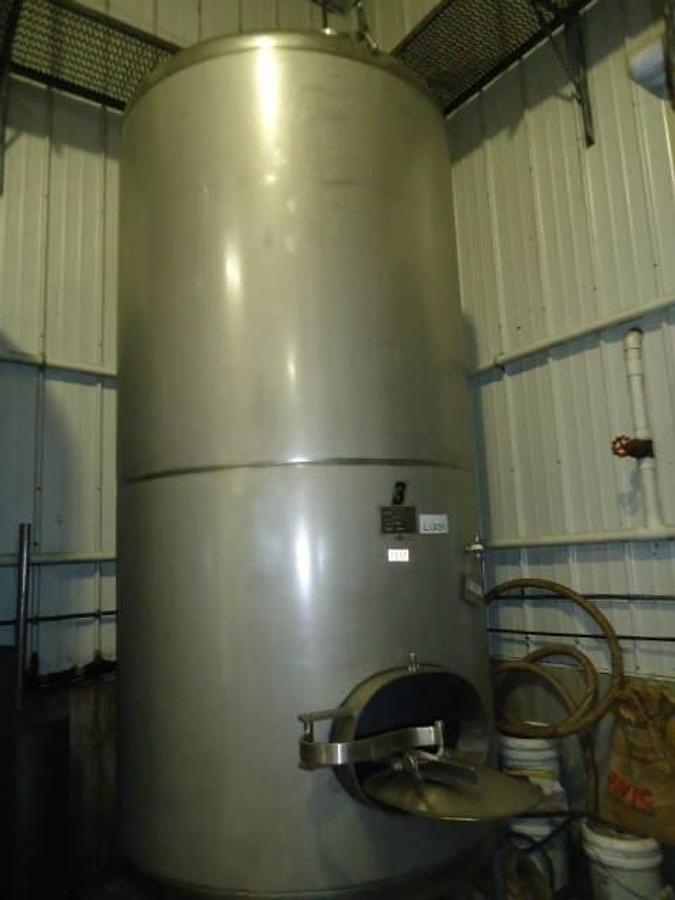
Stollenwerk's product line includes vertical closed tanks, mixing vessels, storage tanks, and other process vessels designed for sanitary and industrial applications. Capacities vary considerably, with units available in sizes ranging from a few hundred gallons up to several thousand gallons. A 1,540-gallon vertical closed stainless tank is one example of the type of equipment that appears on the used market. The build quality associated with German manufacturing means these tanks tend to retain strong structural integrity even after years of service, which is a key reason they remain in demand on the surplus equipment market.
What grade of stainless steel is typically used in Stollenwerk tanks, and why does it matter?
Stollenwerk tanks are commonly constructed from 304 or 316L stainless steel, depending on the intended application. Type 304 is the most widely used grade in food and beverage processing, offering good corrosion resistance and easy cleaning. Type 316L contains molybdenum, which provides superior resistance to chlorides and more aggressive chemicals, making it the preferred choice for pharmaceutical, chemical, and certain dairy applications where sanitation protocols involve chlorine-based cleaners.
The grade of stainless steel matters significantly when selecting a used tank. Buyers should confirm the material specification before purchasing, as 316L commands a higher value and is required in some regulated industries. For most food-grade and beverage applications, 304 stainless is entirely appropriate and meets FDA material requirements. When evaluating a used Stollenwerk tank, asking the seller to confirm the alloy specification, and if possible reviewing any available documentation or mill certifications that may accompany the equipment, is a reasonable step in the due diligence process.
Are Stollenwerk stainless tanks suitable for food and beverage processing?
Yes, Stollenwerk tanks are well suited for food and beverage processing applications. They are built with sanitary welds, polished interior surfaces measured to specific Ra (surface roughness) values, and design features that minimize product entrapment and bacterial growth. These characteristics align with the hygienic engineering standards set by organizations like EHEDG (European Hygienic Engineering and Design Group), which governs equipment design for the food industry across Europe.
Many Stollenwerk tanks are also designed to be CIP (Clean-in-Place) compatible, meaning they can be cleaned internally using automated cleaning systems without disassembly. This is a critical feature in dairy, brewing, juice processing, and similar operations where thorough sanitation between batches is required. Buyers sourcing used Stollenwerk tanks for food applications should verify that the interior surface finish is still within acceptable Ra tolerances and that all welds remain smooth and free of pitting or corrosion that could harbor contaminants. A thorough inspection, either in person or via detailed video, is advisable before purchase.
Can used Stollenwerk tanks be used for chemical or pharmaceutical storage?
Used Stollenwerk tanks can be suitable for chemical or pharmaceutical storage, but the appropriateness depends heavily on the specific tank's material grade, surface finish, and prior use history. For pharmaceutical applications, 316L stainless steel is generally required due to its enhanced corrosion resistance and compatibility with the stringent cleaning and sterilization protocols common in that industry. Tanks intended for pharmaceutical use may also need to meet specific documentation requirements, such as material traceability and surface finish certifications.
For chemical storage, the compatibility of the stainless steel with the specific chemicals being stored must be evaluated carefully. While stainless steel handles a broad range of substances, certain acids and halide-containing compounds can cause corrosion even in 316L. Buyers should consult chemical compatibility charts and, where possible, review the tank's service history to understand what it previously held. A used equipment dealer specializing in process equipment can often provide details about prior use, which is valuable information when assessing suitability for a new application.
What should buyers look for when inspecting a used stainless steel process tank?
A thorough inspection of a used stainless steel tank covers several areas. The interior surface condition is among the most important, particularly for food, beverage, or pharmaceutical applications. Buyers should look for pitting, corrosion, scratched or compromised welds, and any areas where the surface finish has degraded beyond acceptable Ra tolerances for hygienic use. The exterior should be checked for dents, deformation, or signs of weld repairs that could indicate past structural stress. All nozzles, manways, and fittings should be examined for integrity and proper sealing surfaces.
Inspections can typically be arranged in person at the dealer's facility or, if the equipment is still at a production plant, at the location where it was last used. Virtual inspections and detailed video walkthroughs are also commonly offered by reputable dealers, which can be a practical option for buyers who cannot travel. Keep in mind that most used equipment dealers do not have the permitting or infrastructure to run actual production tests, so functional testing of the tank under process conditions is generally not possible prior to purchase. Buyers should factor this into their evaluation and focus on physical condition, documentation, and the dealer's track record when making a purchasing decision.
What does a vertical closed stainless tank mean in terms of design and function?
A vertical closed tank is a cylindrical vessel oriented with its axis running vertically, meaning the tank stands upright rather than lying on its side. The term 'closed' indicates the tank has a fixed or sealed top head, as opposed to an open-top vessel. This configuration is common in applications where the contents need to be protected from contamination, where pressure or vacuum conditions are involved, or where hygienic containment is required. Vertical orientation is also space-efficient on a production floor and facilitates gravity-assisted drainage through a bottom outlet.
In food, beverage, and chemical processing, vertical closed tanks are used for storage, blending, fermentation, and intermediate holding of liquids. The closed design supports CIP cleaning systems and can accommodate pressure ratings depending on the vessel's construction specifications. When evaluating a used vertical closed tank, buyers should pay attention to the top head design (dished, flat, or cone top), the location and size of inlet and outlet nozzles, and whether the tank includes any agitation, heating, or cooling features such as a jacket or internal coils. These details determine how well the tank fits a specific process application.
Why do buyers choose used Stollenwerk tanks over purchasing comparable equipment from other sources?
The primary appeal of used Stollenwerk tanks is the combination of German engineering quality and significant cost savings compared to purchasing comparable equipment manufactured to the same standards. Stollenwerk's reputation for precise fabrication, sanitary design, and durable construction means that even after years of service, these tanks often retain the structural and hygienic integrity needed for demanding process applications. Buyers in food, dairy, beverage, and chemical industries recognize the brand and understand what they are getting, which reduces uncertainty in the purchasing decision.
Cost is a major factor. A used Stollenwerk tank can represent a fraction of the price of a comparable unit, freeing up capital for other parts of a project or facility expansion. Lead times are another consideration. Sourcing used equipment can get a tank on-site much faster than waiting for fabrication and delivery of a purpose-built vessel, which can take months. For operations that need to scale quickly or replace a failed unit, the used market offers practical advantages that go beyond price alone. Buyers should work with dealers who specialize in process equipment and have a verifiable history of handling stainless tanks to ensure they are getting accurate information about condition and specifications.
What accessories or fittings typically come with a used stainless process tank?
The fittings and accessories included with a used stainless tank vary depending on the specific unit and how it was configured for its previous application. Common fittings include inlet and outlet nozzles (sized in standard tri-clamp or threaded configurations), a manway or access port for interior inspection and cleaning, a vent or pressure/vacuum relief connection, a CIP spray ball or nozzle, sight glasses, and a drain valve at the bottom. Some tanks may also include level indicators, temperature probes, or pressure gauges if they were part of the original process setup.
Buyers should ask the dealer for a complete list of fittings and their sizes before purchasing, particularly if the tank needs to integrate with existing piping or process equipment. Tri-clamp (also called tri-clover) fittings are the standard in sanitary applications and are widely available, which makes modifications or additions relatively straightforward. If a tank is sold without certain valves or accessories, sourcing sanitary-grade stainless fittings from a specialty supplier is generally not difficult, but the cost of any needed additions should be factored into the total acquisition budget.
How does shipping and logistics work for a large used stainless steel tank?
Shipping a large stainless steel tank requires careful planning to prevent damage in transit. Tanks are typically palletized or crated before shipment, with the level of packaging depending on the tank's size, weight, and the distance it needs to travel. Smaller tanks may ship on a standard pallet with appropriate blocking and bracing, while larger vessels often require custom crating or skidding to protect nozzles, fittings, and the tank shell from impact. Buyers should ask the dealer specifically about how the tank will be packaged and what that packaging is designed to protect against.
Larger tanks may also require specialized rigging equipment for loading at the dealer's facility and unloading at the destination. This can include forklifts with sufficient capacity, cranes, or spreader bars, and the cost of rigging is typically separate from the freight charge. Buyers should request a full breakdown of packaging, rigging, and freight costs to understand the total landed cost of the equipment before committing to a purchase. For international shipments, additional considerations such as customs documentation, import duties, and compliance with destination-country regulations apply. Coordinating with a freight broker experienced in industrial machinery is advisable for complex or long-distance moves.
What payment terms should buyers expect when purchasing used industrial tanks?
Most used equipment dealers require payment in full before a tank is released for shipment. This is standard practice in the used machinery industry and reflects the nature of the transaction, where the dealer needs to confirm funds before arranging logistics. Payment is typically accepted by wire transfer, though some dealers may accept other forms of payment depending on the buyer's relationship with them. Buyers who have an established purchase history with a particular dealer may occasionally be offered payment terms, but this is not the norm for first-time transactions.
Buyers should factor payment timing into their planning, particularly if the purchase requires internal approval processes or financing arrangements. It is also worth clarifying with the dealer exactly when payment is due relative to inspection, so that an inspection can be completed before funds are committed. Understanding the full cost picture upfront, including the tank price, packaging, rigging, and freight, allows buyers to initiate payment for the correct total amount without delays. Clear communication with the dealer about payment expectations on both sides helps avoid misunderstandings and keeps the transaction moving smoothly.