Category
Manufacturer
Model
FAQ:
What is a hot glue sealing machine and how does it work?
A hot glue sealing machine is a packaging device that applies thermoplastic adhesive at high temperatures to close and seal cartons, boxes, and folding cartons. The machine heats the adhesive to a working temperature typically between 150°C and 200°C (302°F to 392°F), then dispenses precise amounts of molten glue onto the flaps or panels of a carton. When the flaps are pressed together, the adhesive cools rapidly and forms a strong, tamper-resistant bond within seconds.
The process is highly repeatable, which makes it well-suited for production environments where consistency matters. Most machines use a glue tank or reservoir that feeds adhesive through heated hoses to application nozzles or heads positioned along the sealing path. As cartons move through the machine, the nozzles fire at programmed intervals, applying glue only where needed. The result is a clean, tight seal that holds up to handling, stacking, and shipping without the bulk or appearance issues associated with tape.
What types of packaging can be sealed with a hot glue sealing machine?
Hot glue sealing machines are most commonly used with folding cartons, corrugated cases, and paperboard boxes. They perform especially well on end-tuck, lock-bottom, and tray-style cartons, which are standard formats across food, pharmaceutical, personal care, and consumer goods packaging. The adhesive bonds well to coated and uncoated paperboard, making these machines a staple in retail packaging lines where a clean, professional finish is expected.
Beyond standard cartons, some machines are configured to handle specialty packaging formats such as display cartons, wraparound cases, and certain types of rigid boxes. The key factor is that the substrate needs to be compatible with the adhesive and capable of withstanding the brief heat exposure during application. Hot glue sealing is generally not used for plastic films or pouches, where heat sealing or pressure-sensitive adhesives are more appropriate. For operations running paper-based packaging at any significant volume, hot glue sealing is typically one of the most efficient and cost-effective closure methods available.
What is the difference between a semi-automatic and fully automatic hot glue sealing machine?
Semi-automatic hot glue sealing machines require an operator to manually feed cartons into the machine, position them, or initiate each sealing cycle. The machine handles the glue application and pressing, but human involvement is needed at one or more points in the process. These machines are generally more compact, lower in cost, and better suited to operations with moderate output requirements or frequent product changeovers where flexibility matters more than throughput.
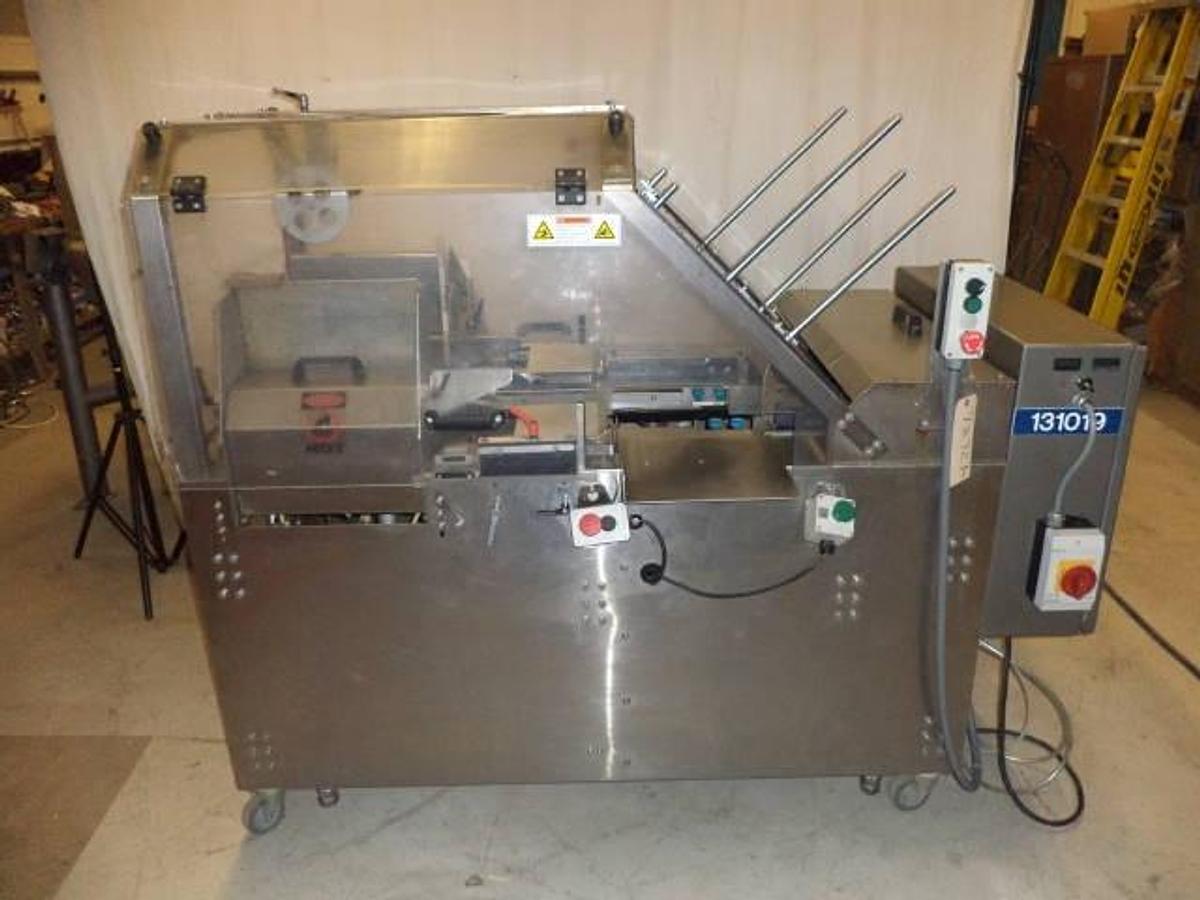
Fully automatic machines integrate into a production line and handle carton feeding, gluing, folding, and sealing with little to no operator intervention. They connect to upstream and downstream conveyor systems, allowing continuous operation at higher speeds. Industrial-grade automatic models can process anywhere from 30 to 60 or more cartons per minute depending on the machine and carton format. A machine like the Econocorp Econoseal E2000, for example, is a horizontal auto cartoner with hot glue sealing capable of running approximately 25 cartons per minute, which places it in the mid-range automatic category. Choosing between semi-automatic and fully automatic depends on production volume, available floor space, labor costs, and how the machine needs to fit into an existing packaging line.
How fast can a hot glue sealing machine run?
Production speed varies considerably depending on the machine type, carton format, and configuration. Entry-level or semi-automatic machines typically handle somewhere between 5 and 15 cartons per minute. Mid-range automatic machines, including horizontal cartoners with integrated hot glue sealing, commonly run in the 20 to 40 cartons per minute range. High-speed industrial systems designed for large-scale production can exceed 60 cartons per minute under the right conditions.
The Econocorp Econoseal E2000, as one specific example in the used market, operates at around 25 cartons per minute, which is a practical speed for many mid-volume packaging operations. When evaluating speed claims on used machines, it is worth asking the seller whether the rated speed reflects tested performance or the machine's design specification, since actual throughput can vary based on carton size, glue type, line configuration, and the condition of the equipment. Speed alone should not be the only factor in the decision; changeover time, uptime reliability, and compatibility with existing line equipment all affect real-world output.
How does hot glue sealing compare to tape sealing for cartons?
Hot glue sealing and tape sealing both close cartons effectively, but they differ in appearance, speed, cost structure, and suitability for different environments. Tape sealing is simpler to set up and requires less equipment investment upfront, but tape can look bulky or inconsistent on retail packaging, and it is more vulnerable to temperature extremes and humidity. In cold chain or refrigerated environments, tape adhesion can weaken, which creates problems for food and beverage operations.
Hot glue sealing produces a cleaner, more finished look that works well for consumer-facing packaging where shelf presentation matters. The bond is typically stronger and more resistant to environmental conditions than most pressure-sensitive tapes. From a production standpoint, hot glue systems can run at higher speeds and integrate more cleanly into automated lines. The tradeoff is that hot glue equipment requires more maintenance, including regular cleaning of nozzles and hoses, and the adhesive itself has a cost. For high-volume operations producing retail cartons, hot glue sealing is generally the preferred method. For lower-volume shipping applications where appearance is secondary, tape sealing may still be the more practical choice.
What type of adhesive is used in hot glue sealing machines?
Hot glue sealing machines use thermoplastic hot melt adhesives, which are solid at room temperature and become fluid when heated. These adhesives are typically formulated from ethylene-vinyl acetate (EVA), polyolefin, or polyamide bases, with EVA-based hot melts being the most widely used in standard carton sealing applications. The adhesive is supplied in pellet, block, or slug form and loaded into the machine's glue tank, where it is melted and held at the operating temperature until dispensed.
The choice of adhesive matters more than it might seem. Different formulations have different open times (the window between application and bonding), temperature resistance, and compatibility with various substrates. Packaging operations in cold storage environments, for example, need adhesives specifically formulated to maintain bond strength at low temperatures. Similarly, food-contact applications may require adhesives that meet relevant food safety standards. Machine manufacturers and adhesive suppliers can recommend compatible formulations for specific applications, and this is worth verifying when purchasing a used machine, since the machine's nozzle type and tank capacity may favor certain adhesive formats over others.
What should buyers look for when purchasing a used hot glue sealing machine?
Condition of the glue system is one of the most important things to assess on a used hot glue sealing machine. Adhesive residue builds up over time in tanks, hoses, and nozzles, and if the machine was not properly cleaned before being taken out of service, those components may need significant attention before the machine runs reliably again. Buyers should ask about the machine's maintenance history, how recently it was last run, and whether the glue system was flushed prior to decommissioning. Mechanical components like the carton transport system, folding guides, and drive mechanisms should also be inspected for wear.
A thorough inspection, either in person or via video, is strongly recommended before committing to a purchase. Reputable used equipment dealers will typically accommodate video walkthroughs or in-person visits, and some machines may still be in production at the facility where they are being sold, allowing buyers to see them running. It is also worth contacting the machine's manufacturer directly to understand what parts and technical support are still available for that specific model and age of equipment, since older machines may have limited parts availability. Understanding the full picture before purchase, including shipping, rigging, and any refurbishment costs, helps avoid surprises after the machine arrives.
What is the typical price range for used hot glue sealing machines?
Pricing on used hot glue sealing machines spans a wide range depending on the machine type, brand, age, speed, and overall condition. Basic semi-automatic units can be found for a few thousand dollars, while mid-range automatic cartoners with integrated hot glue sealing systems commonly sell in the $10,000 to $40,000 range on the used market. High-speed or more complex systems from established manufacturers can command higher prices, particularly if they are in good working condition and have relatively recent production dates.
Beyond the purchase price, buyers should factor in shipping, rigging, any required refurbishment, and the cost of replacement parts or consumables before the machine is production-ready. Freight costs for larger machines can be substantial, especially if heavy-duty crating or specialized rigging equipment is needed for loading and unloading. Getting a clear picture of the total landed cost, not just the listed price, is the right way to evaluate whether a particular used machine represents good value for the application.
Are hot glue sealing machines practical for small or mid-size businesses?
Hot glue sealing machines are used across a wide range of operation sizes, and the used equipment market makes them accessible to smaller businesses that could not justify the cost of purchasing the same equipment brand new from a manufacturer. A small or mid-size operation running a few hundred to a few thousand cartons per shift can often find a semi-automatic or lower-speed automatic machine that fits both the production requirement and the budget. The key is matching the machine's speed and format capabilities to the actual volume and carton types being run.
For smaller operations, the practical considerations include available floor space, the cost and availability of hot melt adhesive, and whether in-house staff can handle basic maintenance tasks like cleaning nozzles and monitoring glue tank temperatures. Hot glue systems do require more hands-on upkeep than tape sealing, and that is worth weighing honestly before making a purchase. That said, for businesses producing retail-facing packaging where presentation matters, the quality of a hot glue seal often justifies the added complexity, even at modest production volumes.
How is a used hot glue sealing machine typically shipped, and what costs should buyers expect?
Shipping a used hot glue sealing machine involves more planning than standard freight. Machines need to be properly secured, palletized, or crated to prevent damage in transit, and the level of packaging required will affect the shipping cost. Smaller machines may ship on a standard pallet with adequate wrapping and bracing, while larger or heavier units often require custom wooden crating to protect them from the impacts and vibration of long-distance freight. Buyers should ask the seller specifically how the machine will be packaged and what that packaging cost covers.
Larger machines may also require specialized rigging for loading at the seller's location and unloading at the destination. Rigging services, which involve the use of forklifts, cranes, or other equipment to safely move heavy machinery, are typically an added cost on top of freight. Buyers should request a full breakdown of packaging, rigging, and shipping charges before finalizing a purchase so they understand the complete landed cost of the equipment. Most used equipment dealers require full payment before a machine ships, so having all cost details in advance allows for accurate budgeting.