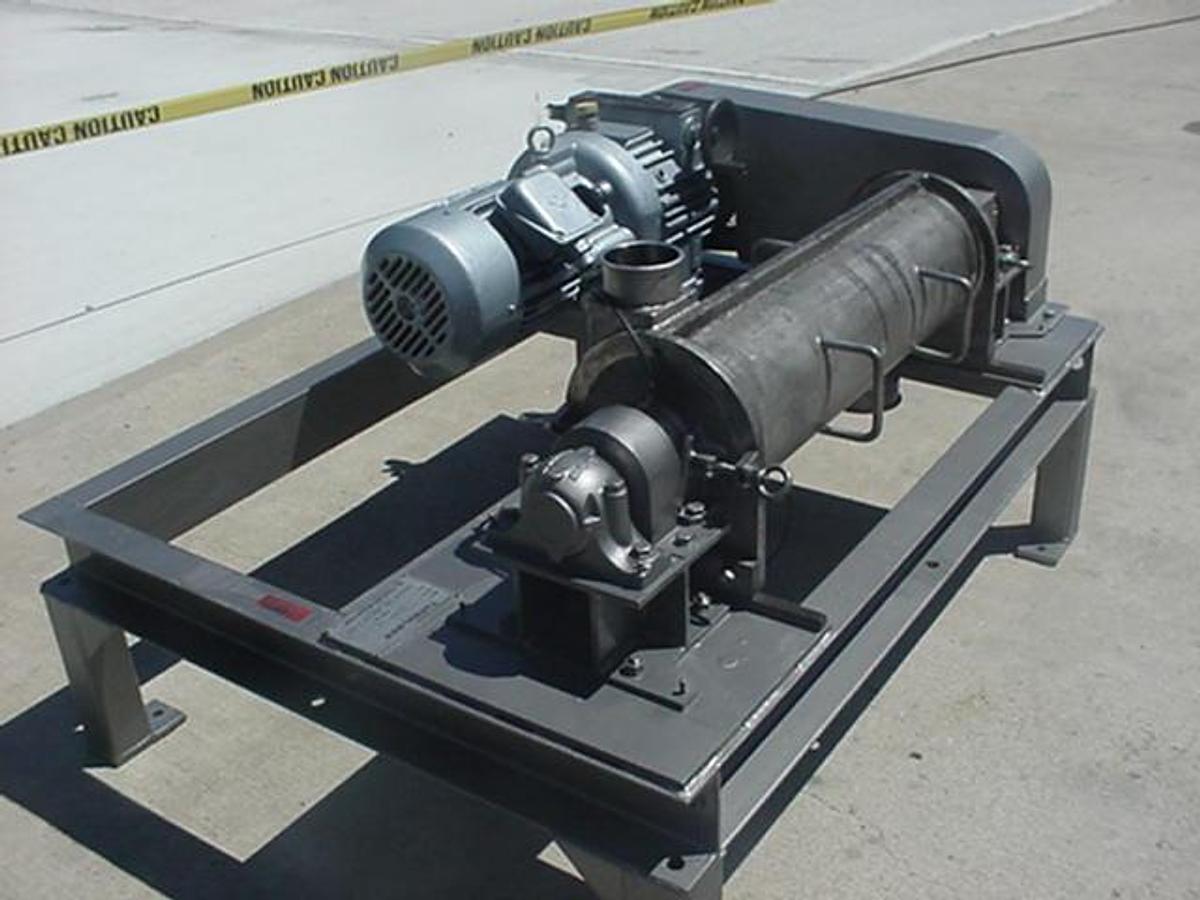
Category
Manufacturer
Model
Hosokawa-Bepex
Hosokawa-Bepex specializes in providing continuous processing equipment for the food and chemical industries. Their machines are designed for efficiency and scalability, allowing manufacturers to optimize production lines. Hosokawa-Bepex’s focus on innovation ensures they remain at the forefront of processing technology.
FAQ:
What types of equipment does Hosokawa-Bepex manufacture, and what industries use them?
Hosokawa-Bepex produces a wide range of continuous processing equipment designed for demanding industrial environments. Their product lines include screw conveyors, paddle dryers, disc dryers, roller compactors, extruders, crushers, mills, dewatering screw presses, and thermal processors such as the Turbulizer. Each machine is engineered for a specific stage of a production process, whether that involves size reduction, thermal treatment, compaction, agglomeration, or moisture removal. The Turbulizer, for example, is a continuous mixer and heat exchanger used across food and chemical applications, while the dewatering screw press is designed to separate liquids from solids in high-volume processing environments.
The brand's equipment serves a broad cross-section of industries, including food processing, chemicals, pharmaceuticals, plastics, and mineral processing. This versatility is one of the reasons Hosokawa-Bepex machines hold their value well on the used equipment market. A food manufacturer might use a Bepex extruder for cereal or snack production, while a chemical plant might rely on a paddle dryer for bulk powder drying. The machines are built for scalability and efficiency, which makes them attractive to manufacturers looking to optimize or expand existing production lines without commissioning entirely custom fabrication.
What is the history behind the Hosokawa-Bepex brand?
Hosokawa-Bepex is the product of an integration between Hosokawa Micron Group, a Japanese-founded multinational with deep expertise in powder and particle processing, and Bepex International, a U.S.-based company with a long history in thermal and mechanical processing equipment. The combination brought together complementary technology portfolios, giving the combined brand a much broader range of solutions than either company offered independently. Hosokawa Micron Group had particular strength in size reduction and classification, while Bepex contributed expertise in continuous thermal processing, compaction, and extrusion.
The result is a brand recognized globally for engineering quality and long operational lifespan. Hosokawa-Bepex machines are frequently found still in active production decades after their manufacture date, which speaks to the build quality and durability of the equipment. This longevity is a significant factor in the active secondary market for used Hosokawa-Bepex machinery, as plants that are upgrading or closing down often sell equipment that still has substantial useful life remaining. Buyers in the used market benefit from acquiring machines with a well-documented engineering heritage and, in many cases, manufacturer support that extends to older model lines.
How do I verify the condition of a used Hosokawa-Bepex machine before buying?
Evaluating the condition of any used industrial machine requires more than reviewing a photo listing. For Hosokawa-Bepex equipment specifically, buyers should request detailed information about the machine's age, the industry it was used in, the materials it processed, and how recently it was last in production. Stainless steel construction, which is common on Bepex food and chemical processing equipment, is worth examining carefully for pitting, welds, or repairs that might indicate heavy use or corrosive service. Internal wear components such as paddles, auger flights, and press screens are also worth asking about, since these are the parts most likely to need replacement after extended use.
Reputable used equipment dealers will typically accommodate inspections, either in person at their facility or through detailed video walkthroughs. In some cases, equipment is still installed at the plant where it was used, and the dealer can arrange an inspection there. Keep in mind that most dealers do not have the permitting or production infrastructure to run test batches of actual product through the machine, so inspection focuses on mechanical condition, visible wear, and operational history rather than live production testing. Buyers who cannot travel for an in-person inspection should ask for comprehensive video documentation covering all major components, drive assemblies, and any visible wear points before committing to a purchase.
Are replacement parts and technical support available for older Hosokawa-Bepex models?
Parts availability for used Hosokawa-Bepex equipment varies depending on the model and its age. For many machines still within a reasonable production window, Hosokawa Micron Corporation and related entities can supply replacement parts or provide engineering drawings that allow parts to be fabricated by a third party. Wear components like paddle assemblies, screw flights, press screens, and seals are often the first items buyers need to source, and for commonly sold models these are generally available through the manufacturer or specialized industrial parts suppliers. It is worth contacting Hosokawa directly before purchasing a used machine to ask specifically about parts availability for that model number, since support levels can vary significantly between product generations.
Technical support is another factor worth researching before purchase. Hosokawa-Bepex has a field service and engineering team that, depending on the machine's age and model, may be able to provide commissioning assistance, troubleshooting guidance, or maintenance documentation. Buyers should ask the equipment dealer for any manuals, wiring diagrams, or maintenance records that accompanied the machine, as this documentation can significantly reduce the cost and difficulty of getting a used machine back into production. In cases where manufacturer documentation is unavailable, third-party industrial service firms with experience in processing equipment can often fill the gap.
Does used Hosokawa-Bepex equipment come with a warranty?
Used Hosokawa-Bepex equipment sold through secondary market dealers is typically sold on an as-is basis, which is standard practice across the used industrial machinery industry. Warranties are generally only offered by the original manufacturer on new equipment, and used equipment dealers do not extend that coverage. This places the responsibility for evaluating the machine's condition squarely on the buyer, which is why thorough pre-purchase inspection is so important. Buyers should not assume that a machine's age alone determines its condition, since a well-maintained machine that saw light use may be in considerably better shape than a newer machine that ran at full capacity in a harsh environment.
To manage risk in the absence of a warranty, buyers should focus on selecting dealers with a long track record of selling industrial processing equipment and a reputation for accurately representing machine condition. A dealer who specializes in food and chemical processing equipment will generally have more relevant expertise than a general surplus liquidator. Asking for detailed photos, inspection access, and any available service history are all reasonable steps before finalizing a purchase. Consulting with Hosokawa directly about the specific model can also help a buyer understand what to expect in terms of remaining service life and support availability.
What is the typical price range for used Hosokawa-Bepex equipment?
Pricing for used Hosokawa-Bepex machines spans a wide range depending on the type of equipment, its size, age, condition, and current market demand. Smaller units such as a compact Turbulizer or a smaller-capacity dewatering screw press may be priced in the range of a few thousand to tens of thousands of dollars. Larger thermal processing systems, roller compactors, or full continuous processing lines can reach well into six figures, particularly if they include drives, controls, and auxiliary components. Stainless steel construction typically commands a premium over carbon steel equivalents because of the material value and the broader range of industries the machine can serve.
Beyond the listed purchase price, buyers should account for additional costs that affect the total landed price of the equipment. Rigging and loading at the seller's facility, freight or trucking to the destination, and unloading and installation at the buyer's plant can collectively add a meaningful amount to the final cost. Customs duties apply to international shipments. Any refurbishment, parts replacement, or recommissioning work needed before the machine enters production should also be factored into the total investment. Getting a clear picture of all these costs before committing to a purchase helps avoid surprises and allows for a more accurate comparison between available machines.
What should buyers know about shipping and logistics for used Hosokawa-Bepex equipment?
Hosokawa-Bepex machines range from relatively compact bench-scale units to large continuous processing systems that can weigh several tons and require specialized rigging equipment for loading and unloading. For smaller machines, standard freight palletization with appropriate blocking and bracing is often sufficient, but larger units typically require custom crating or skidding to prevent damage during transit. The level of packaging required will directly affect shipping costs, so buyers should ask the dealer specifically what packaging is included in the quoted price and what additional crating or rigging charges may apply.
For heavy equipment, a crane or forklift with adequate capacity is needed at both the pickup and delivery locations, and coordinating this in advance avoids costly delays. International shipments involve additional considerations including export documentation, customs clearance, and import duties that vary by destination country. Buyers should request a complete breakdown of all shipping-related costs, including loading at origin, freight, and any special handling required at the destination, before finalizing a purchase. Understanding the full landed cost of the equipment, not just the purchase price, is essential for accurate budgeting and for comparing options across different sellers.
What are the most common Hosokawa-Bepex machine types found on the used equipment market?
The used market for Hosokawa-Bepex equipment tends to be strongest for machines that were produced in large volumes and deployed across multiple industries. Paddle dryers and disc dryers appear regularly, as do Turbulizer continuous mixers, dewatering screw presses, roller compactors, and various types of mills and crushers. Screw conveyors and extruders from the Bepex product line also surface with some regularity, particularly from food processing facilities that are upgrading or consolidating operations. Stainless steel versions of these machines are especially sought after because they can be redeployed across food, pharmaceutical, and chemical applications without extensive modification.
The RSP series dewatering screw presses and the TCX Turbulizer are among the specific model lines that appear in secondary market listings, and both have strong reputations for durability in demanding continuous processing environments. Buyers looking for a specific model or configuration should monitor multiple sources and be prepared to act when the right machine becomes available, since used Hosokawa-Bepex equipment in good condition does not typically sit on the market for extended periods. Working with a dealer who specializes in processing equipment and maintains an active inventory is often more efficient than waiting for a specific unit to appear at auction.
Can used Hosokawa-Bepex equipment be retrofitted or modified after purchase?
Retrofitting or modifying used Hosokawa-Bepex equipment after purchase is technically possible in many cases, though the feasibility depends on the specific machine design and the nature of the modification. Common modifications include upgrading drive motors to improve energy efficiency, replacing worn internal components with current-specification parts, adding instrumentation or automation controls to meet modern production requirements, and converting machines from carbon steel to stainless steel contact surfaces for sanitary applications. Because Hosokawa-Bepex machines are built to a high engineering standard with well-documented designs, third-party fabricators and industrial service firms can often work from original drawings to manufacture custom components or adapt existing assemblies.
Buyers considering significant modifications should consult with both the equipment dealer and, where possible, with Hosokawa's engineering or service team before purchasing, to confirm that the planned changes are compatible with the machine's design and that any necessary parts or drawings are accessible. Some modifications may affect the machine's performance characteristics in ways that require process revalidation, particularly in regulated industries like food or pharmaceuticals. In those cases, working with an experienced process engineer who understands both the equipment and the regulatory environment is advisable. Minor modifications such as changing discharge configurations, adding sampling ports, or upgrading seals are generally more straightforward and can often be handled by a qualified millwright or equipment service shop.
What payment terms are typical when purchasing used Hosokawa-Bepex equipment from a dealer?
Payment practices in the used industrial equipment industry are fairly consistent across dealers. Most require payment in full before the machine is released for shipping or pickup. This protects the seller from loss in a transaction involving equipment that may be difficult to resell quickly if a deal falls through, and it is a standard expectation that buyers in this market should plan for. Wire transfer is the most common payment method for large transactions, though dealers may accept other forms of payment depending on the purchase amount and the buyer's relationship with the seller. Buyers who are unfamiliar with a particular dealer should verify the company's reputation and track record before sending funds.
Some dealers extend credit terms or deferred payment arrangements to established customers with a history of prior purchases, but this is the exception rather than the rule for first-time buyers. For buyers who need financing, third-party equipment financing companies specialize in used industrial machinery and can structure loans or lease arrangements that allow payment to be spread over time while the dealer receives full payment upfront. Exploring financing options before beginning the search for equipment can help buyers move quickly when the right machine becomes available, since desirable used Hosokawa-Bepex units can sell within a short window once listed.