Category
Manufacturer
Model
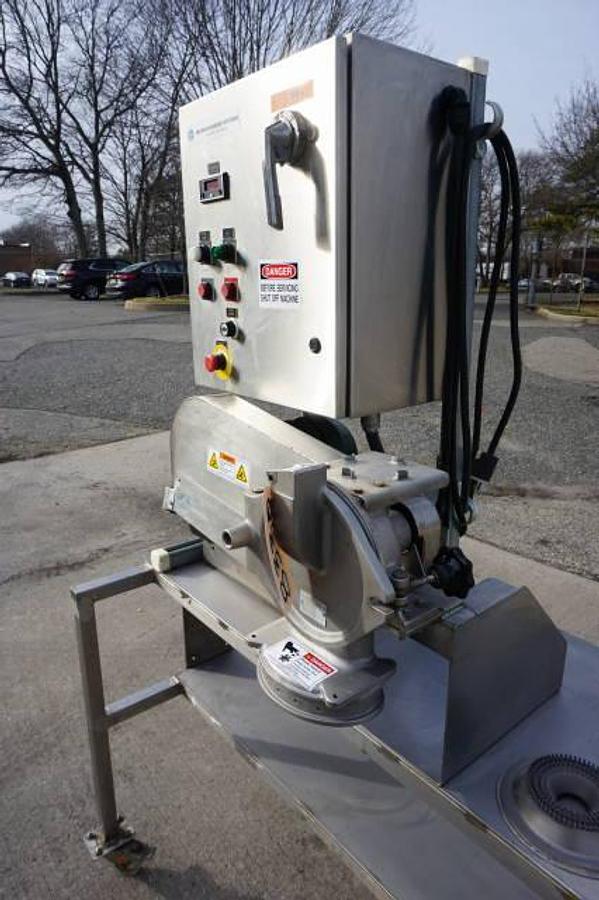
Hosokawa Micron Alpine
Hosokawa Micron Alpine is a leading provider of powder processing equipment, serving various industries including food, chemicals, and pharmaceuticals. They are particularly known for their milling and classification systems that ensure high-quality end products. Their technological advancements make them a preferred choice for manufacturers seeking precision in powder processing.
FAQ:
What types of equipment does Hosokawa Micron Alpine manufacture?
Hosokawa Micron Alpine produces a broad range of powder processing machinery, with particular strength in particle size reduction and classification systems. The core product lineup includes fluidized bed opposed jet mills (AFG series), Turboplex air classifiers (ATP series), pin mills, annular gap bead mills (ANR series), conical screen mills (CW series), classifier mills (ZPS series), and ball mills. Each machine series is engineered for a specific particle size range and application type, so the right choice depends heavily on the target material, desired fineness, and throughput requirements.
The brand is headquartered in Augsburg, Germany, and has built a global reputation for precision engineering and long service life. That durability is one reason used Hosokawa Alpine machines hold strong functional value on the secondary market. Buyers sourcing used units can often find equipment that, with proper maintenance history, continues to perform to specification for years after its initial installation.
What industries use Hosokawa Micron Alpine milling and classification equipment?
Hosokawa Micron Alpine equipment is used across a wide range of industries where controlled particle size is critical to product quality. Pharmaceutical manufacturers rely on these machines for active ingredient milling, where tight particle size distributions directly affect drug bioavailability and dosing consistency. The chemical industry uses Alpine mills and classifiers for pigments, fillers, and specialty chemicals. Food processors use them for spices, starches, sugars, and other dry ingredients that require uniform granulometry. Mineral processing operations also use Alpine equipment for materials like calcium carbonate, talc, and silica.
This cross-industry applicability is part of what makes used Hosokawa Alpine equipment attractive on the resale market. A machine originally installed in a food plant may be entirely suitable for a chemical application after appropriate cleaning and inspection, provided the materials of construction and any relevant compliance certifications align with the buyer's process requirements. Buyers should assess their specific application needs carefully and, where possible, consult with the manufacturer regarding suitability of a particular model for their intended use.
What is the typical price range for used Hosokawa Micron Alpine equipment?
Pricing for used Hosokawa Micron Alpine machinery varies considerably depending on the model series, machine size, age, condition, and included ancillary components. Smaller laboratory-scale or pilot units can be found in the low thousands of dollars, while larger production-scale fluidized bed jet mills, classifier systems, or integrated milling lines can run well into the tens of thousands or higher. Machines from high-demand series like the AFG, ATP, or ZPS tend to command stronger resale prices because of their precision capabilities and the cost of equivalent machines from the manufacturer.
Beyond the purchase price, buyers should factor in freight, rigging, any reconditioning work, and spare parts when calculating total acquisition cost. Shipping larger Alpine machines requires heavy-duty rigging for loading and unloading, which adds to the landed cost. Getting a full picture of those ancillary expenses before committing to a purchase is important, and reputable used equipment dealers will typically provide detailed breakdowns of packaging, crating, and freight charges on request.
What are the key differences between the Alpine AFG, ATP, and ANR equipment series?
The AFG (Fluidized Bed Opposed Jet Mill) uses compressed air jets to accelerate particles into each other within a fluidized bed chamber, achieving very fine and ultra-fine particle sizes, in some configurations down to a D97 of approximately 2 microns. Because grinding energy is applied by particle-on-particle impact rather than mechanical contact, the AFG is well suited for hard, abrasive, or heat-sensitive materials where contamination from grinding media must be avoided. It is commonly used in pharmaceutical, chemical, and mineral applications.
The ATP (Turboplex Air Classifier) is a high-precision classification machine rather than a mill. It separates particles by size using centrifugal force and air flow, making it the right tool when the goal is to achieve a sharp cut point in an existing powder rather than to reduce particle size. The ANR (Annular Gap Bead Mill), by contrast, is a wet grinding system designed for liquid suspensions, using agitated media to reduce particles in slurry form. These three product lines address fundamentally different stages and methods of particle processing, so matching the right machine type to the application is essential when evaluating used equipment.
How do you verify the condition of used Hosokawa Micron Alpine equipment before purchasing?
Condition verification for used industrial milling and classification equipment typically starts with a thorough inspection, either in person, via live video call, or through detailed video recordings provided by the seller. A good inspection should cover the condition of wear parts (liners, classifier wheels, seals, screens), the state of the drive components, any visible corrosion or damage to the housing, and the completeness of the control panel and associated instrumentation. Asking for any available maintenance records or service logs is worthwhile, as this can reveal how frequently the machine was serviced and whether major components have been replaced.
It is worth noting that most used equipment dealers do not have the permitting or production infrastructure to run actual product through a machine as a functional test, so buyers should set realistic expectations about what an inspection can and cannot confirm. Some machines may still be installed and running at the facility where they are being sold, which allows for a live operational observation. In cases where the equipment has been decommissioned, a mechanical inspection combined with a review of the machine's history is the standard approach. Consulting directly with Hosokawa Micron Alpine regarding the specific model and serial number can also help buyers understand what level of manufacturer support, parts availability, and technical documentation to expect for that unit.
Are spare parts and technical support available for older Hosokawa Micron Alpine models?
Hosokawa Micron Alpine has a long manufacturing history, and the availability of spare parts and technical support for older models can vary depending on the age and specific series of the machine. For many well-established product lines like the AFG, ATP, and ZPS, the manufacturer has maintained parts programs over extended periods, and third-party suppliers also produce compatible wear components for some of the more common models. That said, buyers of used equipment should not assume parts availability without verifying it directly with the manufacturer or an authorized service provider before completing a purchase.
Contacting Hosokawa Micron Alpine directly with the model number and approximate manufacture date is the most reliable way to get a clear answer on parts and support availability for a specific unit. The manufacturer can advise on which components are still stocked, what lead times look like, and whether field service technicians are available for that equipment generation. This step is particularly important for critical production applications where unexpected downtime would be costly. Factoring in parts lead times and support costs as part of the total cost of ownership calculation is a sound practice when evaluating any used processing equipment.
What certifications and compliance standards do Hosokawa Micron Alpine machines typically meet?
Hosokawa Micron Alpine machines are engineered to meet a range of international safety and regulatory standards depending on the model and the market they were built for. CE marking is standard for equipment manufactured for the European market, indicating conformity with applicable EU machinery and safety directives. ATEX certification is available on many models designed for use with explosive or flammable dusts and gases, which is a critical compliance requirement in pharmaceutical, chemical, and food processing environments where combustible powders are handled. Some configurations are also designed to meet FDA material contact requirements for food and pharmaceutical applications, using stainless steel construction and surface finishes that comply with cGMP guidelines.
For buyers sourcing used equipment, it is important to verify which certifications apply to the specific unit being purchased, as certification status is tied to the individual machine's build specification, not just the model series. Documentation such as the CE Declaration of Conformity or ATEX certification plates should be confirmed as present and legible. If a machine was originally built for a non-ATEX environment and a buyer intends to use it in an ATEX zone, additional engineering assessment and potentially retrofitting would be required. Consulting with a qualified process safety engineer before repurposing used equipment in a hazardous area application is strongly recommended.
What should buyers know about shipping and rigging used Hosokawa Micron Alpine equipment?
Hosokawa Micron Alpine machines range from compact laboratory units to large-scale production systems, and shipping logistics vary significantly across that range. Smaller mills can often be palletized and shipped via standard freight carriers with appropriate blocking and bracing to prevent movement in transit. Larger systems, particularly fluidized bed jet mills or complete classifier installations, may require custom crating and heavy-duty rigging for loading at the origin and unloading at the destination. Rigging costs for heavy industrial equipment can be substantial and should be confirmed with the seller before finalizing a purchase.
Buyers should ask the dealer for a complete breakdown of packaging, crating, rigging, and freight charges to understand the full landed cost of the equipment. International shipments add customs clearance, import duties, and potentially additional documentation requirements to the equation. Machinery should be carefully packaged to prevent damage in transit, and buyers should clarify with the seller exactly what level of preparation the machine will receive before it leaves the facility. Inspecting the equipment upon arrival and documenting any transit damage promptly is also an important step in protecting the buyer's interests.
What are the typical payment terms when buying used Hosokawa Micron Alpine equipment from a dealer?
Payment practices in the used industrial equipment market are fairly consistent across reputable dealers. In most cases, full payment is required before the equipment is released for shipping. This is standard practice because the dealer bears the risk of the machine leaving their possession, and unlike consumer retail, there is no practical mechanism for return and resale if a buyer changes their mind after shipment. Wire transfer is the most common payment method for transactions of this size, though some dealers may accept other forms of payment depending on the transaction.
Buyers who have an established relationship with a particular dealer may find that more flexible terms are available over time, but first-time buyers should plan for full payment upfront. It is also reasonable to ask the dealer whether a deposit structure is possible, particularly for larger transactions where the buyer needs time to arrange financing or internal approvals. Getting all payment terms, shipping responsibilities, and any agreed-upon inspection conditions documented in writing before transferring funds is a basic but important step in any used equipment transaction.
Can used Hosokawa Micron Alpine equipment be retrofitted or modified for different process requirements?
Hosokawa Micron Alpine equipment is generally well-regarded for its mechanical quality and modular design, which in many cases does allow for retrofitting or modification to adapt a machine to different process requirements. Common modifications on used units include upgrading classifier wheels to achieve different cut points, changing liners or grinding elements to suit different materials, adding or replacing dust collection connections, or updating control systems to interface with modern automation platforms. The feasibility of any specific modification depends on the machine model, its age, and the scope of the change being considered.
For significant modifications, engaging a qualified process engineer with experience on Alpine equipment is advisable. The manufacturer can also be a useful resource for understanding what factory-supported upgrade paths exist for a given model, though support for older machines may be more limited than for current production series. Buyers who intend to use a machine in a materially different application than its previous use should assess not just the mechanical compatibility but also whether the machine's certifications and material contact specifications remain appropriate for the intended new use. Thorough due diligence at this stage can prevent costly surprises after installation.