Category
Manufacturer
Model
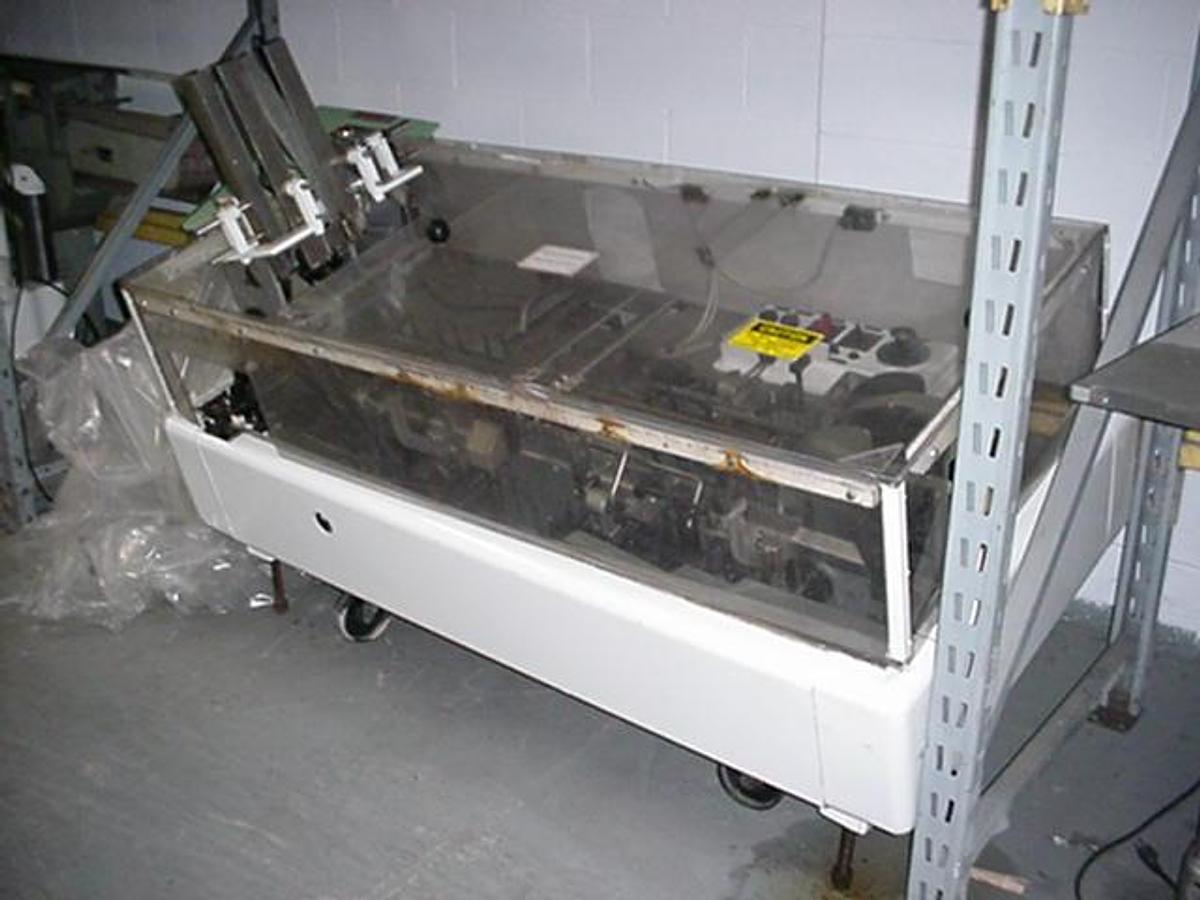
Hofliger + Karg
Hofliger + Karg specializes in the pharmaceutical and cosmetics industries, providing equipment for filling, sealing, and packaging. Their machines are known for their precision and compliance with stringent regulatory standards, making them essential for manufacturers in these sectors. The company emphasizes innovation and customer service to ensure optimal production outcomes.
FAQ:
What types of Höfliger & Karg pharmaceutical equipment are commonly available on the used market?
Höfliger & Karg built a broad range of equipment for the pharmaceutical and cosmetics industries, with their product line covering capsule filling, cartoning, filling, sealing, and packaging machinery. On the used market, the most frequently listed machines include GKF-series capsule fillers (such as the GKF 400, GKF 700, and GKF 1500), horizontal cartoners, and blister packaging lines. These machines were designed for precision and regulatory compliance, which is a large part of why they continue to circulate on the secondary market decades after manufacture.
Buyers searching for used H&K equipment will also encounter portable cartoners and encapsulators configured for multiple capsule sizes, including size 1, 2, 3, and 4 capsules. Because the brand was acquired by Bosch Packaging Technology (now operating as Syntegon), the H&K name is no longer in production, but the installed base of legacy machines remains large. Pharmaceutical manufacturers, contract packagers, and nutraceutical producers are the most common buyers of used H&K equipment, drawn by the machines' reputation for long operational lifespans and tight engineering tolerances.
What is the difference between the Höfliger & Karg GKF 400, GKF 700, and GKF 1500 capsule filling machines?
The GKF series represents H&K's flagship line of automatic hard capsule filling machines, and the primary difference between models comes down to output capacity and physical scale. The GKF 400 is the smallest of the three, capable of filling approximately 400 capsules per minute, making it well-suited for small-to-medium batch production or development-scale manufacturing. The GKF 700 steps up to roughly 700 capsules per minute, while the GKF 1500 is a high-output machine designed for large-scale commercial production at around 1,500 capsules per minute. All three models are compatible with hard gelatin and HPMC capsules across a range of sizes, typically 000 through 5.
Beyond throughput, the models differ in footprint, dosing system configurations, and the complexity of changeover procedures. The GKF 1500, for instance, requires more floor space and more robust utility connections than the GKF 400. When evaluating used GKF machines, buyers should consider not just the output rating but also the specific dosing modules installed, since H&K machines can be configured for powder, pellet, tablet, or liquid filling depending on the dosator or tamping pin setup. Confirming which tooling and change parts are included with a used machine is an important step before purchase.
What should buyers know about spare parts availability for older Höfliger & Karg machines?
Spare parts availability is one of the most practical concerns for anyone buying used H&K equipment, and the answer depends largely on the model and age of the machine. Since Bosch Packaging Technology acquired H&K and has since rebranded as Syntegon, some legacy parts can still be sourced through Syntegon's aftermarket support channels. However, availability varies by model, and buyers should contact Syntegon directly before purchasing a used machine to understand what level of parts support they can realistically expect for that specific model and serial number range.
Beyond the manufacturer's successor, a secondary ecosystem of third-party parts suppliers and machine refurbishers has developed around popular H&K models, particularly the GKF series. These suppliers often stock common wear items such as dosator pistons, tamping pins, sealing segments, and drive components. Buyers should ask the selling dealer whether any spare parts or tooling are included in the sale, as machines sold with a full set of change parts and consumables represent considerably better value. It is also worth requesting any maintenance logs from the seller, since a well-documented service history can indicate how components have worn and what may need attention in the near term.
What validation documentation should buyers request when purchasing used Höfliger & Karg equipment?
Validation documentation is a significant cost driver in pharmaceutical equipment procurement, and acquiring used machinery with existing paperwork can substantially reduce the time and expense of requalification. Buyers should request any available Installation Qualification (IQ), Operational Qualification (OQ), and Performance Qualification (PQ) packages from the seller. Even if those documents were written for a previous facility, they provide a useful baseline and can often be adapted rather than created from scratch. Calibration records, preventive maintenance logs, and any change control documentation are equally valuable and should be part of the due diligence process.
It is important to recognize that validation packages from a prior installation are not automatically transferable. Regulatory requirements typically mandate that equipment be requalified after relocation, so the documentation serves as a starting point rather than a finished compliance package. That said, having access to the machine's full history, including previous production environments, cleaning validation data, and any deviations or corrective actions, helps the new owner's validation team work more efficiently. Buyers who skip this documentation review often face higher requalification costs after the machine arrives, so it is worth pressing the dealer for whatever records exist before finalizing a purchase.
How does used Höfliger & Karg equipment hold its value compared to other pharmaceutical machinery brands?
H&K machines have a well-established reputation for holding their value on the secondary market, which is a direct reflection of the brand's engineering standards and the longevity of the equipment. Machines manufactured in the 1980s and 1990s are still in active production use at pharmaceutical facilities around the world, which speaks to the build quality and the availability of support infrastructure that has grown up around these machines. The GKF capsule filling series in particular commands consistent demand, meaning well-maintained units rarely sit unsold for long.
The acquisition of H&K by Bosch, and subsequently the rebranding to Syntegon, has had a mixed effect on resale values. On one hand, it lends institutional continuity and some degree of parts support. On the other hand, buyers need to verify parts availability on a model-by-model basis, as support for older machines can be inconsistent. Machines that come with complete tooling sets, documented maintenance histories, and any existing validation paperwork tend to command higher prices on the used market. Buyers should factor in the cost of any necessary reconditioning, tooling gaps, or requalification work when comparing asking prices across listings.
What should buyers expect during the inspection process for used pharmaceutical packaging equipment?
Inspecting used pharmaceutical equipment before purchase is a critical step, and reputable dealers typically offer several options: in-person inspections at the dealer's warehouse, virtual walkthroughs via video call, or pre-recorded video documentation of the machine's condition and any operational demonstration. For machines that are still installed and running at an active production facility, the dealer can often arrange an inspection at the plant itself, where the buyer can observe the equipment in its current environment. The goal of any inspection is to get an accurate picture of the machine's working condition, including the state of mechanical components, control systems, and any visible wear.
One practical limitation buyers should keep in mind is that most used equipment dealers are not licensed to run pharmaceutical production, so they cannot perform a full production trial with actual product. What they can typically demonstrate is mechanical function, cycle operation, and basic performance under power. Buyers should use the inspection to check the condition of contact parts, verify that all listed tooling and change parts are present, and assess the control system. Asking for a detailed video of the machine running through its operating cycle, with close-ups of critical assemblies, is a reasonable request and helps buyers who cannot travel for an in-person visit.
What are the typical capsule size compatibility ranges for Höfliger & Karg GKF capsule filling machines?
GKF-series capsule filling machines from H&K are designed to handle hard capsules across a wide size range, generally from size 000 (the largest standard hard capsule) down to size 5 (the smallest). The specific sizes a given machine can run depend on the tooling installed, since capsule filling machines use size-specific change parts including dosator pistons, capsule transport segments, and rectification components. A machine listed as compatible with sizes 1, 2, 3, and 4, for example, would need additional tooling to run size 000 or size 5 capsules.
Both hard gelatin and hydroxypropyl methylcellulose (HPMC) capsules can be processed on GKF machines, though the machine's settings and capsule handling components may need to be adjusted depending on the shell material, as HPMC capsules have different moisture sensitivity and mechanical properties compared to gelatin. When reviewing a used GKF machine listing, buyers should confirm exactly which capsule sizes the included tooling supports and whether dosing modules for their intended fill material (powder, pellet, tablet, or liquid) are part of the sale. Acquiring a machine with incomplete tooling can add significant cost and lead time before production can begin.
Can Höfliger & Karg equipment be upgraded or retrofitted with modern control systems?
Retrofitting older H&K machines with updated control systems is technically feasible and is a fairly common practice among pharmaceutical equipment refurbishers and in-house engineering teams. Older GKF machines, for instance, may run on obsolete PLCs or relay-based logic systems for which replacement components are no longer manufactured. Upgrading to a modern PLC platform, such as Siemens S7 or Allen-Bradley, can extend the machine's useful life considerably and often simplifies troubleshooting and maintenance. Some refurbishers also offer HMI upgrades, replacing older operator panels with touchscreen interfaces that are easier to use and better suited to 21 CFR Part 11 compliance requirements.
Buyers considering a retrofit should weigh the cost of the upgrade against the purchase price of the machine and the cost of a more modern alternative. For high-output machines like the GKF 1500, a controls retrofit can be a cost-effective investment, since the mechanical components of the machine may be in excellent condition while only the electrical systems are outdated. It is also worth noting that any modification to a validated pharmaceutical machine triggers a change control process and likely requires requalification of the affected systems, so the regulatory implications should be factored into the project plan from the outset.
What are the shipping and logistics considerations when buying used pharmaceutical equipment?
Shipping used pharmaceutical machinery involves more complexity than standard freight, particularly for larger machines like capsule fillers and cartoning lines. Proper packaging is essential to prevent damage in transit, and costs will vary based on the level of preparation required, whether that is basic palletization, custom crating, or foam-lined protective packaging for sensitive components. Larger machines typically require professional rigging for both loading at the origin and unloading at the destination, and those rigging costs are usually separate from the freight quote. Buyers should ask dealers for a detailed breakdown of packaging, rigging, and shipping charges upfront to understand the full landed cost before committing to a purchase.
International shipments introduce additional considerations, including customs clearance, import duties, and compliance with the destination country's import regulations for used pharmaceutical equipment. For machines with electronic controls, export licensing may also be relevant depending on the countries involved. Buyers should clarify with the dealer whether the quoted shipping price is door-to-port or door-to-door, and whether the dealer handles export documentation or whether that falls to the buyer. Getting clarity on these logistics details early in the process avoids surprises that can significantly affect the total cost of acquisition.
What payment terms are typical when purchasing used pharmaceutical equipment from a dealer?
Most used equipment dealers require full payment before a machine is released for shipping. This is standard practice across the industry and reflects the nature of used equipment transactions, where the seller typically cannot hold inventory indefinitely while a buyer arranges financing. Payment is commonly made by wire transfer, though some dealers may accept other forms of business payment depending on the transaction size and the buyer's relationship with the dealer. Buyers who have an established purchasing history with a particular dealer may occasionally be offered more flexible terms, but this is the exception rather than the rule for first-time transactions.
For buyers concerned about paying in full before receiving the equipment, the best risk mitigation strategy is thorough due diligence before payment, including a detailed inspection, a review of available documentation, and verification of the dealer's track record in the pharmaceutical equipment space. Selecting a dealer with a long history of selling machinery specifically within the pharmaceutical and life sciences sector provides meaningful assurance, since those dealers have reputational stakes in the accuracy of their machine descriptions and the reliability of their shipping practices. Buyers should also clarify the process for resolving any discrepancies between the machine's described condition and its actual condition upon arrival.