Category
Manufacturer
Model
FAQ:
What types of packaging machinery does HMC manufacture?
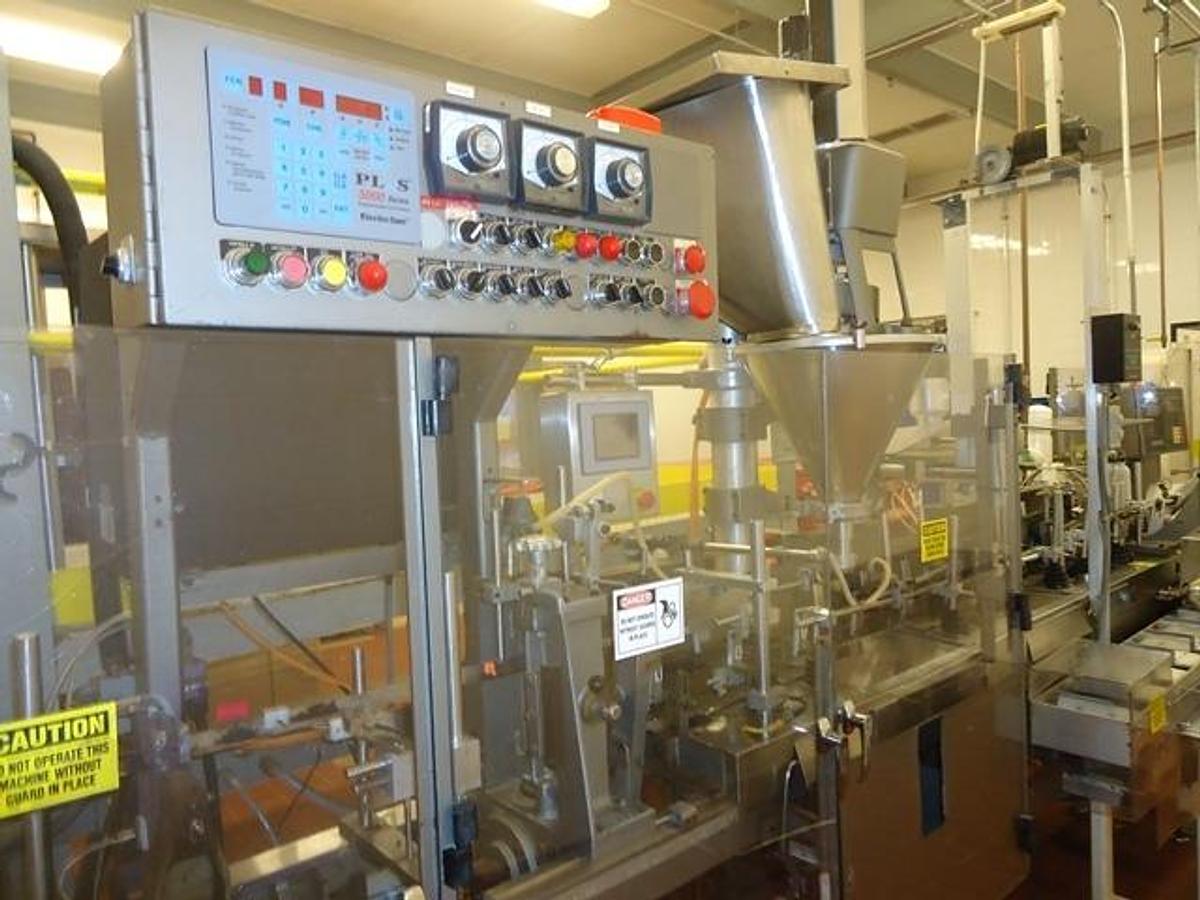
HMC is best known for producing horizontal form-fill-seal (HFFS) packaging equipment, with a strong reputation in pouch packaging systems. One of the most recognized product lines is the HMC/Bartelt series, which includes machines like the IM 8-1/2-12, a pouch packaging and cartoning line designed for high-speed, automated packaging operations. These machines are widely used for pre-made pouch filling, sealing, and secondary packaging into cartons, making them a popular choice in food, pharmaceutical, and consumer goods manufacturing.
Beyond the Bartelt-branded pouch machines, HMC equipment spans a range of packaging formats including horizontal motion conveyors, form-fill-seal systems, and integrated packaging lines. Their machinery is built for continuous production environments where throughput, accuracy, and reliability are critical. Because HMC machines are modular and designed for integration, they are often found as part of larger automated packaging lines rather than as standalone units.
What industries commonly use HMC packaging equipment?
HMC packaging machinery has a broad application footprint across several manufacturing sectors. The food and beverage industry is historically the largest user, particularly for snack foods, condiments, powdered products, and single-serve portions that require pouch or sachet packaging. The pharmaceutical and nutraceutical industries also rely heavily on HMC equipment for precise fill-weight accuracy and hygienic sealing, both of which are critical in regulated production environments.
Beyond food and pharma, HMC machines are used in household products, pet food, agricultural chemicals, and industrial goods packaging. The flexibility of their horizontal form-fill-seal systems makes them adaptable to a wide range of product types, including powders, granules, liquids, and solid items. This cross-industry versatility is one reason HMC equipment retains strong resale value and remains in demand on the used machinery market long after initial production runs.
What should buyers know about purchasing used HMC packaging machinery?
Buying used HMC packaging equipment is a well-established practice in the manufacturing industry, and it can deliver significant cost savings compared to sourcing equivalent capacity through other channels. That said, buyers should approach the purchase with a clear understanding of what they are acquiring. Used machines are sold as-is, meaning the condition of the equipment at the time of sale is what the buyer receives. There are no manufacturer warranties on used equipment, so the inspection process becomes one of the most important steps in the transaction.
Reputable used equipment dealers will typically offer in-person inspections, virtual walkthroughs, or detailed video documentation of the machine in its current state. Some machines may still be in active production at a facility, which can allow for a live demonstration of the equipment running. Buyers should also contact HMC or the relevant manufacturer directly to understand parts availability and the level of technical support that can be expected for a particular model, since older machines may have limited parts access. Choosing a dealer with a long track record in packaging machinery specifically, rather than a generalist reseller, significantly reduces purchasing risk.
How do inspections work when buying used packaging machinery?
Inspections are a critical part of any used packaging machinery purchase, and most reputable dealers offer multiple options to accommodate buyers who may not be able to travel to the equipment's location. In-person inspections are the gold standard, allowing a buyer or their technician to physically examine the machine, check wear components, review electrical panels, and assess the overall mechanical condition. Virtual inspections via video call are an increasingly common alternative, where a dealer representative walks through the machine in real time and answers questions on the spot.
For machines that are still installed at a production facility, the inspection may be arranged between the dealer and the plant owner, and in some cases the equipment may still be running product. This is a valuable opportunity to observe actual production performance. It is worth noting that most used equipment dealers do not have the permits or infrastructure to run full production tests themselves, so buyers should not expect a dealer's warehouse to replicate a live production environment. The goal of any inspection is to get the most accurate picture possible of the machine's current mechanical and operational condition before committing to purchase.
What is the price range for used HMC packaging machines?
Pricing for used HMC packaging machinery varies considerably depending on the model, configuration, age, condition, and included ancillary equipment. Entry-level or older single-function machines may be available in the range of a few thousand dollars, while complete integrated lines such as an HMC/Bartelt pouch packaging and cartoning system can command prices well into the tens of thousands or higher, depending on the production capacity and condition of the equipment.
Total cost of ownership is a more useful frame than purchase price alone. Buyers should factor in shipping and rigging costs, any reconditioning or parts replacement needed after acquisition, and the ongoing cost of consumables and maintenance. A machine priced lower upfront may require more investment to bring to production-ready condition, while a higher-priced machine in better condition may deliver a faster return to operation. Getting a clear picture of the machine's service history and current state during inspection helps buyers make a more accurate total-cost assessment.
What are the typical production speeds for HMC pouch packaging machines?
Production speed is one of the primary specifications buyers evaluate when considering HMC packaging equipment. HMC/Bartelt horizontal form-fill-seal machines are generally designed for mid-to-high volume production, with many models capable of running anywhere from 30 to over 100 pouches per minute depending on the pouch size, product type, and machine configuration. The IM series, for example, is built around intermittent motion indexing, which allows for precise fill and seal operations at consistent cycle rates.
Actual throughput in a production environment depends on several factors beyond the machine's rated speed, including product flow characteristics, film material, seal dwell time, and how well the machine has been maintained. When reviewing used equipment, buyers should ask about the speeds at which the machine was last run in production, as this gives a more realistic performance benchmark than the manufacturer's rated maximum. Machines that were regularly operated near their rated capacity with proper maintenance tend to perform more predictably than those that were run inconsistently or stored for extended periods.
Can used HMC packaging machinery be integrated into an existing production line?
HMC packaging machines are designed with integration in mind, and many used units are purchased specifically to slot into an existing line rather than to build a standalone operation from scratch. The modular nature of HMC/Bartelt systems, in particular, makes them compatible with upstream filling equipment, downstream cartoning or case packing systems, and conveyors from various manufacturers. However, integration complexity depends on the specific machine model, the age of the equipment, and the control systems already in place at the buyer's facility.
Buyers planning to integrate used HMC equipment should have their engineering or maintenance team review the machine's electrical and mechanical specifications before purchase. Older machines may use control platforms that require updated interface components to communicate with modern PLCs or line management systems. Discussing integration requirements during the inspection phase, and consulting with a qualified packaging machinery technician, helps avoid surprises after the machine arrives on-site. Some dealers who specialize in packaging equipment can also provide referrals to integration specialists familiar with HMC machinery.
What are the shipping and rigging considerations for used HMC packaging equipment?
Packaging machinery, particularly complete lines like an HMC/Bartelt pouch and cartoning system, can be large, heavy, and mechanically complex, which makes proper packaging and rigging essential to prevent damage in transit. Dealers will typically offer various levels of preparation for shipping, from basic palletization to full custom crating, and the cost will vary accordingly. Buyers should ask specifically what packaging method will be used and whether it is appropriate for the size and fragility of the machine being shipped.
For larger or heavier equipment, professional rigging is required for both loading at the origin and unloading at the destination. Rigging costs are typically an added expense and should be factored into the total landed cost of the machine before finalizing a purchase decision. Buyers should also confirm that their facility has the appropriate forklift capacity, dock height, or crane access to receive the equipment safely. Getting a clear breakdown of all freight, rigging, and crating costs upfront prevents unexpected expenses and allows for accurate budgeting.
What payment terms should buyers expect when purchasing used packaging machinery?
Payment practices in the used packaging machinery market are fairly consistent across reputable dealers. The standard expectation is full payment prior to shipment, which protects the dealer given the significant value of the equipment and the logistics involved in preparing it for transport. This is standard industry practice and not specific to any one seller. Buyers should plan for this requirement when budgeting for a machinery acquisition, particularly if internal purchase approval processes take time.
Some dealers may offer payment terms to established customers with a prior transaction history, but this is at the dealer's discretion and not something buyers should count on for a first purchase. Wire transfer is the most common payment method for transactions of this size. Buyers should also clarify exactly when title transfers and when the machine is considered available for shipping after payment clears, so that logistics arrangements can be made without unnecessary delays.
How should buyers evaluate parts and support availability for used HMC machinery?
Parts and technical support availability is one of the most important factors in the long-term value of any used packaging machine purchase. Before buying used HMC or HMC/Bartelt equipment, buyers should contact the manufacturer directly to ask about parts availability for the specific model and serial number they are considering. Older machines or discontinued models may have limited factory support, which means buyers would need to rely on third-party parts suppliers, machine shops capable of fabricating replacement components, or the used parts market.
A machine with strong parts availability and an active service community is significantly easier and less costly to maintain over time. Buyers should also ask the dealer what, if any, spare parts are included with the machine at the time of sale, as some sellers include a stock of wear parts or tooling that can provide immediate value. Engaging a packaging machinery technician who has hands-on experience with HMC equipment during the evaluation phase can provide a realistic assessment of what maintenance and parts costs to expect after the machine is placed into service.