Category
Manufacturer
Model
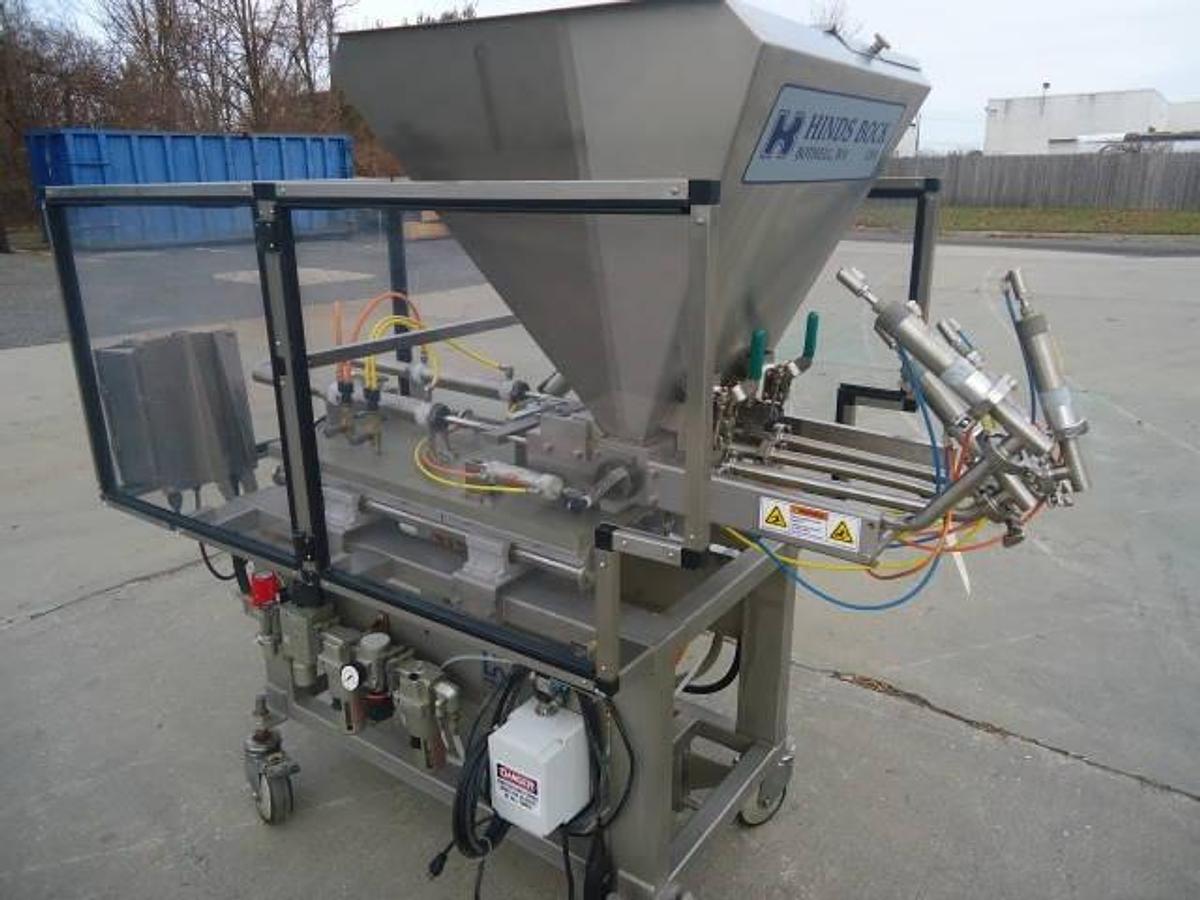
Hinds Bock
Hinds Bock focuses on providing high-quality equipment for the food processing industry, particularly in the areas of filling and depositing. Their machines are renowned for their precision and reliability, making them a popular choice for manufacturers of baked goods and confections. The company is committed to innovation, continually improving their product offerings to meet industry demands.
FAQ:
What types of Hinds Bock equipment are available on the used market?
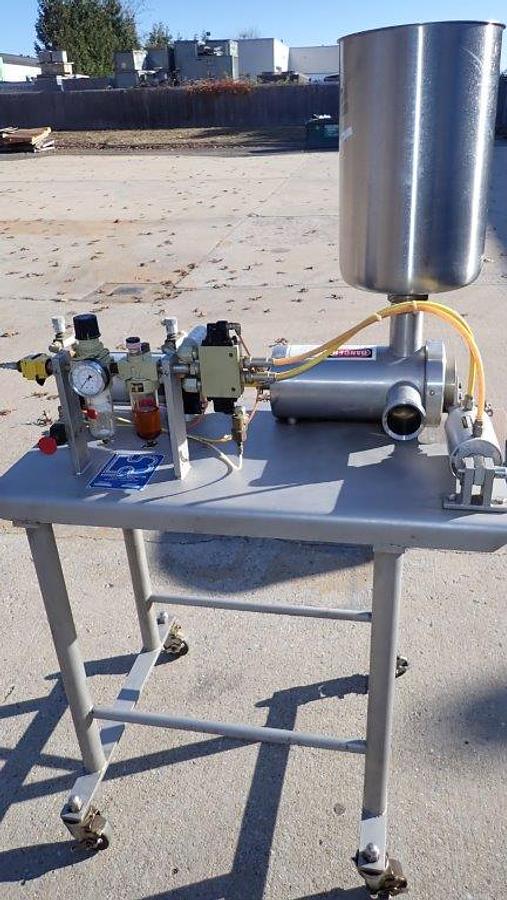
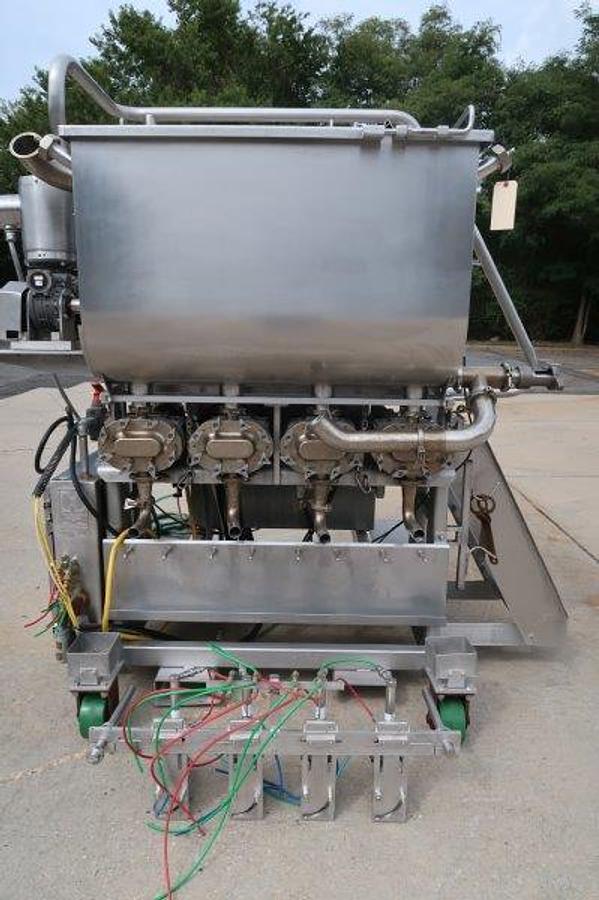
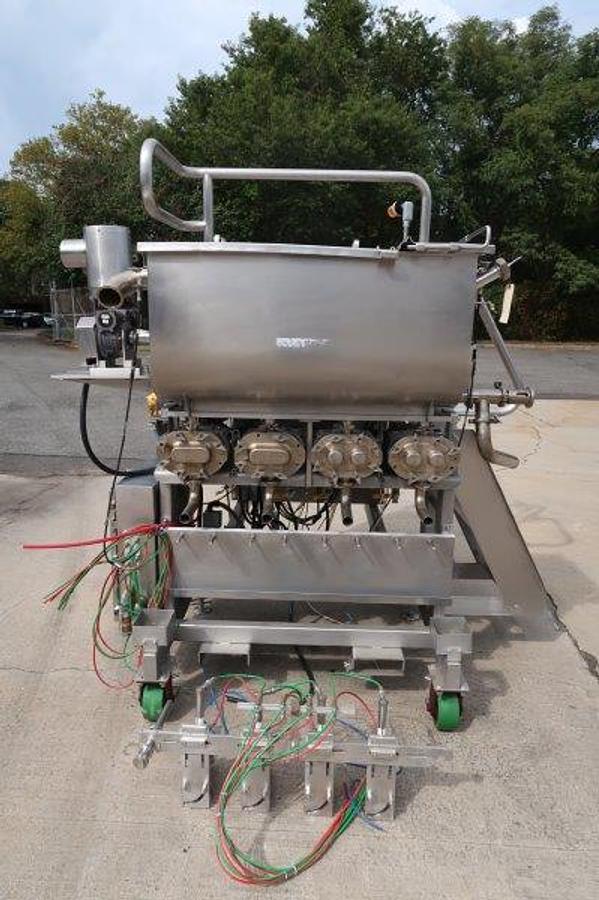
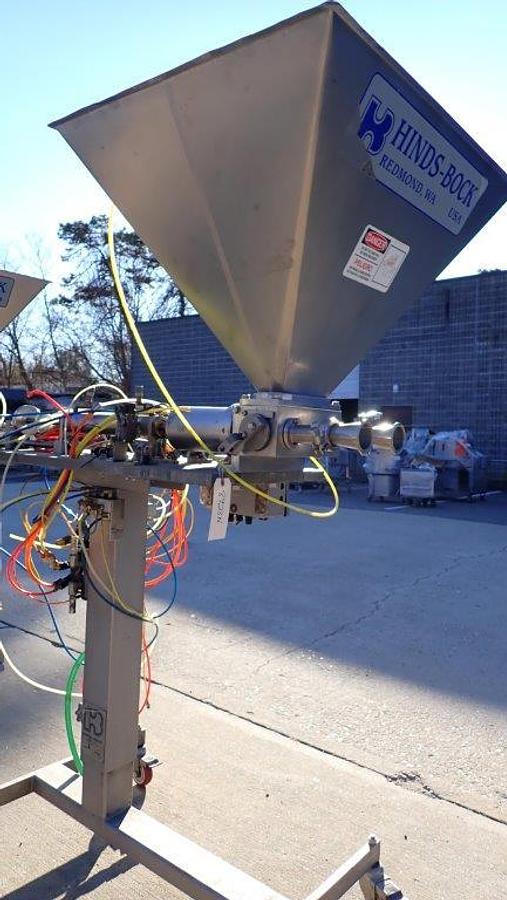
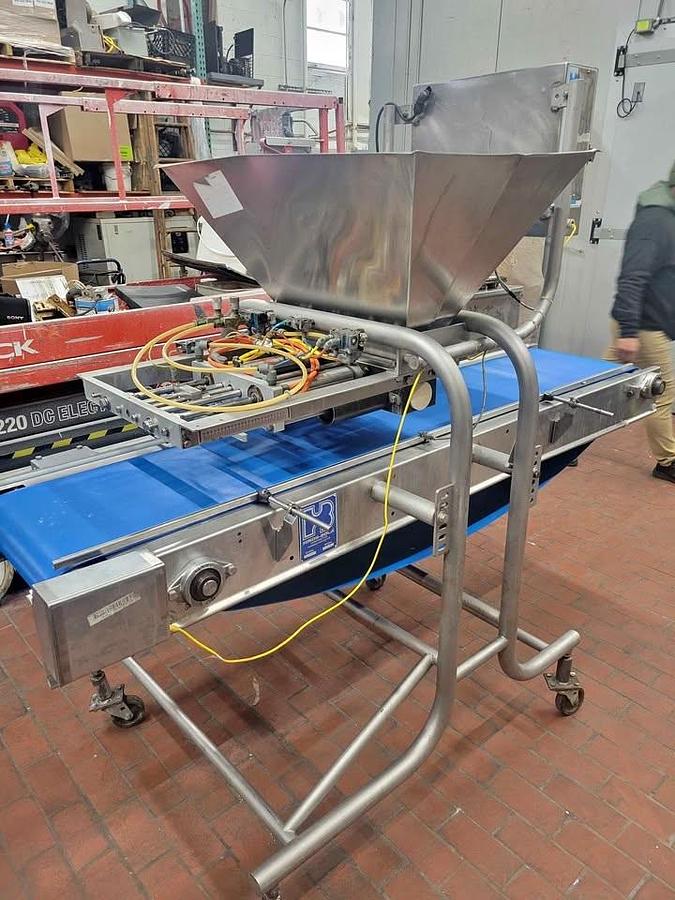
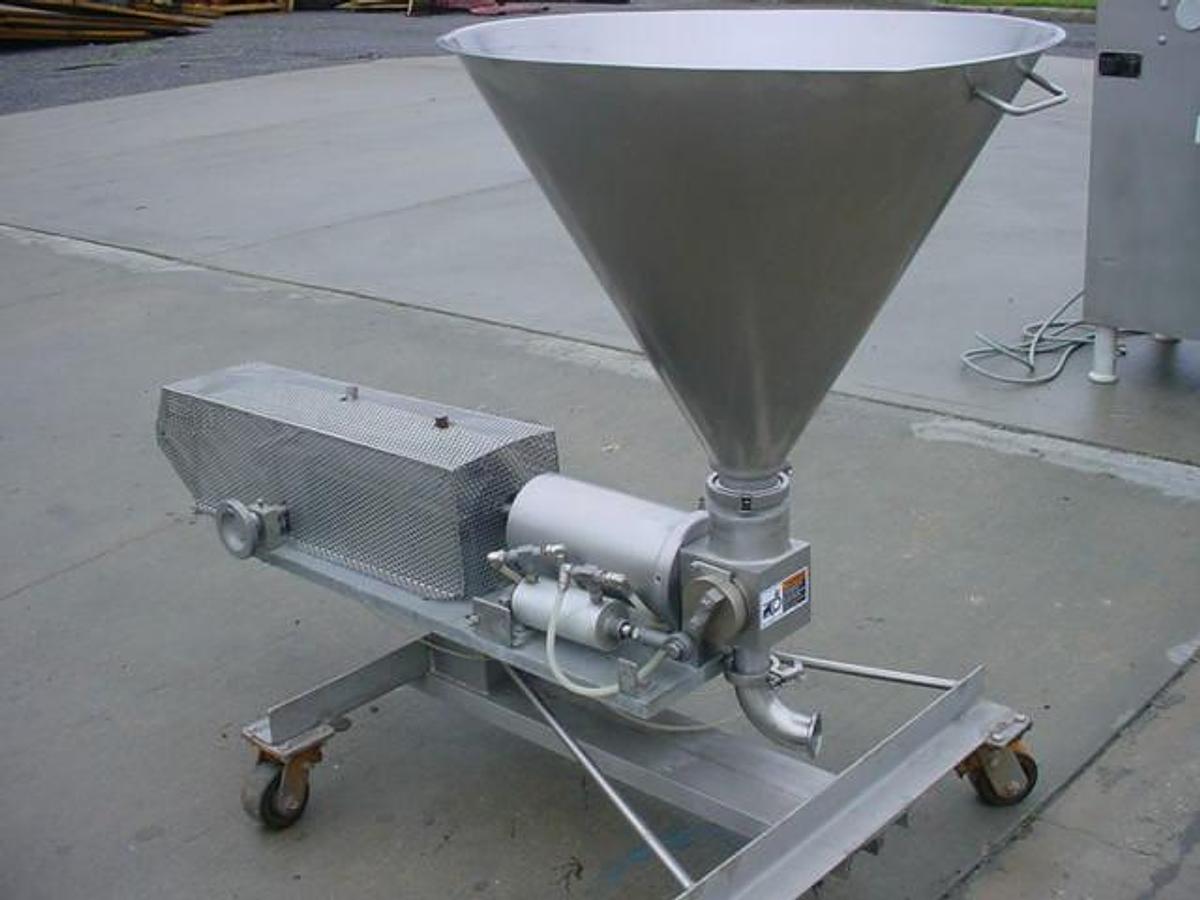
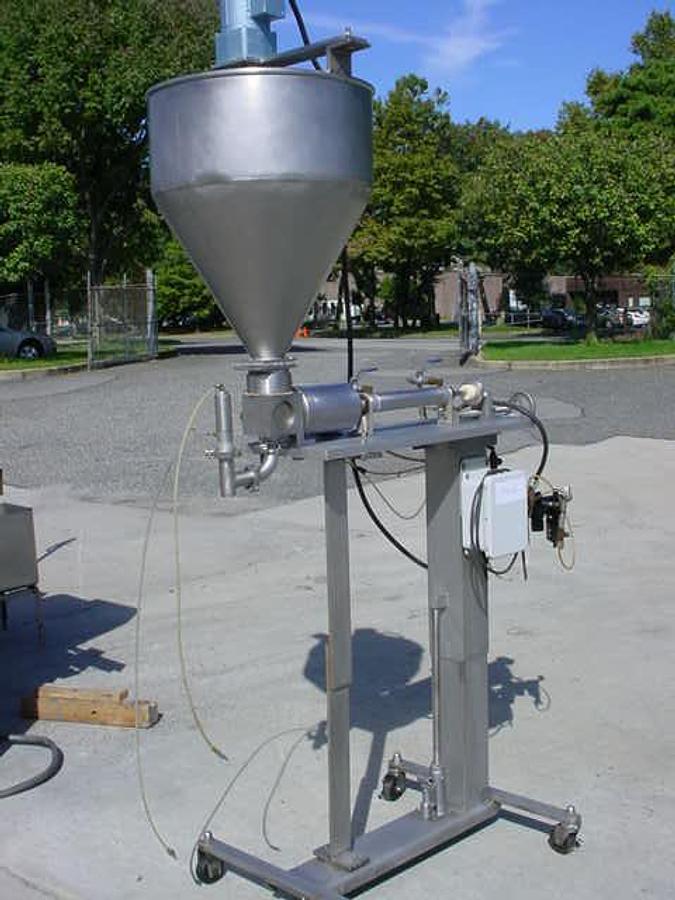
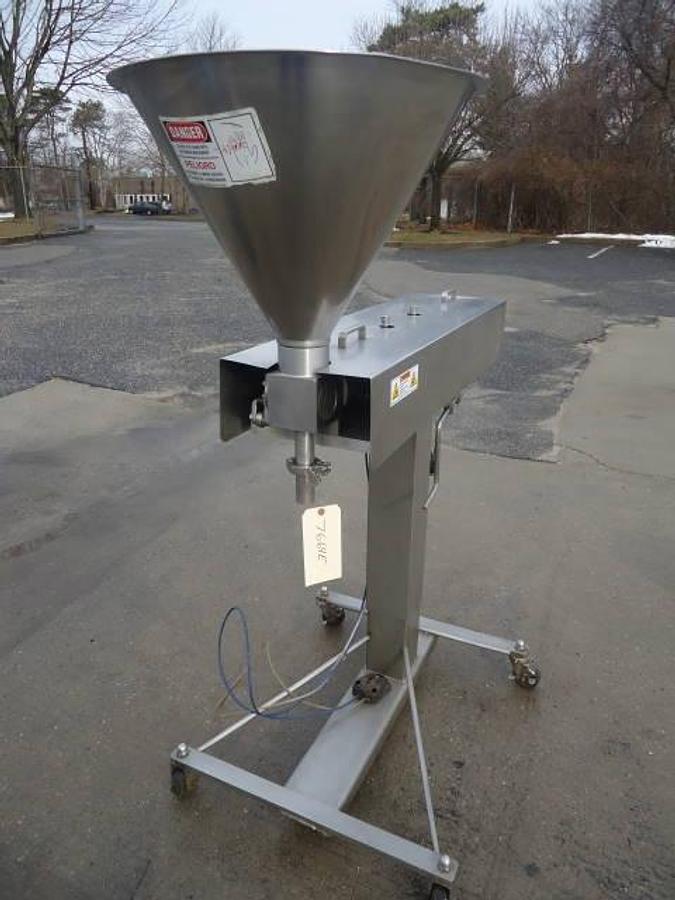
Hinds Bock produces several distinct product lines, and most of them surface regularly on the used equipment market. The most commonly available machines include piston depositors (both single-head and multi-head configurations), pump-style fillers, and rotary depositors. Specific models like the SP-64 single piston filler, the 2P-64 twin piston filler, and the 4P-08 four-head filler/depositor appear with some frequency, as do air-operated piston units and servo-driven automatic pump fillers. These machines were built for high-volume food production environments, so they tend to have long useful lives and remain in circulation long after their initial deployment.
Beyond the standard piston and pump configurations, buyers occasionally find specialty filling systems designed for more specific applications such as depositing thick batters, jellies, creams, or chunky inclusions. The range of head counts varies as well, from single-head portable units suited to smaller production runs, up to four-head and multi-head systems designed for high-throughput lines. Anyone sourcing used Hinds Bock equipment should clarify the model number and head configuration early in the process, since these details directly affect compatibility with existing production setups.
What industries use Hinds Bock filling and depositing equipment?
Hinds Bock equipment is primarily associated with the baked goods and confectionery industries, where precise depositing of batters, doughs, creams, and fillings is critical to product consistency. Bakeries use these machines for depositing muffin and cake batters, cookie doughs, and filled pastry products. Confectionery manufacturers rely on them for chocolate, caramel, and fondant depositing. The machines handle a wide viscosity range, which makes them adaptable across product types without requiring a complete equipment swap between runs.
Beyond baking and candy production, Hinds Bock fillers are also used in dairy processing, snack food manufacturing, and other segments where portioned filling into trays, molds, or packaging is part of the production line. Their stainless steel construction and food-grade design make them appropriate for environments with strict sanitation requirements. This cross-industry applicability is one reason used Hinds Bock machines tend to retain their value and attract buyers from multiple food manufacturing backgrounds.
What is the difference between Hinds Bock piston depositors and pump depositors?
Piston depositors use a reciprocating piston inside a cylinder to draw in product and then push a measured volume out through a nozzle or die. This mechanism is particularly well-suited to products with higher viscosity, such as thick batters, doughs, cheese fillings, and chunky products that contain particulates. The piston design delivers a consistent, volumetrically accurate deposit with each cycle, and the machines are generally straightforward to clean and maintain. Models like the SP-64 and 2P-64 are classic examples of this style.
Pump depositors, including Hinds Bock's servo-driven automatic pump-style fillers, use a rotary or gear pump mechanism to move product continuously or in timed bursts. These tend to perform better with lower-viscosity products like thin batters, sauces, and liquid fillings. Servo-driven pump systems offer the added benefit of programmable deposit volumes and speeds, which allows for faster changeovers and greater flexibility across product lines. When choosing between the two styles on the used market, buyers should match the machine type to their product's viscosity profile and the deposit accuracy their process requires.
How do you assess the condition of a used Hinds Bock machine before buying?
Evaluating a used Hinds Bock depositor or filler starts with understanding the machine's history. Buyers should ask about the production environment it came from, the types of products it ran, how frequently it was serviced, and whether any major components have been replaced. Piston seals, check valves, nozzles, and drive components are the parts most subject to wear, so their condition is worth scrutinizing closely. Reputable used equipment dealers will typically accommodate in-person inspections, video walkthroughs, or photo documentation to give buyers an accurate picture of the machine's current state. Some machines may still be in active production at a facility, in which case the dealer can often arrange an inspection at the plant itself.
It is worth keeping in mind that most used equipment dealers do not have the permitting or production infrastructure to run actual food products through a machine during an inspection. What buyers can reasonably expect is a mechanical demonstration showing that the machine powers on, cycles correctly, and shows no obvious signs of damage or excessive wear. For high-value purchases, buyers may also want to consult directly with Hinds Bock or an authorized service technician to assess whether the specific model and age of the machine can still be supported with parts and technical assistance. This kind of due diligence is especially important since used equipment is sold as-is, placing the responsibility for condition assessment squarely on the buyer.
Are replacement parts still available for older Hinds Bock machines?
Hinds Bock has maintained a reputation for building durable equipment with relatively consistent component designs across model generations. For many of their piston filler and depositor lines, wear parts such as seals, pistons, check valves, and nozzle assemblies have remained available through the manufacturer and through third-party suppliers. This parts availability is one of the reasons used Hinds Bock equipment holds its resale value better than some competing brands. Buyers interested in a specific used model should contact Hinds Bock directly before purchasing to confirm whether parts are still actively stocked for that machine's age and configuration.
The level of manufacturer support can vary depending on how old the machine is and whether the model has been discontinued. Older or less common models may require sourcing parts from specialty machining shops or fabricating replacements. Before committing to a purchase, it is a practical step to identify the critical wear components for the specific model in question and verify their availability and approximate cost. A machine that is mechanically sound but lacks a reliable parts supply can become a liability in a production environment, so this research is worth doing upfront.
What should buyers expect to pay for used Hinds Bock depositing equipment?
Pricing for used Hinds Bock equipment varies considerably based on the model, configuration, age, and condition of the machine. Single-head piston fillers and smaller portable units typically sit at the lower end of the price range, while four-head servo-driven systems and larger multi-head configurations command significantly higher prices. The brand's strong reputation for durability means that even older machines in good working condition tend to sell at a premium compared to lesser-known brands with similar specifications.
Buyers should also factor in the full landed cost of the equipment, not just the listed sale price. Shipping, crating, rigging, and any freight surcharges for heavy machinery can add meaningfully to the total. Larger multi-head systems may require specialized rigging equipment for loading and unloading, which carries its own cost. Getting a complete breakdown of packaging, shipping, and delivery costs from the dealer before finalizing a purchase is the best way to avoid surprises and accurately compare options.
What capacity ranges are available for Hinds Bock depositing equipment?
Hinds Bock offers depositing equipment across a fairly wide range of output capacities, from compact single-head units designed for smaller or more specialized production runs to high-throughput multi-head systems built for large-scale manufacturing. Single-piston models like the SP-64 are suited to operations that need portability and flexibility, while four-head systems like the 4P-08 and 4P-04 are designed to deposit into multiple cavities simultaneously, dramatically increasing output per cycle. Servo-driven pump fillers add another dimension of capacity control through programmable speed and volume settings.
On the used market, buyers will find machines with varying cylinder sizes and nozzle configurations that affect both deposit volume per cycle and the range of product types the machine can handle. A 1-gallon single piston filler, for example, suits different applications than a multi-head system with smaller-bore cylinders designed for precise small-portion deposits. Matching the machine's capacity and cycle rate to the production line's throughput requirements is an important part of the selection process, and reviewing the original manufacturer specifications for any used model under consideration will help buyers make that determination accurately.
Does Hinds Bock equipment meet food safety and sanitation standards?
Hinds Bock designs its filling and depositing equipment with food-grade materials and construction practices that align with industry sanitation requirements. Stainless steel contact surfaces, tool-free disassembly for cleaning, and designs that minimize product traps are standard features across much of their product line. These characteristics make the equipment suitable for use in facilities that follow Good Manufacturing Practices (GMP) and operate under food safety frameworks such as HACCP.
For used machines, buyers should verify that the equipment has not been modified in ways that compromise its sanitary design, and that all seals, gaskets, and contact-surface components are in acceptable condition or can be replaced with food-grade equivalents. Worn or degraded seals are a common issue on older machines and should be inspected carefully. Facilities operating under third-party food safety certifications or regulatory oversight may also want to confirm that the specific machine configuration meets their auditor's requirements before putting it into production.
How does shipping and delivery work for used Hinds Bock equipment?
Shipping used depositing and filling equipment requires careful preparation to prevent damage in transit. Smaller portable units like single-piston fillers can often be palletized and shipped via standard freight carriers, but larger multi-head systems and servo-driven pump fillers typically require custom crating or heavier-duty packaging to protect precision components. The cost of packaging varies depending on the level of protection required, and buyers should ask the dealer specifically what packaging method will be used and what that cost includes.
Larger Hinds Bock machines may also require professional rigging for loading at the origin and unloading at the destination. Rigging services add to the total cost and should be accounted for when budgeting the purchase. Most used equipment dealers require full payment prior to shipping, though some may offer alternative arrangements for repeat customers. Before finalizing any purchase, buyers should request a complete breakdown of all shipping-related costs to understand the true landed price of the equipment.
Why does used Hinds Bock equipment tend to hold its resale value?
Several factors contribute to strong resale values for used Hinds Bock machines. The brand has been manufacturing depositing and filling equipment for decades, building a track record of durability that buyers and dealers recognize. Their machines are constructed with heavy-gauge stainless steel and robust mechanical components designed for continuous production use, which means they often remain functional and productive well beyond their initial service life. This longevity translates directly into sustained demand on the secondary market.
The availability of replacement parts for many models also supports resale value, since buyers are more willing to pay for a used machine when they know it can be serviced and maintained over time. Additionally, Hinds Bock equipment is used across multiple food industry segments, which broadens the pool of potential buyers when a machine comes up for resale. A bakery depositor, for example, may be equally useful to a confectionery manufacturer or a dairy processor, and that cross-industry demand keeps prices competitive even for older units in good condition.