Category
Manufacturer
Model
FAQ:
What types of Hicks Equipment are typically available on the used market?
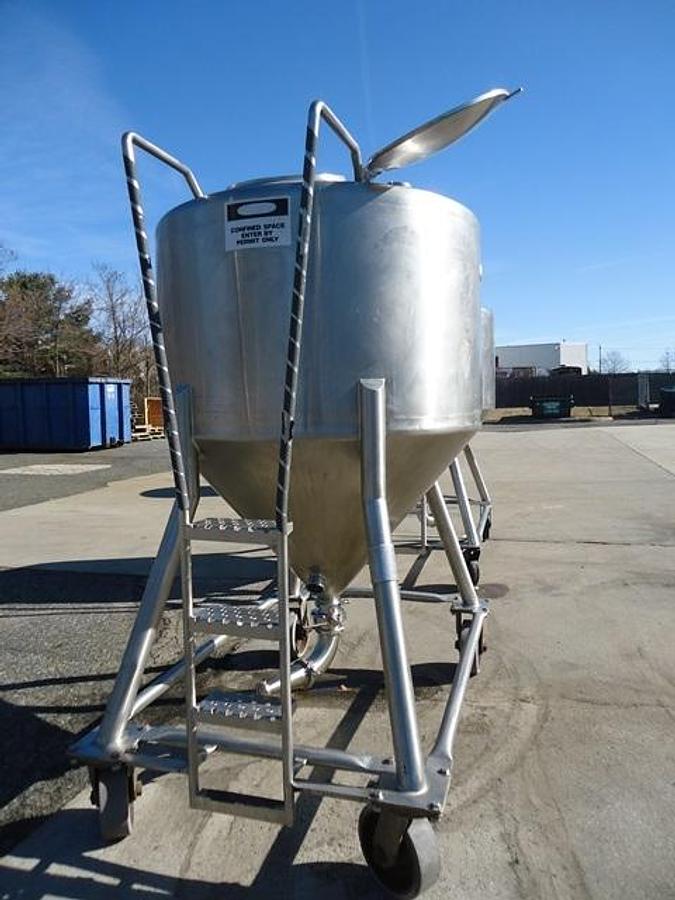
Hicks Equipment appears across several industrial and agricultural segments, and the used market reflects that range. Listings commonly include liquid handling and storage equipment such as portable cone bottom tanks, which are built in stainless steel grades suited for food processing, chemical handling, and sanitary applications. The 316L stainless steel construction found on some Hicks portable tanks, for example, is a specification that buyers in pharmaceutical, dairy, and chemical industries specifically seek out because of its corrosion resistance and cleanability.
Beyond liquid handling equipment, Hicks machinery shows up in agricultural, construction, and general industrial contexts. Used equipment dealers who specialize in process and industrial equipment tend to carry the broader range, so buyers looking for a specific model or configuration are best served by checking with dealers who focus on their particular industry. Searching by specification, such as tank capacity, material grade, or configuration type, often yields better results than searching by brand alone, since inventory turns over frequently in the used equipment market.
What should I know about buying used industrial equipment versus buying from a manufacturer?
Buying used industrial equipment is fundamentally different from purchasing through a manufacturer's sales channel. The most significant difference is condition variability. Used machines range from lightly used surplus equipment that has barely been run, to fully decommissioned machinery that has seen years of production cycles. There is no standardized grading system across the industry, so buyers have to rely on inspection, dealer reputation, and their own technical knowledge to assess what they are actually getting.
The trade-off is almost always price. Used industrial equipment can be acquired at a fraction of the cost of a comparable machine purchased through a manufacturer, which makes it an attractive option for businesses that need to manage capital expenditure carefully. The key is doing the homework upfront. Selecting a dealer with a long track record in the relevant equipment category, requesting detailed photos or video, and arranging an inspection before committing to a purchase are all steps that experienced buyers treat as non-negotiable. The savings are real, but so is the need for due diligence.
Can I inspect used Hicks Equipment before buying it?
Inspections are standard practice in the used equipment industry and most reputable dealers will accommodate them in some form. Depending on where the equipment is located, options typically include an in-person visit to the dealer's facility, a live video walkthrough conducted over a video call, or a set of detailed video and photo documentation captured by the dealer. Each approach has its advantages. In-person inspections allow a buyer or their technician to physically examine welds, seams, motors, controls, and any wear points. Video inspections are more practical when travel is not feasible and can still reveal a great deal about a machine's condition when conducted thoroughly.
One important nuance worth understanding is that some equipment being sold is still in active production at a third-party facility. In those cases, an inspection can sometimes be arranged at the actual plant where the machine is running, which gives the buyer a chance to see it operating under real conditions. However, dealers typically cannot run production tests themselves, since operating production equipment requires permitting and infrastructure that a resale dealer does not maintain. Buyers should clarify inspection logistics with the dealer early in the process, before negotiating price, so that the machine's actual condition is factored into the offer.
What does 316L stainless steel mean for a used portable cone bottom tank?
316L stainless steel is a low-carbon variant of the 316 alloy, and it is one of the most specified materials for tanks used in sanitary, chemical, and food-grade applications. The 'L' designation refers to the reduced carbon content, which minimizes the risk of carbide precipitation during welding. This matters in practice because it preserves the corrosion resistance of the metal at weld joints, which are the most vulnerable points in a fabricated tank. For industries where cleanliness and chemical compatibility are critical, such as dairy processing, brewing, pharmaceuticals, and specialty chemicals, 316L is often a baseline requirement rather than a premium upgrade.
A portable cone bottom tank in 316L stainless is particularly useful because the cone configuration allows for complete drainage, which is essential for processes that require full product recovery or thorough cleaning between batches. When evaluating a used tank of this type, buyers should inspect the interior welds and the cone junction for any signs of pitting, cracks, or contamination buildup. The exterior condition is less critical functionally, but the interior surface finish and weld quality are direct indicators of how the tank was used and maintained. A 600-gallon capacity in this configuration covers a wide range of process applications, which is part of why tanks like this retain strong resale value.
How is used industrial equipment typically priced, and what factors affect the cost?
Pricing for used industrial equipment is driven by a combination of factors including the machine's age, condition, original purchase price, current market demand, and how specialized the equipment is. A piece of equipment that serves a broad range of industries will generally command stronger pricing on the secondary market than something highly specialized with a limited buyer pool. Material construction also plays a significant role. Stainless steel tanks and equipment, for example, carry a floor value tied to scrap metal prices, which means they rarely sell below a certain threshold regardless of condition.
Buyers should also account for the full landed cost of an acquisition, not just the asking price. Rigging, crating, freight, and any required installation or reconditioning work all add to the total investment. A machine priced attractively on paper can become less compelling once shipping from across the country and the cost of getting it production-ready are factored in. Experienced buyers typically request a complete cost breakdown from the dealer, including packaging and freight estimates, before making a final decision. Comparing total landed cost across multiple listings, rather than sticker price alone, gives a more accurate picture of value.
What payment terms should I expect when buying used equipment from a dealer?
Most used equipment dealers require full payment before a machine is released for shipping or pickup. This is standard practice across the industry and reflects the nature of the transaction. Unlike retail purchases with consumer protection frameworks, used industrial equipment sales involve significant sums, one-of-a-kind inventory, and buyers and sellers who may be located in different regions or countries. Dealers protect themselves and their inventory by confirming payment before committing to packaging and freight logistics.
Some dealers do extend payment terms to repeat customers or buyers with established relationships, but this is the exception rather than the rule for first-time transactions. Buyers who need financing should explore equipment financing through their bank, a credit union, or a third-party equipment lender before approaching a dealer, since most dealers do not act as lenders themselves. Having financing pre-arranged also strengthens a buyer's position during negotiations, since it signals that the transaction can close quickly once terms are agreed upon.
How does shipping and freight work for used industrial equipment purchases?
Shipping used industrial equipment involves more complexity than standard freight, and the costs can vary significantly based on the size, weight, and fragility of the machine. Dealers are responsible for preparing equipment for transit, which typically involves palletizing, crating, or custom packaging depending on what is needed to prevent damage. The level of packaging required directly affects the shipping cost, and buyers should ask the dealer specifically how the equipment will be prepared before agreeing to a price.
Larger or heavier machines often require specialized rigging for loading and unloading, which adds cost on both ends of the shipment. Flatbed freight, oversized load permitting, and lift gate service at the delivery location are all variables that can affect the final freight bill. Buyers should request a detailed shipping quote that covers all of these elements so there are no surprises at delivery. Understanding the full landed cost before committing to a purchase is one of the most practical steps a buyer can take to avoid budget overruns on an otherwise good deal.
Are replacement parts and service support available for used Hicks Equipment?
Parts and service availability for used equipment depends heavily on the age of the machine and the manufacturer's current product and support policies. For equipment that is still within an active production line, manufacturers typically continue to offer parts support and may have authorized service technicians available regionally. For older or discontinued models, parts availability can become limited, which is why buyers are advised to contact the manufacturer directly before purchasing to understand what level of support they can realistically expect for a specific machine and model year.
For tanks and vessels, the situation is somewhat different than for mechanical or electrical equipment. Fabricated stainless steel tanks have fewer wear components than machinery with moving parts, so ongoing parts dependency is lower. Fittings, valves, agitators, and ancillary components can often be sourced from third-party suppliers even when the original fabricator no longer supports the product. Buyers should assess which components are most likely to need attention over the equipment's service life and verify sourcing options for those parts before completing a purchase.
How do I evaluate the reputation of a used equipment dealer before making a purchase?
Dealer reputation is one of the most important factors in a used equipment purchase, particularly because the transaction typically involves full payment before shipping and the equipment is sold in its current condition. A dealer's track record in the industry is the closest thing a buyer has to a reliability signal. Key indicators include how long the dealer has been in business, whether they specialize in the type of equipment being purchased, and whether they have verifiable customer references or reviews. Dealers who have operated for many years in a specific equipment category develop deep product knowledge and tend to represent their inventory more accurately than generalist resellers.
Buyers should also look at how a dealer handles pre-sale communication. Willingness to provide detailed photos, video, condition notes, and inspection access are all signs that a dealer is operating transparently. Dealers who are evasive about condition details or reluctant to accommodate reasonable inspection requests are a red flag regardless of how attractive the asking price appears. Spending time vetting the dealer upfront is far less costly than discovering a misrepresented machine after it has been shipped and installed.
What industries commonly use portable cone bottom tanks like those made by Hicks Equipment?
Portable cone bottom tanks in stainless steel are workhorses across a wide range of process industries. Food and beverage manufacturing relies on them for mixing, blending, holding, and transferring liquid ingredients, particularly in applications where sanitary construction and complete drainage are required between batches. Dairy operations, breweries, wineries, and beverage producers all use this tank configuration regularly. The cone bottom design ensures that product does not pool at the base, which is critical both for yield recovery and for cleaning-in-place protocols.
Beyond food and beverage, these tanks are common in pharmaceutical manufacturing, cosmetics production, specialty chemical processing, and water treatment applications. The 316L stainless steel construction makes them compatible with a broad range of substances that would corrode or contaminate in lesser materials. Portability adds operational flexibility, since tanks can be repositioned within a facility as production needs change, rather than being fixed in place. This versatility is a significant part of why quality stainless tanks from established fabricators retain value on the used market and attract buyers from multiple industries.