Category
Manufacturer
Model
FAQ:
What types of heatseal equipment are available on the used market?
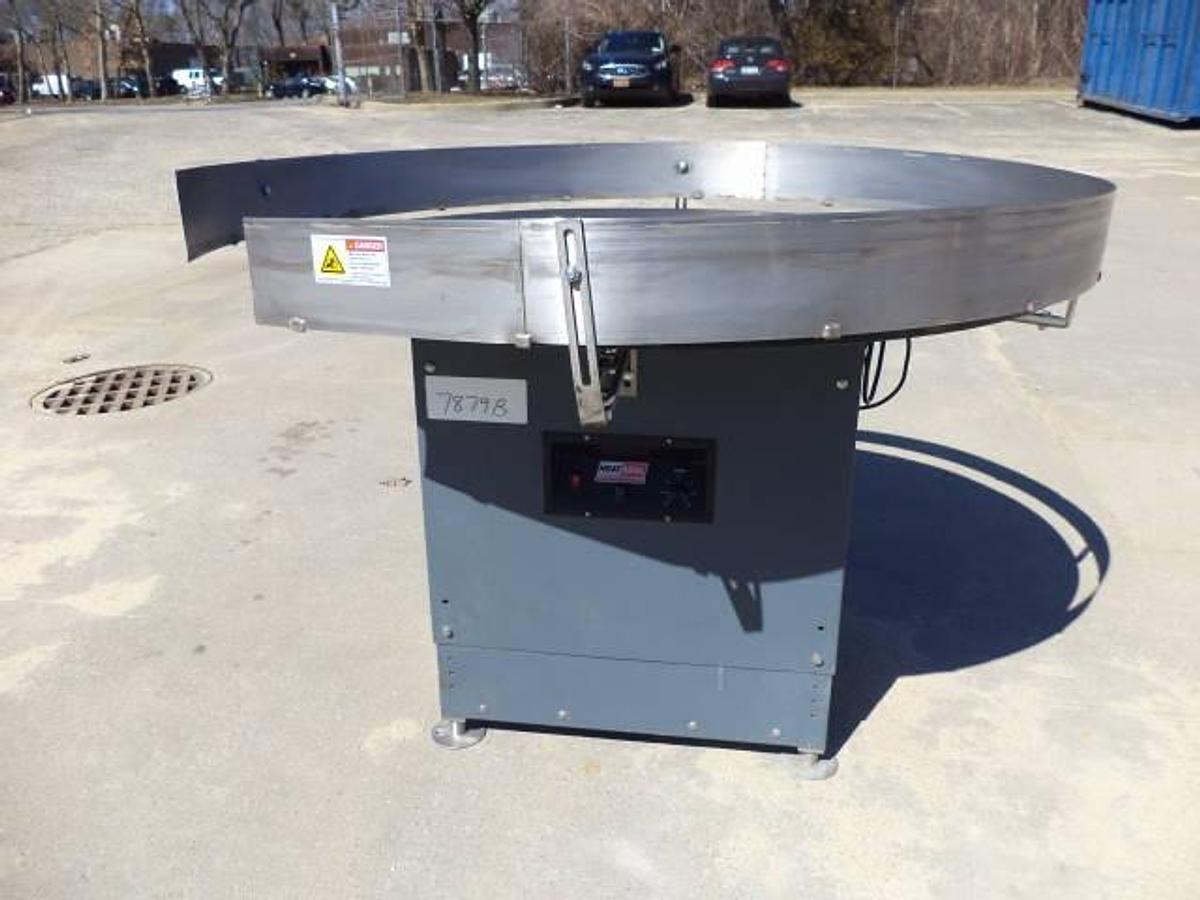
Used heatseal equipment spans a wide range of machine types, each designed for different production environments and packaging requirements. The most common categories include impulse sealers, continuous band sealers, rotary sealers, vacuum sealers, and rotary unscrambling or accumulating tables. Impulse sealers are compact bench-top units that apply a brief burst of heat to seal a bag, making them popular for lower-volume operations. Continuous band sealers run packaging material through a set of heated belts, allowing for high-speed, uninterrupted sealing on a production line. Rotary sealers and accumulating tables, such as 48-inch diameter rotary units, are used to orient, collect, or feed products into downstream packaging processes.
Buyers shopping the used market will find machines that were originally built for industries ranging from food and beverage to pharmaceuticals, contract packaging, and industrial goods. The variety available through used equipment dealers is often broader than what any single manufacturer might stock at a given time, since machines come from plant liquidations, equipment upgrades, and facility closures. This means a buyer can sometimes locate a specific model or configuration that suits a niche application. When evaluating options, it helps to know your required sealing width, production speed, and the type of film or pouch material you are working with, since these factors will narrow down which machine category makes sense for your operation.
What is the difference between impulse sealers and continuous band sealers?
Impulse sealers work by clamping two layers of film between jaws and sending a short pulse of electrical current through a nichrome wire element, which heats up instantly, melts the film layers together, and then cools before the jaws release. Because the element only heats during the actual sealing cycle, impulse sealers consume relatively little power and are well-suited to intermittent use. They are common in lower-volume packaging environments where an operator manually feeds one bag at a time. Seal width on impulse sealers typically ranges from a few inches up to about 24 inches on larger models, and they handle materials like polyethylene and polypropylene bags effectively.
Continuous band sealers, by contrast, run film through a pair of continuously heated belts or rollers, sealing the material as it passes through without stopping. This makes them far better suited to high-volume production lines where throughput and consistency are priorities. Band sealers can be oriented horizontally or vertically depending on the product being sealed, and many models include a date coder or batch printer integrated into the sealing head. The tradeoff is that continuous sealers draw more power, require more floor space, and involve more mechanical components that need periodic maintenance. When sourcing either type on the used market, buyers should verify that the heating elements, belts, and drive motors are in serviceable condition, and request a video inspection or in-person review of the machine before purchasing.
What materials can heatseal equipment bond or seal?
Heatseal machines are compatible with a fairly broad range of thermoplastic films and laminate structures, though not every machine seals every material equally well. The most commonly processed materials include low-density polyethylene (LDPE), high-density polyethylene (HDPE), polypropylene (PP), nylon, mylar (biaxially oriented polyester), and foil-laminate pouches used in medical, food, and specialty packaging. Multi-layer co-extruded films are also widely used in commercial packaging and can be sealed on properly configured equipment. The key requirement is that at least the inner layer of the film must be a heat-sealable thermoplastic that melts and fuses at the machine's operating temperature.
Material thickness, seal layer composition, and the presence of barrier coatings all affect the temperature and dwell time settings needed to produce a reliable seal. For example, foil-laminate pouches used in retort or vacuum applications typically require higher temperatures and greater jaw pressure than a standard polyethylene bag. Buyers should match the machine's temperature range and jaw pressure specifications to the specific films they plan to run. When purchasing used heatseal equipment, it is worth asking the seller about the materials the machine was previously used with, since this can give useful insight into whether the equipment is a practical fit for your application.
How do I choose the right heatseal machine for my business needs?
Selecting the right heatseal machine comes down to understanding four core variables: the type and thickness of the film or pouch you are sealing, your required production speed, the seal width you need, and the available power supply at your facility. A small contract packager running a few hundred bags per shift has very different requirements than a food manufacturer running a continuous line at several hundred units per minute. Starting with a clear picture of your daily or hourly output target will immediately narrow the field from a broad category like 'band sealer' down to a specific size and configuration.
Beyond throughput, consider whether the machine needs to integrate with upstream or downstream equipment. A standalone tabletop sealer is easy to place anywhere, but a continuous band sealer on a production line needs to be matched to conveyor heights, line speeds, and the orientation of the package. For buyers sourcing used equipment, it is also practical to think about parts availability and technical support for a given manufacturer and model. Older or discontinued models may be harder to service, so consulting with the manufacturer before purchasing a used machine is a smart step. Reputable used equipment dealers who specialize in packaging machinery can often provide guidance on which machines have a strong track record and which are known for reliability issues, which is valuable information that goes beyond what a general equipment listing can tell you.
What sealing width and temperature range should I look for in heatseal equipment?
Sealing width refers to the length of the seal jaw or heating element, and it needs to match or exceed the width of the bag or pouch opening you intend to seal. Most tabletop impulse sealers offer jaw lengths from about 8 inches up to 24 inches, while larger floor-standing or industrial models can reach 30 inches or more. If you are sealing a variety of bag sizes, it is generally better to size up on jaw length, since you can always seal a narrower bag on a wider machine but not the reverse. For rotary or band-style sealers, the sealing width is determined by the belt width, which is typically fixed on a given model.
Temperature range is equally important and should be matched to the melting point of your specific film material. Standard polyethylene films seal at relatively low temperatures, roughly in the range of 250 to 350 degrees Fahrenheit, while nylon, polypropylene, and foil laminates may require temperatures in the 350 to 500 degree range or higher depending on thickness and construction. Most industrial heatseal machines offer adjustable temperature controls, but the maximum rated temperature of the machine must exceed the requirements of your material. When evaluating used heatseal equipment, verify that the temperature control system, thermocouples, and heating elements are functional, since these are the components most likely to need attention on a machine that has seen significant production use.
Is heatseal equipment suitable for food packaging applications?
Heatseal equipment is widely used throughout the food packaging industry for sealing bags, pouches, flow-wrap packages, and trays containing everything from snack foods and frozen products to fresh produce and ready-to-eat meals. For food contact applications, the construction materials of the machine matter. Stainless steel contact surfaces and frames are preferred because they resist corrosion, are easier to clean, and meet the sanitary requirements of food production environments. Machines built with aluminum or painted steel components may be adequate in some settings but are generally harder to sanitize to food-grade standards.
Buyers sourcing used heatseal equipment for food applications should also consider whether the machine was previously used in a food environment, since this can affect both its cleanliness and its suitability for FDA-regulated production. It is worth asking the seller about the machine's prior application and whether it was maintained under a sanitation program. Additionally, the sealing films used in food packaging must themselves be food-safe and approved for contact with the specific food type being packaged. The heatseal machine does not independently confer food safety to the package; the combination of the machine, the film, and the production environment all factor into compliance. Consulting with your packaging film supplier and, where applicable, a regulatory specialist is advisable before deploying any used machine in a food production line.
What is the typical price range for used heatseal equipment?
Pricing for used heatseal equipment varies significantly based on machine type, size, age, condition, and the brand's reputation in the market. At the lower end, small tabletop impulse sealers can be found for a few hundred dollars or less, making them accessible for startups or low-volume operations. Mid-range continuous band sealers in good working condition typically sell somewhere between $1,000 and $8,000 depending on their specifications and the demand for that particular model. Larger automated sealing systems, inline integration equipment, or specialty machines from well-regarded manufacturers can reach $15,000 to $20,000 or more on the used market, though still at a meaningful discount compared to purchasing equivalent equipment through a manufacturer.
Beyond the machine price itself, buyers should factor in the full landed cost before making a purchasing decision. Shipping costs for heatseal equipment depend on the machine's size and weight, the packaging required to prevent transit damage, and whether rigging is needed for loading and unloading. Larger floor-standing machines may require a forklift or crane for loading, which adds to the cost. Some machines may also need electrical work to match the buyer's facility power supply, particularly if the machine is configured for three-phase power and the buyer's facility runs single-phase, or vice versa. Getting a clear picture of all these costs upfront prevents surprises and allows for a fair comparison between different machines and sellers.
Do heatseal machines require special installation or power requirements?
Power requirements vary considerably across heatseal machine types and sizes. Small tabletop impulse sealers typically run on standard 110V single-phase power and can be plugged into a conventional outlet without any special electrical work. Larger continuous band sealers and industrial sealing systems often require 220V single-phase or 208/240V three-phase power, which may necessitate a dedicated circuit or electrical panel upgrade depending on the buyer's facility. Before purchasing any used heatseal machine, it is important to confirm the machine's voltage, amperage, and phase requirements and compare them against what is available at the installation site.
Installation complexity also depends on whether the machine is a standalone unit or needs to be integrated into a production line. A standalone band sealer on a cart can typically be positioned and put into service quickly once the power connection is confirmed. Inline sealing equipment that connects to conveyors, feeding systems, or downstream packaging machinery requires more careful planning around line height, belt speed synchronization, and physical footprint. For used machines, it is also worth inspecting the condition of the electrical wiring, control panel, and any pneumatic connections before installation, since these components can degrade over time. Many used equipment dealers can provide photos or video of the control panel and wiring as part of a pre-purchase inspection, which helps buyers assess whether any electrical refurbishment will be needed before the machine goes into service.
What should buyers inspect before purchasing used heatseal equipment?
A thorough inspection of used heatseal equipment should cover both the mechanical and electrical systems of the machine. On the mechanical side, buyers should look at the condition of the sealing jaws or bands, the integrity of the heating elements or nichrome wires, the state of the Teflon-coated surfaces that prevent film from sticking, and the condition of any drive belts, rollers, or conveyor components. Worn or damaged Teflon tape and heating elements are relatively inexpensive to replace, but they are a good indicator of how well the machine was maintained. Jaw alignment and clamping pressure should also be checked, since uneven pressure produces inconsistent seals.
On the electrical side, the control panel, temperature controllers, thermocouples, and any timing or cycle controls should be inspected for proper function. Reputable used equipment dealers will typically accommodate in-person inspections at their facility or, where the machine is still located at the selling plant, can arrange access for a buyer's representative to view the equipment. Virtual inspections via video call or pre-recorded video are also commonly offered and can give a detailed look at the machine's condition without requiring travel. Keep in mind that most equipment dealers do not have the permitting required to run actual production, so testing with live product is generally not possible. The goal of the inspection is to confirm that all major systems are present, intact, and operational, and to identify any components that will need attention before the machine returns to service.
What are the typical payment and shipping terms for used heatseal equipment purchases?
Most used equipment dealers require payment in full before a machine is released for shipment. This is standard practice in the industry and reflects the nature of selling pre-owned machinery, where the dealer needs to confirm funds before incurring the cost of preparing, packaging, and shipping the equipment. Some dealers extend credit terms to repeat customers or established buyers with a track record, but first-time buyers should expect to pay in full upfront. Common payment methods include wire transfer and credit card, though acceptance of specific methods varies by dealer.
Shipping costs for heatseal equipment depend on the machine's dimensions and weight, the level of packaging required to protect it in transit, and the destination. Smaller tabletop sealers can often be palletized and shipped via standard freight carriers at a relatively modest cost. Larger floor-standing machines may require custom crating and heavy-duty rigging for loading and unloading, both of which add to the total landed cost. Buyers should ask the dealer for a detailed breakdown of packaging, rigging, and freight costs before finalizing a purchase, so there are no surprises when the invoice arrives. For international shipments, customs duties, import fees, and compliance with destination-country electrical standards are additional factors to account for.