Category
Manufacturer
Model
Handtmann
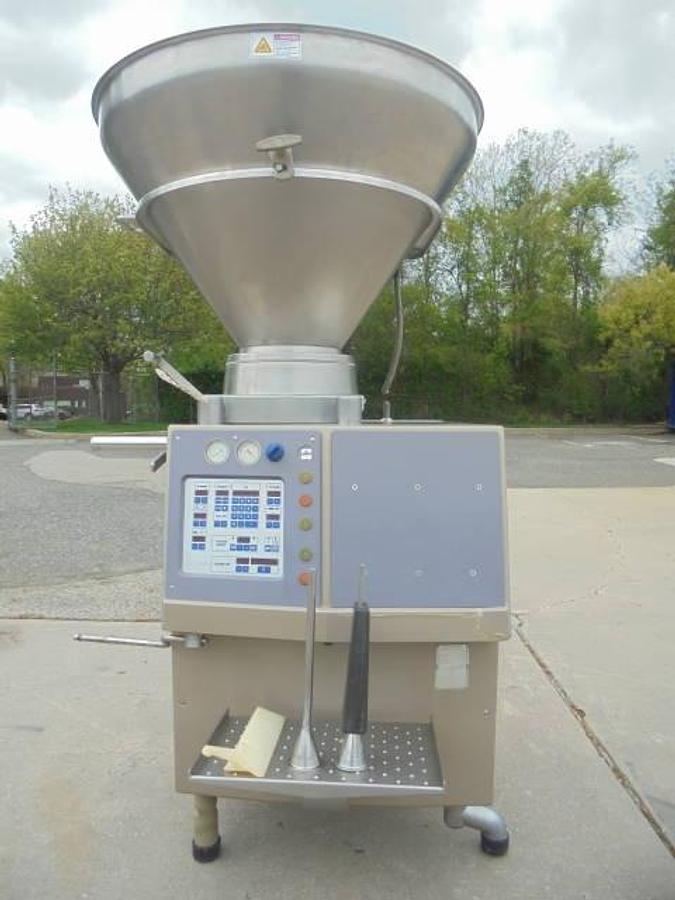
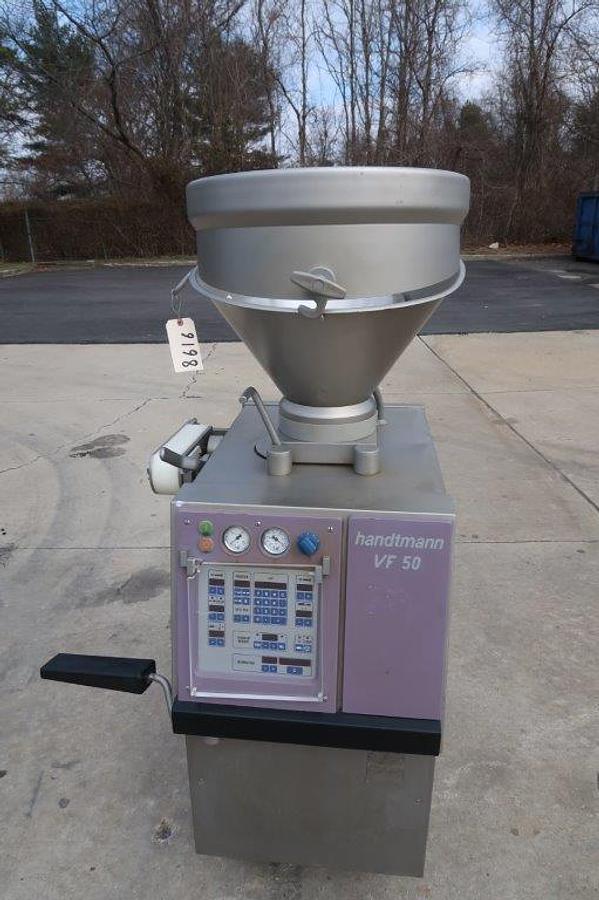
Handtmann is a global leader in food processing technology, particularly known for their vacuum filling machines and portioning systems. They cater primarily to the meat and sausage production industries, offering solutions that enhance product quality and consistency.
FAQ:
What is a Handtmann vacuum filling machine and what is it used for?
Handtmann vacuum filling machines are industrial food processing systems designed to fill, portion, and link products like sausages, ground meat, and other viscous food items with high precision and consistency. The machines use a vane cell pump system that moves product through the filling process without introducing air into the mix, which helps preserve the texture, appearance, and shelf life of the finished product. This makes them a preferred choice for meat processors, sausage manufacturers, and food production facilities that require repeatable output at scale.
Handtmann is a German manufacturer with roots going back to 1873, and the brand has built a strong reputation in the food processing industry for engineering reliability and output consistency. Their VF series machines cover a broad range of production capacities, from smaller artisan operations running lower volumes to large industrial facilities processing thousands of kilograms per hour. The machines are also widely compatible with attachments like twist-off systems, clippers, portioners, and linking modules, which gives processors significant flexibility to adapt the equipment to different product types and packaging formats.
What types of food products can be processed with a Handtmann vacuum filler?
Handtmann vacuum fillers are primarily associated with sausage and meat processing, but their capabilities extend well beyond that. These machines are commonly used to fill and portion fresh sausages, cooked sausages, frankfurters, bratwurst, salami, and other emulsified or coarse-ground meat products. Because the vane cell pump system handles product gently, it is also suitable for applications where maintaining the integrity of the mix is critical, such as products containing whole spice inclusions, cheese cubes, or vegetable pieces that should not be crushed during filling.
Beyond meat, Handtmann fillers are used in the production of plant-based protein products, seafood preparations, deli items, and some dairy and pastry applications depending on the machine model and configuration. The key factor is product viscosity and consistency. Products that flow under controlled pressure and can be portioned by weight or volume are generally good candidates for vacuum filling technology. Buyers evaluating a used Handtmann machine should consider which product types the machine was previously used for and whether the configuration, including nozzle sizes and attached portioning systems, matches their intended application.
What is the production capacity of Handtmann vacuum filling machines?
Production capacity varies significantly across the Handtmann VF series lineup, which is one of the reasons these machines are used by operations ranging from small butcher shops to high-volume industrial processors. Entry-level models in the VF series are designed for lower throughput environments where precision portioning matters more than raw speed. Mid-range models like the VF 608 and VF 616 are commonly found in mid-sized processing facilities and can handle several hundred to over a thousand kilograms per hour depending on product type and nozzle configuration. The higher-end VF 800 series machines are built for continuous, high-volume industrial production and can push significantly greater output.
For buyers shopping used Handtmann equipment, capacity is one of the first specifications to confirm. A machine that was configured for a high-volume operation may include features and attachments not needed by a smaller facility, and vice versa. It is worth asking the seller for the specific model number and any available production records or documentation, as these will give a clearer picture of what the machine was designed to do and how it was used. Capacity ratings from the manufacturer are typically listed in kilograms per hour and can also be influenced by the type of product being filled and the speed settings used during operation.
What is the difference between the Handtmann VF 600 series and VF 800 series?
The Handtmann VF 600 series and VF 800 series represent different tiers of production capacity and automation within the Handtmann vacuum filler lineup. The VF 600 series, which includes models like the VF 608, VF 616, and VF 628, is designed to cover a wide range of mid-level production needs. These machines are well suited for processors who need reliable portioning and filling with a reasonable degree of flexibility in product types and configurations. They are commonly found in regional meat processing facilities, specialty sausage producers, and food manufacturers with moderate throughput requirements.
The VF 800 series is engineered for higher-volume, continuous-run industrial environments where uptime, speed, and automation integration are the priority. These machines typically feature larger hopper capacities, higher pump output, and more advanced control systems that allow tighter integration with downstream equipment like clippers, linkers, and packaging lines. For buyers evaluating used equipment, the choice between the two series often comes down to matching machine capacity to actual production needs. Purchasing a VF 800 series machine for a low-volume operation may mean paying for capacity that will never be used, while trying to push a VF 600 series machine beyond its intended range in a high-volume setting can lead to accelerated wear.
What should buyers look for when purchasing a used Handtmann vacuum filling machine?
Buying a used Handtmann vacuum filler requires a careful evaluation of both the machine's mechanical condition and its history in production. Key areas to inspect include the condition of the vane cell pump, which is the core of the filling system, as well as seals, gaskets, the hopper, and any attached portioning or linking equipment. Wear on these components is expected in used machines, but the extent of wear will influence how much reconditioning the machine may need before it can be put back into service. Buyers should also check for corrosion, particularly in the hopper and any parts that were in regular contact with meat products or cleaning chemicals.
Reputable used equipment dealers will typically offer in-person inspections, video walkthroughs, or photo documentation of the machine's current condition. Some machines may still be installed at a production facility where an in-person inspection can be arranged. Keep in mind that most dealers do not have the permitting required to run actual food production, so live product tests are generally not possible. Buyers should also contact Handtmann directly to ask about parts availability and technical support for the specific model they are considering, since the age of the machine can affect what support is still available from the manufacturer.
Are replacement parts and technical support available for used Handtmann machines?
Parts availability for Handtmann vacuum filling machines depends largely on the model and its age. Handtmann has been manufacturing food processing equipment for well over a century, and the company maintains a support infrastructure for many of its machine lines. For relatively recent models in the VF 600 and VF 800 series, parts such as vanes, seals, pump components, and control system elements are generally available through the manufacturer or authorized service networks. Older or discontinued models may have more limited support, and some components may need to be sourced from third-party suppliers or fabricated to spec.
Before purchasing a used Handtmann machine, buyers are strongly encouraged to contact Handtmann directly to ask about parts availability and service support for the specific model number. This step can prevent a situation where a machine is purchased and then cannot be serviced due to unavailable components. A good used equipment dealer specializing in food processing machinery will often have some knowledge of parts availability for the machines they sell and can help buyers understand what they are getting into. Factoring in the potential cost of replacement parts and any needed reconditioning is an important part of calculating the true cost of acquiring used equipment.
Can Handtmann vacuum fillers be integrated with portioning, clipping, and linking attachments?
One of the notable strengths of the Handtmann VF series platform is its compatibility with a wide range of downstream attachments and processing modules. Handtmann machines are commonly paired with twist-off systems for creating linked sausages, mechanical or pneumatic clippers for sealing casings, portioners for weight-based or volume-based output, and linking modules that automate the separation and looping of sausage chains. This modular approach means that a single filling machine can be configured for a variety of product formats without requiring a completely different piece of equipment for each application.
For buyers looking at used Handtmann machines, it is worth asking whether any attachments are included with the machine or available separately. Attachments sold with the machine are often configured specifically for that unit, which can simplify setup. However, Handtmann's attachment ecosystem is well established enough that compatible modules can often be sourced independently. Buyers should verify compatibility between any separately acquired attachments and the specific machine model they are purchasing, as interface specifications can vary across machine generations. A dealer experienced in food processing equipment can often help match attachments to the correct machine.
What is the typical price range for used Handtmann vacuum filling machines?
Pricing for used Handtmann vacuum filling machines varies considerably based on the model, age, condition, included attachments, and the seller. Entry-level or older VF series models in basic configuration can be found at lower price points, while mid-range models like the VF 616 or VF 628 in good working condition with attachments will command higher prices. High-capacity machines from the VF 800 series, especially those that are more recent and well-maintained, typically represent the upper end of the used market pricing for this brand.
Because Handtmann is considered a premium brand in food processing equipment, used machines often retain meaningful resale value compared to lesser-known manufacturers. Buyers should budget not just for the purchase price but also for shipping, rigging, any reconditioning costs, and potential parts replacement. Getting a clear picture of the machine's service history and current condition through an inspection is the best way to assess whether the asking price reflects the actual value. Requesting an itemized breakdown of all costs including packaging, freight, and any loading fees will help buyers understand the full landed cost before committing to a purchase.
What does the inspection process look like when buying a used Handtmann filling machine?
Inspections are a standard part of purchasing used industrial food processing equipment, and most reputable dealers will accommodate them in some form. Buyers can typically request an in-person visit to the dealer's facility to view the machine directly, or a virtual inspection conducted via video call where a dealer representative walks through the machine's components in real time. Some dealers also provide detailed photo sets or pre-recorded video documentation that covers the machine's condition from multiple angles, including the pump assembly, hopper, control panel, and any attached modules.
In some cases, the machine being sold may still be installed at a food processing facility rather than at the dealer's location. In these situations, the dealer can often arrange access to the plant for an in-person inspection, and the machine may even still be in active production, which can be a useful indicator of its operational status. Buyers should understand that even in these cases, testing with actual product is typically not feasible, as food production environments have specific permitting and sanitation requirements that equipment dealers do not operate under. The goal of the inspection is to get the most accurate and honest picture of the machine's physical and mechanical condition before purchase.
What are the shipping and payment considerations when buying a used Handtmann machine?
Shipping a used Handtmann vacuum filling machine involves more logistical planning than smaller equipment purchases. These machines can be substantial in size and weight, so proper packaging is critical to prevent damage in transit. Depending on the machine's size and the seller's capabilities, it may be palletized, crated, or require custom rigging for safe loading and unloading. Buyers should ask the seller specifically what packaging will be used and whether heavy-duty rigging or a forklift will be needed at the destination, as these factors add to the total cost of the purchase.
On the payment side, most used equipment dealers require full payment before the machine is released for shipping. Some dealers may offer extended terms to established customers with a prior purchasing relationship, but buyers should not assume this is standard. Clarifying payment terms early in the process avoids delays. Buyers should also request a complete breakdown of all costs beyond the machine price itself, including freight charges, insurance, export documentation if applicable, and any fees for loading or rigging at the seller's location. Understanding the full landed cost before agreeing to a purchase is an important step in evaluating whether a deal makes financial sense.