Category
Manufacturer
Model
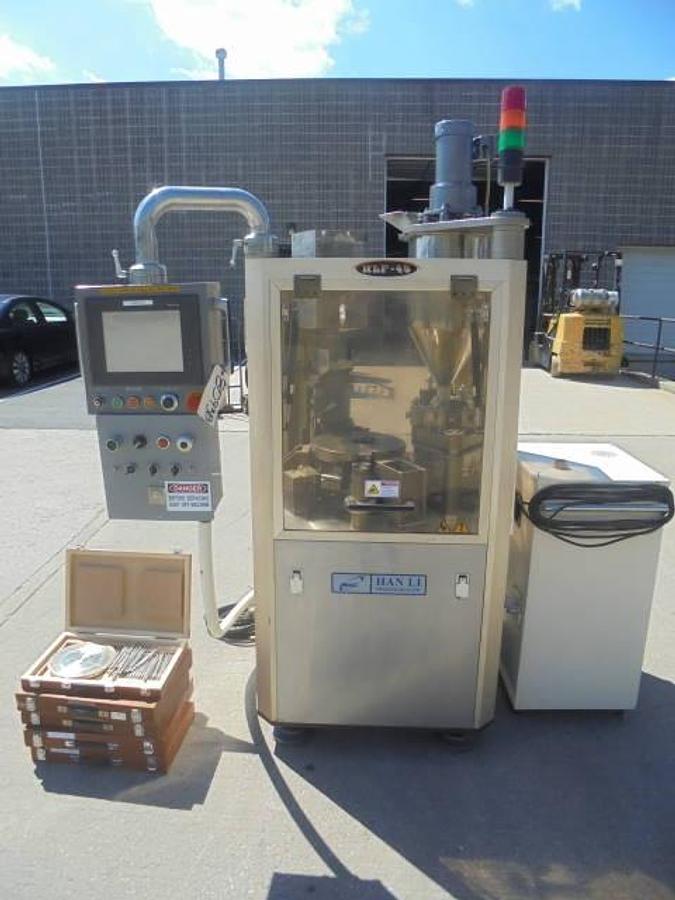
Han Li Phamatech
Han Li Phamatech focuses on providing pharmaceutical manufacturing equipment, particularly known for their tablet press machines. They serve the healthcare industry, ensuring compliance with stringent regulations and quality standards.
FAQ:
What types of pharmaceutical equipment does Han Li Phamatech produce?
Han Li Phamatech is a China-based pharmaceutical equipment manufacturer with a product range that covers several core areas of solid dosage form production. The brand is particularly well known for tablet press machines, but their lineup also includes capsule filling machines, blenders, granulators, coating machines, and packaging equipment. This makes them a relevant option for facilities that need to outfit multiple stages of a production line rather than sourcing each machine type from a different supplier.
Their equipment is generally positioned toward small to mid-size pharmaceutical manufacturers, contract manufacturers, and research laboratories that need capable machinery without the price point associated with larger European or North American brands. Used Han Li Phamatech machines available on the secondary market tend to reflect this same range, with tablet presses and automatic encapsulators being among the more commonly listed units. Buyers shopping the used market should pay close attention to the specific model and configuration, since tooling compatibility, output capacity, and control system specifications can vary significantly between generations of the same machine type.
What should buyers know about purchasing used pharmaceutical equipment compared to buying from a manufacturer?
Buying used pharmaceutical equipment is a fundamentally different transaction than purchasing directly from a manufacturer. The most significant difference is that used machines are sold as-is, meaning there is no manufacturer warranty covering the equipment's condition or performance. The responsibility for verifying the machine's working order falls entirely on the buyer, which makes the inspection process and the reputation of the seller far more important than they would be in a direct manufacturer purchase.
For regulated industries like pharmaceuticals, this due diligence carries extra weight. Buyers need to confirm that the specific model they are considering still meets the GMP standards applicable to their facility, whether that is FDA 21 CFR, EU GMP, WHO GMP, or another framework. Age and production history affect not just mechanical condition but also the availability of spare parts and manufacturer support. Consulting the equipment manufacturer directly before purchasing a used unit is a practical step, as they can advise on whether a particular model and serial number range is still supported, what parts are available, and whether the machine can realistically be validated in a current regulatory environment. Selecting a used equipment dealer who specializes in pharmaceutical machinery, rather than a general industrial reseller, reduces the risk considerably.
How can buyers verify the condition of used Han Li Phamatech equipment before purchasing?
Reputable used pharmaceutical equipment dealers typically offer several inspection options to help buyers assess a machine's condition before committing to a purchase. In-person inspections are the most thorough approach, allowing a buyer or their technical representative to examine the machine directly, check wear on contact parts, review the control system, and assess overall mechanical condition. When travel is not practical, most dealers can accommodate video inspections or provide detailed video walkthroughs of the equipment, which can reveal a great deal about the machine's state.
It is worth understanding that even the most cooperative dealer will generally not be able to run actual pharmaceutical product through a machine during an inspection. Equipment dealers typically do not hold the production permits required for that level of testing. Some machines may still be installed at an active manufacturing facility at the time of sale, in which case the dealer can sometimes arrange for the buyer to observe the equipment running in its current production environment, which is about as close to a live test as most buyers will get. For any used pharmaceutical machine, buyers should also request whatever documentation is available, including maintenance records, calibration certificates, and any existing validation documentation, since this paperwork can significantly reduce the cost and effort of qualifying the machine at a new facility.
Are Han Li Phamatech machines GMP compliant, and how should buyers evaluate compliance for used units?
Han Li Phamatech designs its equipment with GMP compliance as a stated objective, and many of their models are built to meet standards relevant to pharmaceutical manufacturing including FDA 21 CFR guidelines, EU GMP requirements, and WHO GMP frameworks. For a machine purchased directly from the manufacturer, compliance documentation and design specifications would typically accompany the sale. The situation is more nuanced for used equipment, where the compliance status of a specific unit depends on its age, configuration, maintenance history, and the regulatory environment it was originally built for.
A used machine that was GMP compliant at the time of its original installation may still meet current standards, or it may require modifications, updated documentation, or re-validation before it can be used in a regulated production environment. Buyers in regulated markets should treat GMP compliance as something to be verified rather than assumed when purchasing used equipment. This means reviewing any existing validation documentation (IQ, OQ, PQ protocols and reports), checking whether the model is still recognized by the manufacturer, and potentially engaging a validation specialist to assess what would be required to qualify the machine at the buyer's facility. The specific regulatory requirements of the buyer's target market should drive this evaluation, since compliance thresholds vary between regions.
What is the typical price range for used Han Li Phamatech pharmaceutical equipment?
Pricing for used Han Li Phamatech equipment varies considerably depending on the machine type, model generation, production capacity, and overall condition. As a brand positioned toward cost-effective pharmaceutical manufacturing, Han Li Phamatech machinery tends to be priced below comparable European equipment even when purchased new from the manufacturer. On the secondary market, this pricing advantage is amplified, making their used machines an attractive option for buyers with tighter capital budgets.
Tablet presses and capsule filling machines from this manufacturer can range from a few thousand dollars for older or smaller-capacity units to considerably more for higher-output models in good working condition with documentation intact. Automatic encapsulators, which require more complex tooling and calibration, tend to sit at the higher end of the used price spectrum for this brand. Buyers should factor in all associated costs beyond the machine price itself, including shipping, crating or rigging, any required refurbishment, and the cost of re-validation if the machine will be used in a regulated production environment. Getting a clear picture of the total landed cost before committing to a purchase is essential, as these additional expenses can represent a meaningful percentage of the machine's base price.
What documentation should buyers request when purchasing used pharmaceutical manufacturing equipment?
Documentation is one of the most practically valuable assets that can accompany a used pharmaceutical machine, and buyers should request as much of it as possible before finalizing a purchase. The most useful documents include the original operator and maintenance manuals, calibration certificates, any existing validation protocols and reports (IQ, OQ, PQ), spare parts lists, and records of maintenance or repairs performed during the machine's service life. For equipment that was previously operating in a regulated facility, some of this documentation may be available from the selling facility or from the dealer.
The presence of thorough documentation can meaningfully reduce the time and cost required to qualify a used machine at a new facility. Validation in a pharmaceutical environment requires demonstrating that a piece of equipment performs consistently within defined parameters, and having the historical data and protocols from a previous installation gives the new owner a head start on that process. Buyers should also check whether the manufacturer still provides technical support for the specific model they are considering, since access to manufacturer documentation, spare parts, and technical guidance becomes more important once a machine is installed and in production. A dealer who specializes in pharmaceutical equipment will often be better positioned to assist with sourcing documentation than a general industrial equipment reseller.
How does shipping and logistics work for used pharmaceutical equipment purchases?
Shipping used pharmaceutical equipment involves more complexity than standard freight, largely because of the weight, size, and sensitivity of the machinery involved. Proper packaging is critical to preventing damage in transit. Depending on the machine, this can mean anything from basic palletization with protective wrapping to full custom crating built around the specific dimensions and fragility points of the equipment. The level of packaging required directly affects shipping costs, and buyers should ask dealers for a detailed breakdown of crating and packaging charges before finalizing a purchase.
Larger machines, particularly tablet presses with heavy frames or multi-component encapsulators, may require specialized rigging equipment for loading at the origin point and unloading at the destination. Rigging costs are typically separate from freight charges and can add up quickly for heavy industrial equipment. International shipments introduce additional considerations including customs documentation, import duties, and in some cases regulatory permits for pharmaceutical machinery. Buyers should request a full landed cost estimate from the dealer that accounts for packaging, rigging, freight, and any applicable import costs, so there are no surprises once the transaction is underway. Most reputable dealers have experience coordinating these logistics and can provide guidance on what to expect.
What are the payment terms typically associated with used pharmaceutical equipment purchases?
Used equipment dealers in the pharmaceutical machinery space generally require full payment before a machine is released for shipping. This is standard practice across the used industrial equipment industry and reflects the fact that, unlike a manufacturer with ongoing production runs, a dealer is selling individual units that cannot easily be re-listed once the logistics of a sale are underway. Buyers should plan for this upfront payment requirement when budgeting for a purchase.
Some dealers may extend payment terms to established customers with a prior purchase history, but this is the exception rather than the rule for first-time buyers. Wire transfer is the most common payment method for transactions of this size, though the specifics will vary by dealer. Buyers unfamiliar with purchasing used capital equipment should also be aware that the as-is nature of used machinery means the payment structure does not include provisions for returns or refunds in the way a retail purchase might. This reinforces the importance of completing a thorough inspection before payment is made, rather than after. Understanding the full scope of the transaction, including payment timing, shipping release conditions, and what documentation will be provided, should all be clarified with the dealer before funds are transferred.
What is the difference between a tablet press and a capsule filling machine, and which is right for a given application?
Tablet presses and capsule filling machines are both used to produce solid oral dosage forms, but they work through entirely different mechanisms and are suited to different formulations and production goals. A tablet press compresses a powder or granule blend into a solid tablet using punches and dies. The process requires that the formulation have adequate flow and compressibility characteristics, and the resulting tablet is a single, dense unit that can be film coated, scored, or debossed. Tablet presses are well suited for high-volume production and offer good dose uniformity when the formulation is properly developed.
Capsule filling machines, including automatic encapsulators like those produced by Han Li Phamatech, fill pre-formed gelatin or HPMC capsule shells with a measured dose of powder, pellets, granules, or in some cases liquids. Capsules are often preferred for formulations that are difficult to compress, have poor taste that needs masking, or are intended for faster dissolution. They also offer flexibility for combination products where multiple fill types are used in a single capsule. The choice between the two formats typically comes down to the formulation's physical properties, the target patient population, the desired release profile, and the production volumes involved. For a facility evaluating used equipment, it is also worth considering which format the existing team has experience operating and validating, since that practical knowledge affects how quickly a machine can be qualified and brought into production.
How should a buyer evaluate a used equipment dealer specializing in pharmaceutical machinery?
The dealer's track record and specialization are the two most important factors to assess before purchasing used pharmaceutical equipment. A dealer who has been operating in the pharmaceutical equipment space for many years will have accumulated knowledge about specific brands and models, understand the documentation requirements that regulated buyers need, and have established relationships with rigging and freight companies experienced in moving sensitive machinery. General industrial equipment resellers may list pharmaceutical machines, but they often lack the product knowledge to accurately describe a machine's condition or help a buyer understand its suitability for a regulated application.
Practical indicators of a reputable dealer include the depth of information provided in equipment listings, willingness to accommodate inspections (in person or via video), transparency about a machine's history and condition, and clear communication about total costs including packaging, rigging, and freight. Buyers should also look at how long the dealer has been in business and whether they carry a consistent inventory of pharmaceutical-specific equipment rather than a broad mix of unrelated industrial machinery. Asking the dealer specific technical questions about a machine is a useful test of their expertise. A knowledgeable dealer will be able to speak to tooling compatibility, control system specifications, and known wear points for a given model, while a less specialized reseller may only be able to relay what is written on a spec sheet.