Category
Manufacturer
Model
FAQ:
What is a jacketed double motion kettle and what is it used for?
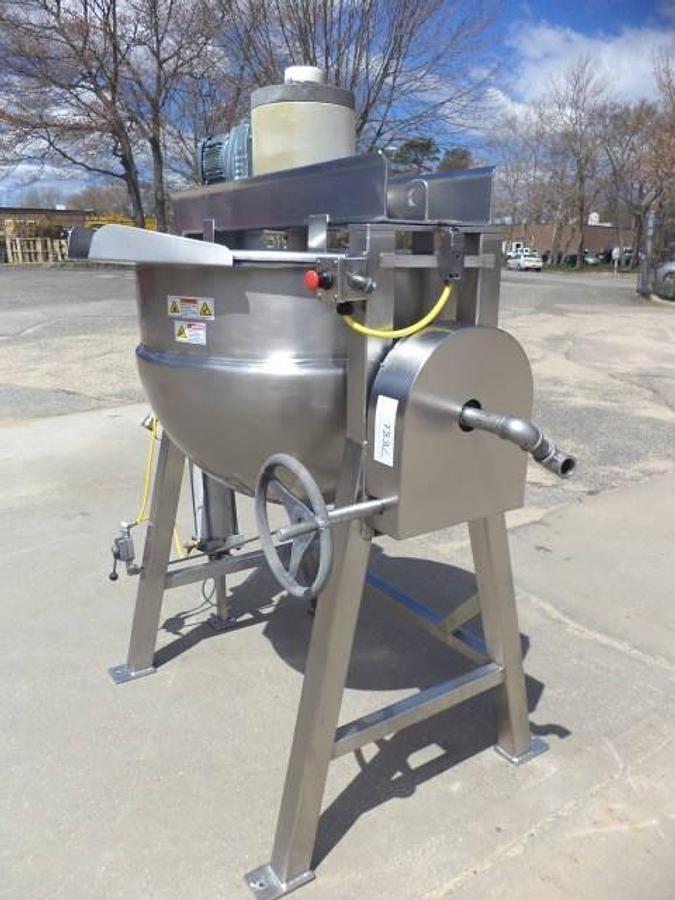
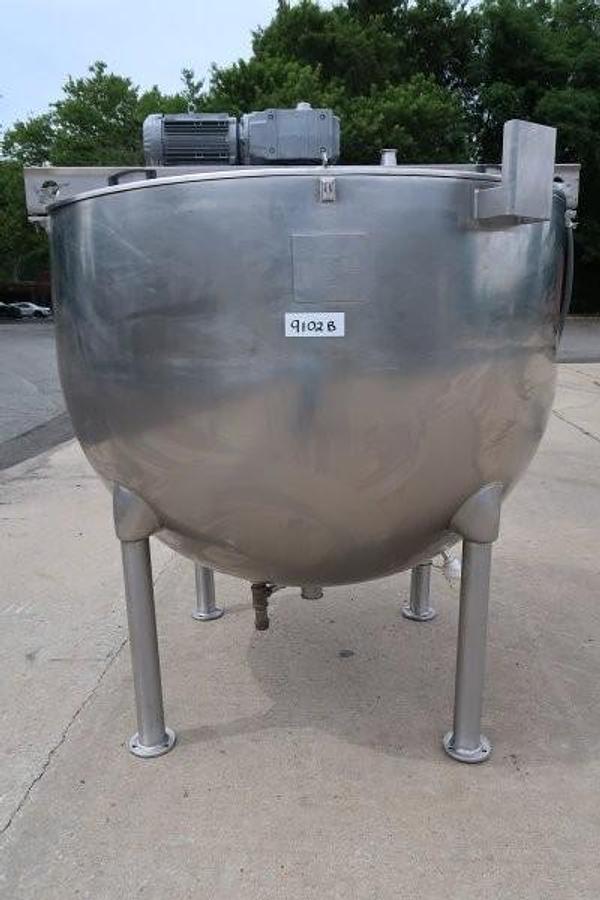
A jacketed double motion kettle is a piece of commercial food processing equipment designed for cooking, heating, and mixing large volumes of product. The 'jacketed' portion refers to a double-walled vessel where steam or hot water circulates between the inner and outer walls, providing indirect, even heat transfer to the product inside. This design prevents scorching and allows precise temperature control across the entire batch. The 'double motion' agitation system typically combines two separate mixing actions, often a planetary or sweep motion along the outer wall combined with a counter-rotating inner agitator, which keeps thick or viscous products moving continuously and prevents sticking.
These kettles are widely used in food manufacturing facilities for products like soups, sauces, jams, confections, dairy products, and institutional-scale recipes. The tilt discharge feature, common on many commercial models, allows operators to pour the finished product directly into containers or downstream processing equipment by tilting the kettle on a pivot axis rather than scooping or pumping the contents out manually. A 100-gallon capacity unit is considered a mid-to-large production size, suitable for batch processing operations at food manufacturers, co-packers, and institutional kitchens. Stainless steel construction is the industry standard for food contact surfaces due to its corrosion resistance, ease of sanitation, and compliance with food safety regulations.
What should I know before buying a used commercial kettle?
Buying a used commercial kettle requires more due diligence than purchasing new equipment, because the buyer assumes responsibility for verifying the machine's condition. The most important step is arranging an inspection before committing to a purchase. Reputable used equipment dealers will typically offer in-person inspections, live video walkthroughs, or recorded video documentation of the machine. During an inspection, buyers should look closely at the condition of the jacket welds, the integrity of the agitator shaft seals, the function of the tilt mechanism, the condition of any gaskets or valves, and the overall cleanliness of the food contact surfaces. Any signs of pitting, corrosion, or weld repairs on the interior bowl deserve careful scrutiny.
It is also worth contacting the original equipment manufacturer directly to ask about parts availability and technical support for the specific model and serial number being considered. Older machines or discontinued models may have limited parts availability, which affects long-term serviceability. Buyers should also factor in the full landed cost of the equipment, including rigging, freight, and any reconditioning work needed before the kettle can be put back into production. Used commercial kettles are sold as-is by dealers, so understanding exactly what you are buying before the transaction is finalized protects the investment. Selecting a dealer with a long track record in food processing equipment specifically, rather than a general industrial auction, gives buyers a better chance of getting accurate, knowledgeable descriptions of what the machine can do.
What is Hamilton Trinity Industries and what kind of equipment do they manufacture?
Hamilton Trinity Industries is a manufacturer of commercial food processing equipment, particularly known for producing jacketed steam kettles used in food production environments. Their kettles are built for industrial and institutional applications rather than consumer use, and are designed to handle the demands of continuous batch production in facilities such as food manufacturers, co-packers, soup and sauce producers, and large-scale institutional kitchens. The equipment is constructed from stainless steel to meet food industry sanitation standards and is engineered for durability under heavy production schedules.
Hamilton Trinity kettles are not consumer appliances and should not be confused with countertop or household kettles sold in retail stores. They are capital equipment items that appear in the used and surplus food processing machinery market when production facilities upgrade, consolidate, or close. Buyers searching for this brand in the used equipment market will typically find listings through specialized industrial machinery dealers rather than general retail channels. When evaluating a used Hamilton Trinity kettle, prospective buyers should contact the manufacturer directly to confirm parts availability and technical support for the specific model, as the level of support available can vary depending on the age and configuration of the machine.
How much does a used Hamilton Trinity Industries kettle typically cost?
Pricing for used commercial jacketed kettles varies considerably based on capacity, configuration, age, and overall condition of the equipment. A used 100-gallon stainless steel jacketed kettle with double motion agitation and tilt discharge is a well-specified piece of production equipment, and used examples in good working condition can range from several thousand dollars to well above ten thousand dollars depending on market conditions and the specific features included. Kettles with more complex agitation systems, larger capacities, or additional features such as scraped surface agitators or integrated temperature controls generally command higher prices.
Buyers should also account for costs beyond the listed price. Rigging and loading at the seller's facility, freight to the destination, and any unloading or installation costs at the receiving facility can add meaningfully to the total investment. Depending on the condition of the machine, reconditioning costs such as seal replacements, valve rebuilds, or surface polishing may also be necessary before the kettle is ready for production. Getting a clear picture of the full landed cost before agreeing to a purchase is an important part of evaluating whether a particular used kettle represents good value. Requesting a detailed inspection and asking the dealer specific questions about the machine's history and current condition will help buyers make a more informed comparison between available options.
What does 'tilt discharge' mean on a commercial kettle?
Tilt discharge is a design feature on commercial kettles that allows the entire vessel to pivot on a horizontal axis so the contents can be poured out through the kettle's opening rather than being removed by pump, ladle, or other means. The tilting mechanism is typically operated by a hand wheel, gear drive, or motorized actuator, giving the operator controlled, gradual pouring action. This is particularly useful for thick or viscous products like sauces, stews, or confections that are difficult to transfer by pump, and it allows the kettle to drain more completely than a bottom-outlet valve alone.
From a sanitation standpoint, tilt discharge also makes cleaning easier because the operator can fully invert or steeply angle the vessel to drain wash water and inspect the interior. In a production environment, tilt discharge speeds up batch turnaround by reducing the time needed to empty and clean the kettle between runs. On larger kettles, the tilt mechanism is often motorized and may include a locking feature to hold the kettle at a specific pour angle. When inspecting a used tilt-discharge kettle, buyers should verify that the tilt mechanism operates smoothly without binding or excessive play, and that any locking or braking components are functioning correctly, as these are safety-critical elements of the equipment.
What should I inspect on a used stainless steel jacketed kettle before buying?
A thorough inspection of a used jacketed kettle covers several distinct systems. Starting with the vessel itself, the interior stainless steel surface should be free of deep pitting, cracks, or weld repairs that could harbor bacteria or compromise structural integrity. The jacket, which is the outer chamber through which heating or cooling media flows, should be checked for any signs of leaks, corrosion, or previous repairs. Pressure relief valves and jacket fittings should be present and in serviceable condition. If the kettle was steam-heated, the steam inlet, condensate outlet, and any pressure gauges should be examined.
The agitation system deserves equal attention. On a double motion kettle, both agitator drives should be checked for smooth operation, unusual noise, and proper seal condition at the shaft penetrations through the vessel wall. Worn or leaking shaft seals can allow product to contaminate the drive components and are a common maintenance item on high-use kettles. The tilt mechanism, if present, should operate without binding, and any safety locks should engage positively. Buyers should also ask about the electrical condition of any motors and controls, and whether the unit has been tested under power recently. Dealers who specialize in food processing equipment will often be able to provide video documentation of the machine running, which gives buyers a useful baseline for assessing mechanical condition before committing to an in-person visit or purchase.
How does double motion agitation differ from single agitation in commercial kettles?
Single agitation kettles use one agitator, typically a sweep or anchor-style blade that travels around the inside wall of the vessel. This works well for relatively fluid products but can leave dead zones near the center of the kettle where product moves more slowly, and it may not provide enough shear for products that need active blending throughout the entire batch. Double motion agitation adds a second agitator that typically rotates in the opposite direction or at a different speed, often positioned at the center of the vessel. The result is a more thorough mixing action that reaches the entire volume of the kettle, reduces temperature gradients, and prevents product from building up in low-movement areas.
For food manufacturers working with thick sauces, gravies, puddings, or confections, double motion agitation is often essential to product quality and consistency. It reduces the risk of burning at the wall and ensures that heat from the jacket is distributed evenly throughout the batch. Double motion kettles are generally more mechanically complex than single agitation units, which means there are more components to inspect and maintain on a used machine. Buyers should pay particular attention to the condition of both drive systems, the inter-agitator clearances, and the condition of any scrapers or blades attached to the agitators, as worn scrapers reduce the effectiveness of the wall-sweep action and can affect heat transfer efficiency.
What are the typical shipping and rigging considerations for a used commercial kettle?
Commercial kettles are heavy, bulky pieces of equipment that require careful handling throughout the shipping process. A 100-gallon jacketed kettle can weigh anywhere from approximately 800 to over 2,000 pounds depending on its construction and features, which puts it well beyond the capacity of standard parcel or LTL freight without proper preparation. Before shipping, the equipment typically needs to be secured to a heavy-duty pallet or placed in a crate, with the agitator, tilt mechanism, and any fragile components protected against movement and impact. The cost of palletization or crating varies and is usually the buyer's responsibility or is quoted separately by the dealer.
Loading at the seller's facility and unloading at the destination often require a forklift or rigging crew, particularly if the kettle is large or if the loading dock situation is not straightforward. These rigging costs are typically additional and should be confirmed with the dealer before finalizing a purchase. Buyers should ask specifically about how the machine will be packaged, who is responsible for loading, what freight carrier will be used, and whether liftgate service is needed at the destination. Getting a complete landed cost estimate, including all rigging, freight, and delivery charges, before agreeing to buy is the most reliable way to avoid unexpected expenses and accurately compare the total cost of different equipment options.
What payment terms should I expect when buying used food processing equipment?
Used equipment dealers in the food processing machinery market generally require full payment before a machine is released for shipping. This is standard practice across the industry and reflects the nature of used equipment transactions, where the dealer has already acquired and is holding the asset. Payment is typically accepted by wire transfer, and some dealers may accept other forms of business payment depending on the transaction size and the buyer's relationship with the dealer. Credit terms or deferred payment arrangements are uncommon for first-time buyers but may occasionally be extended to established customers with a prior purchasing history with that dealer.
Buyers should treat the payment process as part of their overall due diligence. Confirming the dealer's banking details through verified channels before initiating a wire transfer is a basic precaution. It is also reasonable to ask for a formal invoice or purchase agreement that clearly describes the equipment, the agreed price, and any included items such as accessories or documentation before sending payment. Reputable dealers with a long history in the industry will have straightforward, transparent payment processes and will be willing to answer questions about the transaction before funds are transferred. If a dealer is reluctant to provide documentation or pushes for unconventional payment methods, that is a signal to proceed with caution.
How can I verify the condition of used food processing equipment if I cannot visit in person?
Remote verification of used equipment condition has become a well-established part of the used machinery market, and reputable dealers offer several options for buyers who cannot travel to inspect a machine in person. The most common approach is a live video inspection conducted via video call, where a dealer representative walks through the equipment in real time, demonstrating the tilt mechanism, running the agitator drives, showing the interior of the vessel, and pointing out any visible wear or damage. This allows the buyer to ask specific questions and direct attention to areas of concern as the inspection proceeds.
Dealers may also provide pre-recorded video documentation of the machine, including close-up footage of key components, the interior bowl surface, shaft seals, and any control panels or electrical components. Detailed photographs from multiple angles supplement video and are standard for any serious listing. Buyers should ask for images or footage of the kettle's data plate or nameplate, which typically shows the manufacturer, model number, capacity, and jacket pressure rating. This information is useful for contacting the manufacturer directly to ask about parts availability and technical specifications. Keep in mind that most equipment dealers do not have production facilities, so functional testing under actual operating conditions is generally not possible. The goal of any remote inspection is to get the most accurate possible picture of the machine's current mechanical state, and a dealer who is forthcoming with documentation and willing to answer detailed questions is a strong indicator of a trustworthy transaction.