Category
Manufacturer
Model
Hallock
Hallock is focused on providing advanced automation solutions for the packaging industry, particularly in food and beverage sectors. Their equipment includes high-speed filling and capping machines that are designed to optimize production lines.
FAQ:
What types of packaging equipment does Hallock manufacture?
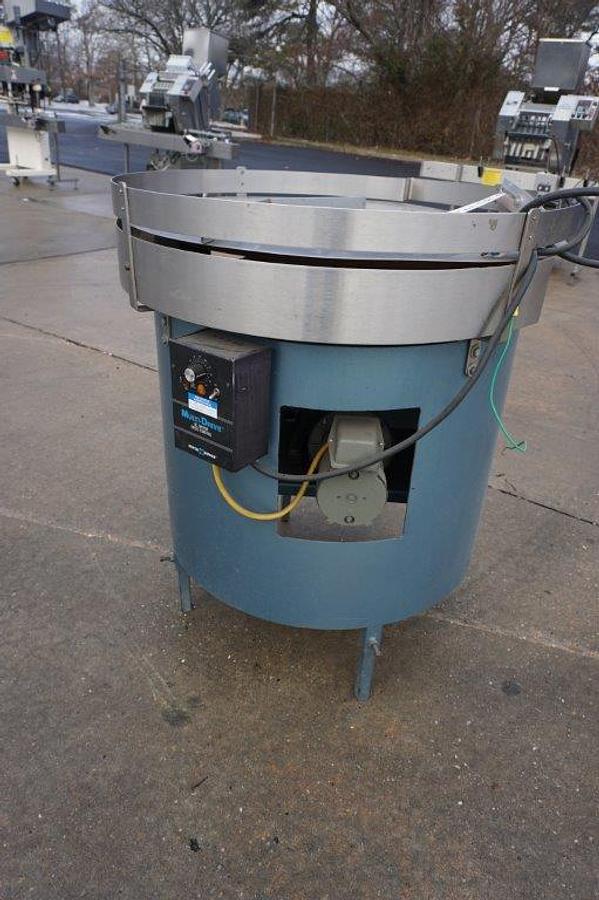
Hallock builds automation-focused packaging machinery designed for high-volume production environments. Their lineup includes high-speed filling and capping machines, rotary unscrambling and accumulating tables, and related equipment built to optimize packaging lines. The rotary accumulating table, for example, is a common piece of Hallock equipment that appears on the used market, designed to handle bottle and container flow at variable speeds with a 32-inch diameter turntable configuration.
Beyond filling and capping, Hallock has a broader association with form-fill-seal machines and bagging equipment suited to dry goods and agricultural products. Their machines are generally built for durability in demanding, continuous-run production settings, which is part of why they retain value and remain functional for many years after leaving the original facility.
What industries commonly use Hallock packaging equipment?
Hallock packaging equipment is most closely associated with food and beverage production, where high-speed, reliable automation is critical to maintaining throughput. Their filling and capping machines are well-suited to bottling lines, while their accumulating and unscrambling tables support container handling across a range of product types. Agricultural processing and dry goods packaging are also industries where Hallock machinery has a strong track record, particularly for bagging and form-fill-seal applications.
The durability and relatively straightforward mechanical design of many Hallock machines makes them attractive to mid-size and large production facilities that run extended shifts. Buyers from snack food, grain processing, beverage, and consumer goods manufacturing have historically relied on this equipment for its consistent performance in high-volume environments.
Where can I find used Hallock packaging equipment for sale?
Used Hallock machinery is available through specialized used packaging equipment dealers who focus on industrial and food processing machinery. These dealers typically carry a rotating inventory of machines sourced from facility closures, production upgrades, and equipment auctions. Searching dealers who specialize specifically in packaging and food processing equipment tends to yield better results than general industrial surplus sites, since specialists are more likely to have accurate model information and condition details.
When evaluating a listing, it helps to confirm the model number, approximate production year, and any available service history. Dealers who specialize in packaging machinery will generally have more context about a given machine's application history and can provide better answers about its current condition than a general auction platform. Choosing a dealer with a long track record in the packaging equipment space reduces the risk that comes with buying used machinery.
What should I look for when evaluating used Hallock equipment before buying?
The most important factors to assess are the machine's model number, approximate age, and visible mechanical condition. Knowing the model allows you to research parts availability and understand what level of support the manufacturer may still offer for that particular configuration. Older models may have limited parts availability from the manufacturer, which means sourcing components could require third-party suppliers or custom fabrication. Understanding this upfront helps you budget accurately for ongoing maintenance.
Reputable dealers will typically offer in-person inspections, video walkthroughs, or recorded video captures of the machine so you can assess its current state before committing to a purchase. Keep in mind that most equipment dealers do not have the permitting or production setup to run actual product through a machine during a demonstration, so inspections focus on mechanical condition, visible wear, and operational movement rather than full production testing. If the machine is still installed at an active facility, some dealers can arrange an inspection at that location, which gives you the added benefit of seeing it in a working environment.
Are parts and technical support available for used Hallock packaging machinery?
Parts availability for used Hallock equipment depends heavily on the age and model of the machine. More recent models are more likely to have manufacturer support and available components, while older machines may fall outside the range of parts the manufacturer actively stocks. Before purchasing, it is worth contacting Hallock directly to ask about parts support for the specific model you are considering. That conversation will give you a realistic picture of what to expect in terms of manufacturer assistance.
For models where manufacturer parts are limited, buyers often turn to third-party component suppliers or work with local machine shops to fabricate replacement parts. Many Hallock machines use standard industrial components like motors, drives, and sensors that are widely available regardless of the machine's age. Having a qualified packaging equipment technician review the machine's condition before purchase can help identify any components that may need near-term replacement and factor those costs into the overall buying decision.
What is the typical price range for used Hallock packaging equipment?
Pricing for used Hallock machinery varies considerably based on the type of equipment, its age, mechanical condition, and how much reconditioning has been done prior to sale. A smaller piece of equipment like a rotary accumulating table will generally be priced lower than a complete high-speed filling and capping line. Condition is often the biggest pricing driver: a machine that has been recently serviced and is in clean operational condition will command a meaningfully higher price than one sold strictly as-is from a decommissioned facility.
Buyers should also factor in the full landed cost of the equipment, not just the listed price. Shipping, crating or palletization, and rigging for loading and unloading can add significantly to the total investment, particularly for heavier machines that require specialized equipment to move. Getting a clear breakdown of all these costs from the dealer before finalizing a purchase is the best way to avoid budget surprises.
What does warranty coverage look like for used Hallock packaging equipment?
Used packaging equipment is typically sold on an as-is basis, which is standard practice across the used industrial machinery market. Warranties in the traditional sense are generally associated with manufacturers selling new equipment directly, not with used equipment transactions. This places the responsibility of due diligence squarely on the buyer, making a thorough pre-purchase inspection the most important step in the buying process.
To protect yourself in an as-is transaction, prioritize dealers who have a long, verifiable history of selling packaging machinery and who are transparent about a machine's condition. Requesting an inspection, whether in person or via video, is the practical substitute for warranty protection in the used equipment market. Consulting with the manufacturer about the specific model's known issues and parts availability is also a smart step before committing to a purchase.
How does shipping work for used Hallock packaging equipment?
Shipping costs for used packaging machinery depend on the size and weight of the equipment, the distance it needs to travel, and the level of packaging required to protect it in transit. Smaller machines may ship palletized, while larger or heavier equipment typically requires custom crating to prevent damage during loading, transport, and unloading. The cost of that crating or palletization is usually separate from the freight charge itself, so buyers should ask for a full breakdown before finalizing a purchase.
Larger Hallock machines, particularly complete filling lines or heavy rotary tables, may require professional rigging for both loading at the origin and unloading at the destination. Rigging costs can be substantial and are often not included in a standard freight quote. Getting clarity on all of these line items, including crating, freight, and rigging at both ends, gives you an accurate picture of the total delivered cost of the equipment.
What payment terms should I expect when buying used Hallock equipment from a dealer?
Most used equipment dealers require full payment before a machine is released for shipping. This is standard practice in the industry and applies to most buyers regardless of the transaction size. Some dealers may offer extended payment terms to repeat customers with an established purchasing history, but first-time buyers should generally plan to pay in full upfront.
Before sending payment, it is worth confirming the dealer's process for inspection, documentation, and release of the equipment. A reputable dealer will have a clear process for confirming payment receipt, preparing the machine for shipment, and providing any available documentation such as manuals or service records. Understanding that process in advance helps the transaction go smoothly and gives you confidence that you are working with a professional operation.
What is a rotary unscrambling and accumulating table, and how is it used in a packaging line?
A rotary accumulating table is a piece of material handling equipment that manages the flow of containers, bottles, or other packaging units between stages of a production line. The rotating turntable surface moves containers in a controlled, continuous flow, preventing bottlenecks when upstream equipment runs faster than downstream equipment, or vice versa. The unscrambling function specifically refers to the table's ability to orient randomly placed containers into a single-file, organized stream that downstream filling or capping equipment can process reliably.
In a typical bottling or packaging line, a rotary unscrambler sits near the beginning of the line, taking bulk containers and feeding them in the correct orientation to fillers, cappers, or labelers. The variable speed control on machines like the 32-inch diameter Hallock table allows operators to tune the feed rate to match the rest of the line, which reduces jams and improves overall throughput. These tables are durable, mechanically simple, and often remain functional for decades, which makes used units a practical option for facilities looking to add or replace this type of equipment without the cost of a brand-new machine.