Category
Manufacturer
Model
FAQ:
What is a Hacos cookie decorating system and how does it work?
Hacos is a Belgian confectionery equipment manufacturer known for producing professional-grade decorating tools for cookies, chocolate, and other confections. Their cookie decorating systems are built around the concept of repeatable, consistent decoration at production scale. The core technology typically involves molds, stencils, or transfer sheet mechanisms that apply detailed designs onto cookie surfaces quickly and uniformly, without requiring the operator to hand-pipe each element freehand.
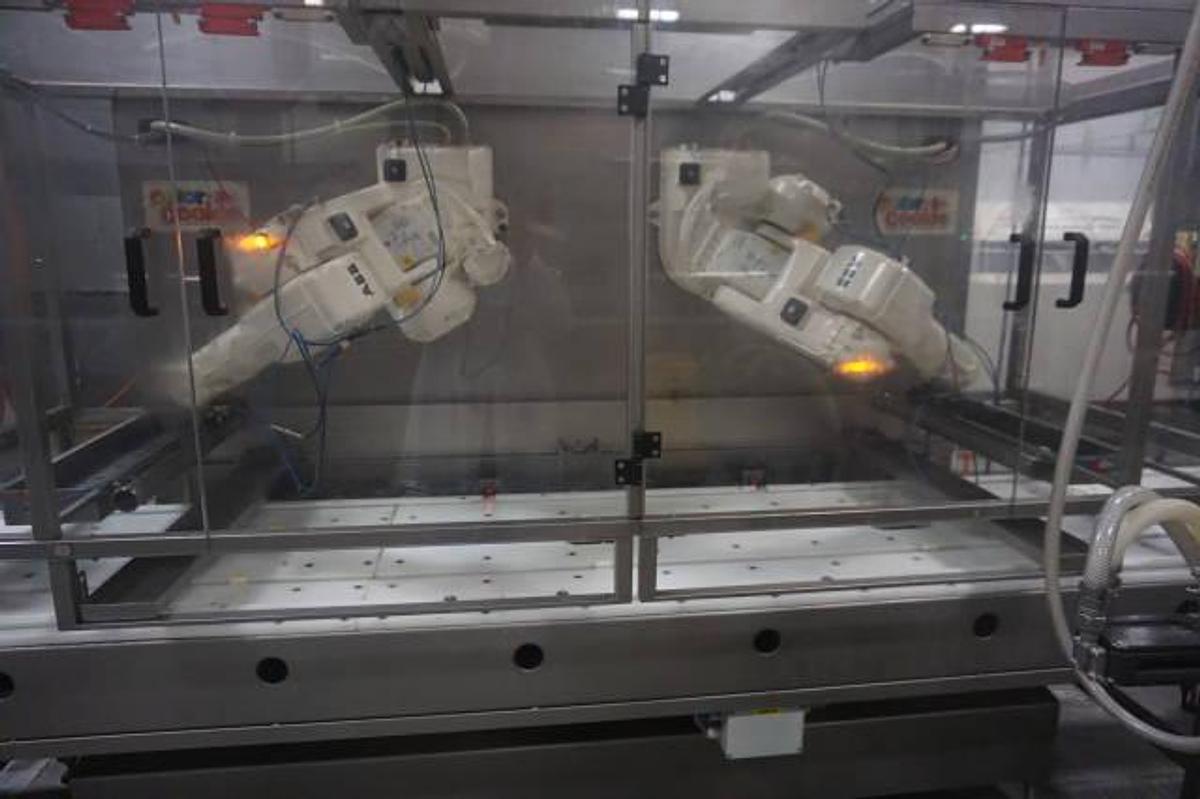
The Decorobot, one of the flagship models in the Hacos lineup, automates much of the decoration process by depositing icing or other coatings in precise patterns across multiple cookies at once. This makes it possible for a bakery or confectionery operation to produce large batches of identically decorated cookies in a fraction of the time it would take using traditional hand-decorating methods. The system is designed for commercial production environments where speed, consistency, and food-safe operation are all priorities.
What types of designs and patterns can be created with a Hacos cookie decorating system?
Hacos decorating systems are capable of producing a wide range of intricate patterns, from geometric designs and floral motifs to detailed figurative artwork, depending on the molds, stencils, or programming used. Because the decoration is applied mechanically rather than by hand, the level of detail is highly consistent from cookie to cookie, which is one of the main reasons professional bakeries invest in this type of equipment. Designs that would take a skilled decorator several minutes per cookie can often be replicated in seconds per unit at volume.
The flexibility of the system also extends to seasonal and custom work. Wedding cookies, corporate branded cookies, holiday batches, and retail packaging runs are all common applications. Some configurations allow operators to switch between design templates relatively quickly, making it practical to run short production runs of multiple different designs within the same shift. The repeatability factor is particularly valued in wholesale and custom order contexts where every cookie in a box needs to look identical.
Does the Hacos cookie decorating system work with royal icing, fondant, or other mediums?
Hacos decorating systems are primarily designed to work with fluid or semi-fluid confectionery coatings, and royal icing is one of the most commonly used mediums in this type of equipment. The viscosity of the decorating medium matters significantly, as the system relies on controlled flow and deposition to achieve clean, defined patterns. Royal icing, when mixed to the correct consistency, is well-suited to this kind of automated application because it flows predictably and sets firm once applied.
Fondant-based coatings and other pourable confectionery mediums may also be compatible depending on the specific model and configuration, but operators should verify compatibility with the particular machine they are evaluating. Chocolate coatings and compound coatings are used in some Hacos equipment designed for confectionery decoration more broadly, though cookie-specific systems are generally optimized for icing-type mediums. Anyone purchasing a used Hacos system should clarify which mediums the machine was originally configured for and whether any adjustments are needed for their intended application.
What is the Hacos Decorobot and what makes it different from other cookie decorating equipment?
The Hacos Decorobot is an automated cookie decorating machine designed for commercial bakery and confectionery production. It stands apart from simpler decorating tools by combining precision deposition technology with the ability to handle high-volume runs consistently. Rather than relying on operator skill to produce uniform results, the Decorobot mechanizes the decoration step, which reduces both labor costs and the variability that comes with hand decoration. For operations producing hundreds or thousands of decorated cookies per day, this kind of automation has a direct impact on throughput and product consistency.
What distinguishes the Decorobot from lower-tier decorating equipment is its build quality and the level of control it offers over the decoration process. Hacos, as a Belgian manufacturer with a long history in confectionery equipment, engineered the Decorobot for the demands of professional production rather than hobbyist use. This means the machine is built to run for extended production cycles, handle food-grade materials safely, and integrate into a professional bakery workflow. Used Decorobot units that come to market represent a significant capability upgrade for smaller operations that want professional-grade output without the cost of purchasing the equipment at full price.
What should buyers look for when evaluating a used Hacos cookie decorating system?
Buying a used Hacos decorating system requires a more careful evaluation process than purchasing new equipment, since the condition, history, and remaining service life of the machine are not guaranteed. Buyers should start by requesting detailed photographs or a video walkthrough of the machine, paying close attention to the condition of the deposition heads, any conveyor or indexing components, and the control panel or programming interface. Signs of heavy wear, corrosion from improper cleaning, or damaged components are all worth flagging before committing to a purchase.
Beyond the visual inspection, it is worth contacting Hacos directly to ask about parts availability and technical support for the specific model and approximate age of the machine being considered. Older models may have limited parts availability, which affects long-term serviceability. Reputable used equipment dealers will typically accommodate in-person or video inspections, and some machines may still be installed at a production facility where they can be viewed in their working environment. Buyers should also factor in the full landed cost of the equipment, including any rigging, crating, and freight charges, since these can add meaningfully to the total acquisition cost for a machine of this size and weight.
What is the typical price range for a used Hacos cookie decorating system?
Hacos cookie decorating systems, including the Decorobot, are positioned in the mid-to-high range of confectionery production equipment, reflecting their professional-grade construction and the precision engineering required for consistent automated decoration. Used units naturally trade at a discount relative to what the same equipment would cost when sourced directly from the manufacturer, but the actual price depends heavily on the model, age, condition, and what accessories or tooling are included with the machine.
Buyers should expect pricing to vary significantly based on these factors, and should request itemized quotes that break out the machine price from any additional costs such as shipping, rigging, and crating. It is also worth asking the dealer whether the listed price includes any tooling, molds, or stencils, since these components can represent a meaningful portion of the system's total value. Comparing multiple listings and understanding the condition of each machine is the most reliable way to gauge whether a given asking price reflects fair market value for that specific unit.
How should a used Hacos decorating machine be cleaned and maintained?
Proper cleaning and maintenance of a Hacos cookie decorating system is critical for both food safety and machine longevity. These machines come into direct contact with food-grade materials like royal icing or confectionery coatings, which means residue buildup is a real concern if cleaning protocols are not followed consistently after each production run. The deposition heads and any contact surfaces should be disassembled and cleaned according to the manufacturer's guidelines, using food-safe cleaning agents that will not corrode or damage the components.
For a used machine, it is especially important to establish a thorough baseline cleaning before the first production run, since the machine's cleaning history prior to purchase is unknown. Mechanical components such as conveyors, drive systems, and any pneumatic elements should be inspected and lubricated according to the maintenance schedule outlined in the operator's manual. If the manual is not included with a used purchase, contacting Hacos directly may help in obtaining documentation for the specific model. Keeping detailed maintenance logs from the point of acquisition is a good practice that also helps track any wear patterns or recurring issues over time.
What does the shipping and delivery process look like for a used Hacos decorating system?
Shipping a commercial cookie decorating machine like a Hacos Decorobot involves more logistics than shipping smaller equipment, and buyers should plan accordingly. The machine will typically need to be properly palletized or crated before transport, and the level of packaging required to prevent damage in transit will affect the shipping cost. Heavier or larger configurations may require specialized rigging for loading at the seller's facility and unloading at the destination, which adds to the total freight cost. Buyers should ask the dealer for a detailed breakdown of all shipping-related charges before finalizing the purchase so there are no surprises in the landed cost.
For international buyers, additional considerations include customs clearance, import duties, and compliance with any local electrical or safety standards, since Hacos equipment is manufactured in Belgium and may be configured for European voltage and frequency standards. Confirming the electrical specifications of the machine and whether any modifications are needed for the buyer's facility is an important step before purchase. Reputable dealers will be transparent about the machine's specifications and can often assist with coordinating freight logistics, but the buyer bears responsibility for understanding and arranging the receiving end of the shipment.
What payment terms are typical when purchasing a used Hacos system from a dealer?
Most used equipment dealers require payment in full before a machine is released for shipping. This is standard practice in the used machinery industry and reflects the dealer's need to confirm cleared funds before incurring the costs of rigging, crating, and freight coordination. Buyers who are purchasing from a dealer for the first time should expect this requirement and plan their financing or cash flow accordingly. Some dealers may offer extended terms to established customers with a purchase history, but this is not the norm for first-time transactions.
Accepted payment methods vary by dealer but commonly include wire transfer, which is the most widely accepted method for transactions of this size. Buyers should verify payment instructions directly with the dealer and be cautious about any last-minute changes to wire transfer details, which can be a sign of fraud. Keeping all transaction documentation, including invoices and payment confirmations, is important for both accounting purposes and in case any disputes arise during the shipping or delivery process.
Can a used Hacos cookie decorating system be inspected before purchase?
Inspection options for used Hacos equipment vary depending on where the machine is located and whether it is still in active production at a facility or has been decommissioned and moved to a dealer's warehouse. Reputable dealers will generally accommodate in-person inspections, virtual walkthroughs via video call, or pre-recorded video documentation of the machine's current condition. The goal of any inspection is to get an accurate picture of the machine's working order, the condition of its components, and whether it powers on and cycles through its basic functions correctly.
It is worth noting that most used equipment dealers do not have the permitting or production infrastructure to run actual food product through a machine during an inspection, so a full production test is rarely possible in a dealer setting. However, observing the machine power up, watching the mechanical components move through their cycles, and examining the condition of contact surfaces and wear parts can still provide a meaningful assessment of the machine's state. For machines that are still installed at a production facility, there may be an opportunity to observe the equipment running in its actual operating environment, which is the most informative inspection scenario available.