Category
Manufacturer
Model
FAQ:
What types of packaging machinery does Guangzhou Gantan produce?
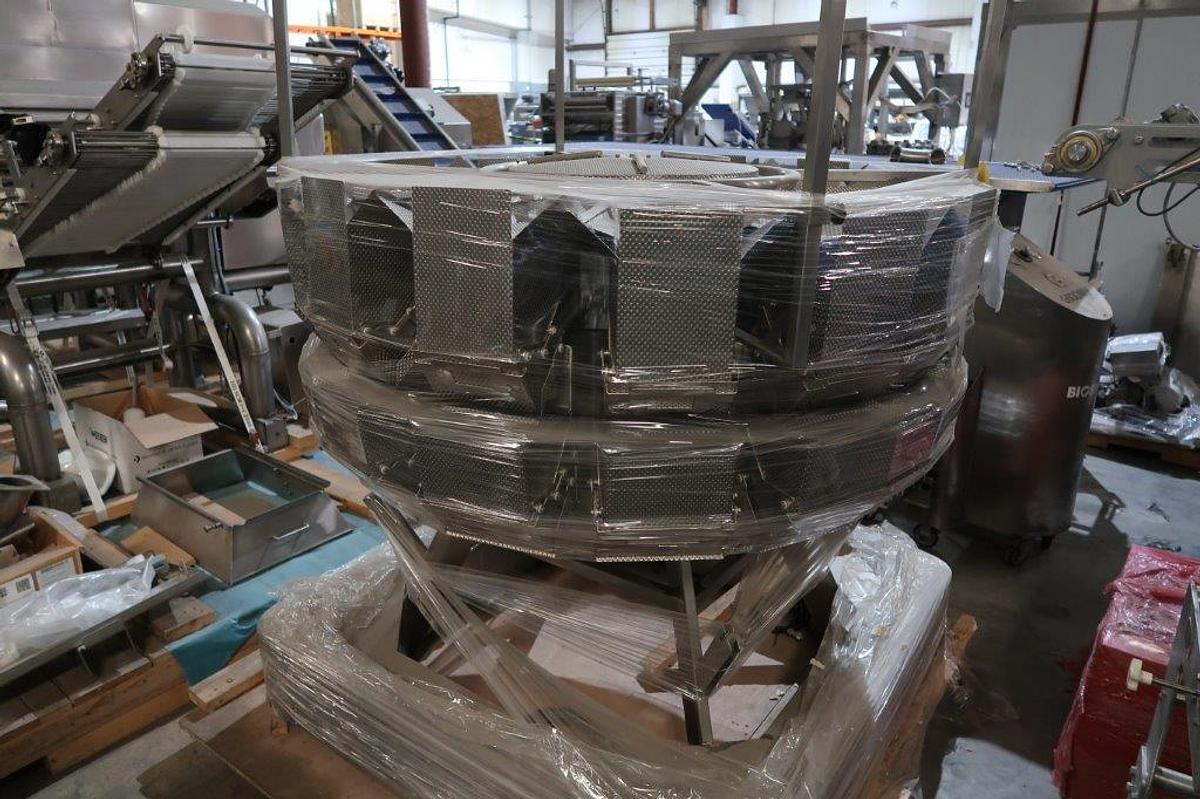
Guangzhou Gantan Packaging Machinery Co., Ltd. is a China-based manufacturer known for producing a broad range of packaging equipment. Their product lineup includes multi-head weighers, filling machines, sealing machines, labeling machines, wrapping machines, and integrated packaging lines. One of their more recognized products is the multi-head weigher, such as the 14-Head Multi-Head Weigher, which is commonly used in food processing and industrial packaging applications to achieve fast, accurate weight-based portioning and filling.
Multi-head weighers like those produced by Gantan are designed to handle a wide variety of products, including snacks, frozen foods, hardware, and other granular or irregular-shaped items. The machines use a combination of radial and linear feeder trays along with computerized combination weighing technology to maximize throughput while minimizing giveaway. Buyers looking at used Gantan equipment should consider which product types the machine was originally configured for, as hopper size, pan coating, and speed settings can vary significantly depending on the intended application.
What is a multi-head combination weigher and how does it work?
A multi-head combination weigher is an automated weighing machine that uses multiple weighing heads, typically ranging from 10 to 32, to rapidly calculate the best combination of product portions that adds up to a target weight. The machine disperses product from a central dispersion cone outward to radial feeder trays, which then move product into individual pool hoppers and weigh hoppers beneath each head. A computer processor samples thousands of possible weight combinations per second and selects the one closest to the target weight, then releases those hoppers simultaneously into a collection chute below.
The practical advantage of this system is speed and accuracy. A 14-head weigher, for example, can typically achieve 60 to 100 weighing cycles per minute depending on the product and target weight, with accuracy tolerances well within the legal limits required for packaged goods in most markets. These machines are commonly paired with vertical form-fill-seal (VFFS) baggers or other downstream packaging equipment to create a complete automated line. When evaluating a used multi-head weigher, buyers should pay close attention to the condition of the load cells, feeder trays, and control system, as these are the components most subject to wear in high-throughput environments.
What should buyers know before purchasing used Guangzhou Gantan packaging machinery?
Buying used packaging machinery from any manufacturer requires a more hands-on due diligence process than purchasing directly from a factory. Because used machines are sold as-is, the condition of the equipment at the time of sale is what the buyer receives. Key areas to evaluate on a used Gantan multi-head weigher or other packaging machine include the condition of the load cells, the state of the control panel and software, the wear on feeder trays and hoppers, and whether all safety guards and covers are present and intact. Requesting detailed photos, video footage of the machine running, or arranging a live video inspection are all reasonable steps before committing to a purchase.
It is also worth contacting Guangzhou Gantan directly to determine what level of technical support, spare parts availability, and documentation they can provide for the specific model and production year in question. Older models may have limited parts availability or may no longer be supported with firmware updates, which affects long-term serviceability. Buyers should factor in the cost of any refurbishment, replacement parts, and installation support when calculating the total cost of ownership, not just the purchase price of the machine itself.
How should used packaging machinery be inspected before purchase?
Inspections of used packaging machinery typically take one of three forms: in-person visits to the machine's current location, live video calls where a dealer or facility representative walks through the equipment in real time, or pre-recorded video walkthroughs that document the machine's condition and, where possible, its operation. Each approach has trade-offs. In-person inspections give the buyer or their technician the most thorough view of the equipment, including the ability to check for rust, worn components, missing parts, and overall cleanliness. Video inspections are more practical for international buyers and can still reveal a great deal about a machine's condition if the footage is thorough and well-lit.
One important limitation to understand is that most used equipment dealers do not have the production permits, staffing, or facility setup required to run actual product through a machine during an inspection. This means that while a machine may be powered on and shown running through its cycle, a full production test with real product is generally not feasible in a dealer environment. If the machine is still installed at an active production facility, there may be an opportunity to observe it in operation, but this depends entirely on the seller's arrangement with the facility. Buyers should ask specifically what kind of inspection is available and request as much documentation as possible, including maintenance records if they exist.
What are the typical shipping and logistics considerations for used packaging machinery purchased from a dealer?
Shipping used packaging machinery, particularly larger equipment like multi-head weighers and complete packaging lines, involves several layers of cost and planning that buyers should understand before finalizing a purchase. The machine must first be properly decommissioned, cleaned, and prepared for transport. Depending on the size and fragility of the equipment, it may need to be palletized, crated, or skidded with custom bracing to prevent damage during handling and transit. The level of packaging required directly affects shipping costs, and buyers should ask dealers for a detailed breakdown of crating, rigging, freight, and any customs or import duties that may apply.
For international shipments, heavy machinery typically moves via ocean freight in a container, either full container load (FCL) or less-than-container-load (LCL) depending on the machine's dimensions and weight. Loading and unloading often requires forklifts or cranes, which adds rigging costs at both the origin and destination. Buyers are responsible for understanding the import requirements in their country, including any documentation needed for customs clearance. Getting a full landed cost estimate, covering the purchase price, export packaging, freight, insurance, import duties, and delivery to the facility, before agreeing to a purchase is a practical step that prevents unexpected expenses after the deal is done.
What certifications should buyers look for on used Guangzhou Gantan packaging machinery?
CE certification is one of the most important quality and safety indicators to look for on packaging machinery intended for use in European markets or exported to regions that recognize CE compliance. The CE mark indicates that a machine was designed and built to meet the essential health, safety, and environmental protection requirements outlined in relevant European directives, including the Machinery Directive. For buyers outside Europe, CE certification still serves as a useful benchmark for build quality and safety design, even if it is not a regulatory requirement in their specific market.
Beyond CE, some packaging machinery manufacturers also pursue ISO certifications, which relate to quality management systems and manufacturing consistency rather than the machine's specific safety features. When buying a used machine, buyers should ask for any original documentation, including CE declarations of conformity, user manuals, and electrical schematics, as these are valuable for installation, operator training, and future service work. If documentation is unavailable, contacting the manufacturer directly with the machine's model number and serial number is the best way to determine what certifications applied to that unit and whether any technical documentation can still be obtained.
How does the pricing of used packaging machinery compare to buying directly from a manufacturer?
Used packaging machinery is generally priced significantly below the cost of equivalent equipment purchased directly from a factory. The discount varies depending on the age of the machine, its condition, how much of its useful service life remains, and how specialized the equipment is. For a machine like a multi-head combination weigher, which can cost anywhere from $15,000 to well over $60,000 when purchased factory-direct depending on the number of heads, speed, and features, a used equivalent in good working condition might be available for 30 to 60 percent less. The savings can be substantial for smaller operations or businesses that need to get a line running quickly without the lead time associated with a factory order.
However, the purchase price is only one part of the equation. Used machinery may require refurbishment, replacement of worn components, or software updates before it is ready for production. Buyers should budget for these costs alongside shipping, installation, and any operator training that may be needed. In some cases, sourcing spare parts for older machines can be challenging, particularly for equipment from manufacturers based overseas, so it is worth researching parts availability before committing to a specific model. When all of these factors are weighed together, used machinery can still represent excellent value, but the total cost of getting the machine into production should always be the figure buyers compare against a factory purchase, not just the sticker price.
What payment terms are typically used when purchasing used packaging machinery?
The standard practice in the used equipment industry is for dealers to require full payment before a machine is shipped. This applies to the vast majority of transactions, particularly for buyers who do not have an established purchasing history with a specific dealer. The reasoning is straightforward: once a machine leaves the dealer's facility, the dealer has limited recourse if payment is not completed. For buyers, this means having financing or capital in place before beginning serious negotiations is important, as deals can move quickly when both parties agree on price.
Some dealers may offer payment terms or deferred arrangements to repeat customers with whom they have a track record, but this is not common for first-time buyers. Wire transfer is the most widely accepted payment method for large machinery purchases, though some dealers may accept other forms of payment depending on the transaction size and the buyer's location. Buyers financing through a third-party lender should communicate this early in the process, as it can affect the timeline between agreeing on a price and completing the transaction. Regardless of payment method, buyers should ensure they receive a clear bill of sale that documents the machine's details, the agreed purchase price, and any specific terms of the transaction before funds are transferred.
What is the typical lifespan of a multi-head weigher, and how does age affect the value of used equipment?
A well-maintained multi-head weigher from a reputable manufacturer can remain in productive service for 15 to 20 years or more, though the actual lifespan depends heavily on the intensity of use, the types of products run through the machine, and the quality of ongoing maintenance. Machines used in high-throughput food production environments running two or three shifts per day will accumulate wear much faster than equipment used in lighter-duty applications. Key wear components include the load cells, which can drift or fail over time, the feeder pan coatings, which wear from abrasive products, and the drive motors and control electronics.
Age affects used equipment value in a few ways. Older machines are typically priced lower, but they may also be harder to source parts for and may not be compatible with current software or control systems used elsewhere in a production line. A machine that is 5 to 8 years old and has been well maintained often represents a better balance of price and remaining service life than a machine that is 15 years old, even if the older machine appears to be in reasonable cosmetic condition. Buyers should ask about the machine's production history, the number of shifts it ran, and any major repairs or component replacements that were made during its service life. This information, when available, gives a much clearer picture of what the machine has been through than age alone.
How can buyers find reputable dealers selling used Guangzhou Gantan packaging machinery?
Finding a reputable dealer for used packaging machinery takes some research, but there are a few reliable indicators of a trustworthy source. Dealers who specialize in packaging and processing equipment, rather than general industrial machinery, tend to have deeper knowledge of the specific machines they sell and are better positioned to answer technical questions about condition, compatibility, and parts availability. A dealer's track record matters considerably: companies that have been operating for many years and can point to a history of transactions in the packaging machinery space are generally a safer choice than newer or more generalist operations.
Before committing to a purchase, buyers should ask the dealer how long they have been in business, whether they can provide references from previous buyers of similar equipment, and what their process is for inspecting and representing the condition of machines they list for sale. A reputable dealer will be transparent about a machine's known issues and will accommodate inspection requests rather than discourage them. Buyers should also verify that the dealer can provide clear title to the equipment and proper documentation for export or import if the machine is crossing borders. Taking the time to vet a dealer thoroughly before a transaction is one of the most effective ways to reduce risk when buying used industrial equipment.