Category
Manufacturer
Model
FAQ:
What industries commonly use Gruenberg industrial ovens?
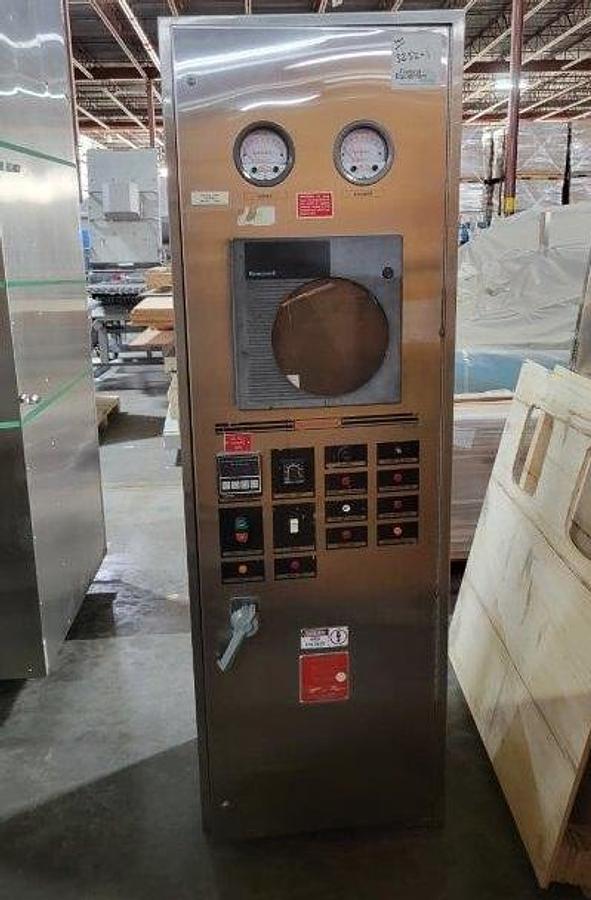
Gruenberg industrial ovens have a long track record across a wide range of demanding industries. Aerospace and defense manufacturers rely on them for composite curing, bonding, and heat treating of structural components. Automotive, electronics, and pharmaceutical manufacturers also use Gruenberg ovens extensively, particularly for processes like drying, annealing, sterilization, and curing adhesives or coatings. The pharmaceutical sector, for example, frequently uses Gruenberg cabinet ovens equipped with chart recorders (such as Honeywell units) to maintain precise temperature documentation for validation and compliance purposes.
Beyond those core sectors, Gruenberg ovens appear in general industrial settings wherever repeatable, controlled thermal processing is required. Their reputation for consistent airflow and temperature uniformity makes them a practical choice for any application where product quality depends on tight process control. Buyers sourcing used Gruenberg equipment should identify the specific model and configuration that matches their process requirements, since the brand produces a broad range of oven styles suited to very different production environments.
What types and configurations of Gruenberg industrial ovens are available?
Gruenberg produces several distinct oven configurations to accommodate different production volumes and floor space constraints. Cabinet ovens are the most common style found on the used market and are well suited for batch processing of small to medium loads. Walk-in and truck-in ovens are much larger enclosures designed to handle full pallets, large assemblies, or bulk production runs. Conveyor-style ovens are built for continuous processing and are common in high-throughput manufacturing lines.
Within each configuration, buyers will find variations in chamber size, airflow direction (horizontal or vertical), heating system type, and control sophistication. Some models include features like Honeywell or similar chart recorders for process documentation, which is especially relevant in regulated industries like pharmaceuticals. When evaluating a used Gruenberg oven, it is worth confirming the specific model number and internal chamber dimensions, since published specifications can vary significantly from one model series to the next.
What temperature ranges do Gruenberg industrial ovens typically operate at?
Most Gruenberg industrial ovens are rated for temperature ranges starting near ambient and extending up to approximately 500 degrees Fahrenheit (260 degrees Celsius), though specific maximum temperatures depend on the model and its intended application. Lower-temperature models are common in drying and pharmaceutical applications, while higher-temperature configurations are used for annealing, stress relieving, and composite curing processes that demand sustained elevated heat.
When purchasing a used Gruenberg oven, buyers should verify the rated temperature range of the specific unit rather than relying on general brand specifications. The control system, heating elements, and insulation on a used machine should all be evaluated to confirm they are still capable of reaching and holding the rated temperature consistently. An in-person or video inspection can help assess the condition of thermocouples, controllers, and heating components before purchase.
What heating systems do Gruenberg industrial ovens use?
Gruenberg industrial ovens are available with electric, gas, and in some configurations steam-based heating systems. Electric models are the most widely encountered on the used market and are popular in laboratory, pharmaceutical, and electronics applications where clean, precise heat is important. Gas-fired models are more common in larger industrial settings where heating large chamber volumes efficiently is a priority and natural gas infrastructure is already in place.
The heating system type has practical implications beyond just energy source. Electric ovens tend to offer finer temperature control and are easier to install in facilities without gas lines. Gas ovens can heat large chambers more quickly and at lower operating cost in many regions. Buyers sourcing used Gruenberg ovens should confirm the heating system type early in their evaluation, since converting from one fuel type to another after purchase is generally not practical and can be expensive.
What is the typical price range for used Gruenberg industrial ovens?
Pricing for used Gruenberg industrial ovens varies considerably based on size, configuration, age, condition, and included features. Smaller cabinet-style units in good working condition can be found in the range of a few thousand dollars, while larger walk-in or truck-in models with advanced controls can run significantly higher, sometimes reaching tens of thousands of dollars depending on specifications and market demand at the time of sale.
Buyers should factor in more than just the purchase price when budgeting for a used Gruenberg oven. Rigging, crating, freight, and any reconditioning or electrical work needed after delivery can add meaningfully to the total landed cost. Requesting a detailed quote from the dealer that covers packaging, loading, and shipping to the destination address is a practical step before committing to a purchase. Comparing a few similarly configured units across reputable used equipment dealers is also a reasonable way to gauge fair market value for a specific model.
Who manufactures Gruenberg industrial ovens, and does that affect parts availability?
Gruenberg industrial ovens are manufactured by Thermal Product Solutions (TPS), an American company that also produces other well-known thermal processing brands including Blue M and Tenney. This shared manufacturing umbrella means that buyers of used Gruenberg equipment may have access to a broader parts and service network than they would with a more obscure brand, since TPS supports multiple product lines from the same facilities.
That said, parts availability for any used industrial oven depends heavily on the age and specific model of the unit. Older Gruenberg ovens may use components that have been superseded or discontinued. Before purchasing a used unit, buyers are encouraged to contact the manufacturer directly to ask about parts availability and technical support for that particular model. A reputable used equipment dealer specializing in industrial ovens can also help identify whether common wear items like heating elements, thermocouples, and control components are still readily sourced.
What certifications and compliance standards do Gruenberg industrial ovens typically meet?
Gruenberg industrial ovens are generally built to meet relevant safety and performance standards for industrial thermal processing equipment. Depending on the model and the era in which it was produced, units may carry UL (Underwriters Laboratories) listings, and some configurations are designed in accordance with NFPA 86, the standard governing ovens and furnaces used with flammable solvents or in other potentially hazardous environments. Certain models intended for international markets may also carry CE marking.
For buyers in regulated industries such as pharmaceuticals or aerospace, confirming the compliance documentation associated with a specific used unit is an important part of the due diligence process. Original certification labels or documentation may or may not accompany a used machine, so buyers should ask the dealer what documentation is available and, if necessary, factor in the cost of re-qualification or re-validation into their purchase decision. An inspection of the unit's data plate and control panel can help identify the standards to which it was built.
What should buyers look for when inspecting a used Gruenberg industrial oven before purchasing?
A thorough inspection of a used Gruenberg oven should cover several key areas. The condition of the heating elements or burners, thermocouples, and temperature controllers directly affects whether the oven can reach and hold its rated operating temperature. The integrity of the door seals and chamber insulation is equally important, since deteriorated seals lead to heat loss and poor temperature uniformity. Any chart recorders or data logging equipment included with the unit should also be checked to confirm they are functional and calibrated.
Reputable used equipment dealers will typically accommodate in-person inspections at their facility, or provide video walkthroughs and detailed photographs if an on-site visit is not practical. Some used Gruenberg ovens may still be installed and running at an active production facility, in which case the dealer can often arrange an inspection at that location. Keep in mind that most used equipment dealers are not set up to run full production tests, so buyers should focus inspections on the mechanical and electrical condition of the machine rather than expecting a live process demonstration. Consulting with a qualified service technician before finalizing a purchase on a high-value unit is a reasonable precaution.
What are the shipping and logistics considerations for buying a used Gruenberg industrial oven?
Industrial ovens are heavy, often bulky pieces of equipment, and the logistics of getting a used Gruenberg oven from a dealer's facility to a buyer's plant require careful planning. Smaller cabinet ovens can sometimes be palletized and shipped via standard LTL freight carriers, but larger walk-in or truck-in models typically require flatbed transport and professional rigging for both loading and unloading. The cost of rigging, crating or skidding, and freight can vary significantly based on the size of the machine and the distance involved.
Buyers should ask the dealer for a detailed breakdown of all costs associated with getting the equipment to their facility, including any special packaging required to prevent damage in transit. Heavier machines may need a forklift or crane at the receiving end, which is worth confirming before the shipment arrives. Getting clarity on the full landed cost, not just the purchase price, is an important step in evaluating whether a particular used Gruenberg oven makes financial sense for a given application.
What payment terms are typical when purchasing used industrial ovens from equipment dealers?
Most used industrial equipment dealers require full payment before a machine is released for shipping. This is standard practice in the industry and applies to purchases of used Gruenberg ovens as well. Some dealers may extend payment terms to buyers with whom they have an established purchasing history, but first-time buyers should generally expect to pay in full prior to shipment. Common payment methods include wire transfer, though dealers may accept other forms depending on the transaction size and their individual policies.
Buyers who are new to purchasing used industrial equipment should take the payment-in-advance requirement as a strong reason to conduct thorough due diligence before committing. Reviewing the dealer's track record, asking for references, and taking advantage of any inspection opportunities offered are all practical steps to take before sending payment. Selecting a dealer with a long history of selling industrial thermal processing equipment specifically, rather than a general-purpose machinery broker, can provide additional confidence that the equipment has been accurately represented.