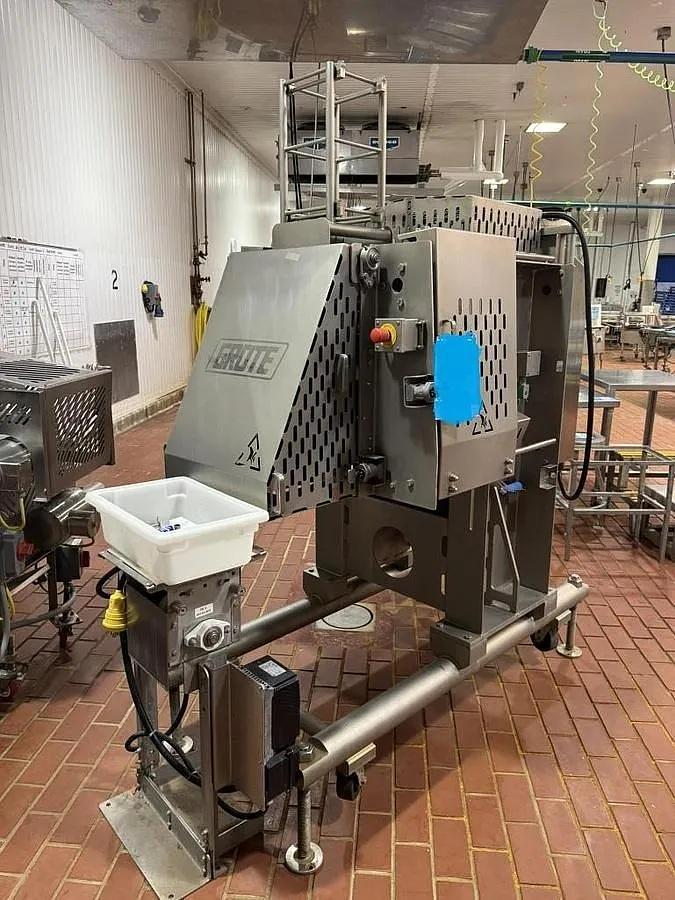
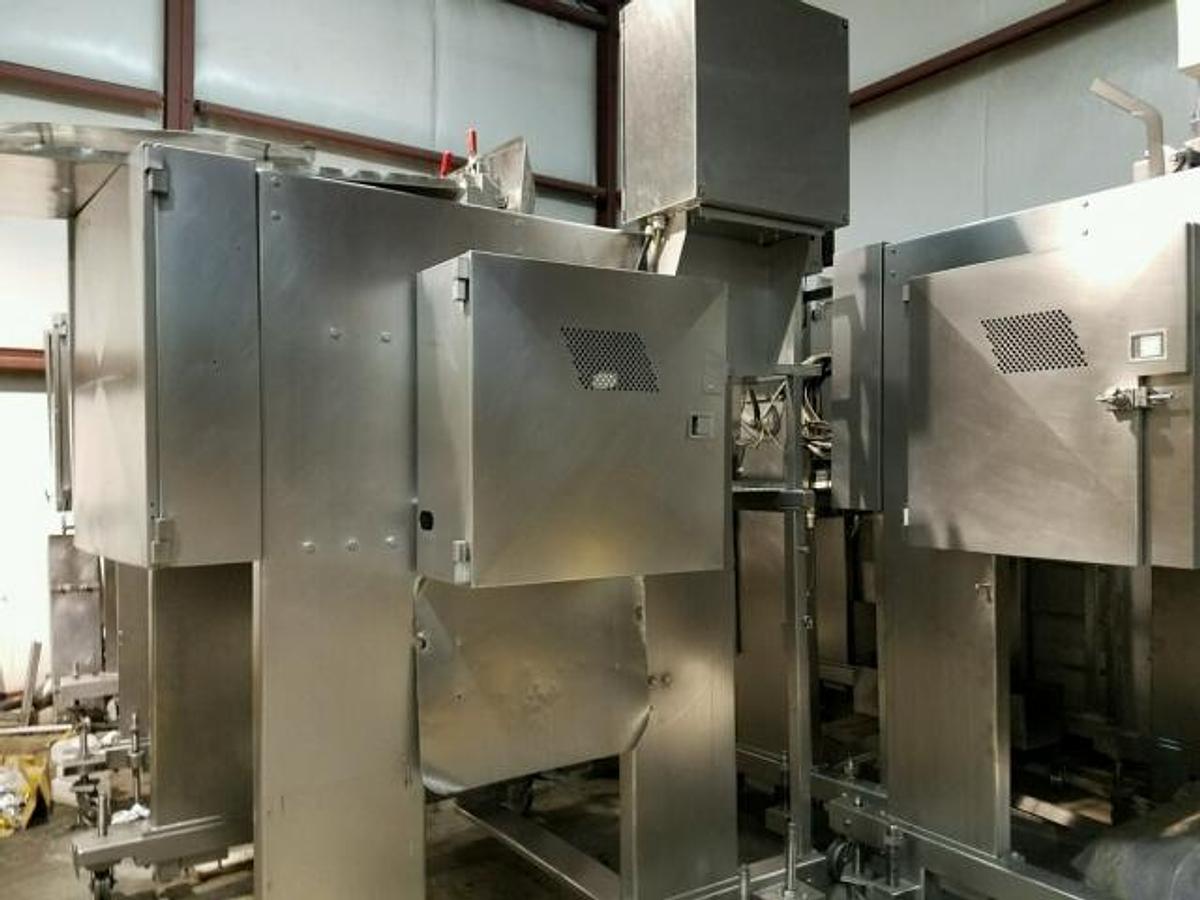
Category
Manufacturer
Model
FAQ:
What types of meat can Grote slicers handle?
Grote slicers are built for high-volume commercial and industrial food processing, and they handle a wide range of meat products. Common applications include slicing cooked and cured deli meats such as ham, turkey breast, roast beef, bologna, and salami. The machines are also used for slicing whole muscle cuts, formed loaves, and other protein products destined for retail packaging, food service, or sandwich production lines. Grote's high-speed models are specifically engineered to maintain slice consistency across large volumes, which makes them a go-to choice for operations where portion control and uniformity are critical.
Beyond traditional deli meats, Grote slicers are found in facilities processing bacon, pepperoni, and various sausage products. The machines are designed to work with both chilled and partially frozen product, depending on the model and blade configuration. Industrial meat processors, sandwich assembly lines, and large-scale food service operations all rely on Grote equipment because the machines can sustain high throughput without sacrificing slice quality. Buyers looking at used Grote slicers should confirm the specific model's intended product range, since blade geometry and feed mechanisms vary across the product line.
What is the typical production capacity of a Grote meat slicer?
Grote meat slicers are classified as high-speed industrial equipment, and their throughput reflects that. Depending on the model, these machines can slice hundreds to thousands of portions per minute, making them suitable for continuous production environments rather than small-batch or on-demand slicing. The HS (High Speed) series, for example, is designed for operations where consistent output over extended production runs is the priority. Slice thickness, product density, and line speed all affect actual throughput, but even at conservative settings, Grote slicers far outpace what a manual or semi-automatic commercial slicer can achieve.
For buyers evaluating a used Grote slicer, understanding production capacity relative to their actual needs is important. These machines are sized for food manufacturing plants, large deli operations, and sandwich production facilities. A smaller food service operation may find that even a single used Grote unit exceeds their daily volume requirements, which can actually be an advantage if future growth is planned. Prospective buyers should review the specifications for the specific model they are considering, and where possible, ask the dealer for documentation on the machine's rated throughput so it can be matched appropriately to the production environment.
What is the price range for used Grote meat slicers?
Pricing for used Grote meat slicers varies considerably based on the model, age, condition, and any reconditioning work that has been performed. Entry-level used units from older production runs can be found at lower price points, while more recent high-speed models in good working condition command significantly higher prices. The HS series and other high-capacity models tend to hold value well because of their industrial build quality and the cost of comparable equipment purchased through other channels. Buyers should expect to pay a meaningful premium for machines that have been inspected, cleaned, and verified to be in good working order versus units sold strictly as-is from a plant closure or auction.
Beyond the purchase price, buyers should factor in the total landed cost of the machine. Shipping and rigging for large industrial slicers can add substantially to the overall expense, particularly if the equipment requires special crating or heavy-duty loading equipment. Installation, any needed blade replacements, and electrical or mechanical reconditioning are additional cost considerations. Getting a clear picture of all these costs upfront from the dealer helps avoid surprises and allows for a more accurate comparison between available units.
Are used Grote meat slicers suitable for small businesses, or are they primarily for large commercial operations?
Grote slicers are engineered for industrial-scale food processing, and that context matters when a smaller business is evaluating one. These machines are built to run continuously in high-volume environments like meat packing facilities, large deli chains, and sandwich manufacturing plants. A small butcher shop or independent deli may find that a used Grote slicer is more machine than their daily volume requires, both in terms of footprint and throughput. That said, some small-to-mid-size operations deliberately seek out used industrial slicers because the build quality, blade precision, and durability exceed what lighter-duty commercial equipment offers at a similar price point on the used market.
The practical considerations for a smaller business go beyond production capacity. Grote slicers require adequate electrical service, sufficient floor space, and staff who are trained on industrial food processing equipment. Maintenance and parts sourcing also require more planning than with a standard countertop or light-duty slicer. Businesses considering a used Grote unit should honestly assess their production volume, facility capabilities, and technical resources before purchasing. For the right operation, a used Grote slicer can deliver exceptional value and longevity. For a business that doesn't have the volume or infrastructure to support it, a smaller commercial unit may be the more practical choice.
Are replacement parts and blades readily available for used Grote meat slicers?
Parts availability for Grote equipment depends on the specific model and how old the machine is. Grote Company has been manufacturing food processing equipment for decades, and for many of their more widely distributed models, replacement blades and wear parts can be sourced through the manufacturer or through authorized service networks. Older or discontinued models may present more of a challenge, as some components may have limited availability or require fabrication. Before purchasing a used Grote slicer, it is worth contacting Grote directly to ask about parts support for the specific model and serial number being considered. The manufacturer can usually indicate whether parts are still stocked and what level of technical support is available for that machine.
Blades are a consumable item on any meat slicer, and for Grote's high-speed models, blade condition directly affects slice quality and food safety. Buyers of used equipment should inspect the current blade condition as part of their evaluation and factor replacement blade costs into their budget. Some used equipment dealers can advise on known parts sources for the models they sell, which is one reason to work with dealers who specialize in food processing equipment rather than general machinery resellers. Having a clear parts sourcing plan before the machine goes into production helps avoid costly downtime.
What should buyers inspect when evaluating a used Grote meat slicer?
A thorough inspection of a used Grote meat slicer should cover both mechanical and food safety considerations. On the mechanical side, buyers should examine the condition of the blade and blade drive system, the feed mechanism, conveyor belts or product guides, and the overall frame for any signs of damage, corrosion, or prior repairs. Electrical components, including the control panel and any programmable settings, should be checked for proper function. Asking the dealer for a video demonstration of the machine running under power is a reasonable request, and many reputable dealers will accommodate either an in-person or virtual inspection. Some machines may still be installed at a production facility, which can allow for a more complete operational review.
Food contact surfaces deserve particular attention on any used food processing equipment. Stainless steel components should be free of pitting, cracks, or buildup that could harbor bacteria and complicate sanitation. Gaskets, seals, and any plastic components should be inspected for wear or deterioration. Buyers should also verify that the machine's safety guards and interlocks are intact and functional, since these are both regulatory requirements and critical for operator safety. Keep in mind that most used equipment dealers do not have the permits or facilities to run actual product through the machine during inspection, so the evaluation will focus on mechanical condition and visual assessment rather than a full production test.
How difficult is it to clean and sanitize a Grote meat slicer?
Cleaning and sanitation are central to operating any meat processing equipment, and Grote slicers are designed with this in mind. The machines feature stainless steel food contact surfaces that can withstand the cleaning chemicals and temperatures required in commercial meat processing environments. Disassembly for cleaning varies by model, but the general process involves removing guards, conveyor components, and blade assemblies to allow thorough access to all surfaces. Industrial meat slicers like those in the Grote line are built to meet food safety standards that require cleanability as a design criterion, so the architecture of the machine reflects that priority.
For buyers of used Grote slicers, it is worth assessing the current condition of the machine's cleanability features. Worn or damaged gaskets, compromised stainless surfaces, or missing guards can complicate sanitation and may represent a compliance issue in a regulated food production environment. Before putting a used machine into service, many operators perform a full teardown cleaning and replace any worn seals or gaskets as a baseline step. Consulting with a food equipment service technician familiar with Grote equipment can help identify any sanitation-related issues that need to be addressed before the machine enters production.
What safety features are included on Grote meat slicers?
Grote meat slicers incorporate safety features consistent with industrial food processing equipment designed for high-speed production environments. These typically include blade guards and interlocks that prevent the machine from operating when safety covers are removed or open, emergency stop controls, and feed mechanisms designed to keep operator hands away from the cutting zone during normal operation. High-speed slicers like the Grote HS series are engineered for automated or semi-automated production lines where the goal is to minimize direct operator interaction with the blade during the slicing cycle. This design philosophy reduces exposure risk compared to manual slicers where the operator is more directly involved in feeding product.
When purchasing a used Grote slicer, verifying that all safety guards, interlocks, and emergency stop systems are present and functional is a critical part of the inspection process. Safety components can be damaged, removed, or bypassed over a machine's service life, and restoring them to proper working order before operation is both a legal requirement and an ethical obligation to the people who will operate the equipment. Buyers should also confirm that any operators who will use the machine receive proper training, since industrial slicers require a different level of awareness and procedure than lighter-duty commercial equipment.
How does buying a used Grote slicer compare to purchasing other used commercial meat slicers?
Grote occupies a specific tier in the commercial meat slicer market. The company's equipment is purpose-built for high-speed, high-volume industrial food processing, which puts it in a different category from general-purpose commercial slicers made by brands like Hobart, Globe, or Berkel. Those brands produce excellent equipment for deli counters, butcher shops, and food service operations, but they are not designed for the continuous high-throughput production that Grote machines handle. Buyers who need industrial-scale slicing capacity, precision portion control across large volumes, and the durability to run multiple shifts will find that used Grote equipment competes in a narrower field of industrial food processing brands.
From a value standpoint, used Grote slicers can offer significant cost savings compared to acquiring comparable industrial slicing capacity through other channels. The machines are built to last in demanding production environments, so a well-maintained used unit can have substantial remaining service life. The tradeoff is that Grote equipment requires a more specialized knowledge base for maintenance and repair, and the pool of technicians familiar with the equipment may be smaller than for more common commercial brands. Working with a used equipment dealer who specializes in food processing machinery, rather than a general industrial auction, increases the likelihood of getting accurate information about the machine's condition and history.
What should buyers understand about shipping and payment when purchasing a used Grote meat slicer?
Used Grote meat slicers are large, heavy pieces of industrial equipment, and shipping logistics require careful planning. The cost and complexity of transport depend on the size of the specific model, the distance involved, and the level of packaging required to protect the machine in transit. Proper crating or palletization is essential to prevent damage, and larger units may require rigging equipment for loading and unloading at both the origin and destination. Buyers should ask the dealer for a detailed breakdown of packaging, rigging, and freight costs before committing to a purchase, since these expenses can be substantial and significantly affect the total landed cost of the machine.
On the payment side, most used equipment dealers require full payment before a machine ships. This is standard practice in the industry and reflects the nature of used equipment transactions, where the dealer needs to confirm payment before releasing the equipment. Some dealers may offer payment terms to established customers with a prior purchase history, but buyers new to a dealer should expect to pay in full upfront. Understanding both the shipping costs and payment expectations before finalizing a purchase helps avoid delays and ensures a smoother transaction from agreement to delivery.