Category
Manufacturer
Model
Greerco/Gifford Wood
Greerco/Gifford Wood combines expertise in mixing technology with a focus on energy and environmental solutions. Their equipment serves multiple industries, emphasizing sustainability and process efficiency.
FAQ:
What types of Greerco Gifford-Wood equipment are available on the used market?
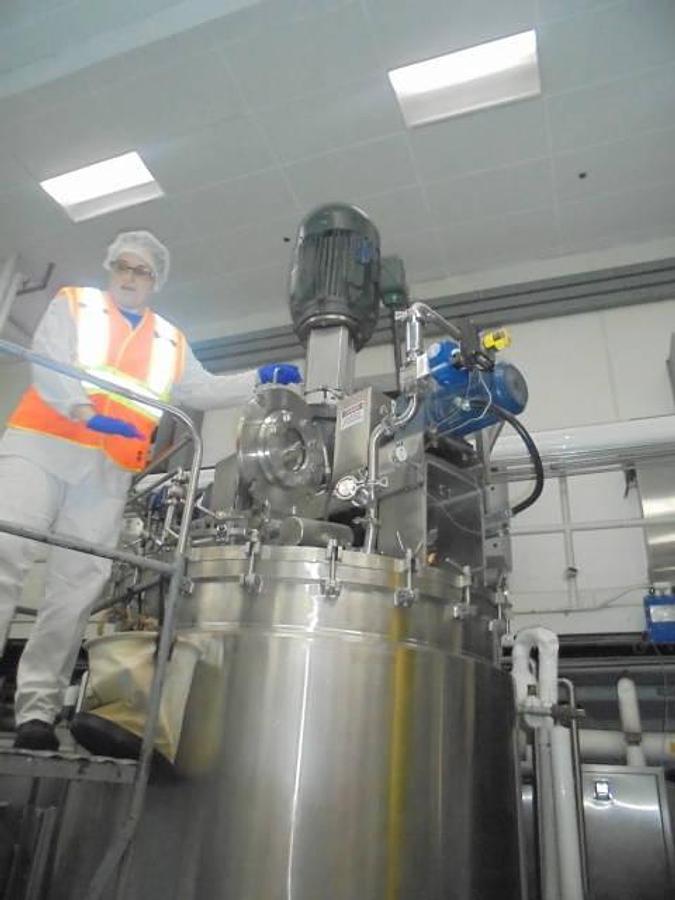
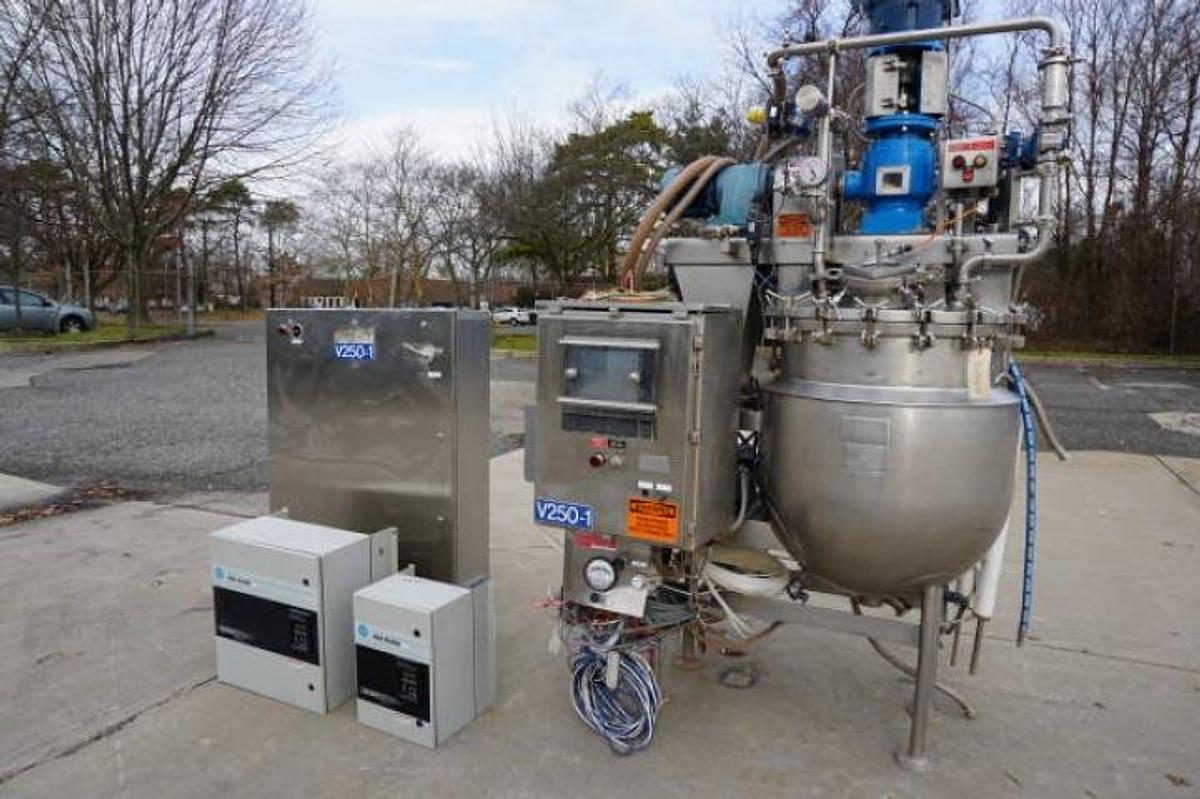
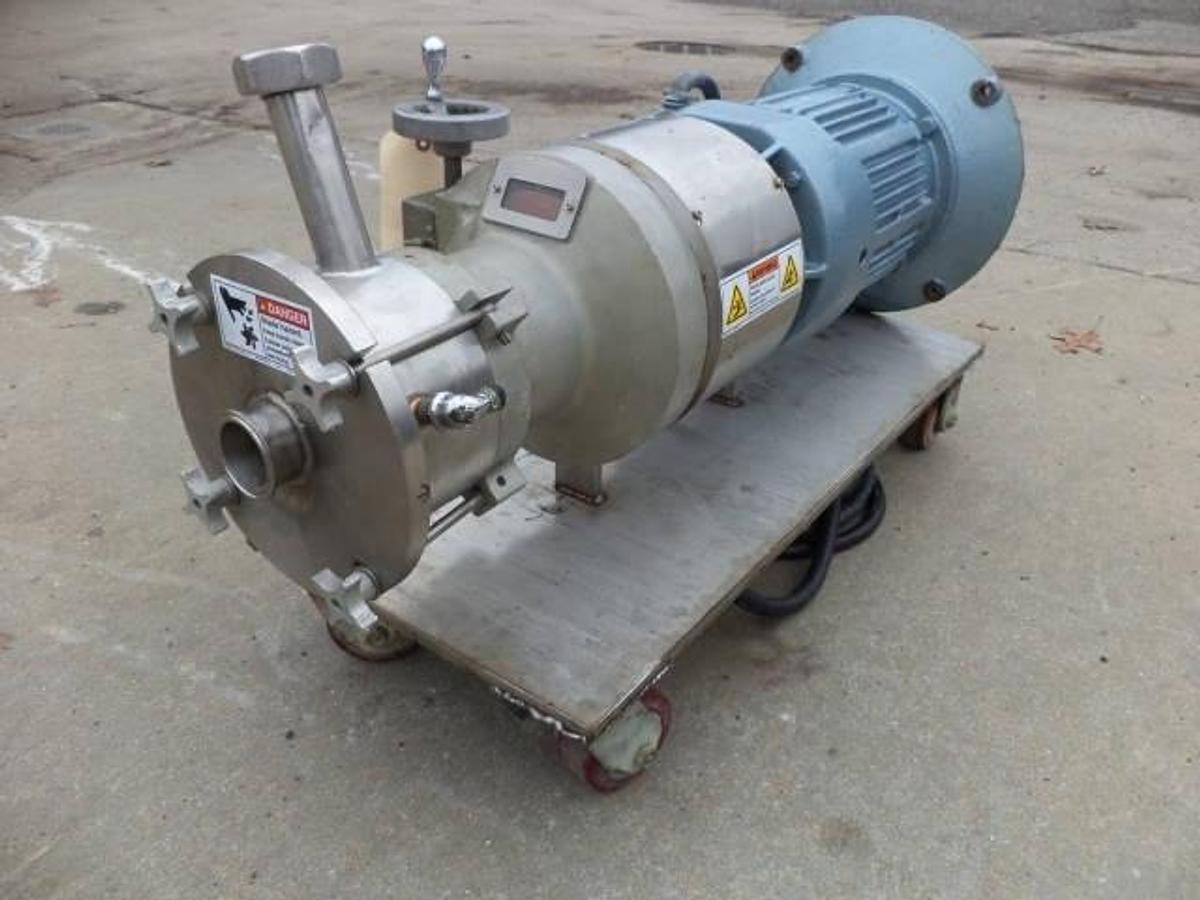
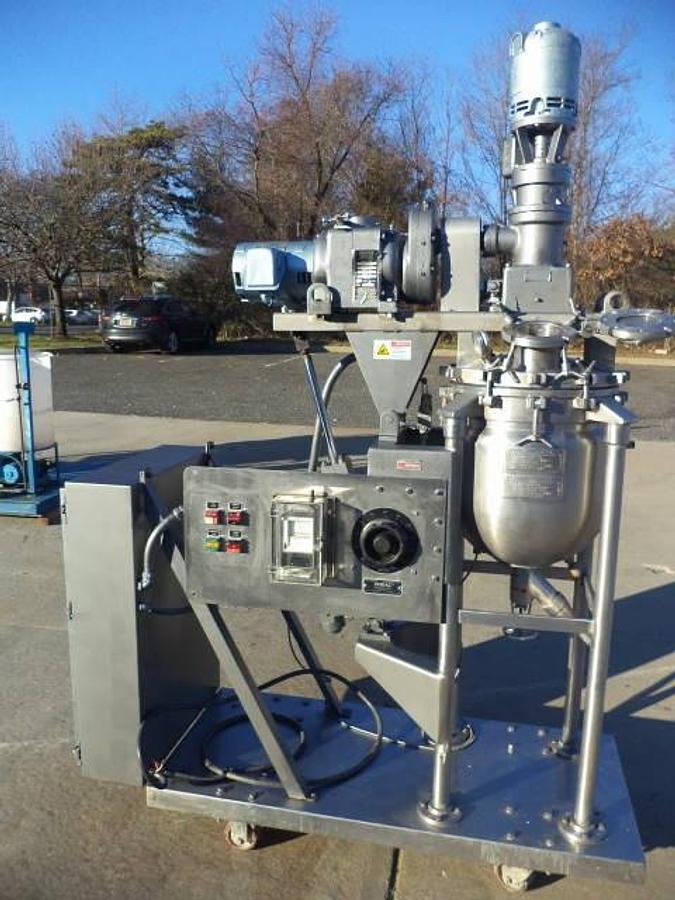
Used Greerco Gifford-Wood equipment covers a fairly wide range of mixing and size-reduction machinery. The most commonly available categories include colloid mills (such as the horizontal W500H model), inline high-shear mixers, and triple-motion vacuum kettles marketed under the Agi-Mixer name. These kettles are available in a range of capacities, from small 10-gallon lab-scale units up to large 2,000-liter production reactors, and are often built in 316 stainless steel to meet sanitary or corrosion-resistance requirements. Some units include jacketed designs rated for pressure or vacuum service, and certain models are available in explosion-proof (XP) configurations for processing flammable materials.
Beyond the physical equipment categories, used listings often vary significantly in condition, configuration, and included accessories. A used Agi-Mixer kettle, for example, may come with a full vacuum jacket rated at 100 PSI, a homogenizing head, and a triple-motion agitator, or it may be a stripped-down unit missing ancillary components. Buyers should review specifications carefully and request detailed photos or inspection opportunities to understand exactly what is included with any particular machine before purchasing.
What industries use Greerco Gifford-Wood mixing and milling equipment?
Greerco Gifford-Wood equipment has a broad industrial footprint, largely because its core technologies, high-shear mixing, colloid milling, and emulsification, are fundamental processes across many manufacturing sectors. Food and beverage producers use these machines for applications like nut butter processing, mayonnaise and salad dressing emulsification, tomato paste production, and beverage homogenization. Pharmaceutical and nutraceutical manufacturers rely on the equipment for creating stable suspensions, creams, and ointments where precise particle size reduction is critical to product efficacy.
Chemical processors, cosmetics manufacturers, and paint producers are also heavy users. In cosmetics, the equipment is used to create smooth, stable lotions and creams. In paint and coatings, colloid mills help disperse pigments uniformly into a base. The construction of many Greerco Gifford-Wood units in 316 stainless steel makes them well suited for sanitary applications, while the availability of explosion-proof models extends their usefulness to solvent-based chemical processing environments. This cross-industry versatility is one reason the brand retains strong demand on the used equipment market.
What are the main applications for Greerco Gifford-Wood colloid mills?
Colloid mills from Greerco Gifford-Wood are designed to reduce particle size and create stable emulsions, dispersions, and suspensions by passing material through a narrow, high-shear gap between a rotor and stator. The mechanical shear forces generated in this gap break down solid particles and droplets to submicron or micron-level sizes. Common applications include the processing of mustard, peanut butter, fruit pulps, and other viscous food products, as well as pharmaceutical creams, gels, and suspensions that require a uniform, fine texture.
In chemical and industrial settings, colloid mills are used for pigment dispersion in inks and paints, processing of adhesives, and the preparation of catalysts. The Greerco W500H, one of the more frequently encountered models on the used market, is a horizontal-configuration stainless steel colloid mill suited to continuous inline processing. Buyers evaluating a used colloid mill should pay particular attention to the condition of the rotor and stator, since wear on these components directly affects processing performance and may require refurbishment or replacement before the machine is put back into service.
What is the Greerco Agi-Mixer, and what makes it different from a standard mixing kettle?
The Agi-Mixer is Greerco Gifford-Wood's proprietary triple-motion mixing system, which combines three distinct agitation actions simultaneously within a single vessel. Rather than relying on a single impeller or paddle, the Agi-Mixer uses a combination of motions, typically including planetary movement, high-speed dispersion, and wall-scraping, to achieve thorough mixing of ingredients with varying viscosities. This design is particularly effective for products that are prone to sticking to vessel walls, require aeration control, or need both gentle folding and high-shear dispersion in the same batch.
Used Agi-Mixer kettles are available in a range of sizes and configurations. Some units are equipped with full vacuum capability and pressure-rated jackets, making them suitable for cooking, heating, cooling, or processing under vacuum to prevent oxidation or remove air from sensitive formulations. Models built in 316 stainless steel are appropriate for food, pharmaceutical, and cosmetic production. Compared to a basic single-agitator kettle, the Agi-Mixer's multi-motion system generally produces more consistent results in shorter batch times, which is why these units remain sought after on the used market even when they are many years old.
What should buyers inspect when evaluating a used Greerco Gifford-Wood machine?
Inspecting a used Greerco Gifford-Wood machine thoroughly before purchase is essential, since these units are sold as-is and no warranty coverage is typically provided by used equipment dealers. For colloid mills, the most critical components to assess are the rotor and stator condition, the shaft seals, and the bearing housing. Wear or pitting on the rotor and stator gap surfaces will directly affect the machine's ability to achieve the target particle size, and refurbishing or replacing these parts can be a significant cost. For Agi-Mixer kettles, buyers should examine the jacket integrity, agitator shaft seals, gearbox condition, and the vacuum system if applicable.
Reputable used equipment dealers will typically offer in-person inspections, video walkthroughs, or photo documentation of the machine's current condition. Some equipment may still be installed at a production facility where it can be observed running, while other units may be decommissioned and available only for static inspection. Keep in mind that most dealers do not have the permitting or setup to run full production tests, so buyers should factor in the cost of any refurbishment or testing they plan to conduct after delivery. Consulting the manufacturer regarding parts availability and technical support for a specific model and age is also a smart step before committing to a purchase.
Are replacement parts still available for older Greerco Gifford-Wood equipment?
Parts availability for older Greerco Gifford-Wood machines can vary considerably depending on the specific model, its age, and the current state of manufacturer support. Some components, such as standard seals, bearings, and fasteners, are often available through industrial supply channels regardless of the machine's age. More specialized parts, like matched rotor and stator sets for colloid mills or proprietary agitator components for Agi-Mixer kettles, may require sourcing directly from the manufacturer or from aftermarket suppliers who specialize in processing equipment.
Before purchasing a used Greerco Gifford-Wood machine, prospective buyers are strongly advised to contact the manufacturer directly to ask about parts and service support for the specific model and serial number they are considering. The manufacturer can clarify which components are still catalogued, what lead times look like, and whether technical support is available for that generation of equipment. This due diligence can prevent a situation where a buyer acquires a machine at a good price only to discover that a critical wear part is no longer supported. Age and model generation are the two biggest factors that determine how straightforward the ongoing maintenance of a used machine will be.
What is the typical price range for used Greerco Gifford-Wood equipment?
Pricing for used Greerco Gifford-Wood equipment spans a wide range depending on the machine type, size, configuration, age, and overall condition. Smaller lab-scale units, such as a 10-gallon Agi-Mixer kettle, will generally be priced significantly lower than a large 2,000-liter production reactor with full vacuum and jacketed capabilities. Colloid mills like the W500H tend to command prices based on their motor horsepower, material of construction (stainless steel versus carbon steel), and whether they are in explosion-proof configuration, which adds cost.
As a general reference point, used industrial mixing and milling equipment from established brands like Greerco Gifford-Wood can range from a few thousand dollars for smaller or older units in average condition to tens of thousands of dollars for larger, well-maintained production-scale machines. Buyers should also factor in the full landed cost of the equipment, including rigging, crating or palletization, freight, and any refurbishment needed after delivery. Getting a clear picture of all these costs before finalizing a purchase helps avoid surprises and allows for an accurate comparison between different available units.
How do I determine the right size Greerco Gifford-Wood mixer or kettle for my production needs?
Sizing a used mixer or kettle correctly starts with understanding your target batch volume and production throughput requirements. For Agi-Mixer kettles, working capacity is typically 70 to 80 percent of the stated vessel volume, so a 60-gallon kettle would realistically process batches in the 42 to 48-gallon range. Production rate requirements, cycle time per batch, and the number of shifts per day all factor into whether a given vessel size is appropriate. For continuous-process equipment like colloid mills, the relevant specification is flow rate capacity, usually expressed in gallons per hour or liters per hour, matched against your production line's throughput demands.
Beyond volume, the viscosity and physical characteristics of the product being processed are critical. High-viscosity materials require more powerful drive motors and may limit throughput compared to low-viscosity fluids. If the application involves vacuum processing, heating, or cooling, the jacket rating and connected utility requirements need to match your facility's capabilities. When evaluating used equipment, it is worth reviewing the original manufacturer specifications for the model in question and comparing them against your process requirements. A used equipment dealer familiar with processing machinery can often help identify whether a specific machine is a reasonable fit for a described application.
What should buyers understand about shipping and rigging costs for used Greerco Gifford-Wood equipment?
Shipping costs for used industrial mixing equipment are rarely straightforward and depend heavily on the size and weight of the machine, its current location, the destination, and the level of packaging required to protect it in transit. Smaller units like a 10-gallon Agi-Mixer kettle may be palletized and shipped via standard LTL freight at relatively modest cost. Larger machines, such as a 2,000-liter reactor or a production-scale colloid mill, will typically require professional rigging for loading and unloading, heavy-duty crating or custom skidding, and flatbed or specialized freight services. These costs can be substantial and should be confirmed with the dealer before finalizing a purchase.
Most used equipment dealers will require full payment prior to shipping, and some may offer payment terms to established repeat customers. Buyers should ask the dealer for a detailed breakdown of packaging, rigging, and freight costs so they can calculate the true landed cost of the equipment at their facility. It is also worth asking whether the machine will be shipped from the dealer's warehouse or directly from a third-party facility, as this can affect logistics coordination and inspection opportunities. Getting all shipping and handling details in writing before payment is made is a straightforward way to avoid unexpected costs.
Why do used Greerco Gifford-Wood machines retain strong demand even after many years of service?
Greerco Gifford-Wood built a reputation over decades for producing mechanically durable mixing and milling equipment that holds up well under continuous industrial use. The use of heavy-gauge 316 stainless steel construction in many of their units contributes to longevity, and the relatively straightforward mechanical design of machines like the colloid mill means that skilled maintenance personnel can keep them running for many years with proper care. In industries like food processing and pharmaceuticals, where sanitary construction and reliable performance are non-negotiable, a well-maintained used Greerco Gifford-Wood machine can represent a cost-effective alternative to purchasing comparable equipment at full price.
The brand's versatility across industries also supports sustained demand. A single model may be equally useful in a food plant, a cosmetics lab, or a chemical processing facility, which means the pool of potential buyers for any given used unit is broad. This cross-industry appeal, combined with the machines' reputation for durability, tends to keep resale values relatively stable compared to more application-specific equipment. Buyers entering the used market for this brand should expect to compete with other qualified buyers, particularly for well-specified stainless steel units in good working condition.