Category
Manufacturer
Model
FAQ:
What types of ice cream machines does Gram Equipment manufacture?
Gram Equipment is a Danish manufacturer with over 80 years of history in the ice cream production industry. Their product range covers the full spectrum of commercial and industrial ice cream production, including continuous freezers, batch freezers, extrusion lines, filling machines, and complete novelty ice cream production systems. Each category serves a distinct role in the production process, from the initial freezing and aeration of mix to the final shaping, filling, and packaging of finished products.
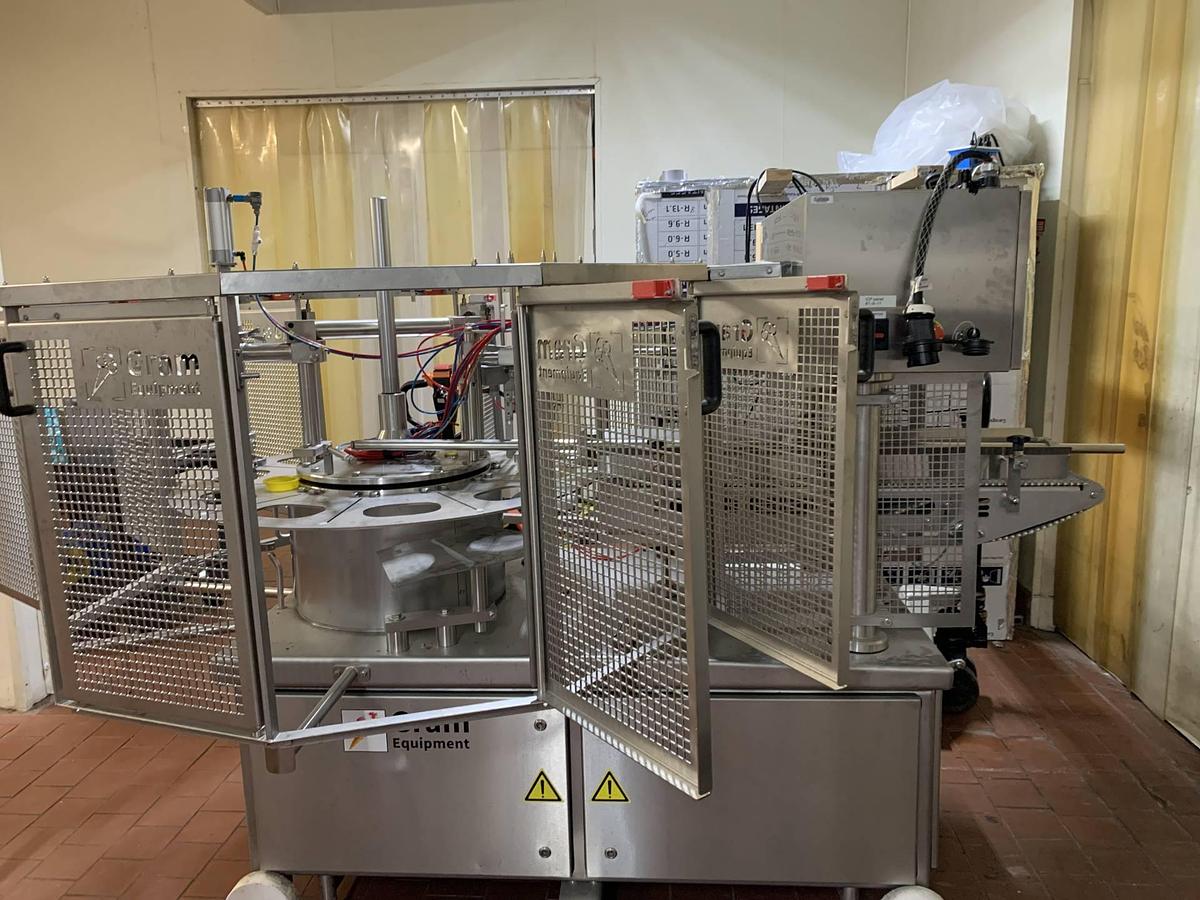
Among the most recognized pieces of equipment in their lineup are rotary filling machines, which are designed for high-volume operations that require consistent portioning and format flexibility. A ten-station rotary ice cream filling machine, for example, is built to handle multiple filling positions simultaneously, making it well-suited for producers running continuous, high-throughput lines. Used Gram Equipment machines appear across a wide range of production environments, from mid-scale regional dairies to large industrial ice cream manufacturers.
What is a rotary ice cream filling machine and how does it work?
A rotary ice cream filling machine is a piece of production equipment designed to fill ice cream into molds, cups, cones, or other containers in a continuous, rotating sequence. The rotary design allows multiple filling stations to operate simultaneously, with each station completing a step in the fill cycle as the carousel advances. This approach dramatically increases throughput compared to linear or single-head filling systems, since product is being dispensed, set, or transferred at several points around the machine at the same time.
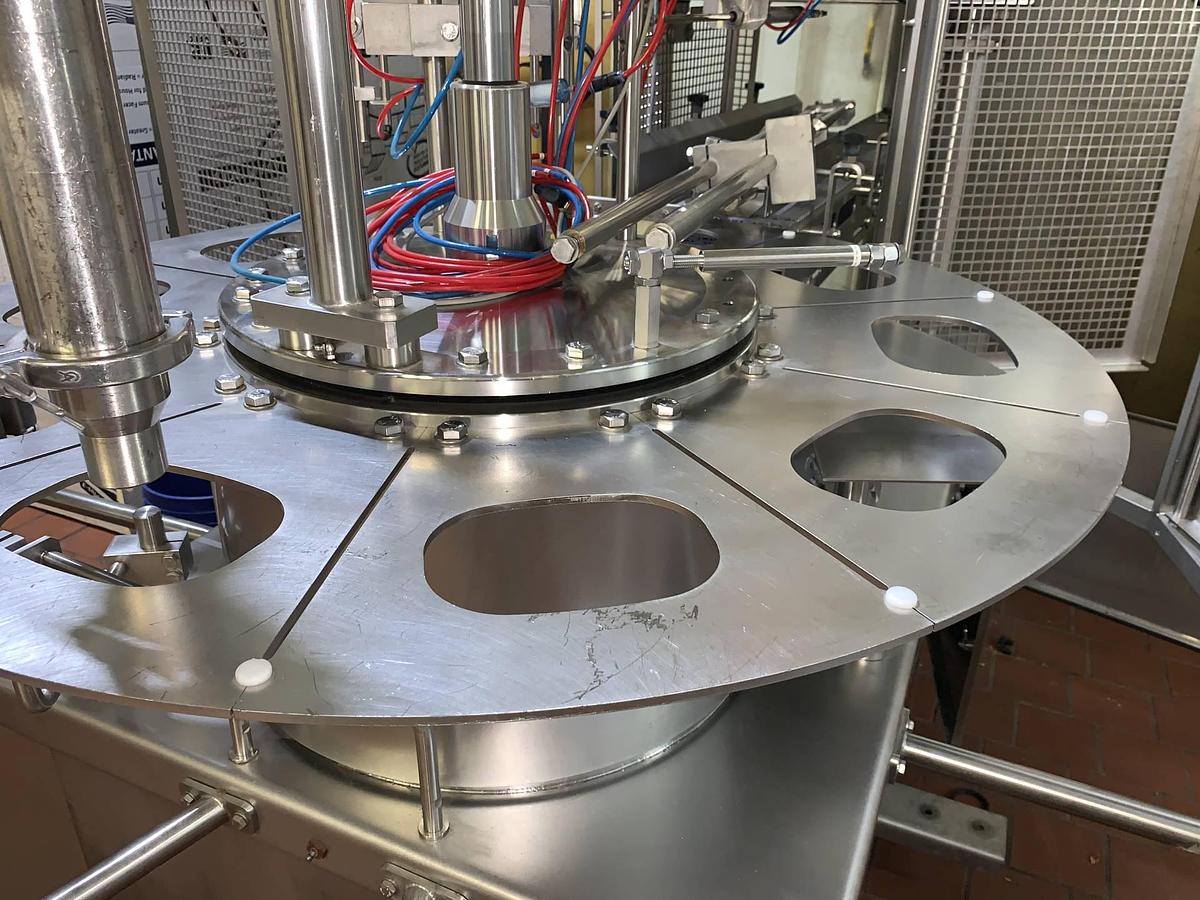
In a ten-station rotary configuration, for instance, ten individual filling positions are arranged around a central rotating platform. As the machine cycles, each station moves through the fill, dwell, and release phases in sequence. This setup is common in facilities producing portion-packed ice cream products such as single-serve cups or novelty items, where consistent fill weights and cycle speeds are critical to both product quality and production efficiency. The rotary format also tends to reduce downtime between fills, which contributes to higher overall line output.
What production capacity can you expect from Gram Equipment ice cream machines?
Gram Equipment designs its machinery for commercial and industrial-scale production, meaning capacity figures are generally measured in liters per hour or units per hour rather than the smaller batch sizes associated with artisan or foodservice equipment. Continuous freezers in their lineup are capable of processing large volumes of ice cream mix with precise overrun control, which is the measurement of how much air is incorporated into the product. Overrun directly affects texture, weight, and cost per unit, so consistent control at high throughput is a significant operational advantage.
Actual capacity varies considerably depending on the specific machine model, configuration, and the type of product being produced. Filling machines like the ten-station rotary models are built to keep pace with high-speed production lines, where consistent cycle times translate directly into output volume. Buyers evaluating used Gram Equipment machines should review the original equipment specifications for a given model and, where possible, consult with the manufacturer to understand how age, wear, and configuration affect real-world throughput on a specific unit.
Are Gram Equipment machines suitable for small businesses or artisan ice cream producers?
Gram Equipment machines are engineered primarily for mid-to-large scale commercial and industrial producers. The scale, complexity, and infrastructure requirements of their continuous freezers, extrusion lines, and rotary filling systems generally exceed what a small artisan shop or startup operation would need or be able to support. These machines are designed to run as part of integrated production lines, often requiring dedicated utilities, floor space, and trained operators to function effectively.
That said, the used equipment market does occasionally make certain Gram Equipment models accessible at price points that smaller regional producers might consider, particularly if they are scaling up from manual or semi-automatic processes. A business moving toward higher volume production could find value in a used Gram filling or freezing unit if their facility can accommodate it. The key factors to evaluate are whether the machine's minimum viable throughput aligns with actual production demand, and whether the buyer has access to qualified technicians who can install, commission, and maintain the equipment properly.
What food safety certifications and hygiene standards do Gram Equipment machines meet?
Gram Equipment has built its machines to comply with internationally recognized food safety and hygienic design standards, including EHEDG (European Hygienic Engineering and Design Group) and 3-A Sanitary Standards. These certifications are significant in the food manufacturing sector because they indicate that a machine's design minimizes harborage points for bacteria, supports effective cleaning-in-place (CIP) procedures, and uses materials that are appropriate for direct food contact. Compliance with these standards is often a prerequisite for operating in regulated dairy and frozen dessert production environments.
For buyers considering used Gram Equipment machines, it is worth noting that the hygienic design principles built into these units at the time of manufacture do not disappear with age, but the actual sanitary condition of a used machine depends entirely on how it was maintained and cleaned throughout its service life. A thorough inspection, including examination of seals, gaskets, contact surfaces, and internal components, is an important step before purchasing any used food processing equipment. Consulting with a qualified technician or the manufacturer can help assess whether a specific used unit still meets the hygiene standards required for a given production environment.
What should buyers inspect when purchasing a used Gram Equipment ice cream machine?
Buying used ice cream production equipment requires a more hands-on evaluation process than purchasing from a manufacturer, since the condition of each machine reflects its specific maintenance and operational history. For Gram Equipment machines, key inspection areas include the condition of all food-contact surfaces, seals, and gaskets; the state of mechanical components such as drive systems, bearings, and gearboxes; the integrity of refrigeration circuits on freezer units; and the functionality of control systems and sensors. Electrical panels and wiring should also be reviewed, particularly on older machines where components may have been repaired or replaced with non-standard parts.
Reputable used equipment dealers will typically offer in-person inspections, virtual walkthroughs, or detailed video captures of the machine so buyers can assess its condition before committing. Some machines may still be installed and running at a production facility, which allows for a more accurate assessment of working order, though even in those cases, dealers generally cannot run actual product through the machine due to permitting and food safety restrictions. Buyers should also contact Gram Equipment directly to ask about parts availability and technical support for the specific model under consideration, since the level of manufacturer support can vary based on a machine's age and production status.
How does overrun control in a continuous ice cream freezer affect product quality and profitability?
Overrun refers to the percentage increase in volume that occurs when air is incorporated into ice cream mix during the freezing process. A mix that doubles in volume through aeration has 100% overrun. Controlling overrun precisely is critical because it directly determines the texture and density of the finished product. Too little air produces a heavy, dense product; too much creates a light, foamy texture that many consumers find unsatisfying. Beyond texture, overrun has a direct financial impact: higher overrun means more finished product volume from the same quantity of mix, which affects cost per unit and margin.
Gram Equipment's continuous freezers are recognized in the industry for their ability to maintain consistent overrun at high throughput, which is a meaningful advantage in large-scale production. When evaluating a used continuous freezer, buyers should pay particular attention to the condition of the mix pump, the back-pressure valve, and the dasher assembly, as these components are central to overrun control. A machine that cannot hold stable overrun will produce inconsistent product and may create significant waste or rework costs. Verifying that these components are in sound working condition is one of the most important steps in evaluating any used continuous freezer.
What is the typical price range for used Gram Equipment ice cream machines?
Pricing for used Gram Equipment machines varies widely depending on the type of equipment, its age, configuration, condition, and current market demand. Simpler ancillary units may be available at relatively modest price points, while large-format continuous freezers, complete extrusion lines, or multi-station filling systems in good working condition can represent a substantial capital investment. The used market generally offers significant savings compared to purchasing equivalent equipment through a manufacturer, but the range is broad enough that buyers should gather multiple quotes and evaluate each machine on its specific merits rather than relying on general price benchmarks.
Beyond the purchase price, buyers should factor in the full landed cost of acquiring the equipment. Shipping charges for industrial ice cream machinery can be considerable, particularly for large or heavy units that require specialized crating, rigging, and freight handling. Installation, commissioning, and any refurbishment or parts replacement needed to bring the machine to operating condition are additional costs that should be budgeted before finalizing a purchase decision. Getting a clear picture of all these costs upfront helps avoid surprises and allows for a more accurate comparison between different machines or sourcing options.
What are the shipping and logistics considerations for buying a used industrial ice cream machine?
Industrial ice cream machines are heavy, often irregularly shaped, and sensitive to damage from vibration, moisture, and improper handling during transit. Proper packaging is essential to prevent damage, and the level of preparation required can range from basic palletization to full custom crating depending on the machine's size, fragility, and the distance it needs to travel. Buyers should ask the dealer specifically how the machine will be packaged and what that packaging is designed to protect against, since the cost and method vary considerably from one situation to the next.
Larger machines typically require professional rigging for both loading at the origin and unloading at the destination, which adds to the overall cost and requires coordination with qualified rigging contractors. Freight charges for heavy industrial equipment are calculated based on weight, dimensions, and distance, and can be a meaningful portion of the total acquisition cost. Buyers should request a detailed breakdown of all shipping-related costs, including crating, rigging, freight, and any accessorial charges, before finalizing a purchase. Understanding the full landed cost of the equipment is just as important as evaluating the machine itself.
What payment terms are typical when buying used ice cream production equipment?
The used equipment market for industrial food processing machinery operates differently from consumer or retail purchases. Most used equipment dealers require payment in full before a machine is released for shipping or pickup. This is standard practice across the industry and reflects the nature of the transaction: used machines are sold as-is, and dealers need to confirm cleared funds before transferring ownership and arranging logistics. Buyers who are unfamiliar with this practice should plan their financing accordingly and not assume that net-payment terms or installment arrangements will be available.
Some dealers may offer payment terms to buyers with an established purchasing history or for transactions involving multiple pieces of equipment, but this is the exception rather than the rule, particularly for first-time buyers. Wire transfer is the most common payment method for transactions of this size, though specific accepted methods will vary by dealer. Buyers should clarify payment expectations early in the negotiation process, and should also confirm what documentation they will receive upon payment, including any bill of sale, equipment records, or maintenance history that the seller has available for the machine.