Category
Manufacturer
Model
Goodway
Goodway is recognized for its industrial cleaning equipment, serving various sectors including manufacturing and HVAC. Their products, such as steam cleaners and vacuum systems, are designed to improve maintenance efficiency and safety in industrial environments.
FAQ:
What types of industrial cleaning equipment does Goodway manufacture?
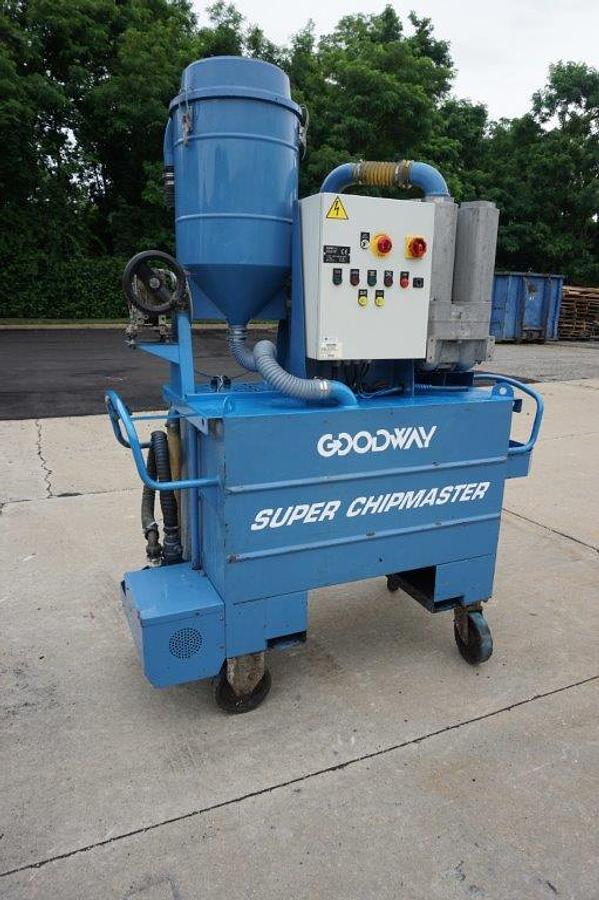
Goodway Technologies has been engineering purpose-built industrial cleaning equipment since 1966, and their product lineup reflects decades of refinement for specific industrial applications. Their catalog spans tube cleaning systems (the TubeMaster line), coil cleaners, tank cleaners, descaling systems under the ScaleBreaker brand, industrial vacuum systems like the VAC-2, steam cleaners, and drain cleaning equipment such as the Ram-Pro series. One notable example is the Super Chipmaster, a metal chip and coolant vacuum and pump system designed specifically for machining environments where fluid and swarf management is a recurring maintenance challenge.
What sets Goodway apart from general-purpose cleaning equipment brands is that most of their machines are engineered for a defined task rather than adapted from a broader design. A tube cleaning system, for instance, is built around the specific demands of heat exchanger maintenance, while a coil cleaner addresses the fouling patterns common in HVAC evaporator and condenser coils. Buyers looking at used Goodway equipment should identify which product line applies to their application, since the performance advantages of these machines are tied directly to how well the equipment matches the job.
What industries are Goodway industrial cleaning machines best suited for?
Goodway equipment is used across a wide range of industrial and commercial sectors, but the brand has particularly deep roots in HVAC maintenance, manufacturing, food and beverage processing, power generation, and facilities management. HVAC contractors and building engineers rely on Goodway coil cleaners and tube cleaning systems to maintain heat transfer efficiency in chillers, cooling towers, and air handling units. In manufacturing environments, machines like the Super Chipmaster address the specific problem of metal chip and coolant recovery at CNC and machining centers.
Food processing facilities use Goodway steam cleaners and tank cleaning equipment because sanitation standards in those environments demand equipment that can handle grease, biofilm, and residue without chemical contamination risks. Power plants and industrial facilities with shell-and-tube heat exchangers are another strong fit, since fouled tubes reduce thermal efficiency and Goodway tube cleaners are designed precisely for that maintenance task. When evaluating a used Goodway machine, confirming that the specific model matches your industry's cleaning demands is more important than brand familiarity alone, since each product line is optimized for a particular type of fouling or debris.
What should buyers know about purchasing used Goodway industrial cleaning equipment?
Buying used Goodway equipment can offer significant cost savings compared to purchasing the same machine through a manufacturer's current pricing, but it requires more due diligence on the buyer's part. Used industrial cleaning machines are typically sold as-is, meaning the responsibility for assessing condition falls on the buyer rather than being covered by any manufacturer protection. The key steps are verifying the model number against Goodway's published specifications, confirming the machine's working condition through an inspection, and checking with Goodway directly about parts and support availability for that specific model and age.
Reputable used equipment dealers will generally accommodate in-person or video inspections so buyers can assess the machine's current state before committing. Some equipment may still be installed at a production facility, in which case the dealer can often arrange an inspection at the plant. Buyers should also factor in the full landed cost, including packaging, rigging if the machine is large, freight, and any reconditioning that may be needed after delivery. Selecting a dealer with a demonstrated history of selling industrial cleaning equipment specifically, rather than a general machinery reseller, tends to reduce the risk of misrepresentation about a machine's condition or suitability.
How do you inspect a used Goodway industrial cleaning machine before buying?
Inspections of used industrial cleaning equipment typically happen in one of three ways: an in-person visit to the dealer's facility or the plant where the equipment is currently located, a live video walkthrough conducted remotely, or a detailed video recording that the dealer provides on request. For a machine like a Goodway tube cleaner or vacuum system, a good inspection should cover the condition of the motor or pump, wear on hoses and fittings, the state of any rotating components, visible corrosion or damage to the housing, and whether all controls and switches respond correctly.
One thing buyers should keep in mind is that most used equipment dealers are not set up to run actual production tests, since that would require the same permitting and facility infrastructure as an operating plant. What dealers can typically demonstrate is that the machine powers on, that mechanical components move freely, and that there are no obvious signs of damage or prior misuse. For higher-value Goodway systems, it is worth contacting Goodway Technologies directly before purchase to ask about the service history expectations for that model, what wear parts are commonly replaced, and whether technical support is still available for that generation of equipment.
Are replacement parts and consumables still available for older Goodway equipment?
Parts availability for used Goodway equipment depends heavily on the model and how long ago it was manufactured. Goodway Technologies has been in operation since 1966 and maintains an active parts and service infrastructure, but support for older or discontinued models can vary. Before purchasing a used Goodway machine, it is advisable to contact Goodway directly with the model number and serial number to ask specifically which replacement parts are still stocked, which may need to be fabricated or sourced from third parties, and whether the company's technical team can still support that unit.
For many of Goodway's core product lines, consumable items like brushes, nozzles, hoses, and descaling chemicals are standardized and remain available for extended periods. Proprietary components tied to a specific machine generation are where availability becomes less predictable. Buyers should treat parts availability as a key factor in the purchase decision, not an afterthought. A machine priced attractively on the used market can become expensive to maintain if critical wear parts are no longer produced, so confirming the supply chain before purchase is a straightforward step that protects the long-term value of the investment.
What is the typical price range for used Goodway industrial cleaning equipment?
Pricing for used Goodway equipment varies considerably based on the product line, the machine's age and condition, and current market demand for that type of industrial cleaning application. Smaller portable units like handheld coil cleaners or compact vacuum systems can trade in the hundreds of dollars on the used market, while larger systems such as industrial tube cleaning rigs, high-capacity steam generators, or multi-component coolant recovery systems like the Super Chipmaster can range from several thousand dollars into the tens of thousands depending on configuration and condition.
The best reference point for evaluating whether a used price is reasonable is the manufacturer's current list pricing for equivalent equipment, which gives a ceiling for comparison. Condition, hours of use, and the availability of original accessories and tooling all influence where a specific unit lands within that range. Buyers should also account for the total cost of ownership beyond the purchase price, including shipping, any rigging required for heavy equipment, and the cost of consumables or wear parts needed to bring the machine to full working order. Getting a clear picture of those additional costs before agreeing to a price is standard practice in used industrial equipment transactions.
What are Goodway TubeMaster tube cleaning systems used for?
Goodway's TubeMaster systems are designed for mechanical cleaning of the interior surfaces of heat exchanger tubes, chiller tubes, and condenser tubes. Over time, these tubes accumulate scale, biofilm, sediment, and other deposits that reduce heat transfer efficiency and can accelerate corrosion. Mechanical tube cleaning with a rotating brush or scraper driven through the tube by a flexible shaft restores the tube's interior surface without the need for chemical descalers in many applications, making it a preferred method in facilities where chemical handling is restricted or where downtime needs to be minimized.
The TubeMaster line is particularly common in HVAC maintenance for large commercial buildings, industrial plants, and power generation facilities where shell-and-tube heat exchangers are central to operations. Fouled chiller tubes, for example, can increase energy consumption by a measurable percentage, and regular mechanical cleaning is a standard part of preventive maintenance programs in those environments. Used TubeMaster systems are a practical option for facilities management companies, HVAC contractors, and industrial maintenance teams that perform this type of work regularly enough to justify owning the equipment rather than renting or contracting it out.
What is the Goodway Super Chipmaster and what is it used for?
The Goodway Super Chipmaster is a combination metal chip vacuum and coolant pump system designed for use in machining and metalworking environments. CNC machining centers, lathes, mills, and grinding equipment generate metal chips and swarf continuously during operation, and the coolant fluid used to lubricate and cool the cutting process becomes mixed with those chips. The Super Chipmaster is built to recover that coolant for reuse while simultaneously removing the metal chips, which reduces waste, keeps the machining area cleaner, and helps maintain the useful life of the coolant.
In a production machining environment, managing chips and coolant manually is time-consuming and creates slip hazards and contamination risks. A dedicated system like the Super Chipmaster addresses those problems more efficiently than general-purpose wet/dry vacuums, which are not designed to handle the volume or abrasiveness of metal chips over sustained use. Used Super Chipmaster units appear on the market when machine shops upgrade their equipment or consolidate operations, and they can represent good value for smaller shops or job shops that need a reliable chip and coolant management solution without the cost of purchasing the same equipment through current distribution channels.
What are the shipping and logistics considerations for buying used Goodway equipment?
Shipping used industrial cleaning equipment involves more planning than a standard freight shipment, particularly for larger or heavier machines. The equipment needs to be properly secured, palletized, or crated to prevent damage in transit, and the level of packaging required will affect the overall shipping cost. Smaller Goodway units like portable coil cleaners or handheld systems can often be palletized and shipped via standard LTL freight, while larger systems with pumps, tanks, or multiple components may require custom crating or heavy-duty rigging for loading and unloading.
Buyers should ask the dealer for a detailed breakdown of packaging, rigging, and freight costs before finalizing a purchase, since these can add a meaningful amount to the total landed cost of the equipment. If the machine is still located at a production facility rather than a dealer's warehouse, rigging and removal costs may also apply. For very large equipment, the buyer's receiving facility will need appropriate unloading equipment such as a forklift or loading dock. Clarifying all of these logistics details upfront avoids surprises and allows for an accurate comparison of the total cost against alternatives.
What payment terms are typical when buying used industrial cleaning equipment?
Used equipment dealers generally require full payment before a machine is released for shipment. This is standard practice across the used industrial machinery market and reflects the fact that the dealer is transferring ownership of physical equipment with a defined resale value. Unlike purchasing from a manufacturer with established credit terms, used equipment transactions are typically cash-based, and the buyer should expect to pay in full prior to any shipping arrangements being made. Some dealers may offer payment terms to established customers with a history of prior transactions, but this is the exception rather than the rule for first-time buyers.
Accepted payment methods vary by dealer but commonly include wire transfer, ACH, or business check, with credit card payments sometimes available for smaller purchases. Buyers using financing should arrange that funding in advance so the purchase can proceed without delays once a price is agreed upon. It is also worth confirming with the dealer exactly what the payment covers, specifically whether it includes the machine only or also accounts for packaging and loading at the dealer's end, since freight and rigging are often invoiced separately.