Category
Manufacturer
Model
Gmp Systems
Gmp Systems provides automation solutions and manufacturing equipment for the pharmaceutical and biotechnology sectors. They specialize in systems that ensure compliance with stringent industry regulations while maximizing production efficiency.
FAQ:
What is GMP Systems and what types of pharmaceutical manufacturing equipment do they produce?
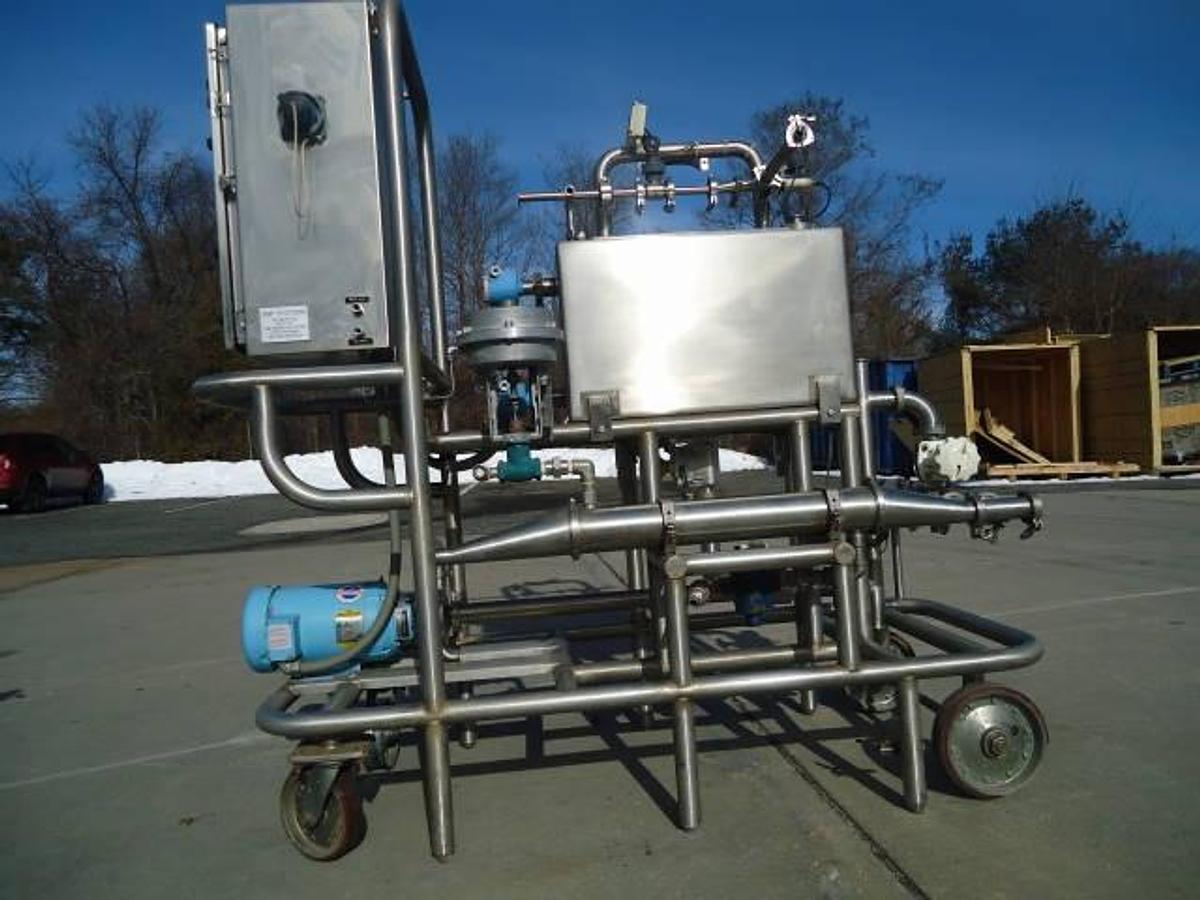
GMP Systems is a manufacturer that specializes in automation solutions and manufacturing equipment for the pharmaceutical and biotechnology sectors. Their product line is built around the core requirement of regulatory compliance, with systems designed to meet the stringent standards that govern drug manufacturing in regulated markets. One of their well-known product categories is the Automatic CIP (Clean-in-Place) System, constructed in stainless steel, which is used in facilities where consistent, documented cleaning validation is essential to product safety and batch integrity.
The company's focus on both compliance and production efficiency makes their equipment a common fit for pharmaceutical manufacturers who need to satisfy regulatory bodies such as the FDA and EMA while maintaining throughput. CIP systems, in particular, are critical infrastructure in pharmaceutical plants because they allow equipment to be cleaned without disassembly, reducing contamination risk and labor time. Used GMP Systems equipment appears regularly on the secondary market because pharmaceutical facilities frequently upgrade or consolidate production lines, making pre-owned units available to buyers who want proven, industry-specific machinery at a lower acquisition cost than purchasing directly from a manufacturer.
What GMP compliance standards should pharmaceutical manufacturing equipment meet?
Pharmaceutical manufacturing equipment is expected to conform to a layered set of regulatory frameworks depending on the markets where the drug product will be sold. In the United States, the primary reference is FDA 21 CFR Parts 210 and 211, which govern current Good Manufacturing Practice (cGMP) for finished pharmaceuticals, with Part 211 containing specific requirements for equipment design, size, and location. For active pharmaceutical ingredient (API) manufacturing, ICH Q7 is the globally recognized guideline, and it addresses equipment construction materials, cleaning, and maintenance in considerable detail. Facilities selling into European markets must also satisfy EU GMP Annex requirements, with Annex 1 covering sterile manufacturing being among the most demanding.
Beyond these overarching frameworks, buyers of pharmaceutical equipment pay close attention to material specifications. 316L stainless steel is the industry standard for product-contact surfaces because of its low carbon content, corrosion resistance, and well-established acceptability under FDA and USP guidelines. Equipment that incorporates non-product-contact plastics should use USP Class VI or equivalent materials. When evaluating used pharmaceutical manufacturing equipment, buyers should verify that the machine's original design specifications align with these standards, review any available documentation from the prior installation, and consult with their own validation and quality teams to determine what requalification work will be required before the equipment enters production.
What is a CIP (Clean-in-Place) system and why is it important in pharmaceutical manufacturing?
A Clean-in-Place system is a method of cleaning the interior surfaces of pipes, vessels, process equipment, and associated fittings without disassembly. The system circulates cleaning solutions, rinse water, and sometimes sanitizing or sterilizing agents through a defined circuit, and the process is typically automated and controlled to ensure repeatability. In pharmaceutical manufacturing, repeatability is not just a convenience; it is a regulatory requirement. Cleaning validation protocols require manufacturers to demonstrate that their cleaning procedures consistently reduce residual product, cleaning agents, and microbial contamination to acceptable levels, and a CIP system with automated controls and data logging makes that demonstration far more defensible during an FDA or EMA inspection.
Automatic CIP systems constructed in stainless steel, like those produced by GMP Systems, are designed to handle the aggressive cleaning chemistries used in pharmaceutical environments while maintaining the surface finish standards (typically Ra 0.8 micron or better on product-contact surfaces) that prevent microbial harborage. The automation component is particularly valuable because it removes operator variability from the cleaning process, which is one of the most common sources of cleaning validation failures. Facilities that purchase used CIP systems should plan for a cleaning validation exercise at the new site, as the validated parameters from the prior installation are specific to that facility's configuration and cannot be directly transferred without supporting data.
What validation documentation should buyers expect when purchasing used pharmaceutical manufacturing equipment?
In pharmaceutical manufacturing, the validation package for a piece of equipment is often considered as valuable as the equipment itself. A complete validation dossier typically includes Installation Qualification (IQ), Operational Qualification (OQ), and Performance Qualification (PQ) documents. IQ confirms that the equipment was installed according to manufacturer specifications and applicable codes. OQ demonstrates that the equipment operates within defined parameters across its intended operating range. PQ provides evidence that the equipment consistently performs as required under actual or simulated production conditions. Together, these documents can represent hundreds of hours of internal engineering and quality work, and having them available significantly compresses the timeline to getting a piece of equipment back into production at a new facility.
However, buyers of used pharmaceutical equipment should understand that validation documentation from a prior installation cannot simply be adopted as-is. Regulatory expectation is that qualification is site-specific and configuration-specific, meaning that even if a seller provides a full IQ/OQ/PQ package, the purchasing facility will need to perform at least a change control assessment and likely a partial or full requalification to satisfy their own quality system and any regulatory oversight. That said, the prior documentation is still extremely useful as a template, as a source of critical instrument calibration ranges, and as evidence of the equipment's operational history. Buyers should ask sellers what documentation is available and factor requalification costs into their total acquisition budget.
Does used pharmaceutical manufacturing equipment support 21 CFR Part 11 compliance for electronic records?
21 CFR Part 11 establishes the FDA's requirements for electronic records and electronic signatures, and it applies to any computerized system used to create, modify, maintain, or transmit records that are required by FDA regulations. For pharmaceutical manufacturing equipment with integrated control systems, this means the software must support features like audit trails, access controls, time-stamped records, and the ability to generate accurate copies of records for inspection. As FDA-regulated facilities have moved toward paperless manufacturing environments, Part 11 compliance has shifted from a differentiating feature to a baseline expectation for any equipment with a programmable logic controller (PLC) or supervisory control system.
When evaluating used pharmaceutical manufacturing equipment, the age and model of the control system are critical factors in assessing Part 11 readiness. Older equipment may have control platforms that predate modern Part 11 implementation practices or that use software versions no longer supported by the original developer. Buyers should request details on the control system make, model, and software version, and then consult directly with the control system manufacturer to understand what level of support, software updates, and Part 11 validation documentation is still available. In some cases, a control system upgrade may be more practical than attempting to validate an outdated platform, and that cost should be factored into the purchase decision.
What should buyers know about inspecting used pharmaceutical manufacturing equipment before purchase?
Inspecting used pharmaceutical equipment before committing to a purchase is one of the most important steps a buyer can take to protect their investment. Reputable used equipment dealers will typically offer inspection options that include in-person visits, live video calls, or pre-recorded video walkthroughs of the machine. For pharmaceutical equipment specifically, buyers should look at the condition of product-contact surfaces (checking for pitting, corrosion, or compromised welds that could harbor contamination), the state of seals and gaskets, the functionality of any automated controls, and the completeness of the documentation package. Some equipment may still be installed and in service at the facility where it originated, which allows for a more meaningful operational assessment than equipment that has been decommissioned and stored.
Buyers should keep in mind that most used equipment dealers do not hold the permits or facility infrastructure required to run actual pharmaceutical production, so functional testing with real product is generally not possible at a dealer's location. What dealers can demonstrate is that the equipment powers on, that mechanical components move as designed, and that control systems respond correctly. For a more complete picture of the machine's production readiness, buyers should engage their own engineering and validation teams to review the equipment during inspection, review any available maintenance and calibration records from the prior owner, and develop a realistic estimate of the qualification and reconditioning work that will be needed before the equipment can be placed into GMP production.
What materials are used in pharmaceutical manufacturing equipment construction, and why does it matter?
Material selection in pharmaceutical manufacturing equipment is driven by a combination of regulatory acceptability, cleanability, and chemical compatibility. For product-contact surfaces, 316L stainless steel is the dominant choice across the industry. The 'L' designation refers to the low carbon content, which reduces the risk of carbide precipitation during welding and makes the material more resistant to corrosion in the aggressive cleaning environments common in pharmaceutical plants. Surface finish is equally important; electropolished or mechanically polished surfaces with a roughness average (Ra) of 0.8 micron or better are standard for product-contact areas, as smoother surfaces are easier to clean and less likely to support biofilm formation. Gaskets and seals in product-contact areas are typically made from materials like EPDM, silicone, or PTFE, selected for their chemical resistance and compliance with USP and FDA extractables standards.
For used pharmaceutical equipment, the condition of these materials after years of service is a central inspection concern. Stainless steel surfaces can develop pitting from prolonged exposure to chloride-containing cleaning agents, and welds can crack or corrode if the original fabrication did not meet pharmaceutical welding standards (such as ASME BPE). Gaskets and seals degrade over time and with repeated cleaning cycles, and they are often the first components that need replacement when used equipment is recommissioned. Buyers should factor in the cost of a thorough surface inspection (including borescope inspection of internal piping where applicable), surface restoration if needed, and complete seal and gasket replacement as part of their commissioning budget. These are predictable costs, not surprises, and planning for them leads to a more accurate total cost of ownership calculation.
How does purchasing used pharmaceutical manufacturing equipment compare to buying directly from a manufacturer?
The most obvious difference is acquisition cost. Used pharmaceutical manufacturing equipment typically sells for a fraction of the equivalent current list price, and for highly engineered systems like CIP skids, sterile filling lines, or process vessels, that difference can represent hundreds of thousands of dollars in capital savings. For facilities that are scaling up, adding redundancy, or equipping a secondary production site, the secondary market can make projects financially viable that would otherwise require significant capital investment. Lead time is another meaningful advantage; current manufacturer lead times for custom pharmaceutical equipment can run six to eighteen months or longer, while used equipment is generally available for immediate or near-term delivery.
The trade-offs are real and should be understood clearly. Used equipment comes without the support structure that accompanies a direct manufacturer purchase. There is no factory acceptance testing performed to the buyer's specifications, no manufacturer-provided validation documentation tailored to the buyer's process, and no manufacturer warranty covering defects in workmanship. The buyer assumes responsibility for verifying the equipment's condition through inspection, for any reconditioning or spare parts sourcing required, and for the full qualification program needed to place the equipment into GMP service. Selecting a dealer with deep experience in pharmaceutical equipment specifically, rather than a generalist industrial machinery broker, significantly reduces risk because a specialist understands the regulatory context, knows what documentation to pursue from prior owners, and can speak to the equipment's history in a way that supports the buyer's qualification effort.
What should buyers understand about shipping and rigging costs for pharmaceutical manufacturing equipment?
Pharmaceutical manufacturing equipment, particularly process systems like CIP skids, tends to be heavy, precision-fabricated, and sensitive to mechanical shock and vibration during transport. Proper packaging is essential to prevent damage to instrumentation, control panels, polished product-contact surfaces, and structural components. Depending on the size and complexity of the equipment, a dealer may ship on a standard pallet, in a custom wooden crate, or in a full enclosed container. The level of packaging directly affects shipping cost, and buyers should ask for a clear breakdown of what packaging is included in any quoted price versus what will be charged additionally.
For larger pharmaceutical systems, rigging is a separate and significant cost consideration. Moving a multi-ton CIP skid or process vessel requires specialized lifting equipment, experienced rigging crews, and in some cases engineering assessments for floor loading at both the origin and destination facilities. Buyers should request detailed information from the dealer on the equipment's weight, dimensions, and center of gravity, and should engage a qualified rigging contractor early in the planning process to develop a realistic unloading and installation plan. The full landed cost of used equipment, which includes purchase price, packaging, freight, rigging, and any import duties for international shipments, can differ substantially from the list price, and understanding that total figure upfront is essential for accurate capital project budgeting.
What are typical payment terms when purchasing used pharmaceutical manufacturing equipment?
Used equipment transactions in the pharmaceutical sector, as in most industrial machinery markets, are generally structured around full payment prior to shipment. This is standard practice across the industry because used equipment dealers carry inventory risk and cannot typically extend credit the way a large manufacturer might. The practical implication for buyers is that funds need to be available and cleared before the equipment leaves the seller's facility, which means buyers should plan their internal purchase order and payment approval processes accordingly to avoid delays that could result in the equipment being sold to another buyer.
Some dealers will offer payment terms to established customers with a history of prior transactions, but this is the exception rather than the rule and is typically negotiated on a case-by-case basis. For buyers making a first purchase from a dealer, wire transfer is the most common payment method for transactions of this size. Buyers should also clarify at what point title and risk of loss transfer from the seller to the buyer, as this affects insurance responsibilities during transit. For high-value pharmaceutical systems, buyers should confirm that their property insurance or a transit policy covers the equipment from the moment it leaves the seller's facility through arrival and installation at the destination.