Category
Manufacturer
Model
Glen Mills
Glen Mills provides a wide array of equipment for sample preparation and size reduction, catering to laboratories and research institutions. Their product offerings include mills, mixers, and homogenizers, which are designed to meet rigorous quality standards.
FAQ:
What types of Glen Mills equipment are commonly available on the used market?
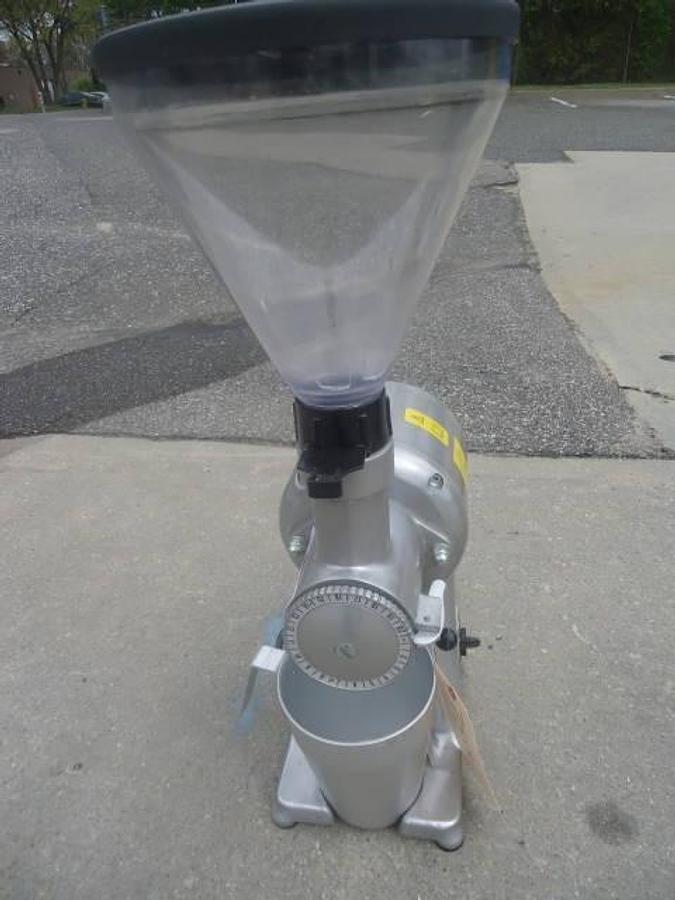
Glen Mills has built its reputation around size reduction and sample preparation equipment, and the used market reflects that range well. Buyers searching for pre-owned Glen Mills machinery will typically find disc mills, tabletop grinders, planetary ball mills, bead mills, and mixers. The Type "C" Tabletop Grinder and Disc Mill is one example of the kind of compact, lab-oriented equipment that surfaces regularly through used equipment dealers. These machines are designed for grinding, homogenizing, and preparing samples across a variety of materials, making them useful in pharmaceutical, chemical, food science, and materials research settings.
Beyond the grinders and disc mills, Glen Mills has historically distributed equipment from well-regarded manufacturers including Retsch and Dyno-Mill, so used listings under the Glen Mills name can sometimes include equipment from those product lines as well. When shopping the secondary market, it pays to review the listed specifications carefully, particularly processing capacity (often expressed in milliliters or liters), speed range in RPM, compatible grinding media, and the material construction of the grinding chamber, whether stainless steel, ceramic, or another material. Each of those details affects whether a particular machine is a good fit for a given application.
Are Glen Mills mills and grinders suitable for laboratory use, industrial use, or both?
Glen Mills equipment spans both settings, though much of what appears on the used market skews toward laboratory and research applications. Tabletop disc mills and planetary ball mills, for example, are sized and designed for sample preparation work in labs, research institutions, and quality control environments. They tend to process smaller batch volumes and are built for precision and repeatability rather than continuous high-volume throughput. That makes them a strong fit for pharmaceutical development, materials science research, food testing, and similar technical work.
That said, Glen Mills also supplies larger-scale dispersing and grinding equipment suited to pilot-scale and production environments. Bead mills and high-capacity mixers, for instance, are used in industrial chemical and coating applications. When evaluating a used Glen Mills machine for a specific setting, the key variables are processing volume, motor capacity, and whether the machine was originally configured for batch or continuous operation. Used equipment listings should include those specifications, and buyers who are uncertain about a machine's suitability for their process should request detailed documentation or arrange an inspection before committing to a purchase.
What materials can Glen Mills grinding mills process?
Glen Mills grinding equipment is designed to handle a broad range of materials, which is a big part of why these machines retain value on the secondary market. Common applications include grinding dry, brittle solids such as minerals, ceramics, grains, and chemical compounds. Disc mills and planetary ball mills can also process softer organic materials, plant matter, and food products depending on the grinding media and chamber material used. In pharmaceutical and life science settings, these mills are frequently used for preparing powders and homogenizing samples prior to analysis.
The material construction of the grinding chamber matters a great deal here. Stainless steel chambers are common for general-purpose and food-safe applications, while ceramic or tungsten carbide options are used when contamination from metal wear is a concern, such as in trace element analysis or high-purity chemical work. When purchasing a used Glen Mills machine, buyers should confirm which grinding vessel materials are included with the unit and whether additional vessels or media are available separately. Some older machines may have limited parts availability, so it is worth checking with the manufacturer or a knowledgeable dealer about what accessories and consumables are still supported for a given model.
What is the typical price range for used Glen Mills equipment?
Pricing for used Glen Mills equipment varies considerably depending on the machine type, model, age, condition, and included accessories. Compact tabletop units like disc mills and small planetary ball mills can range from a few hundred dollars for older or heavily used machines up to several thousand dollars for well-maintained units with complete accessory sets. Larger bead mills or production-scale dispersing equipment can command significantly higher prices, sometimes reaching tens of thousands of dollars depending on capacity and condition.
Glen Mills equipment tends to hold its resale value reasonably well compared to lesser-known brands, largely because of the precision engineering and durability associated with the product lines it represents. Buyers should factor in more than just the purchase price, though. Shipping costs for heavier machines, any required rigging for loading and unloading, and the potential cost of replacement parts or service should all be weighed when calculating the true landed cost of a used unit. Getting a clear picture of the machine's current condition through an inspection, whether in person or via video, is one of the most effective ways to avoid unexpected costs after purchase.
Does used Glen Mills equipment come with a warranty?
Warranties on used industrial equipment work differently than they do on machines purchased directly from a manufacturer. Used equipment dealers typically sell machinery on an as-is basis, meaning the buyer takes on responsibility for verifying the machine's condition before the sale is finalized. This is standard practice across the used equipment industry and is not specific to Glen Mills. Because of this, the inspection process becomes especially important. Buyers should take advantage of any opportunity to inspect equipment in person, request video walkthroughs, or review detailed condition reports before committing to a purchase.
For buyers who want to understand what ongoing manufacturer support might look like for a specific Glen Mills machine, it is worth contacting Glen Mills directly to ask about parts availability and service support for the model in question. Age and model can significantly affect how much support is available, so getting that information upfront helps set realistic expectations. Choosing a used equipment dealer with a solid track record in laboratory and industrial machinery is also a meaningful form of protection, since experienced dealers are more likely to accurately represent the condition of what they sell and to assist with any questions that come up after the transaction.
How should buyers inspect used Glen Mills equipment before purchasing?
A thorough inspection is the single most important step a buyer can take before purchasing any used industrial machine, and Glen Mills equipment is no exception. Most reputable used equipment dealers will accommodate inspection requests, either by allowing buyers to visit their facility in person or by providing detailed video walkthroughs of the machine. Some equipment may still be installed and running at an industrial facility, in which case the dealer can often arrange an in-person visit to observe the machine in its current environment, whether it is still in active production or has been decommissioned.
During an inspection, buyers should pay close attention to the condition of grinding chambers and wear surfaces, the integrity of seals and gaskets, motor function, and any visible signs of corrosion or damage. It is also worth asking whether the machine powers on and runs through its basic functions. Keep in mind that most used equipment dealers do not have the permitting or production infrastructure to run actual material through a machine, so functional testing is typically limited to confirming that the unit powers up and operates mechanically. For complex or high-value purchases, some buyers hire a third-party equipment specialist to conduct or assist with the inspection, which can be a worthwhile investment.
How do I find replacement parts for used Glen Mills equipment?
Finding replacement parts for used Glen Mills equipment depends largely on the age and model of the machine. Glen Mills serves as a distributor for several equipment manufacturers, so parts sourcing may route back to the underlying manufacturer of the specific machine rather than to Glen Mills directly. For newer or still-supported models, contacting Glen Mills or the relevant manufacturer is usually the most direct path to genuine replacement parts, including grinding vessels, seals, rotors, and drive components.
For older or discontinued models, the parts landscape gets more complicated. Third-party parts suppliers and machine shops can sometimes fabricate or source compatible components, particularly for wear items like grinding media, gaskets, and liners. When purchasing a used Glen Mills machine, it is a good practice to ask the seller whether any spare parts are included with the unit, and to request the model number and serial number so you can do parts availability research before finalizing the purchase. A quick inquiry to Glen Mills or the underlying manufacturer at that stage can save a lot of frustration later, especially for machines that are going into a critical production or research role.
What should buyers know about shipping used Glen Mills equipment?
Shipping used industrial machinery requires more planning than shipping standard freight, and Glen Mills equipment is no exception. Smaller tabletop units like disc mills and compact grinders can often be palletized and shipped via standard freight carriers, but the packaging needs to be solid enough to protect precision components from vibration and impact during transit. Larger machines may require custom crating, and the cost of that crating is typically passed on to the buyer. When getting a price from a used equipment dealer, it is worth asking specifically about packaging and crating costs so there are no surprises.
For heavier or bulkier equipment, loading and unloading may require specialized rigging, which adds to the overall cost of getting the machine to its destination. Buyers should ask the dealer about rigging requirements on both the shipping and receiving ends, and confirm whether the receiving facility has the equipment and clearance needed to accept a large industrial shipment. The full landed cost of a used machine includes the purchase price, packaging, freight, rigging, and any local delivery or installation charges, so mapping out all of those figures before agreeing to a purchase is a straightforward way to avoid budget overruns.
What certifications or quality standards are associated with Glen Mills equipment?
Glen Mills has positioned itself as a supplier of precision equipment for technical and scientific applications, and the product lines it represents are generally associated with high manufacturing standards. Equipment distributed through Glen Mills, including machinery from manufacturers like Retsch and WAB (the maker of Dyno-Mill), is commonly used in regulated industries such as pharmaceuticals and food science, where equipment performance and traceability matter. Many of these machines are designed to meet or align with standards relevant to those industries, though specific certifications vary by product line and model.
When purchasing used Glen Mills equipment for a regulated environment, buyers should request any available documentation that came with the machine, including manuals, calibration records, and any original compliance documentation. This paperwork can be difficult to reconstruct after the fact, so getting it at the time of purchase is important. If a machine is intended for use in a GMP (Good Manufacturing Practice) pharmaceutical environment or a similarly regulated setting, buyers may also need to conduct their own qualification and validation work after installation, regardless of what documentation exists from the machine's previous use. A used equipment dealer familiar with laboratory and industrial machinery should be able to advise on what documentation is typically available for a given unit.
What payment terms are typical when buying used Glen Mills equipment from a dealer?
Payment practices in the used industrial equipment market follow a fairly consistent pattern. Most dealers require full payment before a machine is released for shipping or pickup. This is standard across the industry and applies regardless of the equipment brand or type. The reasoning is straightforward: used equipment dealers are often acting as intermediaries, and holding a machine while waiting for payment creates logistical and financial complications. Buyers who are working with a dealer for the first time should expect to pay in full upfront.
For buyers who have an established relationship with a particular dealer, some flexibility on payment terms may be available, though this varies by dealer and is not guaranteed. Common payment methods include wire transfer and business check, with credit card acceptance varying by seller. Before finalizing a purchase, it is also worth clarifying exactly when title transfers and when the machine is available for inspection or shipping after payment clears. Getting those details in writing, along with a clear description of the machine's condition and any included accessories, protects both parties and reduces the chance of misunderstandings after the transaction is complete.