Category
Manufacturer
Model
Gifford-Wood
Gifford-Wood is recognized for its expertise in manufacturing equipment for the energy and environmental sectors. They supply a range of products including heat exchangers and waste treatment systems, focusing on sustainability and efficiency in energy production.
FAQ:
What is a Gifford-Wood colloid mill and what does it do?
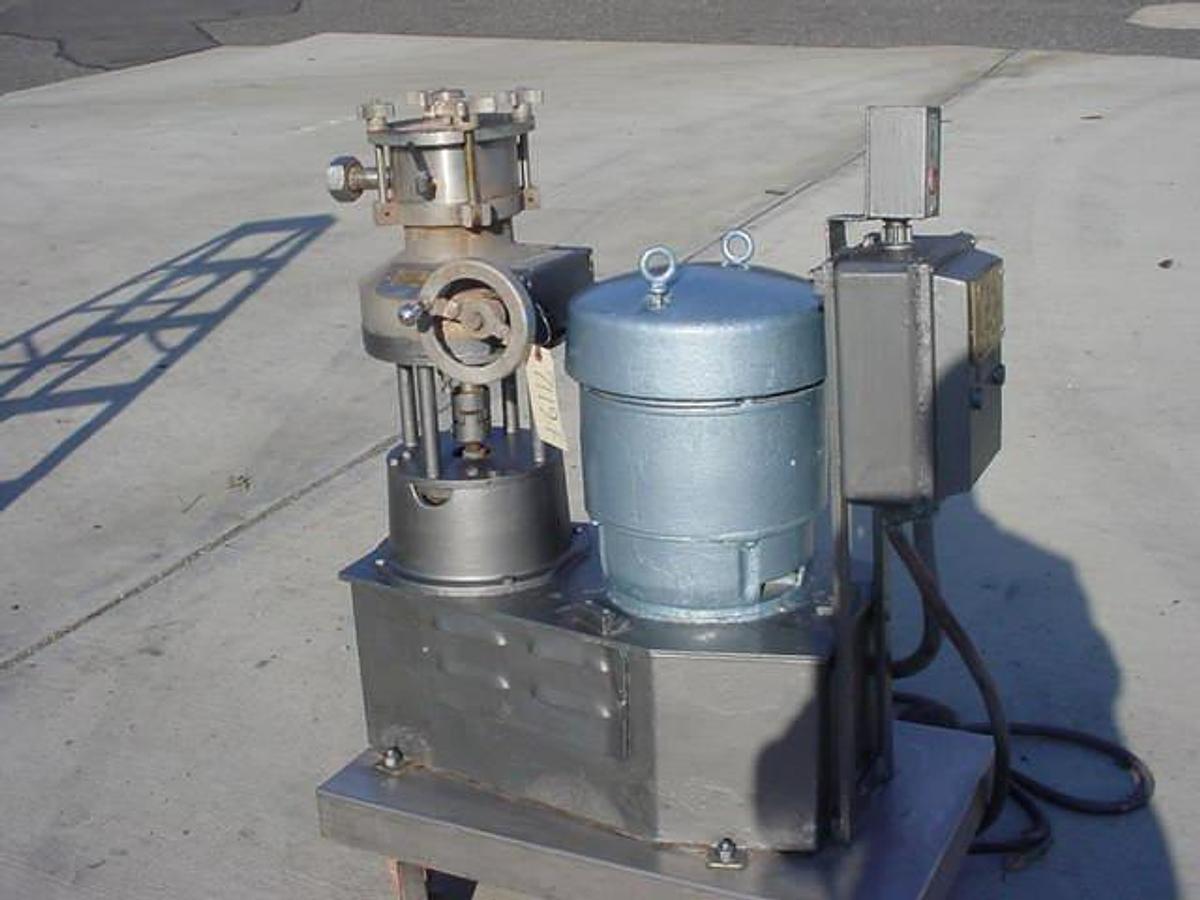
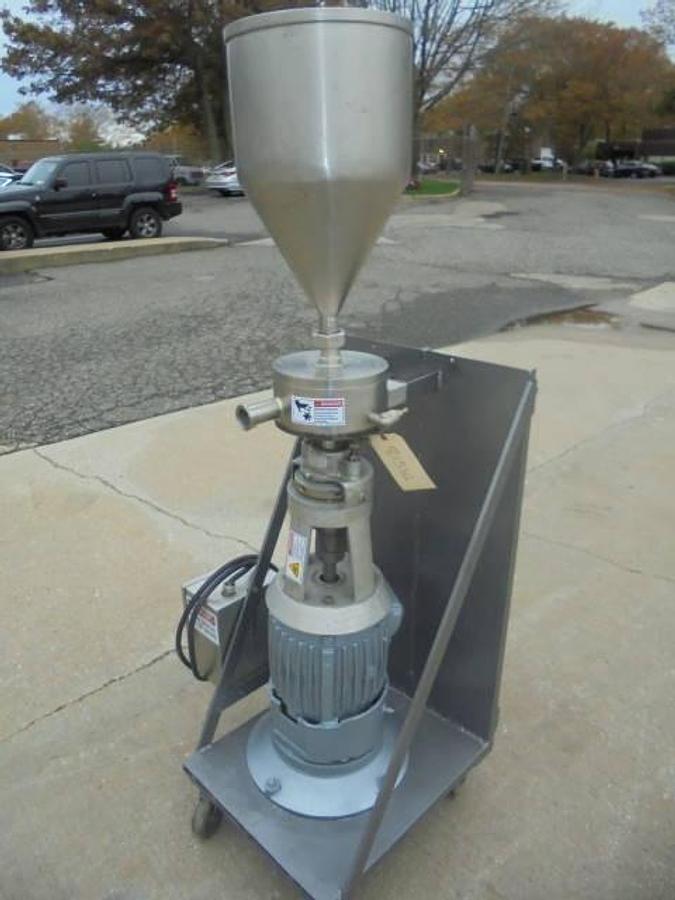
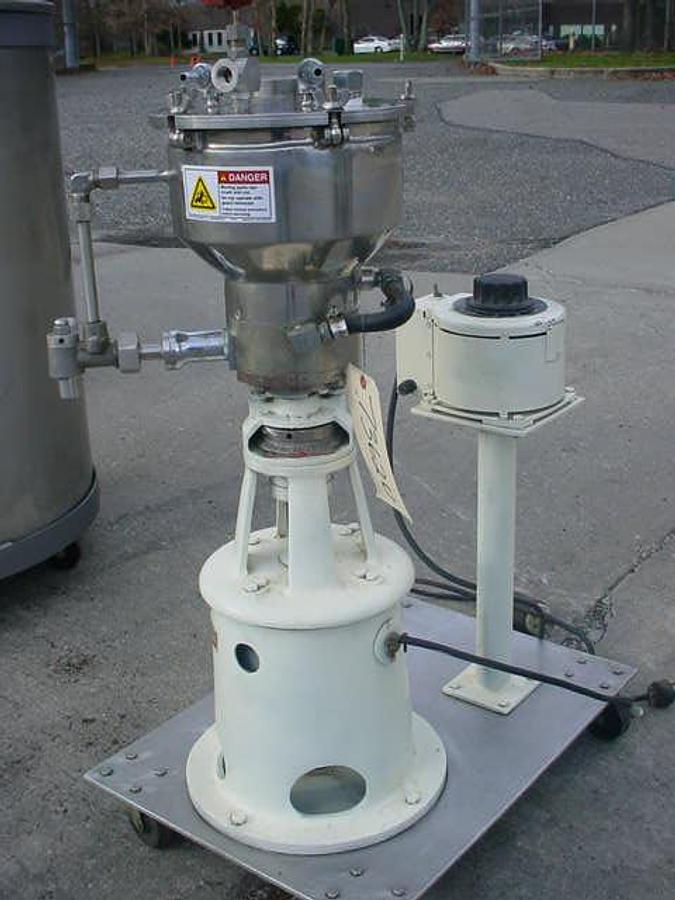
A Gifford-Wood colloid mill is a high-speed rotor-stator mixing machine designed to reduce particle size, emulsify, homogenize, and disperse materials into fine, stable mixtures. The basic operating principle involves passing a liquid or semi-liquid material through a narrow gap between a rapidly spinning rotor and a fixed stator. The intense shear forces generated in that gap break down particles, droplets, or agglomerates to very small sizes, producing smooth, uniform emulsions or dispersions that would be difficult or impossible to achieve with conventional mixing equipment.
Gifford-Wood built a strong reputation over decades of manufacturing these mills for demanding industrial applications. Their machines were engineered for durability and consistent performance, which is why they remain in active use in food processing plants, pharmaceutical facilities, and chemical production environments long after their original manufacture date. Common processing tasks include making peanut butter, mayonnaise, mustard, pharmaceutical ointments, paints, pigment dispersions, and chemical slurries. The machines are available in both vertical and horizontal configurations, with variable speed drives on certain models to allow operators to fine-tune shear intensity for different products.
What industries use Gifford-Wood colloid mills?
Gifford-Wood colloid mills have historically served a wide range of industries where particle size reduction, emulsification, or homogenization is a core processing requirement. In food manufacturing, these mills are used to produce smooth nut butters, condiments like mayonnaise and mustard, salad dressings, and other emulsified food products. The pharmaceutical industry uses colloid mills to manufacture ointments, creams, suspensions, and other preparations that require a fine, consistent particle size to meet product specifications. Chemical and coatings manufacturers rely on them for dispersing pigments, grinding resins, and producing stable chemical slurries.
Beyond those primary sectors, colloid mills also appear in cosmetics manufacturing for lotions and creams, in the paper industry for processing coatings, and in agricultural chemical production for pesticide and herbicide formulations. The ability to handle viscous, abrasive, or chemically aggressive materials makes Gifford-Wood mills particularly versatile. Models like the VT-8, which is built for vertical or horizontal operation and rated explosion proof, are suited for environments where flammable materials are processed, broadening the range of facilities that can safely operate them.
What models of Gifford-Wood colloid mills are commonly available on the used market?
Several Gifford-Wood colloid mill models appear regularly in the used equipment market. Among the most frequently encountered are the MV-6, a high-speed variable speed colloid mill that gives operators control over rotor speed to accommodate different product viscosities and desired particle sizes. The W-250B is another well-known model, typically constructed in stainless steel and powered by a 5 HP motor, making it a popular choice for food-grade and pharmaceutical applications where sanitary construction is required. The VT-8 is a 5 HP unit capable of operating in both vertical and horizontal orientations and is available in explosion-proof configurations for processing flammable materials.
The specific models available at any given time depend entirely on what has come out of service from processing facilities. Because these machines were built to last, many units circulating in the used market are decades old but still mechanically sound. When evaluating a used Gifford-Wood mill, buyers should pay close attention to the condition of the rotor-stator set, since that is the primary wear component, as well as seals, bearings, and the motor. Horsepower rating, speed range, material of construction (stainless steel versus carbon steel), and whether the unit is explosion proof are the key specifications to match against the intended application.
What should buyers inspect before purchasing a used Gifford-Wood colloid mill?
Buying any used processing machine requires a thorough inspection, and colloid mills are no exception. The rotor-stator assembly is the heart of the machine and the component most subject to wear. Buyers should examine the gap adjustment mechanism, check the rotor and stator surfaces for scoring, pitting, or uneven wear, and confirm that the clearance between rotor and stator can still be set within the range needed for the intended product. Shaft seals and mechanical seals are another critical area, as worn seals will cause leaks and contamination issues. Bearings should be checked for noise or play, and the motor should be verified for proper amperage draw and smooth operation.
Reputable used equipment dealers will typically accommodate in-person inspections at their facility, or they can provide video walkthroughs and detailed photo documentation of the machine's current condition. Some equipment may still be installed at the facility where it was last in production, in which case the dealer can often arrange an inspection at that site. Keep in mind that most used equipment dealers are not set up to run actual product through a machine during an inspection, since production operations require different permitting than an equipment dealer holds. The goal of the inspection is to get an accurate picture of the mechanical condition of the machine, not a full production trial. Buyers should also consult with Gifford-Wood or a qualified millwright familiar with colloid mills to assess whether any refurbishment will be needed before putting the machine back into service.
Are replacement parts still available for Gifford-Wood colloid mills?
Parts availability for Gifford-Wood colloid mills can be challenging, and this is one of the most important practical considerations for buyers evaluating used units. Because these mills were manufactured decades ago and Gifford-Wood is a legacy brand rather than an actively producing manufacturer of colloid mills, sourcing direct replacement parts is not always straightforward. Wear components like rotor-stator sets, mechanical seals, and bearings are the items most likely to need replacement over time, and availability varies depending on the specific model and age of the machine.
Buyers have a few practical options when factory parts are not readily available. Some specialty machining shops can fabricate rotor-stator components to the original specifications, provided the buyer can supply accurate measurements or a worn part as a reference. Cross-referencing with compatible parts from current colloid mill manufacturers is another avenue worth exploring, particularly for standard components like bearings and seals that may be interchangeable with modern equivalents. Before purchasing a used Gifford-Wood mill, it is worth contacting the manufacturer or a knowledgeable equipment dealer to get a realistic assessment of parts support for the specific model and serial number under consideration. Age and model can significantly affect what level of support and parts sourcing is feasible.
What is the typical price range for a used Gifford-Wood colloid mill?
Pricing for used Gifford-Wood colloid mills varies considerably depending on the model, horsepower, material of construction, age, and overall condition of the machine. Smaller laboratory or pilot-scale units in good mechanical condition can be found at lower price points, while larger production-scale stainless steel models with variable speed drives or explosion-proof motors command significantly higher prices. The W-250B in stainless steel and the VT-8 in explosion-proof configuration, for example, carry a premium over basic carbon steel units because of their suitability for food, pharmaceutical, and chemical applications with strict material requirements.
Beyond the base price of the machine, buyers should factor in the full landed cost before making a purchasing decision. Shipping costs for industrial milling equipment can be substantial, particularly for larger units that require specialized rigging for loading and unloading. Crating or heavy-duty palletization adds to the freight cost but is necessary to prevent damage in transit. If the machine requires any refurbishment, seal replacement, or rotor-stator work before it can be put back into production, those costs should be estimated in advance. Getting a clear picture of all these costs upfront, rather than focusing only on the purchase price, is the most reliable way to evaluate whether a particular used Gifford-Wood mill represents good value for the application.
What materials can be processed in a Gifford-Wood colloid mill?
Gifford-Wood colloid mills are capable of processing a broad range of liquid and semi-liquid materials, provided the material can be fed through the rotor-stator gap. In food production, common materials include nut pastes (peanut butter, almond butter), oil-in-water and water-in-oil emulsions like mayonnaise and salad dressings, mustard, tomato products, and dairy-based preparations. In pharmaceutical manufacturing, these mills handle ointments, creams, suspensions, and tablet coating dispersions. Chemical and coatings applications include pigment dispersions, resin grinding, adhesive production, and processing of chemical slurries that require uniform particle size.
The material of construction of the mill itself determines what products can be processed safely and without contamination. Stainless steel models like the W-250B are required for food-grade, pharmaceutical, and cosmetic applications where sanitary construction and cleanability are mandatory. Carbon steel units are generally limited to chemical and industrial applications where product contamination from metal contact is not a concern. Explosion-proof models like the VT-8 are designed for environments where flammable solvents or materials are present. Highly abrasive materials will accelerate wear on the rotor-stator set, so buyers processing abrasive slurries should factor in more frequent maintenance and potential rotor-stator replacement when evaluating the total cost of operation.
How does a colloid mill differ from a homogenizer?
Both colloid mills and homogenizers are used to reduce particle size and produce stable emulsions, but they operate on different mechanical principles and are suited to somewhat different applications. A colloid mill uses the shear forces generated between a spinning rotor and a fixed stator to break down particles and droplets. The gap between the rotor and stator is adjustable, giving operators control over the degree of size reduction. Colloid mills handle a wide viscosity range and are particularly effective for high-viscosity materials like nut butters, thick emulsions, and viscous chemical pastes that would be difficult to pump through a high-pressure homogenizer.
A high-pressure homogenizer, by contrast, forces material through a small valve under very high pressure, using the resulting turbulence, cavitation, and shear to achieve homogenization. High-pressure homogenizers generally produce finer, more uniform particle sizes than colloid mills and are preferred for low-viscosity liquids like milk, juice, and injectable pharmaceutical preparations. Colloid mills tend to be simpler to clean, easier to maintain, and better suited for viscous or chunky feed materials. In practice, some processing lines use both: a colloid mill for initial size reduction of a coarse mixture, followed by a homogenizer for final finishing to achieve very fine particle size distribution. The choice between the two depends on the product, the required particle size, the viscosity of the feed material, and the production volume.
What does explosion-proof mean on a colloid mill, and when is it required?
An explosion-proof rating on a colloid mill means the motor, electrical components, and enclosures are designed and certified to prevent internal sparks or heat from igniting flammable vapors, gases, or dusts in the surrounding environment. This is achieved through specially constructed motor housings that contain any internal arcing, sealed conduit entries, and components rated to specific hazardous location classifications under standards set by organizations like the National Electrical Code (NEC) in the United States. The VT-8 Gifford-Wood colloid mill, for example, is available in an explosion-proof configuration specifically to meet these requirements.
Explosion-proof equipment is required in facilities classified as hazardous locations under NEC Article 500 or equivalent standards. This includes environments where flammable solvents, alcohols, or volatile chemicals are processed or stored, as well as areas where combustible dusts may be present. Pharmaceutical manufacturing facilities that process alcohol-based formulations, chemical plants handling flammable solvents, and certain coatings or adhesives production environments typically require explosion-proof rated equipment in processing areas. Buyers should verify that the explosion-proof rating on a used mill is appropriate for their specific hazardous location classification (Class I, II, or III, and the relevant Division or Zone) before assuming the machine meets their facility's safety requirements. An electrician or safety engineer familiar with the facility's hazardous area classification should review the equipment's rating prior to installation.
What are the typical shipping and payment considerations when buying a used colloid mill?
Used colloid mills are heavy industrial machines, and shipping logistics deserve careful attention before finalizing a purchase. The total landed cost of the equipment includes not just the purchase price but also packaging, freight, and any rigging required for loading and unloading. Smaller colloid mills may ship on a standard pallet with adequate blocking and bracing, while larger units often require custom wooden crating to prevent damage in transit. Buyers should ask the dealer specifically what packaging will be used and whether rigging (crane or forklift work for loading and unloading) is included in the quoted shipping cost or billed separately, as these charges can add meaningfully to the total.
On the payment side, most used equipment dealers require full payment prior to shipping the machine. Some dealers extend payment terms to repeat customers with an established relationship, but buyers purchasing from a dealer for the first time should expect to pay in full before the equipment is released. Wire transfer is the most common payment method for industrial equipment transactions of this size. Buyers should confirm all payment terms, get a clear description of what is included in the sale (motor, base, any ancillary components), and understand the dealer's process for resolving any discrepancies between the described condition and what arrives. Selecting a dealer with a long track record in process equipment is one of the most reliable ways to reduce risk in a used equipment purchase.