Category
Manufacturer
Model
General Machinery Corporation
General Machinery Corporation is a well-established company that supplies a diverse range of manufacturing equipment across multiple industries, including automotive and aerospace. They are known for their precision machining tools and assembly line equipment that enhance productivity and accuracy in production processes.
FAQ:
What types of equipment does General Machinery Corporation manufacture?
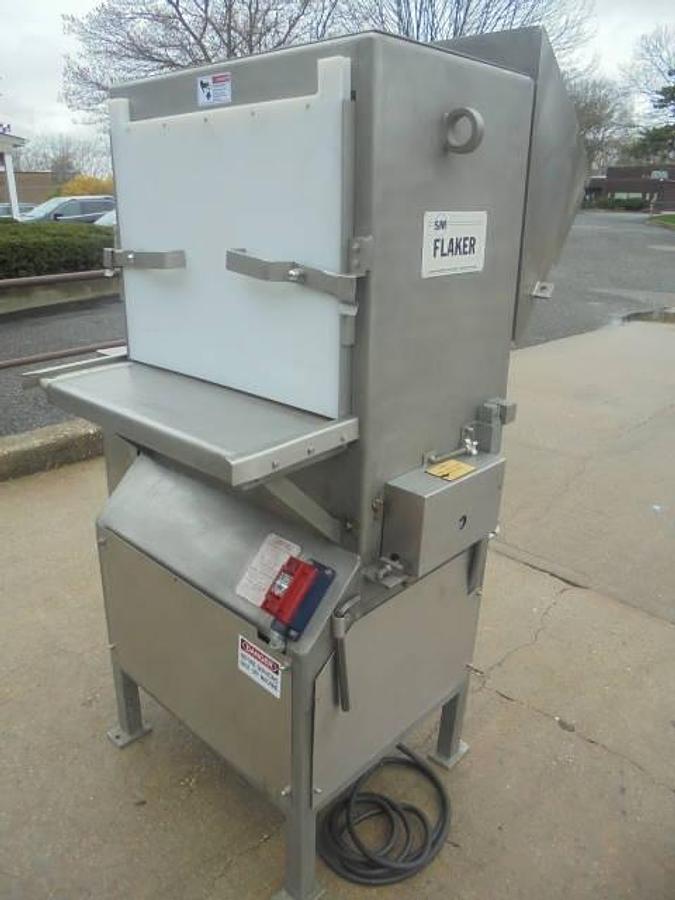
General Machinery Corporation produces a broad range of industrial manufacturing equipment, with particular strength in precision machining tools and assembly line systems. Their product line spans multiple production environments, from high-volume automotive plants to aerospace fabrication facilities. Equipment categories include metalworking machinery such as lathes, mills, and grinders, as well as food processing equipment like frozen meat flakers and slicers. The Genmac 3100 S/M Frozen Meat Flaker/Slicer is one recognized model, rated at 10 HP, which gives you a sense of the industrial-grade capacity their machines are built to handle.
Because General Machinery Corporation has supplied equipment across such varied industries, used examples of their machines tend to appear across a wide range of sectors when they come to market. Buyers in automotive, aerospace, food processing, and general fabrication all have reason to evaluate used General Machinery Corporation equipment. The diversity of their catalog means that prospective buyers should research the specific model they are considering rather than assuming all machines share the same specifications or application.
What should I know before buying used General Machinery Corporation equipment?
Buying used industrial machinery requires more due diligence than purchasing commodity goods. The most important factors to evaluate are the machine's current working condition, its maintenance and service history, and whether replacement parts are still available for that particular model. Provenance documentation, meaning records of how the machine was used, how often it was serviced, and what environment it operated in, can significantly affect both the operational lifespan you can expect and the value you are getting at the asking price. Machines that were lightly used in a climate-controlled facility carry a different risk profile than those that ran three shifts in a heavy industrial setting.
Condition grading is another area worth understanding before you commit. Used equipment dealers typically assess machines based on visual inspection and, where possible, operational testing. However, most dealers do not hold the permitting required to run full production runs, so testing is generally limited to verifying that the machine powers on, cycles correctly, and shows no obvious mechanical defects. Buyers should request as much documentation as the seller has available, ask about the machine's last known use, and arrange an inspection, whether in person or via video, before finalizing any purchase decision.
What industries use General Machinery Corporation equipment?
General Machinery Corporation has historically supplied equipment to manufacturers across automotive, aerospace, and food processing industries, among others. In automotive and aerospace settings, their precision machining tools and assembly line equipment are valued for their accuracy and throughput. These are demanding environments where tolerances are tight and downtime is costly, so equipment that holds up under sustained production pressure is essential. The fact that used General Machinery Corporation machines continue to surface in the secondary market after years of service speaks to the durability of the product line.
Food processing is another sector where General Machinery Corporation equipment appears regularly. The Genmac 3100 S/M Frozen Meat Flaker/Slicer, for example, is a purpose-built machine for high-volume food production environments. Beyond these primary sectors, general fabrication shops and machine shops also acquire used General Machinery Corporation equipment when it fits their production needs. The broad applicability of their catalog means buyers from a variety of manufacturing backgrounds may find relevant equipment available on the used market.
How is used industrial machinery typically priced?
Pricing for used industrial machinery varies considerably based on the age of the machine, its condition, the availability of replacement parts, and current demand within the relevant industry. A well-maintained machine with documented service history and readily available parts will command a higher price than a comparable model that has been sitting idle for years with no maintenance records. Brand reputation also plays a role. Equipment from established manufacturers with a track record of precision and durability tends to hold its value better in the secondary market than lesser-known alternatives.
For buyers, the asking price is only part of the total cost picture. Shipping, rigging, any required reconditioning, and installation all add to the landed cost of a used machine. It is worth getting a clear breakdown of these costs from the seller before comparing prices across multiple listings. A machine priced lower on paper may end up costing more once you factor in crating, freight, and the expense of bringing it up to production-ready condition. Buyers who do this math upfront are less likely to encounter surprises after the purchase.
Are warranties available on used industrial machinery?
Warranties on used industrial equipment work differently than they do on new machines from a manufacturer. Manufacturers typically offer warranties only on equipment sold through authorized channels as part of an initial sale. Once a machine enters the secondary market, that manufacturer warranty is generally no longer in effect. Used equipment dealers typically sell machinery on an as-is basis, which means the buyer accepts the machine in its current condition without a guarantee of performance or longevity from the seller. This is standard practice across the used equipment industry, not a red flag specific to any one dealer.
Because of this, the burden of inspection falls squarely on the buyer. Choosing a dealer with a long, verifiable track record in the industry is one of the most effective ways to reduce risk. Reputable dealers are more likely to represent equipment accurately, accommodate thorough inspections, and have relationships with buyers that depend on honest dealing. It is also worth contacting the machine's manufacturer directly to understand what level of support, parts availability, and technical documentation they can still provide for older models, since this varies by age and product line.
What does the inspection process look like for used machinery purchases?
Inspections are a standard and expected part of buying used industrial equipment, and most reputable dealers will accommodate them in some form. The three most common formats are in-person inspections at the dealer's facility, virtual inspections conducted via video call, and recorded video walkthroughs of the machine that the dealer provides in advance. Each format has its place depending on the buyer's location, the complexity of the machine, and whether the equipment is still installed at a production facility or has been moved to a dealer's warehouse.
Some machines being sold through dealers are still installed and running at the plant where they were used. In those cases, the dealer coordinates access between the buyer and the facility owner, and it may be possible to see the machine operating under actual production conditions. That said, even in those situations, testing the machine's output against specific product specifications is generally not feasible, since running production requires permits and resources that equipment dealers do not maintain. The practical goal of any inspection is to verify the machine's mechanical condition, confirm that it powers up and cycles as expected, and identify any visible wear, damage, or missing components before committing to the purchase.
Can replacement parts be sourced for older General Machinery Corporation machines?
Parts availability for used industrial machinery depends on several factors: the age of the machine, whether the manufacturer still supports that product line, and how widely the machine was distributed in the market. For well-known manufacturers with broad distribution histories, aftermarket parts suppliers and rebuilders often fill gaps left by the manufacturer's own parts catalog. It is worth researching whether a machine model has an active aftermarket ecosystem before purchasing, particularly for older equipment where factory support may be limited.
The best way to gauge parts availability for a specific General Machinery Corporation model is to contact the manufacturer directly. They can tell you whether they still stock parts for a given model, whether they have authorized service centers, and what the realistic support horizon looks like. This conversation is worth having before you finalize a purchase, not after. If the manufacturer has discontinued support for a particular machine, that does not necessarily make it a bad buy, but it does mean you should factor the cost of sourcing parts independently into your decision.
How does shipping and delivery work for large industrial equipment purchases?
Shipping used industrial machinery is more involved than standard freight. Machines need to be properly packaged, palletized, or crated to prevent damage in transit, and the level of packaging required depends on the size, weight, and fragility of the equipment. Smaller benchtop machines may ship on a standard pallet, while larger floor-standing equipment often requires custom crating. The cost of this packaging varies and is typically charged separately from the base shipping rate, so buyers should ask for a complete breakdown that includes crating, freight, and any fuel or dimensional surcharges.
For heavy equipment, loading and unloading require specialized rigging, including forklifts, cranes, or other lifting equipment depending on the machine's weight and configuration. Rigging costs can be significant and are usually the buyer's responsibility to arrange at the receiving end. Before confirming a purchase, buyers should confirm with the seller exactly what is included in the quoted shipping cost, what condition the machine will be in when it leaves the facility, and what equipment will be needed to unload it upon arrival. Getting this information upfront prevents costly surprises on delivery day.
What payment terms are typical when purchasing used industrial equipment?
Most used equipment dealers require full payment before a machine is released for shipping. This is the standard practice across the industry and applies regardless of the purchase price. The reasoning is straightforward: once a machine ships, the dealer has limited recourse if payment issues arise, and the logistics of recovering large industrial equipment after delivery are impractical. Buyers should plan for this expectation and ensure their financing or capital is in place before entering serious purchase negotiations.
Some dealers extend payment terms to repeat customers with whom they have an established relationship and a history of completed transactions. These arrangements are typically negotiated on a case-by-case basis and are not standard for first-time buyers. If extended terms are important to your purchasing process, it is worth discussing this directly with the dealer early in the conversation rather than assuming it will be available. Wire transfer is the most common payment method for transactions of this size, though dealers may accept other forms depending on the circumstances.
How do I evaluate whether a used equipment dealer is reputable?
The used machinery market includes dealers of widely varying quality, so evaluating a dealer's credibility before committing to a purchase is time well spent. Key indicators of a reputable dealer include a long operating history in the industry, specialization in the type of equipment you are buying, transparency about machine condition, and a willingness to accommodate inspections. Dealers who have been in business for many years and who specialize in specific equipment categories tend to have deeper product knowledge and more accurate representations of what they are selling than generalist resellers.
Beyond longevity, look for dealers who can provide detailed information about the machines they list, including photos, specifications, and whatever maintenance or operational history is available. A dealer who is vague about condition or reluctant to allow inspection is a red flag. You can also look for reviews, references from past buyers, or industry affiliations that speak to their standing in the market. The used equipment market runs heavily on reputation, and established dealers understand that their long-term business depends on buyers having accurate expectations going into a purchase.