Category
Manufacturer
Model
Gelman Sciences
Gelman Sciences is a prominent supplier of filtration and separation equipment, primarily serving the life sciences and pharmaceutical industries. Their product range includes membrane filters, chromatography products, and laboratory equipment, which are essential for ensuring the purity and efficacy of pharmaceutical products.
FAQ:
What types of filtration equipment did Gelman Sciences manufacture?
Gelman Sciences built a strong reputation across several filtration product categories, with membrane filters being among their most widely recognized offerings. Their catalog included vacuum filtration assemblies, syringe filters, membrane discs, chromatography products, and a range of laboratory filtration instruments designed for analytical and preparative work. The equipment was engineered to handle demanding applications where filter consistency and chemical compatibility were critical, particularly in pharmaceutical quality control and environmental testing labs.
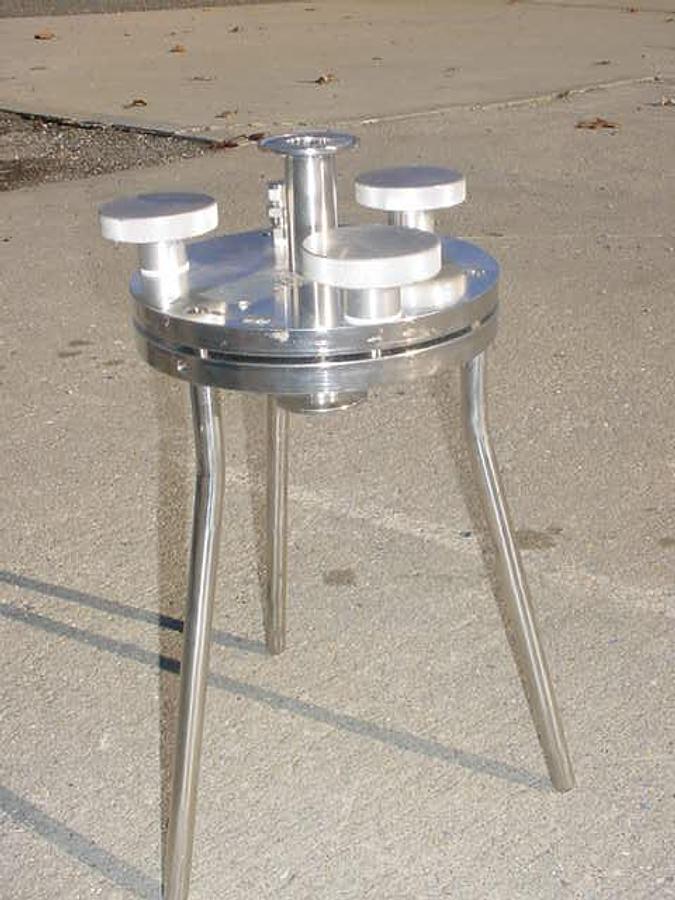
Beyond standard laboratory filters, Gelman Sciences also produced stainless steel filter housings in various sizes, including 120mm configurations suited for larger-volume filtration tasks. Their products spanned both disposable consumables and reusable hardware, giving labs flexibility depending on throughput and budget. The breadth of this catalog is one reason used Gelman Sciences equipment continues to appear on the surplus market, as many of these instruments were built to last and remain serviceable long after their initial deployment.
What industries commonly used Gelman Sciences filtration equipment?
The life sciences and pharmaceutical industries were the primary markets for Gelman Sciences filtration products. Labs relied on their membrane filters and vacuum filtration assemblies to verify the purity and sterility of drug compounds, process intermediates, and finished products. Regulatory requirements in pharmaceutical manufacturing demand extremely consistent filtration performance, and Gelman Sciences equipment earned a reputation for delivering that reliability batch after batch.
Environmental testing laboratories also made heavy use of Gelman Sciences products, particularly for water quality analysis and air particulate monitoring. Industrial applications such as microelectronics manufacturing, food and beverage processing, and general analytical chemistry rounded out the customer base. This cross-industry adoption means that used Gelman Sciences equipment turns up in a wide variety of surplus situations, from decommissioned pharmaceutical facilities to retired environmental monitoring programs, giving buyers access to instruments with different use histories and varying levels of remaining service life.
Is Gelman Sciences equipment still available for purchase?
Gelman Sciences was acquired by Pall Corporation, which means the brand no longer operates independently and does not produce equipment under the Gelman Sciences name. However, a meaningful inventory of used and surplus Gelman Sciences instruments and filter hardware continues to circulate through the secondary market. Specialized used laboratory and industrial equipment dealers periodically list these items as facilities upgrade, consolidate, or close down operations.
Buyers looking for specific Gelman Sciences models should focus on dealers who specialize in life sciences and laboratory equipment, since general industrial surplus dealers may lack the product knowledge needed to accurately describe condition and specifications. Stainless steel filter housings, vacuum filtration units, and analytical instruments from the Gelman Sciences catalog appear with reasonable frequency on the used market, though availability for any specific model can vary. Checking with multiple specialized dealers and setting up inventory alerts is a practical approach when searching for a particular unit.
Is Gelman Sciences equipment compatible with current Pall Corporation products and accessories?
Because Pall Corporation acquired Gelman Sciences, many Gelman Sciences products have direct equivalents or successors in the current Pall catalog. This is particularly relevant for consumables like membrane discs and syringe filters, where Pall has maintained product lines that are functionally equivalent to legacy Gelman Sciences specifications. For buyers purchasing used Gelman Sciences filter housings or vacuum assemblies, this compatibility can be an important practical advantage, since sourcing replacement membranes and seals through Pall is often straightforward.
That said, compatibility is not universal across all product categories, and buyers should verify specific part numbers and dimensions before assuming a Pall consumable will fit a legacy Gelman Sciences housing. Consulting Pall's technical support or cross-reference documentation is the most reliable way to confirm compatibility. For older or more specialized Gelman Sciences instruments, it is worth contacting Pall directly to understand what level of support, replacement parts, and documentation remains available, since support for legacy models can vary based on the age and complexity of the equipment.
What filtration pore sizes were available in Gelman Sciences membranes and filter assemblies?
Gelman Sciences offered a broad range of membrane pore sizes to address different filtration applications. Their product line covered everything from coarse prefiltration membranes down to sterilizing-grade filters in the 0.2 micron range, which are standard for pharmaceutical sterility applications. Analytical applications often called for 0.45 micron membranes used in HPLC sample preparation and water quality testing, and Gelman Sciences supplied these in multiple membrane chemistries including nylon, PVDF, polycarbonate, and mixed cellulose esters.
The availability of multiple membrane materials across a consistent range of pore sizes made Gelman Sciences products adaptable to chemically diverse sample matrices. Nylon membranes offered broad solvent compatibility, while PVDF was preferred for aggressive aqueous and organic solvent applications. When purchasing used Gelman Sciences filter hardware, buyers should keep in mind that the housing itself is the durable component, and replacement membranes in the required pore size and chemistry will need to be sourced separately. Confirming that compatible replacement membranes are still available before committing to a used housing purchase is a sensible step.
Are replacement filters and consumables still available for legacy Gelman Sciences instruments?
For many legacy Gelman Sciences instruments, replacement consumables remain accessible through Pall Corporation, which absorbed the product lines after the acquisition. Membrane discs, syringe filter cartridges, and other standard consumables that were part of the Gelman Sciences catalog have in many cases been carried forward under Pall branding with equivalent specifications. Buyers should cross-reference the Gelman Sciences part number against current Pall catalogs or contact Pall technical support directly to identify the appropriate replacement.
For older or more specialized equipment, parts availability becomes less predictable. Seals, O-rings, and housing components for vintage units may require sourcing from third-party seal suppliers using dimensional specifications rather than brand part numbers. Before purchasing any used Gelman Sciences instrument, it is worth researching consumable availability as part of the due diligence process. A housing or assembly that cannot be supplied with compatible membranes has limited practical value regardless of its mechanical condition, so confirming the consumable supply chain is as important as evaluating the hardware itself.
How do you verify that used Gelman Sciences filtration equipment is in proper working condition before buying?
Inspecting used filtration equipment requires attention to the components most likely to degrade over time. For vacuum filtration assemblies and filter housings, the seals and O-rings are the first things to examine, since aged elastomers can crack, compress permanently, or lose their sealing ability even when the metal or plastic housing remains structurally sound. The integrity of filter membrane support screens, clamp mechanisms, and inlet and outlet fittings should also be assessed, as these directly affect whether the unit will perform properly in service.
Reputable used equipment dealers typically offer inspection options that can include in-person visits, video walkthroughs, or detailed photographic documentation of the equipment's current condition. Buyers should request close-up images of seals, mating surfaces, and any areas showing visible wear or discoloration. Keep in mind that most used equipment dealers do not have the permitting or production infrastructure to run live product through a filtration unit as a functional test, so the inspection will focus on physical and mechanical condition rather than a full operational demonstration. For higher-value instruments, arranging a video inspection with a knowledgeable technician present on both ends of the call is a practical way to get a thorough assessment before committing to a purchase.
What is the typical price range for used Gelman Sciences filtration equipment?
Pricing on used Gelman Sciences equipment spans a wide range depending on the complexity and condition of the item. Simple filter holders and membrane housings can sell for under $50 on the surplus market, while more sophisticated analytical instruments or larger stainless steel filter assemblies can reach several hundred dollars. The condition of seals, the completeness of accessories, and the overall mechanical state of the unit all factor into pricing, as does the current availability of that particular model on the secondary market.
Buyers should factor in more than just the purchase price when evaluating total cost. Shipping for heavier stainless steel housings or multi-component systems can add meaningfully to the landed cost, particularly if specialized crating or rigging is required. Additionally, the cost of replacement seals, membranes, or any refurbishment needed to bring the unit into service should be estimated before finalizing a purchase decision. A unit priced attractively on paper may require enough remediation work that a higher-priced unit in better condition represents the better overall value.
What should buyers know about shipping used filtration equipment?
Filtration equipment, particularly stainless steel housings and precision laboratory instruments, requires careful packaging to arrive without damage. Sellers typically offer different levels of packaging from basic palletization to full custom crating, and the cost varies accordingly. Buyers should ask the dealer specifically what packaging method will be used and whether the chosen approach is appropriate for the size and fragility of the equipment being shipped. Heavier assemblies may require professional rigging for loading at the seller's facility and unloading at the destination, which adds to the total cost.
Getting a clear picture of the full landed cost before committing to a purchase is important. This means asking the dealer for a complete breakdown that includes the equipment price, packaging, rigging if applicable, freight, and any applicable handling fees. For international shipments, customs documentation and import duties become additional considerations. Buyers who have never shipped industrial filtration equipment before may underestimate these ancillary costs, so asking detailed questions upfront avoids surprises and allows for an accurate comparison between different equipment options.
What payment terms are typical when buying used filtration equipment from a dealer?
The standard practice among used equipment dealers is to require full payment before a machine is released for shipping. This applies to most transactions regardless of the buyer's size or history, particularly for first-time purchases with a given dealer. The rationale is straightforward: once equipment leaves a dealer's facility, the ability to verify its condition and resolve disputes becomes significantly more complicated, so dealers protect themselves by collecting payment in advance.
Some dealers extend more flexible terms to established customers with a track record of repeat purchases, but buyers should not assume this will apply to an initial transaction. Accepted payment methods vary by dealer and can include wire transfer, credit card, or other arrangements depending on the transaction size. Buyers should clarify payment expectations early in the purchasing conversation, before investing significant time in inspection and negotiation, to ensure the terms are workable on both sides.