Category
Manufacturer
Model
Gei/Mateer
Gei/Mateer specializes in manufacturing equipment for the food processing industry, offering solutions that enhance production efficiency and product quality.
FAQ:
What types of powder products can Gei/Mateer filling equipment handle?
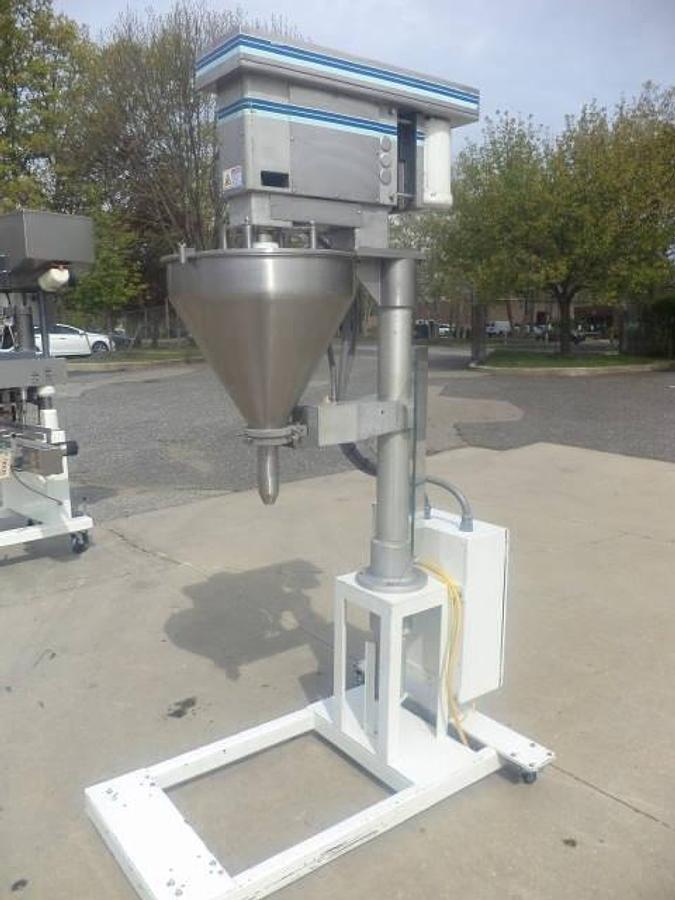
Gei/Mateer powder fillers are built around auger filling technology, which makes them particularly well-suited for fine, difficult-to-handle, and non-free-flowing powders. Common applications include spices, protein powders, pharmaceutical compounds, nutraceutical blends, cosmetic powders, and a wide range of food-grade dry ingredients. The auger mechanism gives these machines a meaningful advantage over volumetric cup fillers or gravity-fed systems when the product tends to bridge, clump, or resist consistent flow.
Beyond non-free-flowing materials, Gei/Mateer fillers also handle free-flowing powders effectively, making them a flexible choice for facilities that run multiple product types on a single line. The agitated hopper design found on many models, including the single auger configurations, helps keep product in motion and prevents settling or compaction during a production run. This combination of auger technology and hopper agitation is a key reason these machines became a standard across pharmaceutical, nutraceutical, food processing, and cosmetic manufacturing environments.
What is the difference between a single auger and dual auger powder filler?
A single auger powder filler uses one rotating auger screw to meter and dispense product into containers. This configuration is common across a broad range of applications and is well-regarded for its fill accuracy and mechanical simplicity. Single auger machines are typically easier to clean and changeover between products, which makes them a practical choice for facilities running multiple SKUs or operating under strict sanitation requirements.
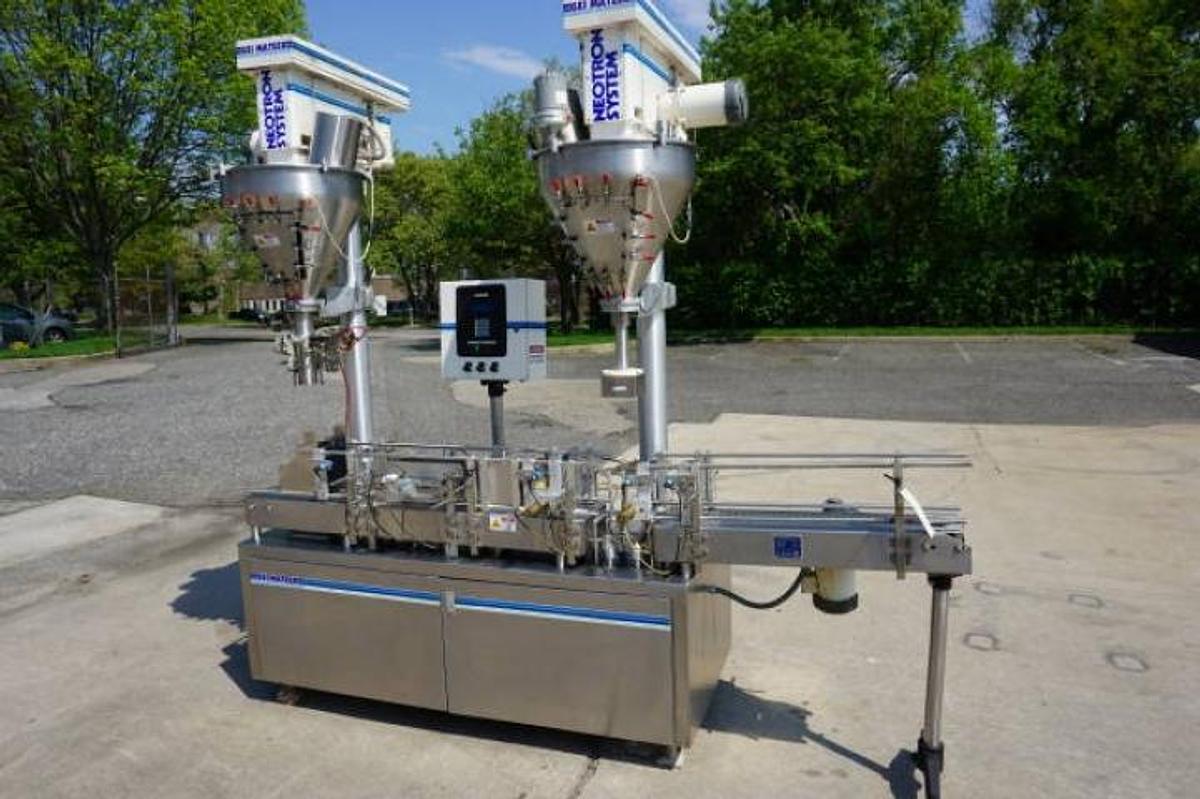
A dual auger configuration, such as the Gei/Mateer Neotron 4230, uses two auger screws working in tandem and is designed for higher-speed production environments where throughput is a priority. By filling two containers simultaneously or running two augers in sequence, dual auger machines can significantly increase output rates compared to single auger equivalents. The tradeoff is generally greater mechanical complexity, which means changeovers and maintenance procedures require more time and familiarity with the machine. For high-volume operations running a consistent product, the production speed advantage of a dual auger filler often justifies that added complexity.
What industries commonly use Gei/Mateer powder filling machines?
Gei/Mateer powder fillers have a long history of use across several industries where precise, repeatable powder dosing is critical. Pharmaceutical and nutraceutical manufacturers have relied on these machines for filling capsules, bottles, and sachets with active compounds, vitamins, and supplement blends. The food processing industry uses them extensively for spices, baking mixes, powdered beverages, and other dry food ingredients. Cosmetic manufacturers also use auger fillers for talc-based products, dry shampoos, and similar fine-particle formulations.
The broad cross-industry adoption of Gei/Mateer equipment reflects the versatility of auger filling technology and the durable construction of these machines. Because they were built to handle products with varying flow characteristics and density profiles, the same machine platform could often be adapted across product types with relatively minor tooling changes. This versatility is one reason used Gei/Mateer equipment remains in demand across multiple sectors, as buyers from different industries can often find a configuration that fits their production requirements.
What should buyers know about purchasing used Gei/Mateer powder filling equipment?
Buying used Gei/Mateer powder filling equipment requires a careful approach to evaluating machine condition, since used machinery is sold as-is without manufacturer warranties. The first priority should be working with a reputable dealer who specializes in packaging and food processing machinery and has a verifiable track record. A specialized dealer is far more likely to have accurate knowledge of the machine's history, configuration, and current working condition than a general industrial surplus seller.
Buyers should request an in-person or video inspection before committing to a purchase. Some machines may still be installed at an active production facility, where the equipment can be observed running under real conditions. Others may be decommissioned, in which case a thorough visual inspection and review of available documentation becomes even more important. It is also worth contacting the manufacturer directly to understand what level of technical support, spare parts, and documentation is available for a specific model and age of machine, since older units may have more limited manufacturer support than more recent ones.
Are replacement parts available for Gei/Mateer powder fillers?
Parts availability for Gei/Mateer equipment depends on the specific model, its age, and the current support posture of the manufacturer or their authorized service network. Gei/Mateer has roots in two distinct manufacturing organizations, with Mateer-Burt being a long-established U.S. manufacturer and Gei being a UK-based packaging machinery group. The combined brand name is common in the used equipment market, and the range of models spans many production years, so parts availability can vary considerably from one machine to another.
Before purchasing a used Gei/Mateer filler, buyers are advised to contact the manufacturer directly to ask about spare parts, consumable components such as auger screws and seals, and whether technical documentation is still available for the specific model in question. For older machines, third-party machining or aftermarket parts suppliers may be a practical alternative for certain wear components. Discussing parts availability with the equipment dealer prior to purchase is also a reasonable step, as experienced dealers in this space often have insight into which models have strong aftermarket support and which may require more creative sourcing.
How accurate are auger-style powder fillers like those made by Gei/Mateer?
Auger filling technology is widely considered one of the more accurate methods for dispensing dry powder products, particularly for materials that do not flow freely or consistently. The auger screw meters product by rotating a precise number of turns, which translates directly into a controlled volume of powder dispensed per cycle. When combined with a consistent product density, this mechanism can achieve fill weight accuracy that meets pharmaceutical and food industry tolerances. Many auger fillers in this class are capable of achieving fill weight accuracy within plus or minus one to two percent under stable production conditions.
Actual fill accuracy in practice depends on several variables beyond the machine itself, including product consistency, ambient humidity, hopper fill level, and the condition of the auger and tooling. A well-maintained machine with properly matched tooling for the product being run will perform significantly better than one with worn components or mismatched auger geometry. For buyers evaluating used equipment, the condition of the auger screw, the sealing surfaces, and the drive components are key indicators of how well the machine is likely to perform after installation.
Can Gei/Mateer powder fillers be integrated into an existing packaging line?
Gei/Mateer powder fillers are designed to function as standalone filling stations that can be incorporated into broader packaging line configurations. Most models can be paired with container conveyors, checkweighers, capping machines, and labeling systems to create a continuous production flow. The footprint and interface requirements of a specific machine will determine how straightforward that integration is, and buyers should review the mechanical and electrical specifications of any unit they are considering to confirm compatibility with their existing line equipment.
For used machines, integration planning requires a bit more groundwork than it would with a purpose-specified system. Buyers should verify the machine's electrical configuration, including voltage, phase, and control system type, as well as any pneumatic or compressed air requirements. Older machines may use control systems that are less compatible with modern line controllers or data collection systems, which could require additional engineering work. Discussing the intended line configuration with the equipment dealer before purchase can help identify potential integration challenges early and avoid costly surprises during installation.
What maintenance does Gei/Mateer powder filling equipment typically require?
Regular maintenance on a Gei/Mateer powder filler centers on keeping the auger drive, seals, and hopper components in good working condition. The auger screw and its associated sealing surfaces are wear components that should be inspected on a scheduled basis, as worn seals can allow product to migrate into the drive assembly and cause premature mechanical wear. Lubrication of the drive train, gearbox, and any bearing surfaces should follow the intervals specified in the machine's technical documentation. Keeping the hopper and product contact surfaces clean and free of buildup is also essential, particularly for hygroscopic powders that can absorb moisture and cause clumping or corrosion over time.
For used machines, establishing a baseline maintenance condition at the time of purchase is an important first step. Buyers should plan to inspect and replace any seals, gaskets, or wear parts that show signs of deterioration before putting the machine into production. Having access to the machine's service manual makes this process considerably more manageable, so confirming that documentation is available, either through the dealer or directly from the manufacturer, should be part of the pre-purchase evaluation. Machines that have been well-maintained and stored properly tend to require less remediation work before they can be returned to service.
What fill weight ranges can Gei/Mateer powder filling machines accommodate?
Gei/Mateer auger fillers are capable of handling a wide range of fill weights, and the specific range depends on the auger diameter, pitch, and the tooling configuration installed on a given machine. Smaller auger assemblies are suited for low fill weights, such as those used in single-serve sachets or small pharmaceutical bottles, while larger diameter augers with coarser pitch are used for higher fill weight applications like canister fills or bulk powder containers. Many machines in this class can be tooled to cover a fill weight range from a few grams up to several kilograms per fill cycle, though any individual machine will have practical limits based on its mechanical design.
When evaluating a used Gei/Mateer filler for a specific application, buyers should confirm what auger tooling is included with the machine and whether that tooling is appropriate for their target fill weight and product type. Additional auger sets can sometimes be sourced separately to extend the machine's range, but this adds cost and requires verification that the additional tooling is compatible with the specific model. Consulting with the equipment dealer about the included tooling and the machine's intended fill weight range is a straightforward way to avoid mismatches between the equipment and the production requirement.
What should buyers expect regarding shipping and inspection when purchasing used powder filling equipment?
Shipping used powder filling equipment requires careful planning to avoid damage in transit. Machines should be properly palletized or crated based on their size and weight, and the level of packaging required will directly affect shipping costs. Larger or heavier machines may need professional rigging services for loading and unloading, which adds to the total landed cost. Buyers should ask the dealer for a clear breakdown of packaging, rigging, and freight charges before finalizing a purchase so there are no surprises when the machine arrives.
Inspections are a standard part of buying used machinery and are typically offered in person, via video call, or through detailed video documentation of the machine. Some machines are still installed at the facility where they were last used, which can allow for an inspection while the equipment is in its operating environment. Buyers should keep in mind that most used equipment dealers do not have the permitting or infrastructure to run actual product through a machine during a demonstration, so inspections generally focus on the mechanical condition, completeness of components, and visual evidence of wear or damage. Getting a thorough inspection before committing to a purchase is one of the most effective ways to make an informed buying decision on used equipment.