Category
Manufacturer
Model
FAQ:
What types of GEA equipment are commonly available on the used market?
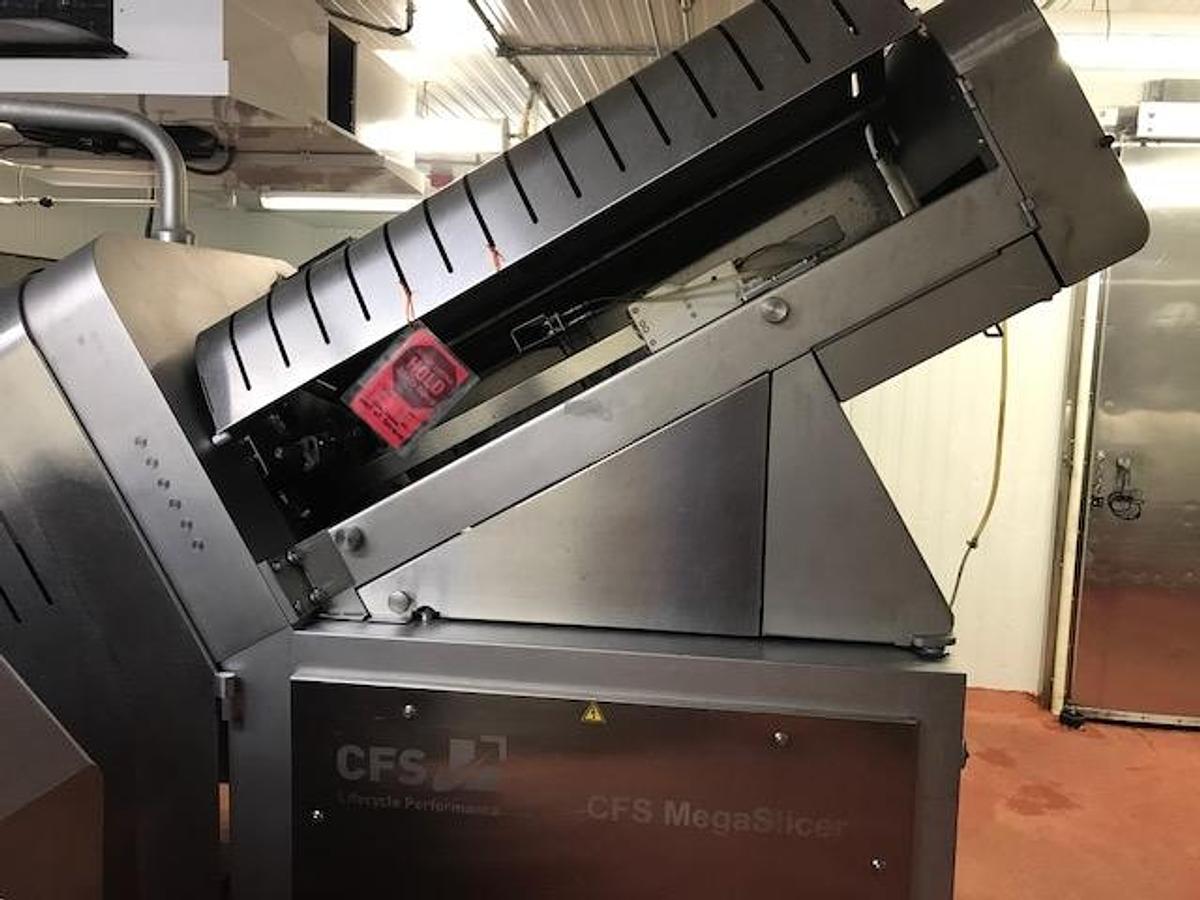
GEA Group manufactures an extensive range of processing equipment across multiple categories, and most of these product lines appear regularly on the used equipment market. Common finds include centrifugal separators, homogenizers, spray dryers, heat exchangers, filling and packaging machines, slicers (such as the GEA Megaslicer), mixers, and industrial refrigeration systems. GEA's product catalog is broad enough that buyers in food processing, dairy, beverage, pharmaceutical, and chemical manufacturing can often find exactly the machine type they need without purchasing new.
Because GEA equipment is built for long operational lifespans, often exceeding 20 years with proper maintenance, used machines frequently still have significant productive life remaining when they enter the secondary market. This longevity is one reason the brand's equipment turns up so consistently among reputable used machinery dealers. Buyers should look for dealers who specialize in food and beverage or pharmaceutical processing equipment, as they are more likely to carry a curated selection of GEA machines and have the industry knowledge to accurately describe each unit's condition and configuration.
What industries use GEA processing equipment?
GEA Group is one of the largest suppliers of process technology in the world, and its equipment serves a wide cross-section of industries. The most common sectors include food processing, dairy production, beverage manufacturing, pharmaceuticals, biotechnology, and industrial chemicals. Within food processing alone, GEA machines handle tasks ranging from high-speed slicing and portioning to spray drying, pasteurization, homogenization, and aseptic filling. The breadth of applications is one reason GEA has built such a strong global reputation over decades.
GEA equipment is designed to meet demanding international regulatory standards including FDA requirements, CE marking, EHEDG guidelines, and 3-A Sanitary Standards. This compliance record makes used GEA machines particularly attractive to buyers in food-grade and pharmaceutical environments, where equipment must meet strict hygiene and safety criteria regardless of age. Buyers in these regulated industries should confirm that any used machine they consider still meets the specific standards applicable to their production environment, and consulting with the manufacturer directly about compliance status for a given model and age can be a useful step in that process.
How do I assess the condition of a used GEA machine before buying?
Evaluating a used GEA machine requires more than reviewing a spec sheet. The most reliable approach is to arrange a direct inspection, either in person or through a video walkthrough conducted by the dealer. Many used equipment dealers will accommodate both options, and some machines may still be installed and running at a production facility, which gives buyers the opportunity to observe the equipment in an operational context. Look closely at wear points, seals, drive components, and any food-contact surfaces, and ask the dealer to document the machine's visible condition in detail.
It's worth understanding that most used equipment dealers are not set up to run full production tests, since that would require product, permits, and a functioning production environment that dealers typically don't maintain. The inspection process is therefore about getting the clearest possible picture of mechanical condition rather than a live production run. Buyers should ask for any available service records, maintenance logs, or decommissioning documentation. Consulting with GEA directly about the specific model and serial number can also help buyers understand what parts and technical support remain available for that machine, which is a practical indicator of long-term usability.
Does used GEA equipment come with a warranty?
Manufacturer warranties are tied to the purchase of new equipment directly from the manufacturer or an authorized distributor. When GEA equipment enters the secondary market and is sold by a used equipment dealer, it is typically sold as-is, without a manufacturer warranty attached. This is standard practice across the used industrial machinery industry and is not specific to GEA. The as-is nature of these transactions puts the responsibility for due diligence squarely on the buyer, which is why thorough pre-purchase inspection matters so much.
To manage risk in the absence of a warranty, buyers should prioritize dealers with a demonstrated track record in their specific industry, whether that is food processing, dairy, pharmaceuticals, or another sector. A dealer who specializes in the relevant equipment category is better positioned to accurately represent a machine's condition and history. Buyers should also contact GEA directly to understand what level of technical support, parts availability, and service documentation they can expect for the particular model and production year they are considering, since older or discontinued models may have more limited manufacturer support.
What is the typical price range for used GEA processing equipment?
Pricing for used GEA equipment varies considerably depending on the machine type, model, age, condition, and configuration. Entry-level or smaller-capacity units such as certain separators or heat exchangers might be found in the range of a few thousand dollars, while large-scale systems like industrial spray dryers, complete filling lines, or high-capacity homogenizers can run well into six figures. GEA's strong brand reputation and the durability of its equipment tend to support higher resale values compared to lesser-known manufacturers, so buyers should expect to pay a premium relative to off-brand alternatives.
The best way to get an accurate sense of current market pricing is to compare listings across multiple reputable used equipment dealers who specialize in food, beverage, or pharmaceutical processing machinery. Keep in mind that the listed price is only part of the total cost. Rigging, crating, freight, and any reconditioning or installation work will add to the final landed cost. Asking dealers to provide a full breakdown of these ancillary costs upfront helps avoid surprises and makes it easier to compare offers on an apples-to-apples basis.
Can I get replacement parts and technical support for used GEA equipment?
Parts availability and manufacturer support are practical considerations that vary depending on the specific GEA model and how old it is. GEA Group maintains a global service and parts network, and for many models, parts remain available for years after a machine leaves active production. However, older or discontinued models may have limited factory support, and some components may need to be sourced through third-party suppliers or fabricated to specification. Before committing to a purchase, it is worth contacting GEA directly with the model number and serial number to get a clear picture of what support exists for that particular machine.
Beyond manufacturer support, the used equipment market itself often produces a secondary supply of spare parts, particularly for popular GEA product lines that were widely deployed in industry. Experienced dealers who specialize in processing equipment can sometimes point buyers toward parts sources or service technicians familiar with specific GEA models. Buyers should factor parts availability into their total cost of ownership calculation, especially for machines that will be put into demanding, high-volume production environments where downtime is costly.
How do I verify the age and service history of a used GEA machine?
The most direct way to verify a machine's age is through the serial number, which GEA uses to track manufacturing date and original configuration. A reputable dealer should be able to provide the serial number, and buyers can contact GEA's service organization directly to request information tied to that number. Some machines also carry data plates with manufacturing year information. If the equipment is being sold from an active or recently decommissioned production facility, the plant operator may be able to provide maintenance logs, calibration records, or service history documentation.
Not all used machines come with complete paperwork, and buyers should approach any gaps in documentation with appropriate caution rather than assuming the best. A dealer who has inspected the machine thoroughly and can speak knowledgeably about its history is more valuable than one who simply relays what they were told by the previous owner. For high-value purchases, some buyers choose to hire an independent equipment inspector or a GEA-certified service technician to conduct a third-party assessment before finalizing the transaction. This added step can provide meaningful peace of mind on a significant capital investment.
What should I know about shipping and rigging costs for used GEA equipment?
Shipping costs for used industrial equipment are rarely straightforward, and GEA machines are no exception. The total freight cost depends on the machine's size and weight, the origin and destination, and the level of packaging required to protect it in transit. Smaller tabletop or skid-mounted units may ship on a standard pallet, while larger machines such as separators, dryers, or complete processing lines typically require custom crating or heavy-duty rigging for safe loading and unloading. Rigging services add cost and require coordination between the dealer, the shipping carrier, and sometimes the receiving facility.
Buyers should ask the dealer for a detailed breakdown of packaging, rigging, and freight costs before agreeing to a purchase, so the full landed cost is clear from the start. International shipments add additional complexity, including customs documentation, import duties, and compliance with export regulations for certain types of industrial equipment. For very large or complex installations, it may be worth engaging a specialized machinery moving company with experience handling food and beverage or pharmaceutical processing equipment, as improper handling during transit can cause damage that is expensive to repair and difficult to attribute after the fact.
Is used GEA equipment compatible with my existing production line?
Compatibility depends on several factors: the specific machine model and its rated capacity, the utility requirements (voltage, phase, compressed air, steam, water), the physical footprint, and how the machine interfaces with upstream and downstream equipment in your line. GEA produces equipment across a wide range of capacities and configurations, so two machines with the same general function can have very different integration requirements. Reviewing the technical specifications carefully, and ideally comparing them against your existing line's documentation, is an essential step before purchase.
If you are not certain about compatibility, the inspection phase is the right time to gather detailed technical information. Ask the dealer for the full spec sheet, electrical diagrams, and any available installation documentation. For complex integrations, consulting with a process engineer or a GEA service technician who is familiar with the model in question can help identify potential issues before the machine arrives at your facility. Retrofitting or modifying a used machine to fit an existing line is sometimes possible but adds cost and lead time, so it is better to surface those needs early in the evaluation process.
What payment terms should I expect when buying used GEA equipment from a dealer?
The standard practice among used equipment dealers is to require full payment before a machine is released for shipping. This applies to most transactions, particularly for first-time buyers or buyers without an established relationship with the dealer. The reasoning is straightforward: once a large piece of industrial equipment leaves a dealer's facility, verifying its condition and resolving disputes becomes significantly more complicated. Full prepayment protects the dealer from that risk and is a widely accepted norm in the industry.
Some dealers extend payment terms to repeat customers or buyers with established credit relationships, but this is not guaranteed and typically requires a history of prior transactions. Buyers should clarify payment expectations early in the negotiation process, including accepted payment methods and any deposit requirements that might be needed to hold a machine while inspections or logistics are arranged. For high-value purchases, working with a dealer who has a verifiable track record and references from past buyers in your industry adds an important layer of confidence when sending payment in advance of receiving the equipment.