Category
Manufacturer
Model
Gaulin
Gaulin is known for its high-quality homogenizers and emulsifiers used in the food and pharmaceutical industries. Their equipment ensures product consistency and quality.
FAQ:
What is a Gaulin homogenizer and what is it used for?
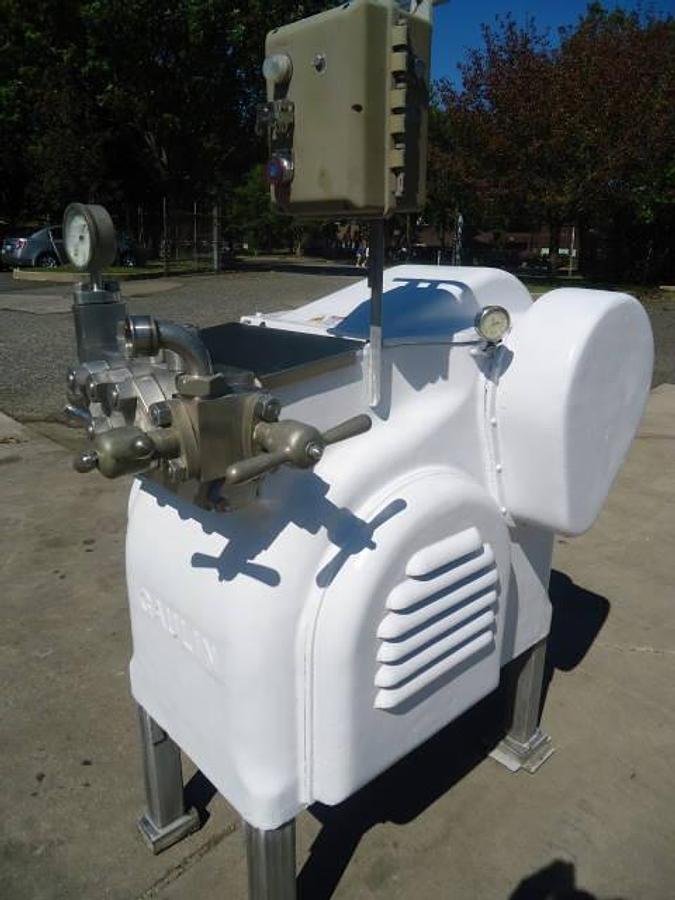
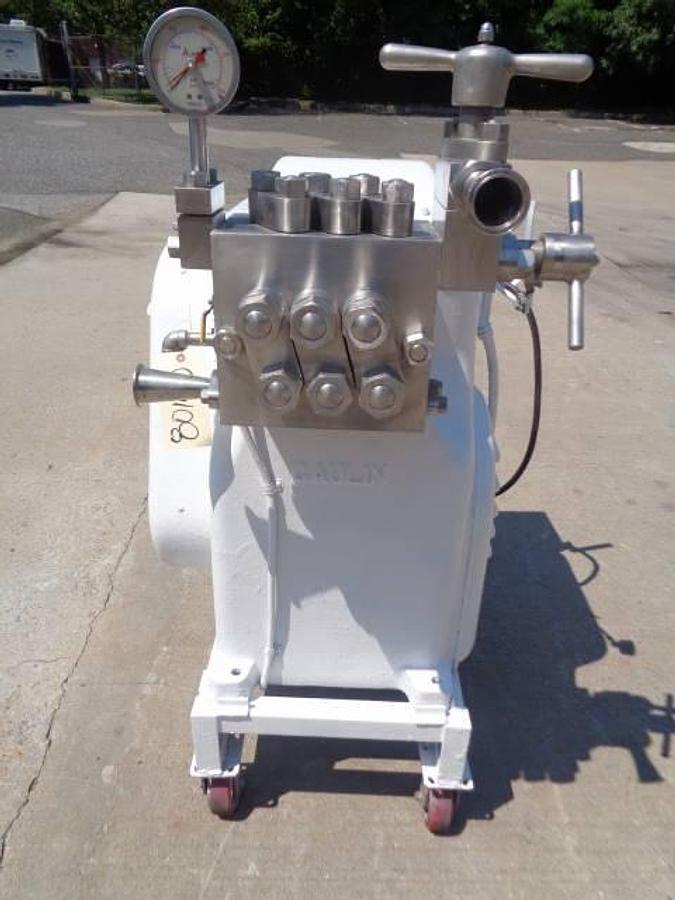
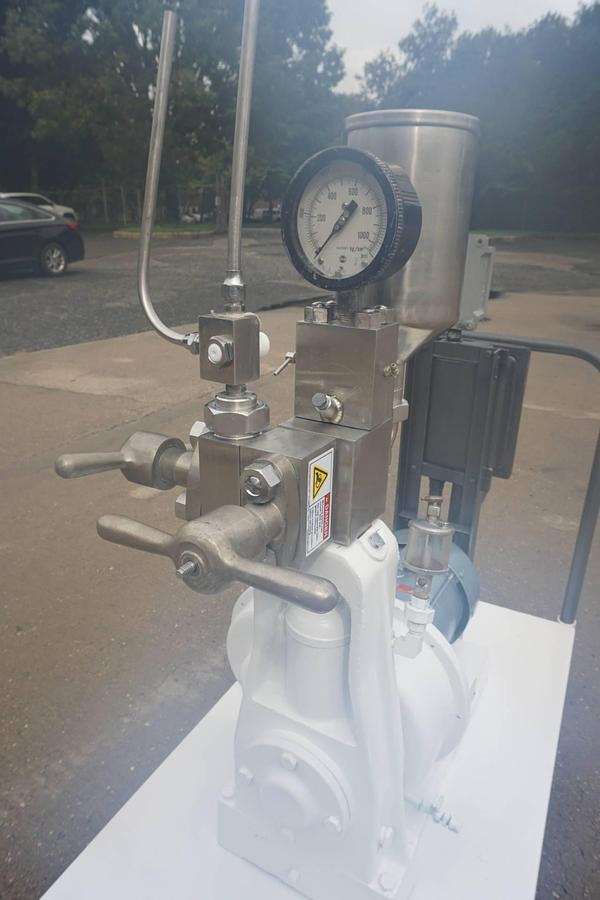
A Gaulin homogenizer is a high-pressure mechanical processing machine designed to reduce particle size, create stable emulsions, and produce consistent product texture across a wide range of liquid and semi-liquid materials. The machine forces product through a precisely engineered valve assembly under high pressure, which disrupts and uniformly disperses particles or fat globules throughout the mixture. Gaulin is a legacy brand with deep roots in industrial processing, historically associated with APV Gaulin and later brought under the SPX Flow umbrella, which gives the brand strong recognition and trust among process engineers worldwide.
These machines are used extensively in dairy processing (particularly for milk and cream homogenization), food and beverage manufacturing, pharmaceutical production, and cosmetic formulation. In dairy applications, homogenization prevents cream separation and improves mouthfeel. In pharmaceutical and cosmetic contexts, the equipment is used to produce stable emulsions and suspensions with tightly controlled droplet or particle size distributions. The two-stage homogenizer configuration, which Gaulin is well known for, allows processors to fine-tune both the primary and secondary valve stages to achieve very specific texture and stability outcomes that single-stage machines cannot replicate.
What industries commonly use Gaulin homogenizers?
Gaulin homogenizers are found across several processing-intensive industries where product consistency, emulsion stability, and particle size reduction are critical quality requirements. The dairy industry is historically the largest user, relying on Gaulin equipment to homogenize fluid milk, cream, ice cream mixes, yogurt bases, and other dairy products. Food and beverage manufacturers use these machines for sauces, dressings, juices, nutritional beverages, and infant formula, where a stable, uniform product is essential for both quality and shelf life.
Beyond food, the pharmaceutical industry uses Gaulin homogenizers to produce injectable emulsions, drug suspensions, and liposomal formulations where precise particle size control directly impacts bioavailability and product safety. Cosmetic and personal care manufacturers rely on them for lotions, creams, serums, and other emulsion-based products. Buyers sourcing equipment for food, dairy, or pharmaceutical applications should pay particular attention to whether a specific machine carries 3-A Sanitary Standards certification, as this is a widely recognized compliance benchmark for equipment that contacts food or pharmaceutical products. Not all used machines on the market will have documentation confirming this certification, so verifying that detail with the seller before purchasing is an important step.
What is the difference between a single-stage and a two-stage Gaulin homogenizer?
The distinction between single-stage and two-stage homogenization comes down to the number of high-pressure valve assemblies the product passes through during processing. In a single-stage machine, the product is forced through one homogenizing valve at full operating pressure, which breaks up particles and fat globules. This is sufficient for many applications where basic emulsification or particle size reduction is the goal. A two-stage machine adds a second valve operating at a lower pressure downstream of the first, which breaks up any clusters or aggregates that may have re-formed immediately after the first stage.
Gaulin two-stage homogenizers are particularly valued in dairy and pharmaceutical processing because the second stage produces a finer, more stable result with a tighter particle size distribution. For fluid milk, the two-stage process is the industry standard because it prevents fat globule clustering and produces a consistently smooth product. When evaluating used Gaulin homogenizers, buyers should confirm whether the machine is configured as a true two-stage unit and inspect the condition of both valve assemblies, as the wear characteristics of each stage can differ depending on the product that was previously processed through the machine.
What pressure ratings should I look for when evaluating a used Gaulin homogenizer?
Operating pressure is one of the most important specifications to evaluate when selecting a Gaulin homogenizer, because the pressure range directly determines what applications the machine can handle and how finely it can process a given product. Common operating ranges for Gaulin homogenizers span from approximately 3,000 PSI on the lower end up to 14,500 PSI for high-intensity pharmaceutical or specialty food applications. Machines rated around 8,000 PSI, such as the Gaulin M3 two-stage model, are well suited for a broad range of dairy and food processing tasks. Lab-scale and pilot units typically operate at lower pressures and smaller flow rates, while production-scale machines are built to sustain continuous high-pressure operation over long run times.
When buying a used machine, it is worth asking the seller about the pressure history of the unit and whether it was routinely operated near its maximum rated pressure or at more moderate levels. Continuous operation at or near maximum pressure accelerates wear on valve seats, plungers, and seals. A machine that spent most of its service life at moderate pressures will generally be in better mechanical condition than one that was pushed hard. Requesting inspection photos or video of the valve assembly and pump components is a practical way to assess wear before committing to a purchase.
What capacity ranges are typically available in used Gaulin homogenizers?
Gaulin homogenizers are manufactured across a wide range of capacities to serve everything from laboratory-scale development work to full industrial production. Lab and pilot-scale units are designed for small batch or continuous processing at low flow rates, often measured in gallons per hour in the single to low double digits. These machines are commonly used for product development, formulation testing, and small-batch specialty production. Mid-range production models handle capacities from a few hundred up to several thousand gallons per hour, and large-scale industrial units can process significantly higher volumes depending on configuration.
Capacity, typically expressed in gallons per hour (GPH) or liters per hour (LPH), is usually one of the first specifications buyers filter by when searching for used equipment, because undersizing or oversizing a homogenizer relative to the production line creates operational inefficiencies. When reviewing used Gaulin listings, it is important to note whether the stated capacity reflects the machine's rated maximum or its typical operating throughput, as these can differ. Buyers should also consider whether the motor horsepower matches the intended capacity and pressure requirements, since pump output is directly tied to drive power.
What should buyers look for when purchasing a used Gaulin homogenizer?
Buying a used Gaulin homogenizer requires more due diligence than purchasing new processing equipment, because the condition of key wear components varies considerably depending on how the machine was operated and maintained. The most critical areas to inspect are the homogenizing valve assembly, the pump plungers and piston seals, the high-pressure cylinder block, and the drive components including the crankshaft and connecting rods. Wear in the valve seats and plunger seals is normal over time, but excessive wear can require significant rebuilding before the machine is production-ready. Asking the seller for detailed photos or a video walkthrough of these components is a reasonable starting point.
Reputable used equipment dealers will typically offer in-person or virtual inspection options, and some machines may still be installed at the facility where they were last used, allowing buyers to see the equipment in its operating context. Keep in mind that most used equipment dealers do not have the permitting or production infrastructure to run actual product through a machine for a live demonstration, so inspections focus on mechanical condition rather than processing performance. Buyers should also check with the manufacturer regarding parts availability for the specific model and serial number being considered, since older or discontinued models may have limited support. Selecting a dealer who specializes in food and pharmaceutical processing equipment and has a long track record in the industry adds an important layer of confidence to the transaction.
What is the typical price range for a used Gaulin homogenizer?
Pricing for used Gaulin homogenizers varies considerably based on the model, capacity, pressure rating, age, and overall mechanical condition of the unit. Lab-scale and pilot models in working condition generally represent the lower end of the price spectrum, while large-scale production homogenizers with high flow rates and elevated pressure ratings command significantly higher prices. The two-stage configuration typically carries a premium over comparable single-stage units because of the additional valve assembly and the broader range of applications it supports.
Condition is the single biggest variable in used equipment pricing. A machine that has been well maintained, is complete with its original components, and has been recently serviced will be priced higher than a unit sold for parts or in unknown condition. Buyers should factor in not just the purchase price but also the cost of any rebuild work, replacement wear parts, shipping, and rigging when calculating the total landed cost of the equipment. Getting a clear picture of what the seller includes in the asking price, and what additional costs the buyer should anticipate, is an important part of the evaluation process before committing to a purchase.
What maintenance does a Gaulin homogenizer require?
Gaulin homogenizers are precision high-pressure machines, and their maintenance requirements reflect the mechanical demands placed on the equipment during production. The homogenizing valve and valve seat are the highest-wear components in the system and require regular inspection and replacement on a schedule that depends on the product being processed, operating pressure, and run time. Abrasive or viscous products accelerate valve wear. Plunger piston seals and packing also require routine replacement to maintain pressure integrity and prevent leaks, and the frequency of this maintenance increases with higher operating pressures and longer production runs.
The lubrication system for the drive end of the machine, including the crankshaft, connecting rods, and crossheads, requires regular oil changes and inspection for metal contamination that could indicate bearing wear. High-pressure fittings and connections should be checked periodically for signs of leakage or fatigue. For food, dairy, and pharmaceutical applications, the product-contact surfaces must be cleaned and sanitized according to the applicable sanitary standards, and any seals or gaskets used in the product path need to be food-grade and replaced on a consistent schedule. Buyers acquiring a used machine should budget for an initial inspection and likely replacement of common wear items before putting the equipment into production, since the service history of a used machine is rarely fully documented.
What spare parts and consumables are typically needed for a Gaulin homogenizer?
The parts that see the most regular replacement on a Gaulin homogenizer are concentrated in the pump and valve sections of the machine. Homogenizing valve seats and valve plugs are the primary consumables, as these components experience intense mechanical stress every time product passes through the valve gap. Plunger seals, piston packing, and o-rings in the high-pressure cylinder are also replaced on a routine basis. For the drive end, bearings, crankshaft seals, and lubrication components are the main items to keep on hand. Diaphragm assemblies on certain models may also require periodic replacement.
Before purchasing a used Gaulin homogenizer, it is strongly advisable to contact the manufacturer or an authorized parts supplier to confirm the availability of replacement parts for that specific model and serial number range. Gaulin's brand history involves multiple corporate transitions, and parts availability can vary depending on the age and configuration of the machine. Older models may require custom fabrication for certain components, or parts may only be available through specialty rebuild shops. Buyers should treat parts availability as a key factor in the purchase decision, not an afterthought, since a machine that cannot be maintained is not a practical investment regardless of its initial condition.
What should buyers expect regarding shipping and inspection when purchasing a used Gaulin homogenizer?
Used Gaulin homogenizers range from compact lab units to large multi-hundred-horsepower production machines, and the logistics involved in moving them vary accordingly. Smaller lab and pilot models can often be palletized and shipped via standard freight, while larger production homogenizers require professional rigging for loading and unloading, which adds to the overall cost. Proper crating and packaging is important because these machines contain precision-machined components that can be damaged by rough handling in transit. Buyers should ask sellers specifically about how the machine will be packaged and what rigging services will be required at both the origin and destination, so there are no surprises in the final landed cost.
Inspection options for used homogenizers typically include in-person visits, virtual walkthroughs via video call, or seller-provided photo and video documentation of the machine's current condition. Some machines are still installed at the facility where they were last operated, which can allow for an inspection in the production context. Most used equipment dealers do not have the production permitting required to run actual product through a machine, so inspections focus on mechanical and visual condition rather than live processing tests. Buyers should use the inspection to verify that all major components are present, assess visible wear on accessible parts, and ask specific questions about the machine's operational history before finalizing the purchase.