Category
Manufacturer
Model
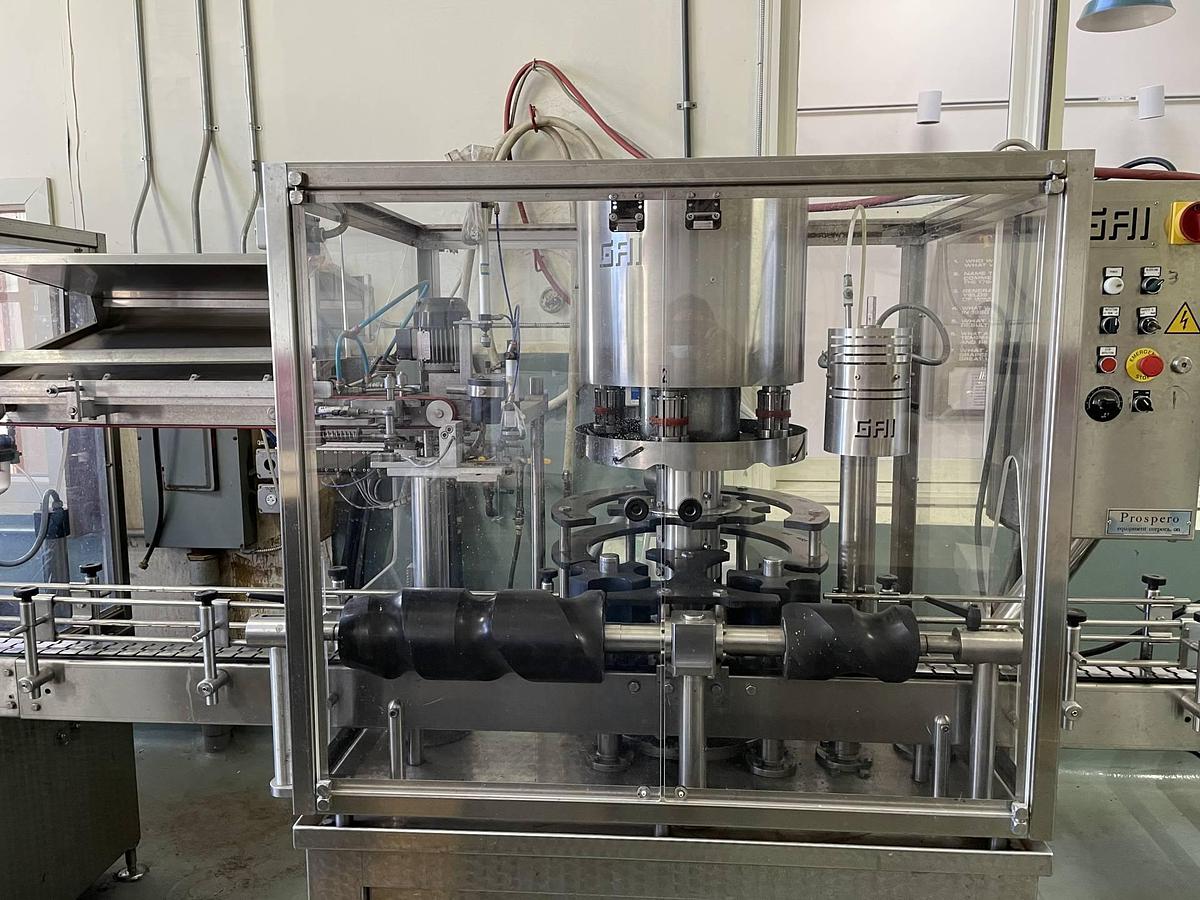
Gai/Prospero
Gai/Prospero focuses on providing innovative solutions for the beverage industry, specializing in bottling and packaging equipment that enhances efficiency and product integrity.
FAQ:
What is the Gai Prospero and what is it used for?
The Gai Prospero is a bottling machine produced by GAI, an Italian manufacturer with a long-standing reputation in the beverage packaging industry. It is designed to handle the filling, corking, and sealing stages of bottling, and is particularly well-regarded in wine and craft beverage production. GAI has built its reputation on precision Italian engineering, stainless steel construction, and machinery that holds fill levels tightly enough to satisfy volume compliance requirements while minimizing product waste.
The Prospero line is generally positioned as a compact, semi-automatic to fully automatic solution suited to small and medium-sized wineries, craft breweries, and specialty beverage producers. Depending on the specific configuration, a Gai Prospero can handle multiple bottle formats and closure types, making it a flexible choice for producers who run more than one product line. Used Gai Prospero machines appear on the market periodically and represent an opportunity to acquire proven Italian bottling technology at a lower cost than purchasing comparable equipment through a manufacturer's distribution channel.
What beverages can be filled using a Gai Prospero bottling machine?
The Gai Prospero is most closely associated with still and sparkling wine, but GAI equipment is designed to handle a broad range of beverages. Still wines, sparkling wines, beer, cider, spirits, and water are all commonly processed on GAI filling lines. The machine's stainless steel product contact surfaces make it suitable for both alcoholic and non-alcoholic beverages, and certain configurations support carbonated products that require counter-pressure filling to preserve carbonation and prevent foaming.
For a used Gai Prospero, the specific beverage compatibility depends on the model and how it was originally configured. A machine that spent its production life filling still wine may need adjustments or component changes before it is suitable for carbonated beer or sparkling wine at scale. Buyers should ask the selling dealer for details on the machine's production history, the filling valve type, and whether the unit includes or is compatible with a counter-pressure system. This information helps determine whether the machine fits a buyer's product requirements without significant modification.
What filling speeds and output capacities are typical for a Gai Prospero?
Output capacity on a Gai Prospero varies by model and configuration. The Prospero line is generally aimed at small to medium-scale production, with throughput rates that can range from a few hundred bottles per hour on entry-level configurations up to higher volumes on fully automatic monoblock setups. As a reference point, a GAI Prospero wine bottling line configured as a monoblock unit has been documented running at speeds around 44 bottles per minute, which translates to roughly 2,600 bottles per hour at that rate. That kind of throughput is well-suited to a mid-sized winery or craft beverage producer running multiple shifts.
When evaluating a used Gai Prospero, actual achievable speed depends on several factors beyond the machine's rated capacity. Bottle format, closure type, fill level, and the condition of the filling valves and timing components all affect real-world output. A machine that has seen heavy production use may require servicing of wear components before it consistently hits rated speeds. Buyers should ask the dealer about the machine's production history and, where possible, arrange an inspection to observe the equipment running or review video footage of it in operation.
Is the Gai Prospero suitable for small craft wineries and breweries, or is it designed for large-scale production?
The Gai Prospero is specifically positioned for small to medium-sized producers, which is part of why it shows up frequently in the used equipment market. Craft wineries, estate vineyards, small-batch breweries, and specialty beverage producers have historically been the core users of this machine. Its compact footprint makes it practical for facilities that cannot dedicate large amounts of floor space to a bottling line, and its semi-automatic to fully automatic configurations give producers flexibility as their volume grows.
That said, the right fit depends on the specific model. A basic semi-automatic Prospero is a different machine from a fully automatic monoblock unit that integrates rinsing, filling, corking, and capsule application in a single line. Large-scale commercial operations running millions of cases per year would typically require higher-speed dedicated filling lines. For a craft producer bottling anywhere from a few thousand to several hundred thousand cases annually, a used Gai Prospero in good working condition can be a practical and cost-effective solution. Confirming the model's rated capacity and comparing it against production targets is the right starting point.
What bottle types and sizes is the Gai Prospero compatible with?
GAI designs its bottling equipment with format flexibility in mind, and the Prospero line is generally capable of handling standard wine and beverage bottle formats including 750ml Bordeaux and Burgundy styles, 375ml half-bottles, and in some configurations, 1.5L magnums. Compatibility with specific formats depends on the tooling and guide parts installed on a given machine. Changeover between bottle sizes typically involves adjusting or swapping star wheels, guide rails, and fill height settings.
For a used Gai Prospero, buyers should confirm which bottle formats were run on the machine during its production life and whether the tooling for additional formats is included in the sale. Tooling sets for less common bottle shapes can sometimes be sourced separately, but lead times and costs vary. It is also worth checking whether the corking or capping heads are configured for the closure type the buyer intends to use, as natural cork, synthetic cork, screw caps, and crown caps each require different tooling. A dealer familiar with GAI equipment should be able to clarify what is included and what would need to be sourced additionally.
What are the installation and setup requirements for a Gai Prospero bottling machine?
Installing a Gai Prospero requires attention to electrical supply, compressed air, water connections, and floor space. GAI equipment is manufactured in Italy and is typically built to European electrical standards, which means machines may require a transformer or rewiring to operate on North American power supplies. Voltage and phase requirements vary by model, so buyers should obtain the machine's electrical specifications and consult with an electrician before installation. Compressed air is generally required for pneumatic components, and the machine should be positioned on a level, stable floor capable of supporting its weight.
Floor space requirements for the Prospero are relatively modest compared to high-speed industrial lines, which is part of its appeal for smaller facilities. However, a monoblock configuration that integrates multiple functions will naturally require more space than a standalone filler. Buyers should also account for infeed and outfeed conveyor runs, operator access on all sides for maintenance, and proximity to product supply lines. When purchasing a used machine, requesting the original technical documentation or operator manual from the dealer is valuable, as these documents specify utility requirements and recommended installation parameters.
How does CIP (Clean-In-Place) work on a Gai Prospero, and how is the machine sanitized?
Sanitation is a critical consideration for any beverage filling equipment, and GAI builds its machines with hygiene in mind. The Prospero's stainless steel product contact surfaces are designed to resist corrosion and are compatible with standard winery and brewery cleaning agents. CIP capability, where cleaning solution is circulated through the filling system without full disassembly, is a feature on many GAI filling machines and significantly reduces the labor involved in changeovers and end-of-run cleaning.
For a used Gai Prospero, the condition of seals, gaskets, and filling valve components is particularly important from a sanitation standpoint. Worn or degraded seals can harbor bacteria and affect fill accuracy. Before putting a used machine into production, a thorough inspection of all product contact components is advisable, and replacing seals and gaskets as a precaution is common practice. Buyers should ask the dealer about the machine's maintenance history and whether any components related to the CIP or cleaning circuits have been serviced. Consulting with a GAI-authorized service technician during commissioning can help confirm the machine is in a sanitary and production-ready state.
Are replacement parts and technical support available for used Gai Prospero machines?
Parts availability and technical support are legitimate considerations when buying any used bottling equipment, and the answer for GAI machinery depends on the age and model of the specific machine. GAI has been manufacturing bottling equipment for decades and maintains an authorized distributor and service network across North America and Europe. For machines that are not excessively old, parts are generally obtainable through authorized channels, though lead times for components sourced from Italy can vary. Buyers should contact GAI or an authorized distributor directly to confirm parts availability for the specific model they are considering before completing a purchase.
For older machines, the level of manufacturer support can diminish as models are discontinued and proprietary components become harder to source. This is a standard reality across the used industrial equipment market and is not unique to GAI. Experienced bottling equipment technicians who work with Italian filling machinery can often fabricate or source equivalent parts for common wear items. When evaluating a used Gai Prospero, asking the dealer about the machine's age, model number, and any known parts sourcing considerations is a reasonable part of due diligence. A dealer who specializes in beverage packaging equipment will typically have more useful guidance on this than a general machinery reseller.
What should buyers look for when inspecting a used Gai Prospero before purchasing?
A thorough inspection is the most important step in buying used bottling equipment. For a Gai Prospero, the key areas to examine include the condition of the filling valves, the state of all seals and gaskets, the function of the corking or capping heads, and the overall condition of the stainless steel frame and product contact surfaces. Corrosion, dents, or signs of improvised repairs can indicate a machine that was not well-maintained. The electrical panel and control system should also be reviewed, particularly if the machine uses a PLC-based control, since sourcing obsolete control components can be costly.
Inspections can be conducted in person, virtually, or through video footage provided by the dealer. Some used machines are still installed at production facilities where they can be observed running, while others have been decommissioned and are in storage. Keep in mind that most equipment dealers do not have the permitting or infrastructure to run actual product through a machine during an inspection, so a live production run is not always possible. Buyers should ask for detailed photos and video of the machine running under power, a review of any available maintenance records, and clarification on what tooling, spare parts, and documentation are included in the sale. Selecting a dealer who specializes in beverage packaging equipment and has a verifiable track record reduces the risk significantly.
What are the typical shipping and payment considerations when buying a used Gai Prospero?
Shipping a bottling machine like the Gai Prospero involves more logistics than standard freight. The machine needs to be properly palletized or crated to prevent damage in transit, and the level of packaging required affects shipping costs. Larger monoblock configurations may require professional rigging for loading and unloading, which is an added expense that buyers should factor into the total landed cost. Buyers should ask the dealer specifically about packaging methods, rigging requirements, and whether they coordinate freight or leave that to the buyer, as practices vary.
On payment, most used equipment dealers require full payment prior to releasing a machine for shipment. Some dealers extend terms to repeat customers, but this is not standard practice for first-time buyers. International buyers should also account for import duties, customs clearance fees, and any electrical conversion costs that may apply once the machine arrives. Getting a clear picture of all costs before committing, including freight, rigging, crating, and any applicable duties, ensures there are no surprises between the purchase price and the machine arriving ready for installation.