Category
Manufacturer
Model
G&H Products
G&H Products provides a variety of equipment solutions for the food processing sector, focusing on enhancing efficiency and product quality in manufacturing.
FAQ:
What types of equipment does G&H Products make for food processing?
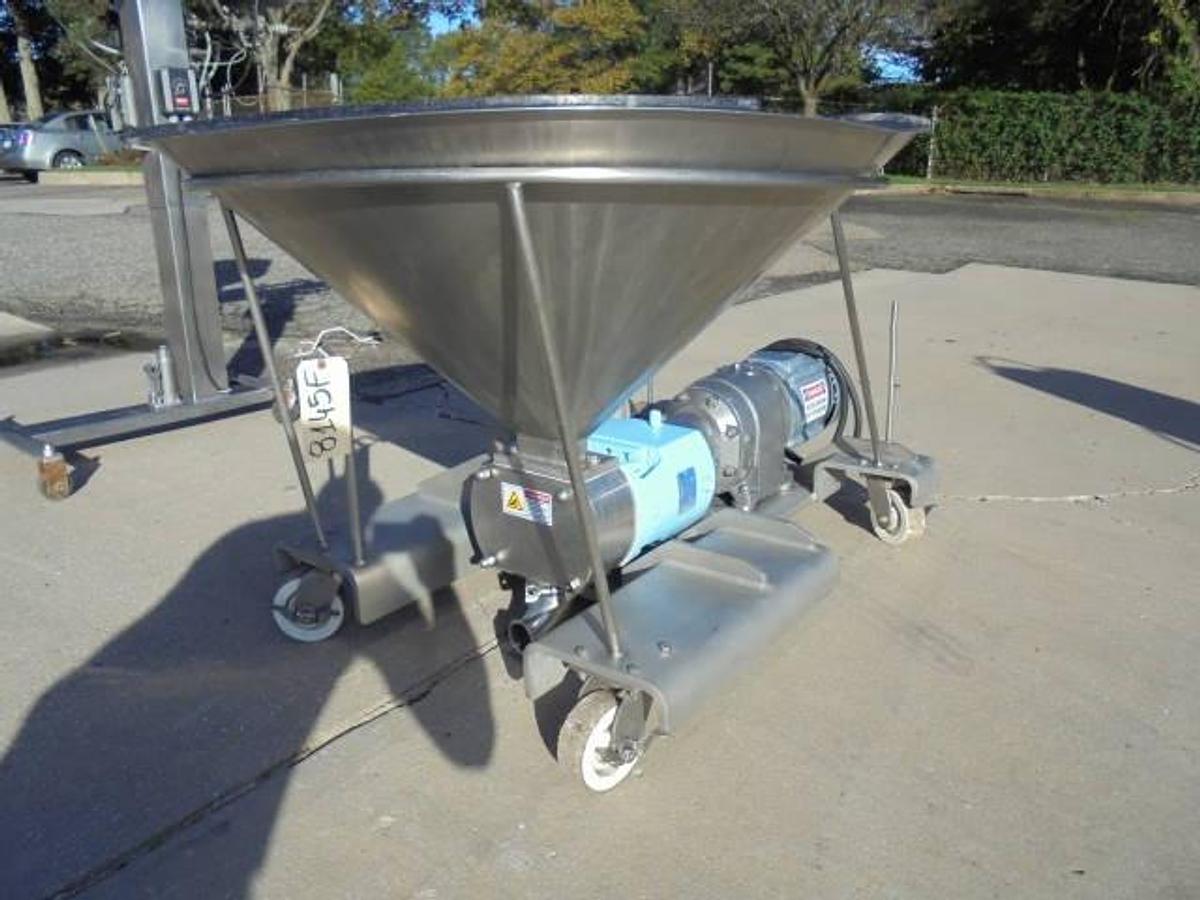
G&H Products focuses on equipment solutions for the food processing sector, with a product line designed to improve efficiency and product quality in manufacturing environments. Their offerings include positive displacement pumps, such as hopper-fed models, which are commonly used to move viscous or semi-solid food products through processing lines. Positive displacement pumps are a staple in food manufacturing because they handle thick, chunky, or shear-sensitive products without damaging them, making them suitable for applications like sauces, meat products, dairy, and similar goods.
Beyond pumps, G&H Products covers a range of equipment categories aimed at supporting various stages of food production. Buyers looking for used G&H Products machinery will typically find units that were previously deployed in commercial or industrial food processing facilities, meaning the equipment has a real-world production track record. For anyone evaluating a specific model, it is worth confirming the exact specifications, including horsepower, capacity, and material construction, to make sure the unit fits the intended application before purchasing.
What is a hopper-fed positive displacement pump and what food processing applications is it used for?
A hopper-fed positive displacement pump is a type of pump where product is gravity-fed from an open hopper into the pump mechanism, which then moves the product through the line at a controlled, consistent rate. Unlike centrifugal pumps, positive displacement pumps move a fixed volume of product per revolution or stroke, which makes them ideal for metering, portioning, and transferring products where accuracy and gentle handling matter. The hopper-fed design is especially practical for products that are too thick or chunky to be drawn in through a standard inlet.
In food processing, these pumps are widely used for transferring ground meat, sausage emulsions, thick sauces, pet food, cheese, and similar high-viscosity products. They are commonly found in filling lines, portioning systems, and transfer applications between processing stages. A 5HP unit, like the G&H model available on the used market, is sized for mid-scale commercial production and can handle meaningful throughput without requiring the footprint or energy draw of larger industrial systems. Buyers should verify the pump's rotor and stator condition when purchasing used, as those components experience the most wear in continuous operation.
What should buyers look for when inspecting used G&H Products food processing equipment?
Inspecting used food processing equipment requires a structured approach because the condition of internal components is often just as important as the external appearance. For pumps and mechanical equipment, key areas to evaluate include the condition of seals, gaskets, rotors, stators, and any contact surfaces that touch food product. Stainless steel surfaces should be checked for pitting, corrosion, or weld repairs that could harbor bacteria. Drive components, including motors and gearboxes, should be examined for signs of wear, overheating, or oil leaks. If the equipment is still installed at a production facility, an in-person inspection during operation is the most reliable way to assess actual working condition.
Reputable used equipment dealers will typically offer in-person inspections, virtual walkthroughs, or detailed video captures of the machinery so buyers can evaluate condition before committing. Some equipment may still be in active production at the seller's facility or at a plant where the dealer has arranged access, which gives buyers the opportunity to see the machine running under real conditions. Keep in mind that most used equipment dealers are not set up to run actual food product through machinery during a demonstration, as food production requires separate permitting and facility standards. Buyers should ask specific questions about the machine's service history, hours of operation if known, and whether any components have been replaced, then factor that information into their purchasing decision.
Are used food processing equipment purchases covered by a warranty?
Warranties on used food processing equipment work very differently from what buyers might expect with factory-direct purchases. Manufacturers typically only extend warranty coverage to the first purchaser of a machine, and that coverage is almost always tied to the machine being unused at the time of sale. Once equipment enters the used market, manufacturer warranty coverage is generally no longer in effect. Used equipment dealers typically sell machinery on an as-is basis, which places the responsibility of evaluating condition squarely on the buyer before the transaction is completed.
Because of this, selecting a reputable used equipment dealer with a long track record in the food processing sector is one of the most important steps a buyer can take. A dealer who specializes in food processing equipment will have the product knowledge to accurately represent the condition and suitability of a machine, and will typically support the inspection process thoroughly. Buyers should also contact the equipment manufacturer directly to understand what level of technical support, documentation, and parts availability they can expect for a specific model and production year, since older or discontinued models may have limited manufacturer support regardless of condition.
What materials are typically used in the construction of food-grade processing equipment like G&H Products machinery?
Food processing equipment intended for direct product contact is almost always built from stainless steel, with 304 and 316 grade being the most common specifications. Type 304 stainless is the standard for most food contact surfaces because it resists corrosion from food acids, cleaning chemicals, and water while remaining cost-effective. Type 316 stainless offers additional resistance to chloride-based cleaners and is often specified for dairy, seafood, and applications where aggressive sanitation protocols are used regularly. The grade of stainless steel matters because inferior materials can corrode, pit, or leach under the conditions typical in food manufacturing.
Beyond the metal grade, buyers should pay attention to surface finish specifications. A finer surface finish (measured in Ra or grit) reduces the microscopic surface area where bacteria can adhere, which is why food-grade equipment is typically polished to a specific standard rather than left with a rough mill finish. Seals, gaskets, and other non-metal components that contact food should be made from FDA-compliant elastomers such as EPDM, silicone, or PTFE. When evaluating used equipment, inspecting the condition of these seals and contact surfaces is critical, as they degrade over time and may need replacement before the machine is put back into production.
How do buyers determine if used food processing equipment meets current sanitation and compliance standards?
Sanitation compliance in food processing equipment is typically evaluated against standards set by organizations like NSF International, 3-A Sanitary Standards, and the FDA's regulations under CFR Title 21. Equipment that was manufactured to these standards will generally carry certification markings, and buyers can often verify certification status by checking the machine's nameplate, documentation, or by contacting the certifying body directly with the model number. It is worth noting that certification status reflects the design of the equipment at the time it was built, not necessarily its current condition after years of use.
For used equipment, buyers need to assess whether the machine has been maintained in a way that preserves its original sanitary design intent. Modifications, repairs using non-compliant materials, or worn seals and gaskets can compromise a machine's ability to meet sanitation standards even if it was originally certified. Buyers should also consult with their own food safety team or a third-party sanitation consultant to confirm that a specific piece of used equipment will satisfy their facility's HACCP plan and any applicable regulatory requirements. Local and state health departments, as well as customers who audit supplier facilities, may have specific requirements that go beyond baseline equipment certification.
What is the typical throughput capacity of a 5HP hopper-fed positive displacement pump in food processing?
Throughput capacity for a positive displacement pump depends on several variables including the pump's rotor and stator geometry, the speed at which it operates, and the viscosity of the product being pumped. A 5HP hopper-fed positive displacement pump is generally suited for mid-scale commercial production rather than high-volume industrial lines. Depending on the specific model and product characteristics, units in this power range can typically handle anywhere from a few hundred to several thousand pounds per hour, though the actual output will vary significantly based on product type and line configuration.
Buyers evaluating a specific used pump for a production application should request the original equipment specifications if available, including the rated capacity at various speeds and the recommended product viscosity range. If specs are not available, the pump's rotor and stator size, along with the motor's RPM rating, can be used to estimate capacity. It is also worth consulting with the pump manufacturer's technical support team, as they can often provide performance data for older models even if those units are no longer in current production. Matching pump capacity to actual production requirements is essential to avoid both underperformance and unnecessary wear from running a pump outside its intended operating range.
How does buying used food processing equipment compare to buying factory-direct in terms of total cost of ownership?
The purchase price of used food processing equipment is typically a fraction of the cost of a comparable factory-direct unit, which makes it an attractive option for processors looking to expand capacity, replace aging equipment, or add redundancy without a major capital outlay. However, total cost of ownership involves more than the acquisition price. Buyers need to factor in the cost of any reconditioning or parts replacement needed before the machine goes into service, ongoing maintenance costs, energy consumption, and the availability and pricing of replacement parts over the machine's remaining service life.
Parts availability is a particularly important consideration for used equipment. Older models may have limited parts support from the manufacturer, which can increase downtime and repair costs if components fail. Before purchasing, buyers should contact the manufacturer to ask about parts availability for the specific model and production year, and consider stocking critical wear parts at the time of purchase. On the other hand, well-maintained used equipment from reputable manufacturers often has years of productive life remaining, and the lower acquisition cost can free up capital for other operational needs. For many food processors, used equipment from an established brand represents a practical balance between cost and reliability.
What should buyers understand about shipping and rigging costs for used food processing equipment?
Shipping costs for used food processing equipment are rarely straightforward, and buyers should request a detailed breakdown of all logistics costs before finalizing a purchase to understand the true landed cost of the machine. Costs will vary based on the size and weight of the equipment, the distance between the seller and the buyer's facility, and the level of packaging or crating required to protect the machine in transit. Smaller units may ship on standard pallets, while larger or more complex machinery may require custom-built crates, which adds both materials and labor costs to the transaction.
For heavier equipment, rigging is an additional cost that buyers often overlook. Loading a large machine at the seller's facility and unloading it at the destination may require forklifts, cranes, or specialized rigging crews, all of which carry their own fees. Buyers should ask the dealer specifically about what is included in any quoted shipping price, whether the machine will be palletized, crated, or shipped loose, and who is responsible for arranging and paying for rigging at each end. Getting clarity on these details upfront prevents surprises and allows for accurate budgeting before the equipment ever leaves the seller's facility.
What payment terms should buyers expect when purchasing used food processing equipment?
Payment practices in the used equipment industry are fairly consistent across dealers. Most used equipment dealers require payment in full before a machine is released for shipping or pickup. This protects the dealer against the risk of the buyer backing out after the machine has been pulled from inventory and prepared for shipment. Payment is commonly accepted by wire transfer, though some dealers may accept other forms depending on the transaction size and the buyer's relationship with the dealer.
Buyers who have an established history with a particular dealer may occasionally be offered payment terms, but this is the exception rather than the rule, particularly for first-time transactions. It is a good practice for buyers to confirm payment requirements early in the negotiation process so there are no delays once a purchase decision is made. For buyers concerned about the risk of paying in full for used equipment, working with dealers who have a long, verifiable track record in the food processing equipment sector and who offer thorough inspection options before payment is the best way to manage that risk.