Category
Manufacturer
Model
FAQ:
What types of industrial equipment does FSI manufacture?
FSI is associated with several distinct industrial equipment categories, which can cause confusion for buyers searching the secondary market. The name appears across product lines including surface finishing systems, fluid handling equipment, stump grinders, and brush chippers, among others. Before purchasing a used FSI machine, it is worth confirming which specific FSI brand and product line you are evaluating, since the company histories, parts networks, and support structures can differ significantly between them.
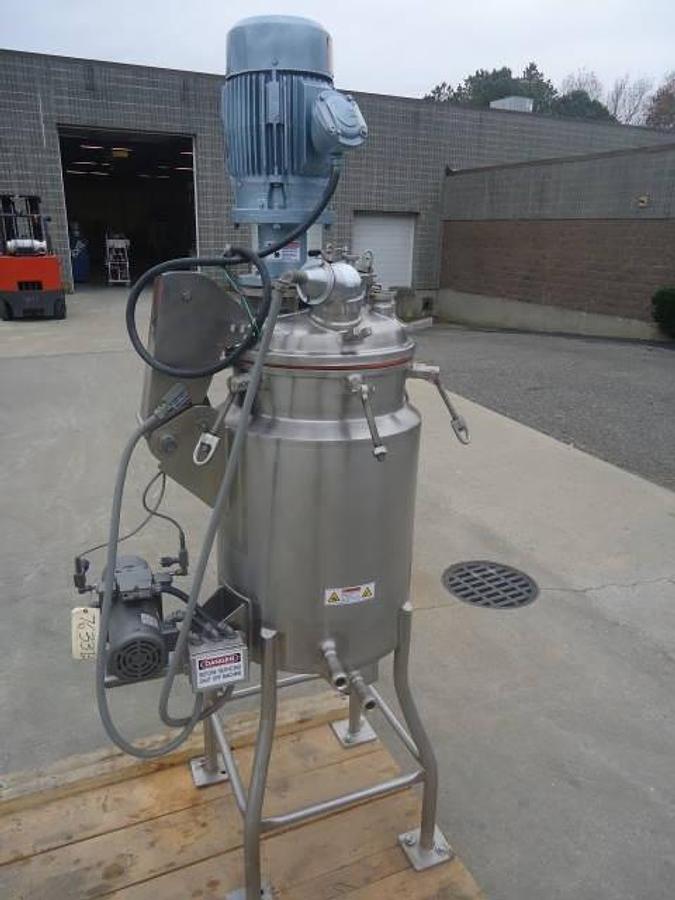
On the used market, FSI equipment commonly available includes jacketed pressure vessels, disperser agitation systems, vacuum vessels, and related process equipment used in chemical, pharmaceutical, and food manufacturing environments. Stainless steel construction is a common feature in FSI process equipment, making it a popular choice for industries requiring sanitary or corrosion-resistant handling of liquids and slurries. Buyers should review the model specifications carefully and confirm the intended application before committing to a purchase.
What should I look for when buying used FSI industrial equipment?
Evaluating used FSI industrial equipment requires a systematic approach to avoid costly surprises after purchase. Key inspection points include the condition of cutting or mixing components, the integrity of the hydraulic system if applicable, the hours of use logged on the machine, and the overall structural condition of the frame and vessel walls. For process equipment like jacketed vessels or dispersers, buyers should look closely at weld integrity, gasket condition, seal wear, and any signs of chemical corrosion or pitting on interior surfaces.
The engine or motor brand and condition is another major factor, particularly for powered equipment, since well-known motor brands tend to have better parts availability and service networks. Buyers should also investigate whether service manuals and parts diagrams are still obtainable for the specific model, as older FSI machines can have limited dealer support depending on the product line and age of the unit. Requesting a thorough inspection, either in person or via video, is strongly recommended before finalizing any purchase decision.
What industries commonly use FSI process equipment like jacketed vessels and dispersers?
FSI jacketed pressure vessels, vacuum vessels, and disperser agitation systems are used across a wide range of process-intensive industries. Chemical manufacturing, pharmaceuticals, cosmetics, food and beverage processing, adhesives, coatings, and specialty materials production all rely on this type of equipment for mixing, blending, emulsifying, and controlled-temperature processing. The stainless steel construction common in FSI vessels, particularly 316 stainless, makes them well suited for applications requiring sanitary conditions or resistance to aggressive cleaning agents and reactive compounds.
For buyers in these industries, used FSI process equipment can offer significant cost savings compared to purchasing equivalent capacity from a manufacturer. A 40-gallon jacketed vacuum pressure vessel with disperser agitation, for example, represents a versatile piece of equipment that can handle a broad range of batch processing tasks. The key is confirming that the vessel's pressure rating, jacket capacity, agitation speed, and material compatibility align with the intended process before purchase.
Why is 316 stainless steel significant in industrial vessels and process equipment?
316 stainless steel is a molybdenum-bearing grade of stainless that offers meaningfully better corrosion resistance than the more common 304 grade, particularly against chlorides, acids, and other aggressive process chemicals. In industrial vessels used for pharmaceutical, food, chemical, and cosmetic applications, this distinction matters considerably. The molybdenum content reduces the risk of pitting and crevice corrosion, which can compromise both the structural integrity of the vessel and the purity of the product being processed.
For buyers evaluating used process vessels, confirming the actual grade of stainless steel is an important step. A vessel listed as 316 stainless commands a premium on the secondary market because of its broader application range and longer service life in corrosive environments. Buyers should ask for material certifications or mill test reports if available, and inspect the interior surface for signs of pitting, discoloration, or weld degradation that could indicate prior exposure to incompatible chemicals.
How does a jacketed vacuum pressure vessel work, and what is it used for?
A jacketed vacuum pressure vessel is a double-walled tank where the space between the inner and outer walls, the jacket, circulates a heating or cooling medium such as steam, hot water, or glycol. This allows precise temperature control of the product inside the vessel without direct contact between the heat transfer fluid and the batch material. The vacuum capability adds another layer of process control, allowing manufacturers to lower the boiling point of liquids, remove dissolved gases, or prevent oxidation during sensitive mixing or reaction processes.
These vessels are widely used in pharmaceutical compounding, cosmetic emulsification, food processing, adhesive manufacturing, and chemical blending. When combined with a disperser agitator, as is common in FSI-style units, the vessel can simultaneously apply high-shear mixing while maintaining temperature and pressure conditions specific to the formulation. On the used equipment market, jacketed vacuum pressure vessels in good condition are in consistent demand because of the high cost of purchasing equivalent capacity from a fabricator, making them a practical acquisition for small to mid-size batch processors.
What does a disperser agitator do in a process vessel?
A disperser agitator is a high-speed mixing device that uses a toothed or bladed impeller, often called a cowles blade or dispersion blade, to break down agglomerates, reduce particle size, and uniformly distribute solids into liquids or blend multiple liquid phases together. Unlike slow-speed paddle agitators, dispersers operate at high peripheral blade speeds that create intense hydraulic shear in the material surrounding the blade. This makes them effective for producing stable emulsions, suspensions, and dispersions that would otherwise separate or remain poorly mixed.
In a jacketed vessel configuration, the disperser works in combination with the vessel's temperature control system to process materials that require both mechanical energy input and thermal management simultaneously. Common applications include pigment dispersion in coatings, active ingredient incorporation in pharmaceutical creams, emulsification in personal care products, and resin blending in adhesive manufacturing. When evaluating a used vessel-disperser combination, buyers should inspect the blade condition, shaft seal integrity, and motor amperage draw to assess remaining service life.
What warranty or guarantee should I expect when buying used industrial equipment?
Used industrial equipment is typically sold on an as-is basis, which is standard practice across the secondary market. Warranties in the traditional sense are generally only offered by equipment manufacturers on units sold directly through their authorized channels. When purchasing through a used equipment dealer, the buyer assumes responsibility for verifying the condition of the machine prior to purchase, which is why thorough inspection is so critical. Selecting a dealer with a long track record in the industry and a specialization in the relevant equipment category provides meaningful protection, even without a formal warranty.
Buyers should also contact the original manufacturer of the equipment to understand what level of support they can expect for a specific model and age of machine. Parts availability, service manual access, and technical support can vary significantly depending on how long a model has been in production and whether the manufacturer still supports older units. For complex process equipment, consulting with an independent service technician who is familiar with the machine type before purchase is a practical way to assess risk and estimate any refurbishment costs.
How are used industrial machines typically inspected before purchase?
Reputable used equipment dealers generally offer buyers several inspection options: in-person visits to the dealer's facility, virtual walkthroughs conducted over video call, or recorded video documentation of the machine's current condition. For equipment that is still installed and operating at a manufacturing facility, some dealers can arrange for the buyer to inspect the machine on-site at the plant, where it may still be in active production or recently decommissioned. This type of inspection provides the most accurate picture of real-world operating condition.
It is worth noting that most equipment dealers are not set up to run actual production tests, since operating a process machine for product output requires different permitting and facility infrastructure than a dealer typically maintains. What buyers can realistically assess during an inspection includes visual condition, mechanical movement, hydraulic or electrical function checks, and any obvious signs of wear, damage, or prior repair. For high-value or complex equipment, hiring an independent machinery appraiser or technician to accompany the inspection, or to review video footage, adds a valuable layer of technical due diligence.
What are the typical shipping and logistics considerations for used industrial equipment?
Shipping used industrial equipment involves more complexity than standard freight, and buyers should factor logistics costs into their total acquisition budget from the beginning. Proper packaging is essential to prevent damage in transit, and charges will vary based on the level of palletization or crating required for a given machine. Smaller process vessels and tabletop equipment may ship on standard pallets, while larger tanks, reactors, or heavy machinery often require custom crating, foam blocking, or specialized bracing to survive long-distance transport without damage.
Larger and heavier machines may also require professional rigging for loading at the dealer's location and unloading at the buyer's facility, which adds cost on both ends of the shipment. Buyers should ask dealers for a detailed breakdown of packaging, rigging, and freight costs before committing to a purchase, so the full landed cost of the equipment is understood. For international shipments, additional considerations include export documentation, customs duties, and compliance with destination country import regulations for used industrial machinery.
What payment terms are standard when purchasing used industrial equipment?
Most used equipment dealers require full payment prior to releasing a machine for shipment. This is standard practice in the industry and reflects the nature of secondary market transactions, where the dealer is transferring ownership of a physical asset that has already been acquired and is ready for sale. Some dealers may offer extended payment terms or net terms to established customers with a prior purchasing history, but first-time buyers should generally plan for full payment upfront.
For buyers working with larger capital budgets, third-party equipment financing companies specialize in used machinery transactions and can provide lease or loan structures that spread the cost over time. These arrangements are typically handled independently of the equipment dealer. Buyers should also account for the full landed cost of the equipment, including shipping, rigging, and any refurbishment or installation expenses, when structuring financing to avoid cash flow gaps between purchase and productive use of the machine.