Category
Manufacturer
Model
Frymakoruma
Frymakoruma provides advanced processing equipment for the food and pharmaceutical industries, particularly known for their innovative systems for emulsifying and homogenizing products.
FAQ:
What types of FrymaKoruma processing equipment are commonly available on the used market?
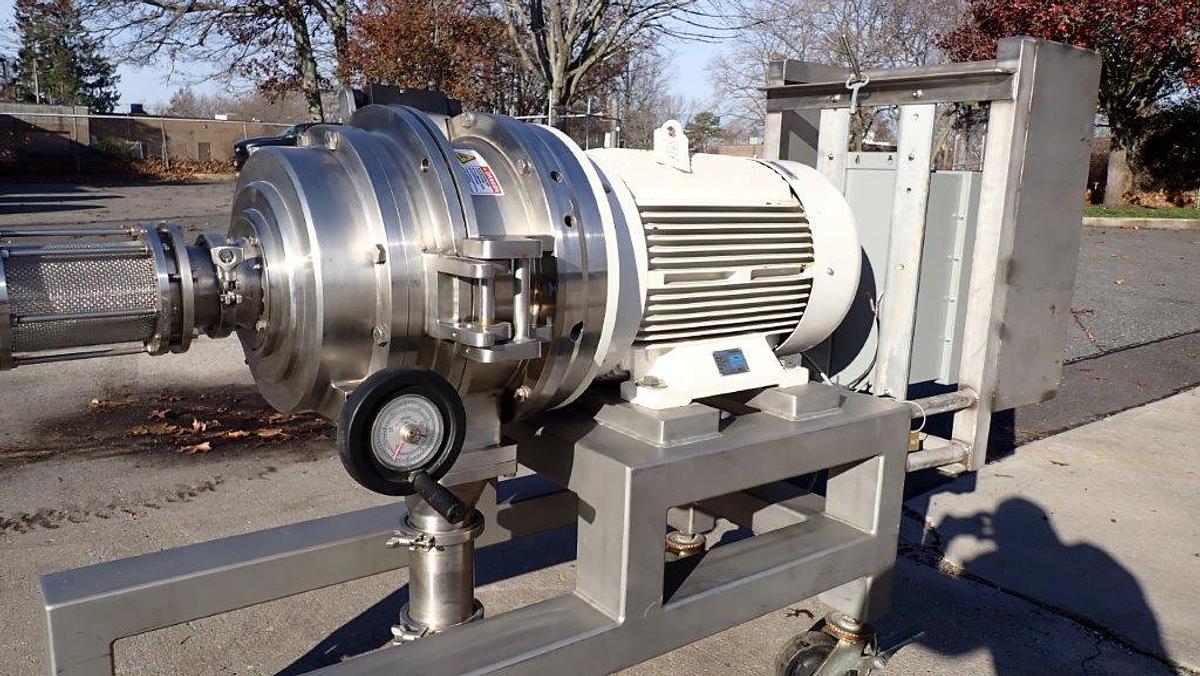
FrymaKoruma produces a fairly wide range of processing equipment, and several model lines tend to appear regularly on the secondary market. The most frequently traded machines include the MZ series colloid mills, the VME series vacuum homogenizers, the MK series inline mixers, and scraped surface heat exchangers. Each of these serves a distinct processing function, so buyers searching the used market will generally find options suited to emulsifying, homogenizing, milling, or heat-transfer applications. One specific example of what surfaces for sale is the FrymaKoruma MK-250 Stainless Corundum Stone Mill, a 50HP unit designed for fine milling of viscous or particle-laden products.
Because FrymaKoruma has served the food, pharmaceutical, cosmetic, and chemical industries for decades, used machines span a broad range of capacities and configurations. Buyers should pay close attention to model designations, as even within a single product line there can be meaningful differences in rotor-stator geometry, seal types, and capacity ratings. When evaluating a used FrymaKoruma machine, confirming the exact model number and cross-referencing it with manufacturer documentation helps ensure the equipment matches the intended application before purchase.
What industries use FrymaKoruma equipment?
FrymaKoruma machines are particularly well established in the pharmaceutical and food industries, where tight hygienic standards and repeatable processing results are non-negotiable. In pharmaceuticals, the equipment is used to produce emulsions, creams, gels, and suspensions that require precise particle size reduction and homogeneous distribution of active ingredients. In food processing, applications range from nut butters and chocolate pastes to sauces, dairy products, and flavor concentrates. The machines are also widely used in cosmetics manufacturing for lotions, serums, and other emulsion-based personal care products.
Beyond those core sectors, FrymaKoruma equipment finds use in the chemical industry for dispersing pigments, adhesives, and specialty coatings. The common thread across all of these applications is the need to process viscous, shear-sensitive, or particle-containing materials under controlled, hygienic conditions. The stainless steel construction and GMP-compliant design of most FrymaKoruma machines make them adaptable across regulated and non-regulated production environments alike, which is part of why they retain strong demand on the used equipment market long after their initial production runs.
What is the difference between a FrymaKoruma colloid mill and a homogenizer?
A colloid mill and a homogenizer both reduce particle size and improve product uniformity, but they accomplish this through different mechanical principles. A FrymaKoruma colloid mill, such as the MZ or MK series, works by passing material through a precision gap between a high-speed rotor and a stationary stator. The intense shear forces generated in that gap break down particles, agglomerates, and droplets. Colloid mills are particularly effective for products with solid particles or high viscosity, such as nut pastes, pigment dispersions, or pharmaceutical suspensions. The corundum stone variant, like the MK-250, is specifically designed for ultra-fine wet grinding where metal-to-metal contact would be undesirable.
A vacuum homogenizer, such as the VME series, takes a broader approach to processing. It typically combines mixing, emulsifying, and homogenizing in a single vessel under vacuum conditions, which prevents air incorporation and oxidation during processing. This makes it better suited for producing stable emulsions and creams, particularly in pharmaceutical and cosmetic applications where product purity and shelf stability are critical. The choice between the two depends heavily on the end product: colloid mills excel at continuous inline size reduction, while vacuum homogenizers are better suited for batch production of emulsified or heat-sensitive formulations.
Does FrymaKoruma equipment meet GMP and FDA regulatory standards?
FrymaKoruma machines were engineered with hygienic design as a core principle, and most models in their processing equipment lines are built to comply with Good Manufacturing Practice (GMP) standards as applied in pharmaceutical, food, and cosmetic production. Key design features that support compliance include electropolished stainless steel product-contact surfaces, clean-in-place (CIP) and sterilize-in-place (SIP) compatibility on many models, and mechanical seals designed to prevent contamination. These characteristics align with regulatory expectations from bodies like the FDA in the United States and equivalent agencies in Europe.
That said, buyers of used FrymaKoruma equipment should approach compliance carefully. A machine that left the factory meeting GMP standards may have been modified, repaired with non-specification parts, or operated in ways that affect its current compliance status. Before deploying a used machine in a regulated production environment, it is advisable to have the equipment inspected and validated by qualified engineers familiar with the applicable regulatory framework. Consulting the manufacturer, now operating under the ProXES Group umbrella, can also help clarify which documentation, certifications, and qualification protocols are available for a given model and serial number range.
Are spare parts and service support available for used FrymaKoruma machines?
Parts availability for FrymaKoruma equipment depends significantly on the age and model of the machine in question. FrymaKoruma was acquired by the ProXES Group, which also owns processing brands like Terlet and Stephan. Buyers should contact ProXES directly to determine what level of parts support is currently available for a specific model, since older or discontinued machines may have limited factory support. Wear components such as rotor-stator sets, mechanical seals, and gaskets are the parts most frequently needed, and availability for these tends to be better for models that were produced in larger volumes or remained in production for longer periods.
For machines where factory parts are scarce, third-party machining and aftermarket suppliers can sometimes produce replacement components, particularly for simpler wear items. However, for precision-machined parts like rotor-stator assemblies in colloid mills, maintaining original tolerances is critical to performance, so buyers should weigh the long-term parts situation carefully before purchasing an older or less common model. Reaching out to the manufacturer before finalizing a purchase to gauge the level of support available for that specific machine is a practical step that can prevent significant headaches down the line.
What should buyers inspect when evaluating a used FrymaKoruma machine?
A thorough inspection of a used FrymaKoruma machine should cover both mechanical condition and documentation. On the mechanical side, key areas to examine include the condition of product-contact surfaces for pitting, scoring, or corrosion; the state of seals and gaskets; bearing condition and shaft runout on mills and homogenizers; and the integrity of any CIP or SIP systems if present. For colloid mills specifically, the rotor-stator gap and the condition of the milling surfaces are critical, since worn or damaged milling elements directly affect product quality and may be expensive to replace. Electrical components, control panels, and drive systems should also be checked for proper function.
Reputable used equipment dealers typically offer in-person inspections, virtual walkthroughs, or detailed video documentation of machines before purchase. Some equipment may still be installed at the facility where it was last used, in which case a live inspection of the machine in its production environment may be possible. Keep in mind that most dealers are not set up to run actual product through a machine during inspection, as that would require production permitting they typically do not hold. Buyers should request as much documentation as possible, including any available service records, prior calibration logs, or maintenance histories, to build a clearer picture of how the machine was used and maintained before it came to market.
What is the typical price range for used FrymaKoruma equipment?
Pricing for used FrymaKoruma machines varies considerably depending on the model, size, age, configuration, and overall condition of the equipment. Smaller inline mills or mixers from the MK series might be found in the range of a few thousand to tens of thousands of dollars, while larger vacuum homogenizer systems from the VME series, particularly those with full skid configurations, auxiliary vessels, and control systems, can run significantly higher. The pharmaceutical and food industries place a premium on well-maintained, documented equipment, so machines with service histories and intact GMP features tend to command higher prices than those without.
Because FrymaKoruma equipment is precision-engineered and built for long service life, even older machines in good condition can carry meaningful price tags compared to lower-tier alternatives. Buyers should factor in not just the purchase price but also the full landed cost, which includes freight, rigging, any necessary refurbishment, spare parts procurement, and validation costs if the machine is going into a regulated facility. Getting a clear picture of all these costs before committing to a purchase helps avoid surprises and makes it easier to compare the true cost of a used FrymaKoruma machine against other options in the market.
Can FrymaKoruma equipment be integrated into an existing production line?
FrymaKoruma machines are generally designed with industrial integration in mind, and many models are well suited for inline or continuous processing setups. The MK series inline mixers and colloid mills, for example, are built to be installed directly in a process pipe, allowing product to flow through the machine continuously as part of a larger production sequence. This makes them relatively straightforward to incorporate into existing lines, provided the upstream and downstream equipment can handle the flow rates and pressures involved. Standard tri-clamp connections and common utility requirements on many FrymaKoruma models also simplify integration.
For batch-oriented equipment like the VME vacuum homogenizers, integration typically involves connecting the vessel to existing transfer pumps, CIP systems, and temperature control circuits. The complexity of integration depends on how closely the used machine's specifications match the requirements of the existing line. Buyers should review dimensional drawings, utility requirements, and process interface details before purchase to avoid costly modifications after delivery. Consulting with a process engineer familiar with FrymaKoruma equipment is advisable, especially if the machine will be going into a regulated production environment where change control and revalidation may be required.
What maintenance does FrymaKoruma processing equipment require?
Routine maintenance on FrymaKoruma equipment centers on the components that experience the most wear during normal operation. For colloid mills and inline mixers, this means periodic inspection and replacement of mechanical seals, bearings, and milling elements such as rotor-stator sets or corundum stones. The frequency of these replacements depends heavily on the abrasiveness and viscosity of the products being processed, as well as the hours of operation. Seals and gaskets in product-contact zones should be inspected regularly and replaced at the first sign of wear to prevent contamination and maintain hygienic integrity.
For vacuum homogenizers, maintenance typically includes checking agitator seals, inspecting the vessel interior for surface damage, and servicing the vacuum system components. All FrymaKoruma equipment benefits from regular lubrication of drive components per the manufacturer's specifications, as well as periodic checks of electrical connections and control systems. Machines that have been in storage before resale may require more thorough servicing before being returned to production, including flushing of internal passages, replacement of aged elastomers, and inspection of any heat exchange surfaces for scale or fouling. Establishing a preventive maintenance schedule based on the manufacturer's recommendations is the most reliable way to extend service life and maintain consistent processing performance.
What should buyers know about shipping and payment for used FrymaKoruma equipment?
FrymaKoruma machines range from compact inline units to large, multi-component systems, and the shipping requirements vary accordingly. Smaller mills and mixers can typically be palletized and shipped via standard freight carriers, though proper crating is important to protect precision components and polished surfaces during transit. Larger systems, such as full vacuum homogenizer skids with vessels and ancillary equipment, may require specialized rigging for loading and unloading, which adds to the overall cost. Buyers should ask the dealer for a detailed breakdown of packaging, rigging, and freight charges to understand the full landed cost before finalizing a purchase.
On the payment side, most used equipment dealers require full payment prior to shipping. Some dealers may offer terms to repeat customers, but this is not standard practice across the industry. Because used machinery is typically sold as-is, buyers carry the responsibility of thoroughly evaluating the equipment before committing to a purchase. Taking advantage of inspection options, whether in person, via video, or through detailed photographic documentation provided by the dealer, is an important step in making a well-informed buying decision. Selecting a dealer with a long track record in processing equipment and specific experience with food and pharmaceutical machinery adds an additional layer of confidence to the transaction.