Category
Manufacturer
Model
Fortress Technology
Fortress Technology specializes in inspection and detection systems for packaging lines, particularly in the food industry. Their machines are designed to enhance product safety and quality assurance.
FAQ:
What industries are Fortress Technology metal detectors designed for?
Fortress Technology metal detectors are built primarily for the food processing, pharmaceutical, and packaging industries, where contamination control is a regulatory and operational priority. Their systems are engineered to handle the demanding conditions of high-speed production lines, including wet environments, high-temperature zones, and applications where product effect (the interference caused by the product itself) can complicate detection accuracy. The food industry is by far the largest application area, covering everything from fresh meat and poultry to baked goods, snacks, dairy, and ready-to-eat meals.
Beyond food, Fortress detectors are used in pharmaceutical manufacturing to screen tablets, capsules, and bulk powders for metal fragments, and in general packaging operations where product integrity is critical. Their pipeline-style detectors are particularly well-suited for liquid, semi-liquid, and pumped product applications such as sauces, pastes, and slurries. This range of configurations makes Fortress equipment adaptable across a wide variety of production environments, which is one reason their machines appear frequently on the used equipment market as facilities upgrade or change product lines.
What are the main product lines in the Fortress Technology metal detector lineup?
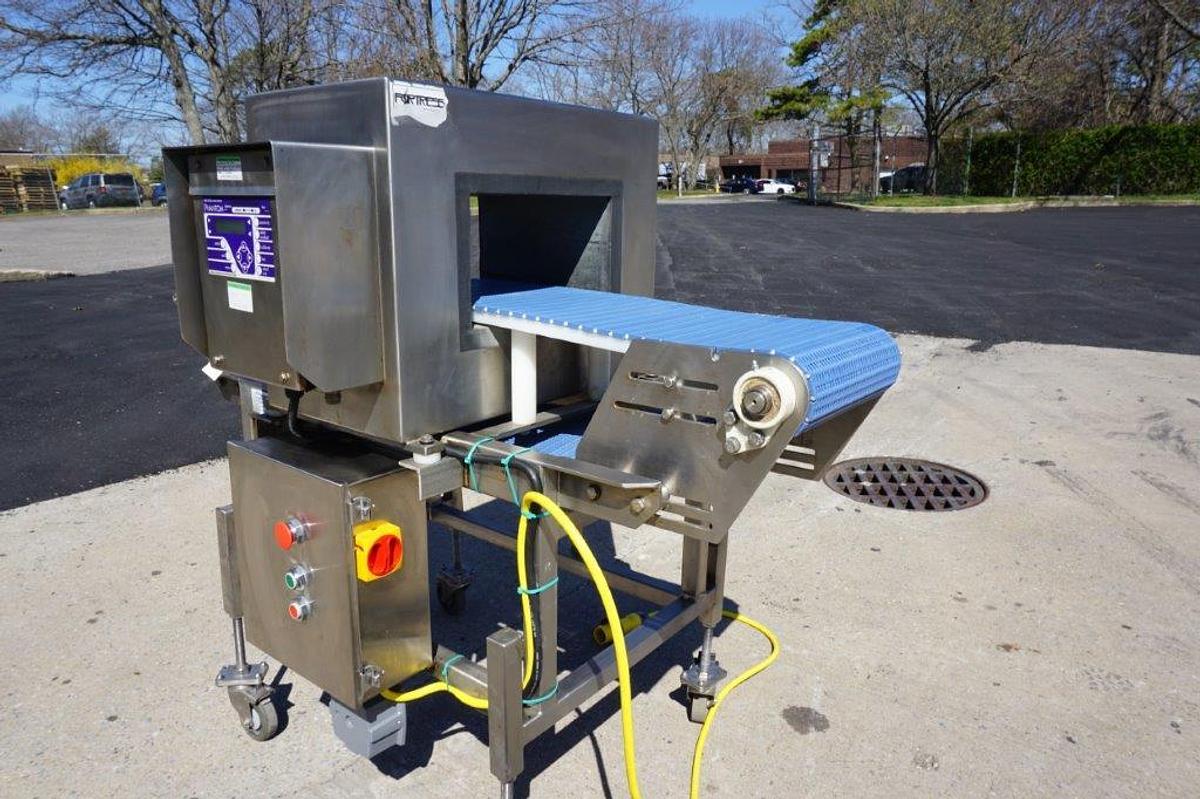
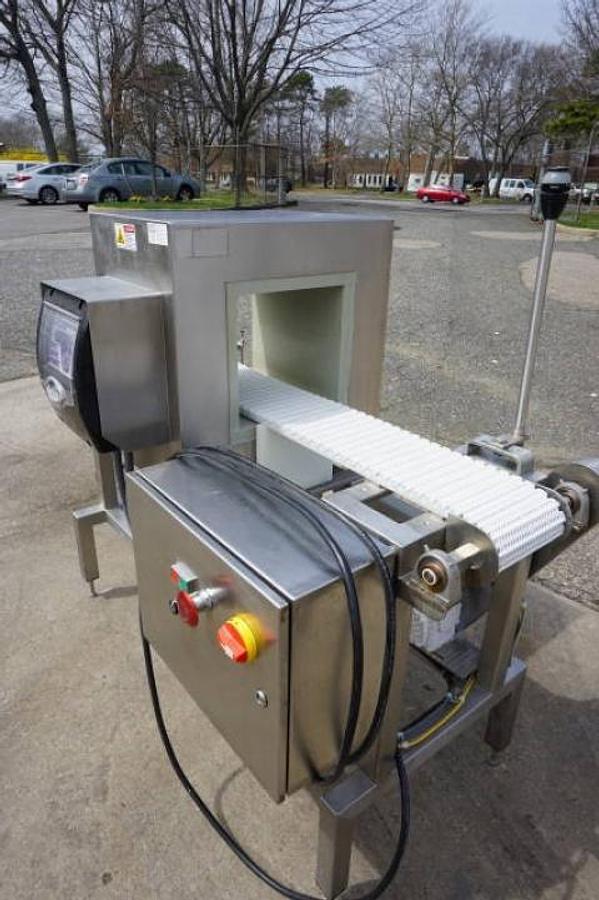
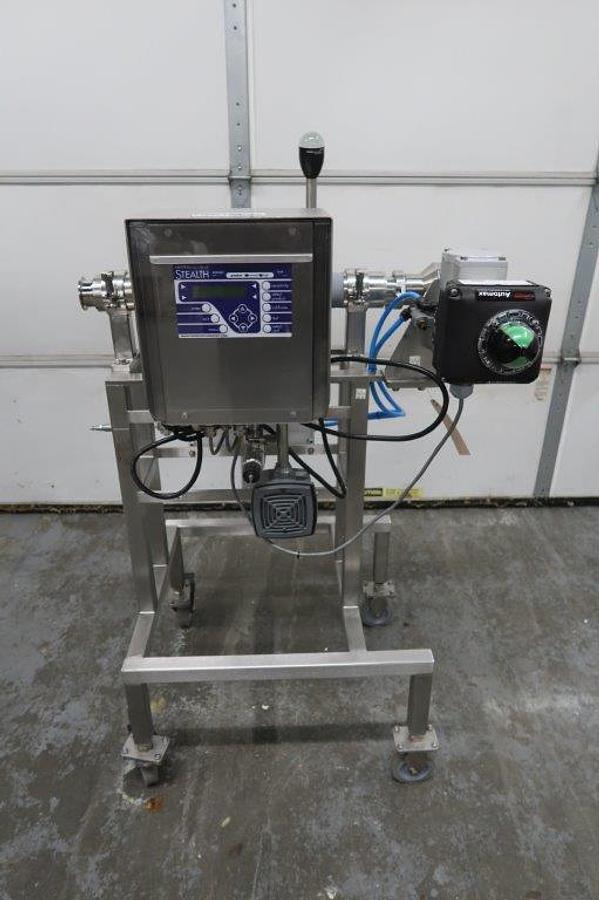
Fortress Technology produces several distinct metal detector series, each designed around specific production environments and sensitivity requirements. The Stealth series is a widely used conveyor-style detector suited for packaged and unpackaged dry goods on standard production lines. The Phantom series is a portable stainless steel unit designed for flexibility, making it a practical choice for facilities that need to move detection equipment between lines or production areas. The Pipeline series is built for pumped products and is installed inline with pipes carrying liquids, pastes, or slurries.
The Interceptor series, one of their more technically advanced offerings, uses dual simultaneous frequency technology to significantly improve detection of stainless steel contaminants, which are notoriously difficult to detect in certain product types. Each series is available in various aperture sizes and configurations to match different conveyor widths, product heights, and throughput speeds. On the used equipment market, the Stealth, Phantom, and Pipeline models are among the most commonly available, as these were widely adopted across food processing facilities during the 2000s and 2010s.
How sensitive are Fortress Technology metal detectors at detecting different types of metal contaminants?
Fortress Technology metal detectors are rated for high sensitivity across all three primary metal categories: ferrous metals (iron and steel), non-ferrous metals (aluminum, copper, brass), and stainless steel. Ferrous metals are the easiest to detect due to their magnetic properties, and Fortress systems typically achieve very small sphere-equivalent detection sizes for these contaminants. Non-ferrous metals are slightly more challenging but still reliably detected. Stainless steel is the most difficult category because its conductivity and magnetic permeability vary depending on the grade, and it can be masked by the electromagnetic properties of certain food products.
To address the stainless steel challenge, Fortress developed their Interceptor series with dual simultaneous frequency technology, which processes two frequencies at once to better distinguish stainless steel signals from product effect noise. Even on their standard Stealth and Phantom models, sensitivity levels are competitive with other major inspection system brands. When evaluating a used Fortress detector, it is worth confirming the specific model and aperture size, as sensitivity performance scales with aperture dimensions. A smaller aperture concentrates the electromagnetic field and generally yields better sensitivity for a given contaminant size.
Are Fortress Technology metal detectors compliant with food safety standards like HACCP, BRC, and SQF?
Fortress Technology designs their metal detection systems to support compliance with major food safety frameworks including HACCP (Hazard Analysis and Critical Control Points), BRC Global Standards, IFS (International Featured Standards), SQF (Safe Quality Food), and various UK and European retailer codes of practice. These frameworks require that metal detection be implemented as a critical control point in the production process, with documented sensitivity testing, reject verification, and regular performance audits. Fortress equipment is built with these audit requirements in mind, typically including features like automatic test piece rejection, data logging, and password-protected settings to prevent unauthorized adjustments.
For buyers purchasing used Fortress detectors, it is important to verify that the machine's software and documentation capabilities still meet current audit requirements, as standards do evolve over time. Consulting with the manufacturer or a qualified food safety auditor before deploying a used machine in a regulated production environment is a practical step. The physical detection capability of the machine is only part of compliance; the supporting documentation, alarm logs, and reject confirmation systems also need to function correctly to satisfy third-party audits.
Can Fortress Technology metal detectors detect stainless steel contaminants in food products?
Yes, stainless steel detection is a capability built into Fortress Technology metal detectors, though the level of performance varies by model and the specific product being inspected. Stainless steel is the most challenging metal to detect because it has lower magnetic permeability and conductivity than ferrous or non-ferrous metals, and its signal can be partially masked by wet, conductive, or high-salt food products. Standard conveyor-style detectors like the Stealth can detect stainless steel, but the minimum detectable sphere size is typically larger than for ferrous metals under the same conditions.
The Interceptor series was specifically developed to address this limitation, using dual simultaneous frequency processing to improve stainless steel sensitivity without sacrificing throughput speed. For facilities where stainless steel contamination is a primary concern (such as those using stainless steel mesh belts, sieves, or cutting equipment), the Interceptor represents a meaningful upgrade in detection capability. When evaluating any used Fortress detector for stainless steel applications, buyers should ask about the aperture size, the product type it was previously used with, and whether the detection thresholds can be verified through a pre-purchase inspection or functional test.
What should buyers look for when evaluating a used Fortress Technology metal detector?
Evaluating a used Fortress Technology metal detector requires attention to both the physical condition of the unit and its functional performance. On the physical side, buyers should examine the stainless steel housing for corrosion, dents, or damage to the coil housing, which can affect detection accuracy. The conveyor belt, drive system, and reject mechanism (if present) should all be inspected for wear. The control panel and display should power up cleanly, and any error codes or fault history should be reviewed. Reputable used equipment dealers will typically accommodate in-person inspections or provide detailed video walkthroughs of the machine so buyers can assess condition before committing to a purchase.
On the functional side, buyers should ask whether the machine has been tested with calibrated test pieces and what sensitivity levels it achieved. Aperture size is a key specification since it directly affects what the machine can be used for and how sensitive it can be set. It is also worth contacting Fortress Technology directly to ask about parts availability and software support for the specific model and serial number being considered, as older units may have limited manufacturer support. Age and model generation can significantly affect how much ongoing support a buyer can expect, so doing that research before purchase is a practical step.
What is the typical price range for used Fortress Technology metal detectors?
Pricing for used Fortress Technology metal detectors varies considerably depending on the model, aperture size, age, condition, and included accessories like conveyors or reject systems. Smaller portable units like the Phantom series tend to be priced lower than full conveyor-integrated systems with larger apertures and built-in rejection mechanisms. Pipeline detectors occupy their own pricing tier based on the pipe diameter and the complexity of the inline installation hardware. In general, used industrial metal detectors from established brands like Fortress can range from a few thousand dollars for a basic portable unit to significantly more for a fully configured conveyor system with a reject conveyor and data logging capabilities.
Buyers should factor in more than just the purchase price when calculating total cost. Shipping costs for industrial detection equipment can be substantial, particularly for larger conveyor-integrated units that require crating and freight. If the machine needs any reconditioning, calibration, or replacement parts before going into production, those costs should be estimated as well. Contacting the dealer directly for a quote that includes packaging, rigging if needed, and freight to the destination gives a more accurate picture of the true landed cost of the equipment.
What does the inspection process look like when buying a used Fortress Technology metal detector?
Used equipment dealers typically offer several inspection options to help buyers assess the condition of a Fortress Technology metal detector before purchase. In-person inspections are the most thorough option and allow a buyer or their technician to physically examine the unit, power it on, review the control interface, and check mechanical components like the conveyor drive and reject system. Some machines may still be installed and running at the facility where they originated, which provides an opportunity to see the detector operating under real production conditions, though that depends on the specific situation and what the selling facility allows.
For buyers who cannot travel, video inspections and detailed photo documentation are commonly offered as alternatives. A good video inspection should show the machine powering up, the control panel navigating through settings, and a close-up review of the aperture, housing condition, and any wear points. Keep in mind that most used equipment dealers do not have the permits or production infrastructure to run actual food or pharmaceutical product through the machine during an inspection, so functional testing is typically limited to electrical operation and mechanical checks rather than full production simulation. Buyers with specific sensitivity requirements should plan to verify those parameters after installation using their own calibrated test pieces.
How do used Fortress Technology metal detectors integrate with existing production line equipment?
Fortress Technology metal detectors are designed with production line integration in mind, and most of their conveyor-style systems can communicate with upstream and downstream equipment through standard electrical interfaces. Common integration points include reject confirmation signals, line stop outputs, and connections to production data systems or SCADA platforms. The Stealth and similar conveyor models are built to fit inline with existing belt conveyor systems, with adjustable leg heights and standard infeed and outfeed heights that align with common conveyor configurations. Pipeline models integrate directly into existing piping runs, typically using tri-clamp or flanged connections depending on the sanitary requirements of the application.
When purchasing a used unit, integration complexity depends on the specific configuration of the machine and the buyer's existing line. Some used detectors come with their original conveyor sections and reject mechanisms, which simplifies installation. Others are sold as detector heads only, requiring the buyer to supply or fabricate a conveyor. Before purchasing, it is worth confirming exactly what components are included and whether the machine's control interface uses standard communication protocols that are compatible with the buyer's existing automation or data collection systems. A qualified controls technician or systems integrator can help assess compatibility based on the machine's documentation and wiring diagrams.
What are the shipping and payment considerations when purchasing a used Fortress Technology metal detector?
Shipping a used industrial metal detector involves more logistical planning than standard freight. These machines contain sensitive coil assemblies that can be damaged by impact or improper handling, so proper packaging is essential. Depending on the size and configuration of the unit, packaging can range from standard pallet wrapping for smaller portable detectors to full wooden crating for larger conveyor-integrated systems. Larger machines may also require forklift or crane rigging for loading and unloading, which adds to the overall cost. Buyers should ask dealers specifically about how the machine will be packaged, what rigging is required at origin and destination, and get a complete shipping quote before finalizing the purchase so there are no surprises in the landed cost.
For payment, most used equipment dealers require full payment prior to shipping. Some dealers may extend terms to established repeat customers, but for first-time transactions, full prepayment is standard practice. Wire transfer is the most common payment method for industrial equipment purchases of this type. Buyers should work only with dealers who have a verifiable track record in the industry, as the combination of prepayment and remote purchasing requires a meaningful level of trust in the seller. Checking the dealer's history, references, and how long they have been operating in the used equipment market is a reasonable part of the due diligence process before sending payment.