Category
Manufacturer
Model
Fortress
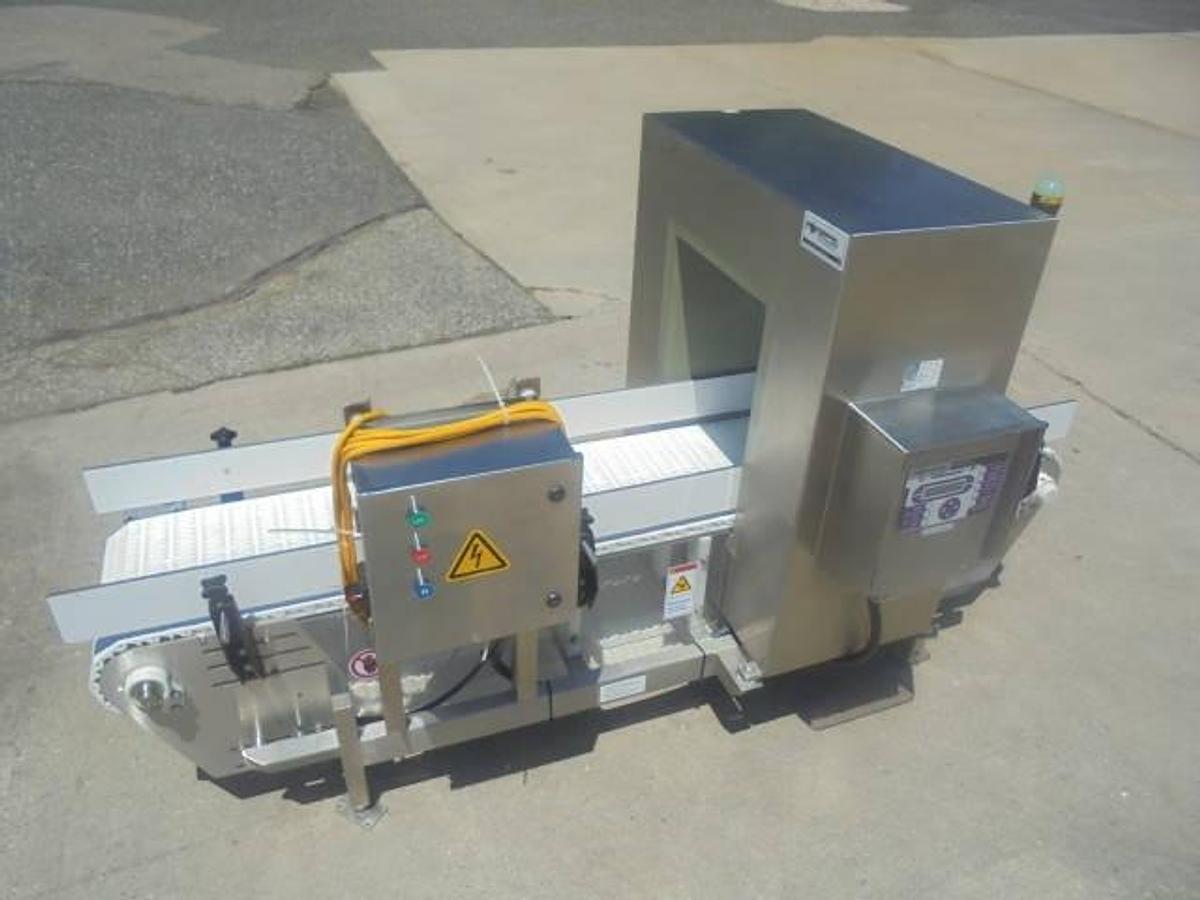
Fortress manufactures metal detection and inspection systems for the food and pharmaceutical industries. Their equipment ensures product safety and compliance with industry regulations.
FAQ:
What types of Fortress metal detection equipment are available on the used market?
Fortress Technology produces several distinct product lines, and all of them can appear on the used equipment market as food and pharmaceutical manufacturers upgrade or decommission their production lines. The three main series most commonly encountered are the Stealth series, the Phantom series, and the Interceptor series. Each targets a different application: the Stealth is a workhorse conveyor-based system suited for general food processing, the Phantom is a stainless steel enclosed detector designed for hygienic environments, and the Interceptor uses multi-simultaneous frequency technology to handle high-moisture or conductive products with fewer false rejects.
Within those series, configurations vary considerably. Buyers will find gravity-fed drop-through detectors for bulk or free-falling products, pipeline systems for pumped liquids and pastes, and conveyor-integrated units in a range of aperture sizes. The Fortress Phantom Stainless Steel Metal Detector, for example, is available in aperture sizes such as 14-3/4 inches wide by 18-1/4 inches high, which suits mid-sized conveyor lines in food or pharmaceutical facilities. When shopping for used Fortress equipment, it pays to match the aperture dimensions and system type to your specific production line before purchasing.
What industries use Fortress metal detection equipment?
Fortress Technology built its reputation primarily in the food processing industry, where detecting metallic contaminants before products reach consumers is both a regulatory requirement and a liability concern. Their detectors are installed across a wide range of food categories including fresh and frozen meat, poultry, seafood, baked goods, dairy, confectionery, and packaged snacks. The pharmaceutical industry is another major user, where product purity standards are equally strict and the consequences of contamination are severe.
Beyond food and pharma, Fortress equipment also sees use in packaging operations and general industrial manufacturing where foreign object detection is part of a quality control program. Because the machines are built to food-grade and pharmaceutical-grade standards, with stainless steel housings and wash-down ratings, they tend to hold up well in demanding production environments. This durability is part of why used Fortress detectors retain practical value long after their initial installation, making them a sensible consideration for facilities that need proven detection capability without the cost of purchasing directly from the manufacturer.
What metals can Fortress detectors identify?
Fortress metal detectors are designed to identify all three primary categories of metallic contaminants: ferrous metals (such as iron and steel), non-ferrous metals (such as aluminum, copper, and brass), and stainless steel. Stainless steel is historically the most difficult contaminant to detect because its magnetic and electrical properties are less pronounced than those of ferrous metals, and because stainless steel is also commonly used in the food processing environment itself. Fortress systems, particularly the Interceptor series, are engineered specifically to address this challenge.
The Interceptor's multi-simultaneous frequency technology allows the detector to run multiple frequencies at the same time rather than switching between them, which improves sensitivity to stainless steel and non-ferrous metals even in wet or high-salt products that would otherwise generate signal interference. Sensitivity levels vary by model, aperture size, and product type, but Fortress detectors are generally regarded in the industry as high-sensitivity systems. Buyers of used Fortress equipment should verify the specific model's sensitivity specifications and confirm that the unit has been properly calibrated, since sensitivity can drift over time without routine maintenance.
Does Fortress metal detection equipment comply with food safety standards like HACCP, FDA, and BRC?
Fortress Technology designs its equipment to meet the major international food safety and quality compliance frameworks, including HACCP (Hazard Analysis and Critical Control Points), BRC (British Retail Consortium), IFS (International Featured Standards), SQF (Safe Quality Food), and FDA 21 CFR Part 11 for electronic records and audit trails. These standards require that metal detection systems be validated, capable of logging detection events, and equipped with reliable reject mechanisms. Fortress equipment generally includes data logging, auto-test functions, and reject confirmation features that satisfy those audit requirements.
For buyers purchasing used Fortress equipment, compliance capability is worth examining carefully. The machine's software version, data logging functionality, and reject system should all be confirmed as operational before purchase. Some older models may not support current software updates from the manufacturer, so it is worth contacting Fortress Technology directly to ask which models are still supported and what parts or firmware updates remain available for the specific unit you are considering. A reputable used equipment dealer will typically allow an inspection, either in person or via video, so buyers can assess the machine's current working condition before committing.
What is the typical price range for used Fortress metal detection equipment?
Pricing for used Fortress metal detectors varies widely depending on the series, aperture size, age, configuration, and overall condition of the unit. Entry-level or older conveyor-based models in smaller aperture sizes can be found in the range of a few thousand dollars, while more advanced units from the Interceptor series or larger-aperture Phantom systems in good working condition can command significantly higher prices. As a general reference point, used industrial metal detectors from established manufacturers like Fortress often sell for roughly 30 to 60 percent of the cost of a comparable unit purchased directly from the manufacturer, though this varies case by case.
Buyers should factor in more than the listed price when calculating the total cost of acquisition. Shipping, crating or palletization, rigging for loading and unloading, and any reconditioning or calibration work needed after delivery all add to the landed cost. A machine priced attractively may require additional investment to bring it to production-ready status. Asking the dealer for a full breakdown of shipping and handling costs upfront, and budgeting for a technician to inspect and calibrate the unit upon arrival, gives a more accurate picture of what the equipment will actually cost to put into service.
How sensitive are Fortress metal detectors, and what factors affect detection performance?
Fortress metal detectors are considered high-sensitivity systems within the industrial inspection market. In controlled conditions, their conveyor-based units can detect ferrous spheres as small as 0.4 to 0.8 mm in diameter, non-ferrous spheres in the range of 0.6 to 1.2 mm, and stainless steel spheres starting around 1.0 to 1.5 mm, depending on the model and aperture size. Larger apertures generally reduce sensitivity because the signal-to-noise ratio decreases as the detection zone grows. These figures are benchmarks rather than guarantees, and real-world performance depends heavily on the application.
Several factors can reduce effective sensitivity in production use. High-moisture products, products with elevated salt or mineral content, and products packaged in metallized film all create background signal that can mask small contaminants or trigger false rejects. The Interceptor series was specifically developed to address these product-effect challenges through simultaneous multi-frequency operation. For used equipment, sensitivity can also degrade if the coil assembly has been damaged, if the unit has not been regularly calibrated, or if the electronics have drifted with age. Buyers should ask for a demonstration or video of the machine running a test standard, and ideally have a qualified technician assess the unit before finalizing a purchase.
What should buyers inspect when evaluating used Fortress metal detection equipment?
A thorough inspection of a used Fortress metal detector should cover both the mechanical and electronic components of the system. On the mechanical side, look at the condition of the conveyor belt and drive system, the integrity of the stainless steel housing (checking for dents, cracks, or corrosion that could affect hygiene ratings), the reject mechanism (whether pneumatic, pusher, or flap-based), and the condition of any seals or gaskets that maintain the wash-down rating. Worn or damaged seals can compromise IP ratings, which matters in wet food processing environments.
On the electronics side, the most important things to verify are that the control panel powers up and responds correctly, that the auto-test or product learn functions operate as expected, and that the reject confirmation sensor is functional. Data logging and audit trail features should be tested if the buyer's facility requires them for compliance. Most reputable used equipment dealers will accommodate an in-person inspection or a detailed video walkthrough of the machine in its current state. Keep in mind that dealers typically do not have production permits to run actual product through the machine during a demonstration, so testing is generally done using certified test pieces rather than real product. Buyers should also contact Fortress Technology directly to confirm whether the specific model and serial number is still supported for parts and service.
What is the difference between the Fortress Phantom, Stealth, and Interceptor series?
The three main Fortress product lines each address different production scenarios. The Phantom series is a stainless steel enclosed conveyor detector designed for hygienic food and pharmaceutical environments. Its fully enclosed housing and wash-down construction make it well-suited for facilities with strict sanitation requirements, and it is available in a range of aperture sizes to accommodate different product dimensions. The Stealth series is a more general-purpose conveyor detector that balances performance and cost, making it a common choice across a wide range of food processing applications.
The Interceptor series is the most technically advanced of the three. It uses a patented multi-simultaneous frequency (MSF) technology that runs multiple detection frequencies at the same time rather than cycling through them sequentially. This approach significantly improves the detector's ability to identify stainless steel and non-ferrous contaminants in products that would otherwise create interference, such as fresh meat, cheese, bread, and other high-moisture or conductive foods. For facilities dealing with product-effect challenges that cause false rejects on conventional single-frequency detectors, the Interceptor is the preferred solution. On the used market, Interceptor units tend to be priced higher than Phantom or Stealth units of comparable size, reflecting their greater capability.
Can used Fortress metal detectors be integrated into existing conveyor or packaging lines?
Fortress conveyor-based metal detectors are designed as modular inline systems, which means they are generally intended to be integrated into a production line rather than operated as standalone units. The conveyor section of the detector connects upstream and downstream to the rest of the line, and the reject mechanism is positioned to divert contaminated product off the line automatically. Integration with existing equipment is usually feasible as long as the aperture height and width accommodate the product being inspected, the conveyor height matches or can be adjusted to match the surrounding line, and the belt speed falls within the detector's operating range.
For used equipment specifically, buyers should obtain the full dimensional specifications of the unit before purchase, including the aperture opening, the overall conveyor length, the belt width, and the height from the floor to the conveyor surface. These measurements need to be matched to the existing line layout. Electrical compatibility (voltage, phase, and frequency) is another practical consideration, particularly for units that were originally installed in a different country. A used Fortress detector that was configured for a 50 Hz European facility, for example, may require modifications before it operates correctly on a 60 Hz North American line. Discussing these details with the dealer and a qualified installation technician before purchase can prevent costly surprises after delivery.
What should buyers know about shipping and payment for used Fortress metal detection equipment?
Used industrial metal detection equipment requires careful handling during transit to avoid damage to the sensitive coil assemblies and electronics inside. Reputable dealers will package units on pallets or in crates appropriate for the size and weight of the machine. Larger or heavier systems may require additional rigging for safe loading at the dealer's facility and unloading at the buyer's location, and that rigging work typically carries an added cost. Buyers should ask the dealer for a complete breakdown of packaging, freight, and rigging charges before finalizing a purchase so the full landed cost is understood upfront.
On payment, most used equipment dealers require payment in full before a machine ships. Some dealers extend credit terms to established repeat customers, but buyers who are purchasing from a dealer for the first time should expect to pay in advance. Wire transfer is the most common payment method for industrial equipment transactions of this scale. Because used equipment is sold as-is and inspections are the buyer's primary protection, it is worth taking full advantage of any inspection opportunity the dealer offers, whether that is an in-person visit, a live video call, or a recorded video walkthrough of the machine in its current condition, before sending payment.