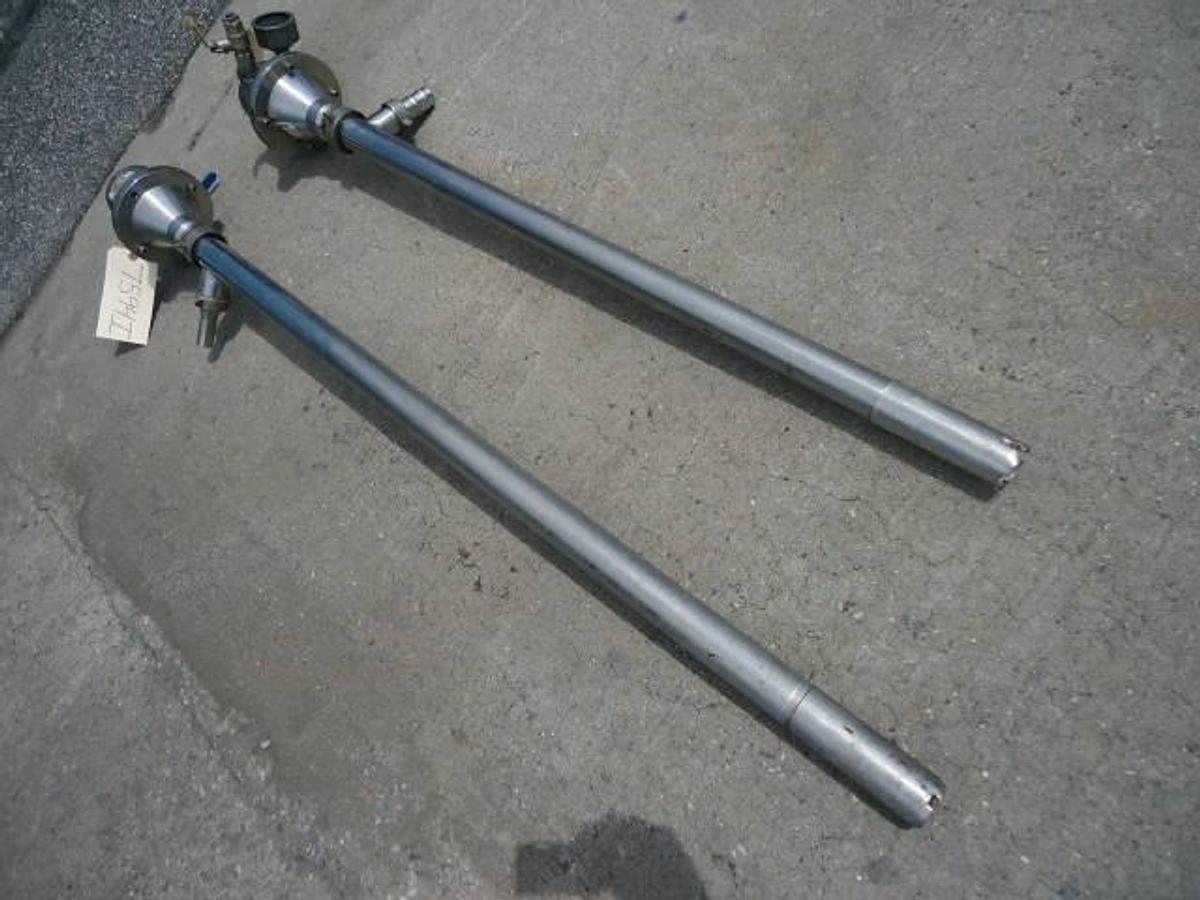
Category
Manufacturer
Model
Flux
Flux specializes in fluid management and pumping solutions for the chemical, food, and pharmaceutical industries. Their products are known for their reliability and efficiency in handling various types of liquids.
FAQ:
What is a Flux drum pump and what is it used for?
A Flux drum pump is a submersible-style transfer pump designed to draw liquids out of drums, barrels, intermediate bulk containers (IBCs), and other large vessels. The pump tube is inserted directly into the container, and a motor mounted at the top drives an impeller or rotor inside the tube to move fluid up and out through a discharge hose. Flux is a German-engineered brand with a long-standing reputation for build quality and chemical resistance, and their drum pumps are widely used across industries that need to transfer liquids safely and efficiently without manual pouring or tipping heavy containers.
Common applications include transferring acids, solvents, cleaning agents, lubricants, food-grade liquids, pharmaceutical ingredients, and agricultural chemicals. Industries that rely on Flux drum pumps include chemical processing, food and beverage production, pharmaceuticals, oil and gas, water treatment, and agriculture. The design keeps operators away from direct contact with potentially hazardous fluids, which makes drum pumps a practical safety solution in addition to a productivity tool. Used Flux drum pumps are available through industrial equipment dealers and can offer significant cost savings compared to purchasing unused equipment, particularly for operations that need reliable fluid transfer without a large capital outlay.
What types of liquids can Flux drum pumps handle?
Flux drum pumps are engineered to handle a wide range of liquids, from thin, low-viscosity solvents and water-like chemicals to moderately viscous fluids such as oils, detergents, and light syrups. The specific liquid compatibility depends heavily on the tube and wetted-parts material of the pump. Polypropylene (PP) tube models are well-suited for many acids, alkalis, and water-based chemicals. PVDF (polyvinylidene fluoride) models handle more aggressive solvents and concentrated acids. Stainless steel 316L tube versions are common in food, beverage, and pharmaceutical applications where hygiene and corrosion resistance are both required. Aluminum tube pumps are typically used for fuels, oils, and non-corrosive hydrocarbons.
It is critical to verify chemical compatibility before using any drum pump with a specific fluid, especially with used equipment where the pump's history may not be fully documented. Flux publishes chemical resistance charts for their product lines, and consulting those charts alongside the pump's material specifications is a standard part of selecting the right unit. Buyers of used Flux drum pumps should confirm the tube material and all wetted components before putting the pump into service with a new chemical application, since some residues from prior use may also affect compatibility or require thorough cleaning before switching fluids.
What flow rates do Flux drum pumps typically deliver?
Flow rates for Flux drum pumps vary considerably depending on the model, motor type, and the viscosity of the fluid being transferred. As a general range, Flux drum pumps can deliver anywhere from roughly 20 liters per minute on smaller or hand-operated models up to 200 liters per minute or more on larger electric-motor-driven configurations. Most standard electric models used in industrial settings fall in the 40 to 120 liters per minute range under typical operating conditions. Pneumatic (air-operated) models also offer competitive flow rates and are often preferred in environments where electric motors are not safe to use.
Viscosity has a significant impact on actual flow rate in real-world use. A pump rated at 100 liters per minute on water may perform considerably slower when transferring a thick oil or syrup. Motor speed (RPM), impeller design, and tube diameter all factor into the final output. When evaluating a used Flux drum pump, it is worth checking the model number against Flux's published specifications to confirm the rated flow range, and if possible, requesting a functional inspection or video demonstration from the seller to verify the pump operates as expected before purchase.
What power options are available for Flux drum pumps?
Flux drum pumps are available in three main drive configurations: electric motor, pneumatic (air-operated), and manual hand-operated. Electric models are the most common in industrial settings and are available in various voltage and frequency configurations, including single-phase and three-phase options to suit different facility power supplies. Electric Flux drum pumps are efficient for continuous or high-volume transfer tasks where a compressed air supply is not available or practical.
Pneumatic drum pumps, sometimes called air-operated drum pumps, run on compressed air rather than electricity. These are a preferred choice in environments where flammable vapors or explosive atmospheres are present, since they eliminate the risk of electrical sparks. Many pneumatic Flux models also carry ATEX certification for use in classified hazardous locations. Hand-operated models exist for lower-volume applications or situations where neither power nor compressed air is available, though these are less common in heavy industrial use. When shopping for a used Flux drum pump, confirming the power type and voltage requirements upfront is essential to ensure compatibility with the intended facility.
Are Flux drum pumps safe for use with flammable or hazardous chemicals?
Many Flux drum pump models are specifically designed and certified for use with flammable or hazardous chemicals. The key certification to look for is ATEX, which is the European standard for equipment intended for use in potentially explosive atmospheres. ATEX-rated Flux drum pumps are constructed to prevent ignition sources, making them appropriate for transferring fuels, solvents, alcohols, and other flammable liquids in environments where vapor accumulation is a concern. Pneumatic Flux drum pumps are particularly well-suited for these applications because they have no electric motor to generate sparks.
For hazardous chemicals that are corrosive rather than flammable, material selection is the primary safety factor. Flux's range of tube materials, including PVDF and stainless steel 316L, provides options for handling concentrated acids, aggressive solvents, and other chemically demanding fluids. Buyers of used Flux drum pumps intended for hazardous applications should verify the specific model's certifications and material composition before use, and should inspect the pump carefully for any wear, cracks, or seal degradation that could compromise safe operation. Consulting the manufacturer's documentation for the specific model is a practical step when the pump's service history is not fully known.
What materials are Flux drum pumps made from, and why does it matter?
The wetted components of Flux drum pumps, meaning the parts that come into direct contact with the fluid being transferred, are available in several materials to match different chemical environments. The four primary tube materials are polypropylene (PP), PVDF (polyvinylidene fluoride), stainless steel 316L, and aluminum. PP is a cost-effective choice for a broad range of acids, bases, and water-based chemicals. PVDF offers superior resistance to aggressive solvents and concentrated acids where PP would degrade. Stainless steel 316L is the standard for food-grade, beverage, and pharmaceutical applications due to its corrosion resistance and ease of cleaning. Aluminum is used primarily for fuels, lubricants, and non-corrosive petroleum-based products.
Material selection matters because using the wrong pump material with an incompatible chemical can cause rapid degradation of the pump components, contamination of the fluid, or even a safety hazard. This is especially relevant with used equipment, where the pump may have been used with different chemicals in its prior service life. Before putting a used Flux drum pump into service, it is worth identifying the exact tube material, checking the impeller and seal materials as well, and cross-referencing all of them against a chemical compatibility chart for the intended fluid. This step takes little time and can prevent costly failures or safety incidents.
What drum or container sizes are Flux drum pumps compatible with?
Flux drum pumps are designed primarily for use with standard 200-liter (55-gallon) drums, which are the most common container size in industrial fluid storage. The pump tubes are manufactured in various lengths to accommodate different container depths, and many models include adjustable or interchangeable tube lengths so the same motor unit can be used with different container sizes. Beyond standard drums, Flux pumps are also used with intermediate bulk containers (IBCs), which typically hold 1,000 liters, as well as smaller containers such as 30-liter or 60-liter pails, provided the correct tube length and bung adapter are used.
The bung adapter at the top of the drum opening is an important fitment consideration. Most standard industrial drums use a 2-inch bung, and Flux drum pump accessories are generally designed around this standard. When purchasing a used Flux drum pump, it is useful to confirm whether the necessary adapters and fittings are included with the unit, since these small components are easy to lose and may add to the total cost if they need to be sourced separately. Checking the tube length against the container depth intended for use is also a practical step before finalizing a purchase.
How do I choose the right used Flux drum pump for my application?
Selecting the right used Flux drum pump starts with identifying four key variables: the chemical being transferred, the required flow rate, the power source available at the point of use, and the container type and size. Once those are defined, the tube material can be matched to the chemical using a compatibility chart, and the motor type (electric, pneumatic, or manual) can be matched to the available power supply and any hazardous-area requirements. Flow rate requirements will point toward a specific motor size and impeller configuration. Flux model numbers typically encode some of this information, and cross-referencing the model number with Flux's published specifications is a reliable way to confirm the pump's rated capabilities.
With used equipment specifically, condition assessment is an added layer of the selection process. Buyers should request detailed photos or a video inspection of the pump, paying attention to the condition of the tube, impeller, seals, and motor housing. Visible corrosion, cracks in the tube, or worn seals are signs that the pump may need servicing before it is put back into production. Reputable used equipment dealers with experience in fluid handling equipment will typically accommodate inspection requests and can provide accurate descriptions of the machine's current condition. Taking the time to inspect before purchasing reduces the risk of receiving equipment that requires significant repair work.
What should buyers know about inspecting a used Flux drum pump before purchasing?
Buying used industrial equipment of any kind requires more due diligence than purchasing unused stock, and drum pumps are no exception. For a used Flux drum pump, the most important areas to inspect are the pump tube and wetted components, the motor, and the seals. The tube should be free of cracks, chemical etching, or visible degradation. The impeller, which is inside the tube and not always easy to see, should spin freely without grinding. Seals and O-rings are wear items that may need replacement after extended service, so their condition is worth confirming. The motor should show no signs of overheating, winding damage, or corrosion on the housing or electrical connections.
Reputable used equipment dealers will typically offer in-person inspections, video walkthroughs, or photo documentation of machines on request. Some equipment may still be installed at the facility where it was in active use, in which case an inspection can sometimes be arranged at the plant. Keep in mind that most equipment dealers are not set up to run full production tests with actual chemicals, so functional testing is generally limited to verifying that the motor runs and the pump tube is mechanically intact. Buyers should factor this into their evaluation and, if the pump's prior chemical exposure is unknown, plan for a thorough cleaning and seal inspection before putting it into service with a new application.
What are typical shipping and payment considerations when buying a used Flux drum pump?
Used Flux drum pumps are relatively compact compared to large industrial machinery, but they still require careful packaging to prevent damage in transit, particularly to the pump tube and motor assembly. Depending on the dealer, equipment may be shipped on a pallet or in a crate, and the level of packaging will affect shipping costs. Buyers should ask the dealer specifically about how the pump will be packaged, what carrier will be used, and whether freight insurance is included or available. Getting a clear picture of the total landed cost, including packaging, freight, and any handling fees, before committing to a purchase avoids surprises.
On payment terms, most used equipment dealers require full payment prior to shipping. Some dealers may extend terms to established repeat customers, but this is not standard practice for first-time buyers. Payment is typically processed by wire transfer, credit card, or other methods specified by the dealer. Since used equipment is generally sold as-is, with no manufacturer backing on the transaction, buyers are well-served by choosing dealers who have a verifiable track record in industrial or fluid handling equipment, who are transparent about the machine's condition, and who are willing to answer questions and accommodate inspection requests before the sale is finalized.