Category
Manufacturer
Model
Fluid Packaging Solutions
Fluid Packaging Solutions provides packaging machinery for liquid products across various industries, including food and pharmaceuticals. They offer filling, capping, and labeling solutions that enhance production efficiency.
FAQ:
What types of machinery does Fluid Packaging Solutions manufacture?
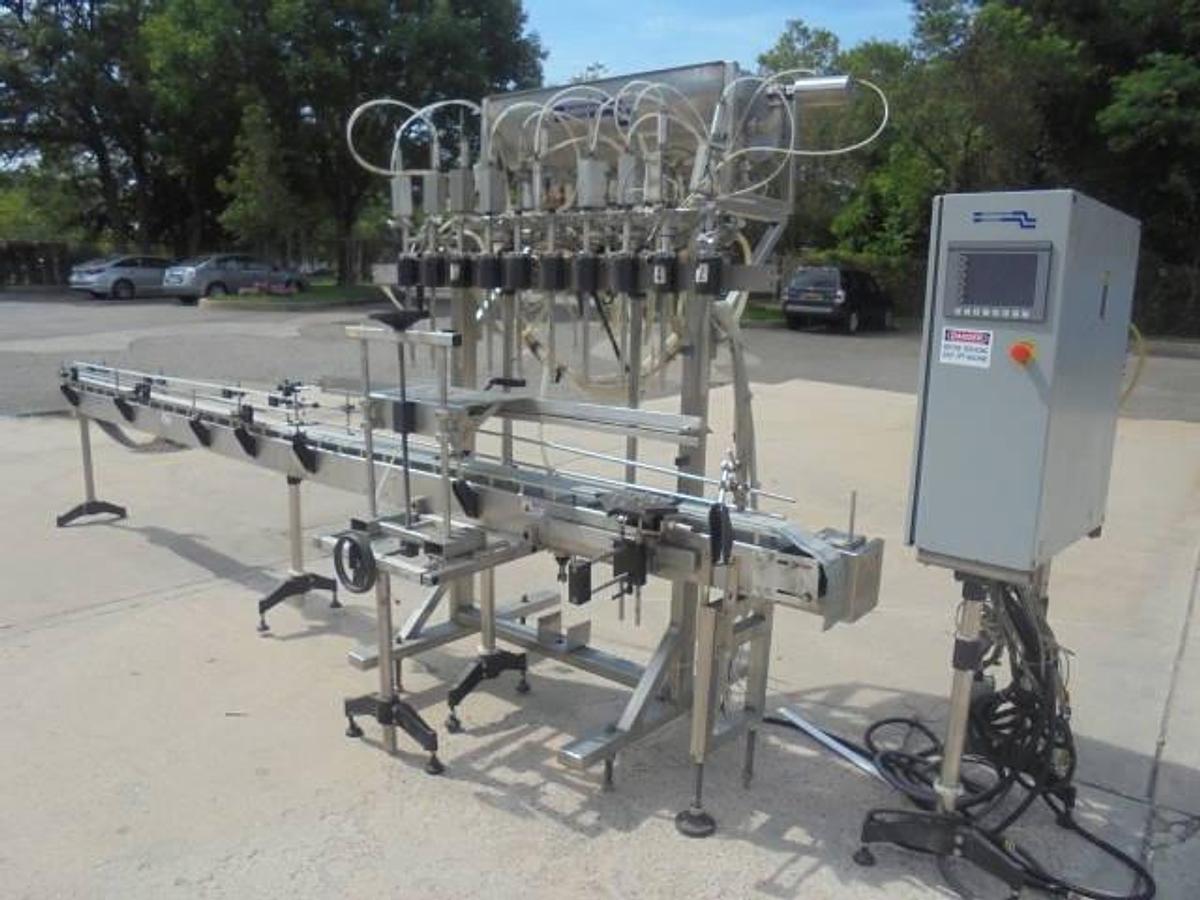
Fluid Packaging Solutions builds equipment for liquid product packaging lines, with their catalog covering filling machines, capping systems, and labeling equipment. Their filling machines include several different technologies depending on the application: gravity fillers, piston fillers, pump fillers, and volumetric fillers. The gravity filler style, such as their 10-spout stainless steel bottom-up gravity liquid filler, is a good example of the kind of multi-head production equipment they produce for higher-volume liquid filling operations.
Beyond individual machines, Fluid Packaging Solutions equipment is often used as part of complete turnkey packaging lines where filling, capping, and labeling happen in sequence. Buyers looking for used Fluid Packaging Solutions machinery will typically find semi-automatic and fully automatic configurations available on the secondary market, which gives operations at different production scales access to the same underlying technology at a lower cost than purchasing comparable equipment outright.
What industries use Fluid Packaging Solutions equipment?
Fluid Packaging Solutions machinery is used across a broad range of industries that package liquid or semi-liquid products. Food and beverage manufacturers rely on their filling and capping equipment for products like sauces, juices, oils, and condiments. Pharmaceutical companies use their machines for liquid medications, supplements, and topical products where fill accuracy and sanitary construction are non-negotiable. Cosmetics and personal care manufacturers also represent a significant portion of their user base, packaging items like lotions, shampoos, and serums.
Beyond those categories, chemical and household product manufacturers use Fluid Packaging Solutions equipment for cleaners, detergents, and industrial fluids. The stainless steel construction found on many of their machines is a key reason why food, beverage, and pharmaceutical operations specifically seek out this brand, since stainless steel holds up to washdown environments and meets sanitation standards that other materials cannot. Buyers on the secondary market often target used Fluid Packaging Solutions machines precisely because of this build quality and the brand's reputation across these regulated industries.
What should buyers look for when inspecting a used liquid filling machine?
The condition of the fill heads, nozzles, and sealing surfaces is the most critical area to evaluate on a used liquid filler. Worn or corroded nozzles can affect fill accuracy and introduce contamination risk, particularly in food or pharmaceutical applications. Buyers should also check the condition of any pumps, pistons, or valves in the filling mechanism, since these are the components that wear most in regular production use. On stainless steel machines, look carefully for pitting, deep scratches, or welds that have been repaired, as these can harbor bacteria or indicate the machine was used in a demanding environment.
Electrical components, control panels, and sensors deserve close attention as well, especially on fully automatic machines where the controls govern fill timing, conveyor speed, and reject systems. Buyers should request an in-person or video inspection before committing to a purchase. Reputable used equipment dealers will typically accommodate both options, and some machines may still be installed at a production facility where a live inspection can be arranged. Keep in mind that most dealers do not have the permitting required to run actual product through a machine during a demonstration, so inspections focus on mechanical condition, cleanliness, and a visual assessment of working order rather than a full production test.
What fill volume ranges can liquid filling machines typically handle?
Liquid filling machines span an enormous range of fill volumes, from a few milliliters for pharmaceutical vials and cosmetic samples up to several gallons for industrial or bulk food products. Gravity fillers and piston fillers in the Fluid Packaging Solutions style are commonly configured for mid-range fills, handling containers from roughly one ounce up to one gallon depending on the specific model and how the machine is set up. Multi-head configurations, like a 10-spout gravity filler, are designed to increase throughput by filling multiple containers simultaneously rather than one at a time.
When evaluating a used filling machine for a specific application, buyers need to confirm that the machine's fill range aligns with their container sizes and that any changeover parts (nozzles, fill tubes, drip trays) are included with the sale. Missing changeover parts can be difficult and expensive to source after the fact, particularly on older models. It is also worth contacting the manufacturer directly to understand what parts and technical support are still available for the specific model being purchased, since support availability can vary significantly based on the age of the machine.
What is the difference between a gravity filler and a piston filler for liquid packaging?
A gravity filler works by allowing liquid to flow from an elevated tank or reservoir down through fill nozzles and into containers using the force of gravity. Fill volume is controlled by timing the open and close cycle of the nozzle valves. Gravity fillers work best with free-flowing, low-viscosity liquids like water, thin juices, or light oils. The bottom-up fill style, where the nozzle descends into the container and fills from the bottom up as it retracts, helps reduce foaming and splashing on products that are prone to it.
Piston fillers use a cylinder and piston mechanism to draw a precise volume of product and then push it into the container. Because the fill volume is determined mechanically rather than by timing, piston fillers tend to offer tighter fill accuracy and handle a wider viscosity range, including thicker products like sauces, creams, and gels that would not flow reliably through a gravity system. For buyers comparing used filling equipment, the choice between gravity and piston filling generally comes down to product viscosity and the level of fill accuracy required. Both technologies are well-established, and used machines of either type from reputable manufacturers can provide years of additional service life when properly maintained.
How do semi-automatic and fully automatic liquid filling machines differ?
Semi-automatic filling machines require an operator to position each container under the fill head and typically trigger the fill cycle manually or with a foot pedal. The machine controls the fill volume and timing, but the operator handles container placement and removal. These machines are well-suited for smaller production runs, startups, or operations that package a wide variety of container sizes and switch between products frequently. They also tend to be less expensive on the secondary market and simpler to maintain since they have fewer automated components.
Fully automatic filling machines integrate container feeding, filling, and discharge into a continuous process with minimal operator intervention. Containers move along a conveyor, are indexed into position at the fill heads, filled, and then conveyed to the next station automatically. These systems are designed for consistent, high-volume production and deliver higher throughput than semi-automatic alternatives. Used fully automatic lines require more thorough inspection before purchase since the conveyors, sensors, and control systems all need to be evaluated in addition to the filling mechanism itself. Buyers should factor in the cost of any necessary repairs or control system updates when assessing the true landed cost of a used automatic filling line.
What should buyers understand about shipping and rigging costs for used packaging machinery?
Shipping costs for used packaging machinery can vary significantly depending on the size and weight of the equipment, the distance being shipped, and the level of packaging required to protect the machine in transit. Smaller tabletop filling machines may ship on a standard pallet with minimal crating, while larger multi-head fillers or complete packaging lines require custom wooden crates and heavy-duty rigging for safe loading and unloading. Buyers should always ask the dealer for a detailed breakdown of packaging, rigging, and freight costs before finalizing a purchase, since these expenses can add meaningfully to the total cost of the equipment.
For larger machines, loading at the dealer's facility and unloading at the buyer's facility may each require a forklift, crane, or specialized rigging crew, and those costs are typically the buyer's responsibility at each end. Some machines being sold are still installed at a production facility rather than at a dealer's warehouse, which can add complexity to the removal and loading process. Getting a clear picture of the full landed cost, including the machine price, freight, rigging, and any required crating, is an important step before committing to a purchase.
What are typical payment terms for purchasing used packaging equipment?
Most used equipment dealers require full payment before a machine is released for shipment. This is standard practice in the industry and reflects the fact that used equipment transactions do not carry the same financing infrastructure as new equipment purchases from manufacturers. Buyers should expect to pay in full prior to shipping unless they have an established relationship with a particular dealer, in which case some dealers may offer payment terms to repeat customers on a case-by-case basis.
For buyers who need financing, third-party equipment financing companies and leasing firms do work with used machinery purchases, though the terms and availability depend on the age, condition, and appraised value of the equipment. It is worth exploring financing options independently before beginning a search, so that budget parameters are clear going into negotiations. Wire transfer is the most common payment method for used equipment transactions of significant value, though dealer-specific payment policies vary and buyers should confirm accepted payment methods early in the process.
How should buyers evaluate a used equipment dealer before purchasing packaging machinery?
The length of time a dealer has been in business and their specialization in a particular equipment category are two of the most important factors to assess. Dealers who have operated for many years and focus specifically on packaging or liquid filling equipment will have deeper knowledge of the machines they sell, better sourcing networks, and a more reliable track record than generalist liquidators or auction platforms. Checking for reviews, industry references, and any professional affiliations can help establish credibility before any money changes hands.
Buyers should also pay attention to how a dealer handles the inspection process. A reputable dealer will be transparent about the condition of equipment, provide detailed photos or video, and accommodate in-person or virtual inspections. Dealers who are reluctant to share detailed condition information or who cannot provide a clear history of the machine's use should be approached with caution. Since used equipment is typically sold as-is without manufacturer warranties, the dealer's willingness to be forthcoming about a machine's condition is one of the clearest signals of their integrity and professionalism.
What parts and support should buyers expect for used Fluid Packaging Solutions machines?
Support availability for used packaging machinery depends heavily on the age and specific model of the machine. Buyers considering a used Fluid Packaging Solutions machine should contact the manufacturer directly before purchasing to ask about parts availability, technical documentation, and whether the company still supports that particular model. Manufacturers sometimes discontinue support for older equipment, and knowing that upfront helps buyers plan for maintenance and repairs realistically. For machines that are still supported, the manufacturer may be able to supply replacement nozzles, valves, seals, and other wear parts, which makes long-term ownership considerably more practical.
For machines where manufacturer support is limited, buyers should assess whether the critical wear components are made from standard off-the-shelf parts that can be sourced through industrial supply channels. Stainless steel fittings, pneumatic components, and common electrical controls are often available from third-party suppliers even when the original manufacturer no longer stocks machine-specific parts. A pre-purchase inspection that inventories the current condition of wear components and identifies any parts that will need near-term replacement is a practical way to avoid surprises after the machine arrives.