Category
Manufacturer
Model
Fisher Scientific
Fisher Scientific is a leading supplier of laboratory equipment and supplies, serving various industries including pharmaceuticals and biotechnology. They provide a vast range of equipment, including analytical instruments and safety products.
FAQ:
What types of laboratory equipment does Fisher Scientific manufacture?
Fisher Scientific, operating under the Thermo Fisher Scientific umbrella, produces one of the broadest catalogs in the laboratory equipment industry. Their product lines span analytical instruments, life sciences equipment, lab furniture, safety products, consumables, reagents, and diagnostic tools. Specific instrument categories include water baths (such as the Isotemp series), centrifuges, incubators, ovens, spectrophotometers, balances, pipettes, fume hoods, and refrigeration units, among many others. The sheer breadth of their catalog makes Fisher Scientific equipment a common fixture across virtually every type of laboratory setting.
This wide range is one reason Fisher Scientific instruments appear so frequently on the used equipment market. Labs upgrading to newer models, facilities closing or consolidating, and research institutions cycling out equipment all contribute to a healthy secondary market for Fisher Scientific instruments. Buyers looking for used Fisher Scientific equipment can often find multiple product categories available at once, making it practical to source several pieces of equipment from a single used dealer familiar with the brand.
What industries commonly use Fisher Scientific laboratory equipment?
Fisher Scientific equipment is used across an unusually wide range of industries, which is part of what makes it so recognizable and trusted in the secondary market. Pharmaceutical and biotechnology companies rely heavily on Fisher Scientific instruments for research, quality control, and production support. Academic and government research institutions use their equipment for everything from basic chemistry to advanced molecular biology. Clinical and diagnostic laboratories, environmental testing facilities, food and beverage quality labs, and industrial manufacturing operations all count Fisher Scientific among their standard suppliers.
This cross-industry adoption matters for buyers of used Fisher Scientific equipment because it speaks to the durability and versatility of the instruments. A water bath or incubator originally purchased for a pharmaceutical application, for example, can often be redeployed in an academic or environmental testing lab without any functional compromise. The broad installed base also means that service technicians, application notes, and user communities are widely available, which can make it easier to get support for a used instrument even years after it was first put into service.
What should buyers know about purchasing used Fisher Scientific equipment instead of buying it new from a distributor?
Buying used Fisher Scientific equipment can offer significant cost savings compared to purchasing through a distributor at full price, sometimes at a fraction of the cost for instruments that still have years of useful life remaining. Used equipment is particularly appealing for labs with tight budgets, startups equipping a new facility, or researchers who need a specific instrument for a limited-scope project. Many Fisher Scientific instruments, including their Isotemp water baths and other bench-top instruments, are known for their durability and can perform reliably long after their initial purchase date.
That said, buying used requires more diligence on the buyer's part. Unlike purchasing through an authorized distributor, used equipment is typically sold as-is, meaning the buyer takes on responsibility for verifying the condition and suitability of the instrument. Buyers should request an inspection, ask about the equipment's service history if available, and check with Fisher Scientific or Thermo Fisher Scientific directly to understand what level of manufacturer support, parts availability, and calibration services can still be expected for a given model and age. Choosing a reputable used equipment dealer with a track record in laboratory instruments is one of the most important steps a buyer can take to reduce risk.
Are warranties available when buying used Fisher Scientific equipment?
Manufacturer warranties are typically tied to the original purchase from an authorized channel and do not transfer to subsequent buyers of used equipment. When purchasing used Fisher Scientific instruments through a secondary market dealer, buyers should expect the equipment to be sold as-is. This is standard practice across the used laboratory equipment industry and is not specific to Fisher Scientific products. The absence of a manufacturer warranty is one of the key differences between buying used versus buying through an authorized distributor.
Because of this, buyers carry the burden of inspection before committing to a purchase. Reputable used equipment dealers will generally accommodate in-person visits, video walkthroughs, or recorded demonstrations of the equipment so buyers can assess its current condition. It is also worth contacting Thermo Fisher Scientific directly to ask about service contracts, calibration support, and parts availability for the specific model being considered, since older or discontinued models may have limited manufacturer support regardless of where they are purchased. Selecting a dealer who specializes in laboratory equipment and has a long history in the industry provides an additional layer of confidence when buying without a manufacturer warranty.
How can I inspect used Fisher Scientific equipment before purchasing?
Most reputable used laboratory equipment dealers offer buyers several options for inspecting equipment prior to purchase. In-person inspections are the most thorough, allowing a buyer or their technician to physically examine the instrument, check for wear or damage, review any available maintenance records, and in some cases observe the machine in operation. Virtual inspections via video call are a practical alternative for buyers who cannot travel, and many dealers will also provide recorded video walkthroughs of the equipment on request.
One important nuance with used laboratory equipment is that dealers typically do not have the permitting or production infrastructure to run actual product through a machine during an inspection. An inspection can confirm that a water bath heats to temperature, that controls respond correctly, and that the unit is free from obvious damage, but it cannot replicate a full production or analytical run. For instruments where performance validation is critical, buyers may want to factor in the cost of post-purchase calibration or qualification by a third-party service provider. Some equipment may still be installed at the facility where it was used, in which case the dealer may be able to arrange an inspection at that location, potentially allowing the buyer to see the instrument in a working production environment.
What compliance and regulatory standards do Fisher Scientific instruments typically meet?
Fisher Scientific instruments are designed for use in regulated laboratory environments and many models are built to meet or exceed standards such as ISO, GLP (Good Laboratory Practice), GMP (Good Manufacturing Practice), FDA 21 CFR Part 11, and CE marking requirements. The specific certifications applicable to a given instrument depend on its category and intended use. Analytical balances, for example, may carry ISO calibration certificates, while software-driven instruments used in pharmaceutical environments may be designed with FDA 21 CFR Part 11 audit trail and electronic records requirements in mind.
For buyers purchasing used Fisher Scientific equipment for regulated applications, it is important to verify that the specific model purchased can still be validated or qualified to the required standard. Compliance is not simply a function of the instrument's design; it also depends on proper installation, calibration, and documentation at the receiving facility. Buyers should consult with their quality or regulatory teams before purchasing used equipment for GMP or FDA-regulated use, and should budget for installation qualification (IQ), operational qualification (OQ), and performance qualification (PQ) activities as needed. Thermo Fisher Scientific's service division can advise on what qualification support is available for specific models.
Are replacement parts and consumables available for used Fisher Scientific instruments?
Parts and consumables availability for Fisher Scientific instruments varies depending on the age and model of the equipment. For instruments that are still within their active product lifecycle, Thermo Fisher Scientific typically maintains a supply of replacement parts, and consumables such as filters, probes, and sample containers are often still in production. This makes servicing and maintaining these instruments relatively straightforward even after purchasing them on the secondary market.
For older or discontinued models, parts availability can be more limited. Before purchasing a used Fisher Scientific instrument, it is worth contacting Thermo Fisher Scientific directly to ask whether replacement parts and consumables are still stocked for that specific model and serial number range. Third-party parts suppliers and specialized laboratory equipment repair companies can sometimes fill the gap for discontinued models, but availability is less predictable. Buyers should factor parts availability into their total cost of ownership calculation, particularly for instruments that require regular consumable replacement or that are likely to need service in the near term.
What does shipping used Fisher Scientific laboratory equipment typically involve?
Shipping used laboratory equipment requires more planning than shipping standard freight. Instruments need to be carefully packaged to prevent damage in transit, and the level of packaging required, whether basic palletization or full custom crating, will affect the overall shipping cost. Smaller bench-top instruments like water baths or stirrers can often be palletized and stretch-wrapped with appropriate cushioning, while larger or more fragile instruments may require custom wooden crates built to the dimensions of the equipment. Buyers should ask the dealer specifically what packaging method will be used and whether that cost is included in the quoted price.
Larger Fisher Scientific instruments, such as biosafety cabinets, large centrifuges, or environmental chambers, may also require specialized rigging for loading at the dealer's facility and unloading at the destination. Rigging services involve equipment like forklifts or cranes operated by trained riggers, and this is typically an added cost beyond standard freight. Buyers should request a full breakdown of packaging, rigging, and freight charges before finalizing a purchase so they have a clear picture of the total landed cost of the equipment, not just the purchase price.
What payment terms should buyers expect when purchasing used Fisher Scientific equipment from a dealer?
The standard payment practice in the used laboratory equipment industry is full payment prior to shipment. This applies to most transactions regardless of the size or value of the equipment. Dealers typically accept payment by wire transfer, and some may accept credit cards for smaller purchases, though processing fees may apply. Buyers should confirm accepted payment methods early in the purchasing process to avoid delays once a deal is agreed upon.
Some dealers extend payment terms to repeat customers or established accounts, but this is not the norm for first-time buyers. Buyers who need financing for larger equipment purchases should explore third-party laboratory equipment financing or leasing companies, as these can provide structured payment plans while the dealer still receives full payment at the time of transaction. Before wiring funds, buyers should verify the dealer's legitimacy, confirm the equipment details in writing, and ensure they have a clear agreement on what happens if the equipment does not arrive in the described condition.
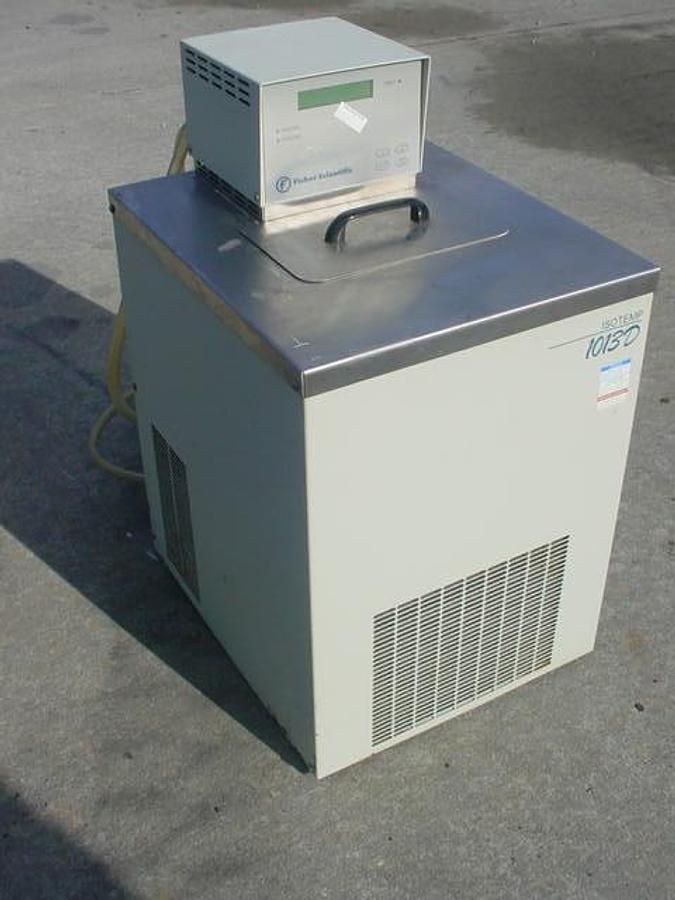
What is the Fisher Scientific Isotemp water bath and what is it used for?
The Fisher Scientific Isotemp is a line of temperature-controlled water baths designed for laboratory applications that require precise and stable heating of samples. Common uses include incubating biological samples, warming reagents to a specific temperature before use, performing enzyme reactions, thawing frozen samples in a controlled manner, and supporting various chemistry and life science protocols that require sustained temperatures. The Isotemp line has been a staple in research, clinical, and industrial laboratories for decades, which is why used units appear regularly on the secondary market.
Isotemp water baths are available in various bath volumes and temperature ranges, making them adaptable to a wide range of laboratory workflows. The 1013D model, for example, is a benchtop unit suited for general laboratory use. When evaluating a used Isotemp unit, buyers should check that the temperature controller is functioning accurately, that the bath interior is free from significant corrosion or scaling, and that the heating element responds properly. These are relatively simple instruments to inspect and service, which contributes to their popularity as used equipment purchases.