Category
Manufacturer
Model
FAQ:
What types of bags can Fischbein sewing machines close?
Fischbein bag sewing machines are built to handle a wide range of bag materials and constructions. Common applications include paper bags, polypropylene woven bags, burlap and jute sacks, multi-wall bags, and polyethylene bags. This versatility makes them a practical choice across a broad set of industries, including agriculture, pet food manufacturing, chemical processing, food production, and building materials.
The ability to close so many different bag types from a single machine platform is one of the main reasons Fischbein has remained a dominant name in bag closing for over a century. Buyers sourcing a used Fischbein machine should confirm the specific model's compatibility with their bag type and material thickness, as sewing head configurations can vary across the product line.
What is the difference between portable and stationary Fischbein bag sewing machines?
Fischbein produces two broad categories of bag closing machines: portable handheld units and stationary inline systems. Portable models are designed for flexibility, allowing operators to move the machine across a facility or use it in locations where a fixed conveyor line is not practical. These are common in smaller operations or in settings where bag closing happens at multiple points on a floor.
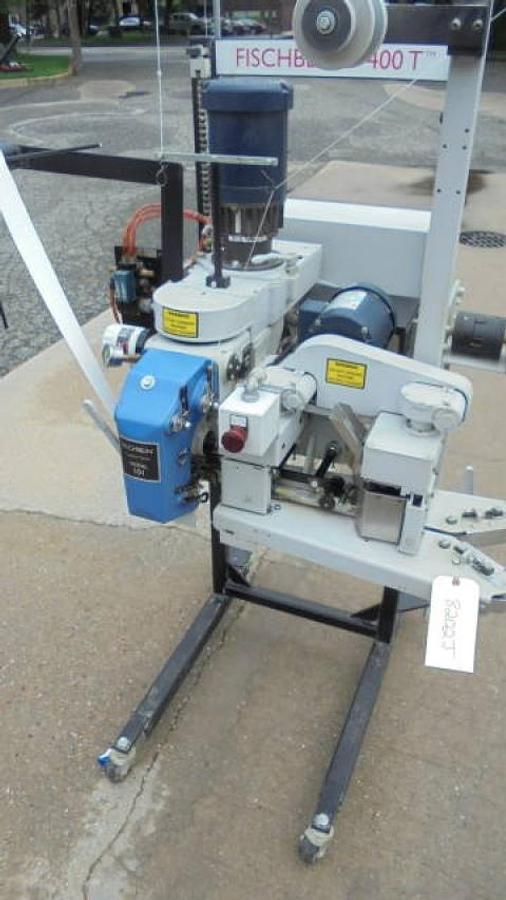
Stationary Fischbein machines are mounted above a conveyor belt and are intended for higher-volume, continuous production environments. They close filled bags as they pass underneath the sewing head, allowing for consistent output speeds and integration into a broader packaging line. Some stationary systems, like the Fischbein 400T Bag Sewing System paired with an Empress 1010 sewing head, are designed specifically for inline automated operation. The right choice depends on production volume, facility layout, and whether the operation requires a fixed or flexible setup.
How fast can a Fischbein bag closing machine operate, and what production capacity can I expect?
Fischbein bag closing machines are engineered for industrial production speeds, and output rates vary depending on the model and configuration. Stationary inline systems designed for conveyor integration can typically process a substantial number of bags per minute, making them suitable for high-volume packaging operations. Portable models, while slower by design, still offer reliable throughput for smaller or mid-sized facilities.
When evaluating a used Fischbein machine, production capacity should be assessed in the context of the specific model and its sewing head. The sewing head is a key component that influences stitch speed and overall throughput. Buyers should ask the selling dealer for model-specific details and, where possible, request a video or in-person inspection to observe the machine running under operating conditions.
What is the single-thread chain stitch, and why do Fischbein machines use it?
The single-thread chain stitch is the industry-standard closure method for filled bags, and it is the stitch type used across the Fischbein product line. In this method, a single thread forms an interlocking chain along the top of the bag, creating a secure closure that holds up through shipping and handling. One of the practical advantages of this design is that the bag can be opened quickly and cleanly by the end user simply by pulling the chain stitch thread, which unravels the seam without damaging the bag or its contents.
This ease of opening is particularly valued in industries like agriculture, pet food, and food processing, where end consumers or distributors need to access bag contents efficiently. The chain stitch design also simplifies thread consumption and machine maintenance compared to more complex stitch types, which contributes to lower operating costs over the life of the machine.
Can Fischbein bag sewing machines be integrated into an automated conveyor or packaging line?
Yes, many Fischbein models are specifically designed for inline conveyor integration. Stationary systems are mounted above a conveyor belt, and bags pass under the sewing head to be closed in a continuous automated process. This setup eliminates the need for manual bag handling at the closing stage, which improves throughput and reduces labor requirements in high-volume facilities. The Fischbein 400T Bag Sewing System with an Empress 1010 sewing head is one example of a machine configured for this type of inline operation.
Integrating a bag sewing machine into an existing packaging line does require some planning around conveyor height, bag dimensions, and line speed. Buyers purchasing used equipment should verify that the machine's specifications align with their existing conveyor infrastructure before completing a purchase. Consulting with a dealer who specializes in bag closing equipment can help identify whether a particular used machine is compatible with a given production setup.
Are replacement parts, needles, and thread readily available for used Fischbein machines?
Parts availability is one of the more important practical considerations when buying any used industrial sewing machine, and Fischbein has a strong track record in this area. The brand has been in production since 1914, and many of its machine models share common components across generations. Genuine Fischbein replacement parts, needles, and thread are available through authorized dealers and a number of industrial supply distributors, which reduces the risk of a machine sitting idle due to a hard-to-find component.
That said, parts availability can vary depending on the age and specific model of the machine being purchased. Buyers should consult directly with the manufacturer or an authorized service provider before finalizing a purchase to understand what level of support is available for a particular model. Older or discontinued models may have more limited parts support, so it is worth confirming this before committing to a used machine.
Do Fischbein bag sewing machines require professional installation, or can they be set up in-house?
Setup requirements vary depending on the type of Fischbein machine. Portable handheld models are relatively straightforward to put into service and can typically be set up by an operator with basic mechanical familiarity. Stationary inline systems, particularly those designed for conveyor integration, involve more complexity. Mounting the machine, aligning it with the conveyor, threading the sewing head, and calibrating for bag height and material type all require a higher level of technical knowledge.
For used machines specifically, in-house setup can carry additional risk if the machine has not been recently serviced or if its condition is not fully known. Having a qualified technician handle the installation and initial setup reduces the likelihood of operational issues early on. Buyers should factor potential installation costs into their total acquisition budget when evaluating used Fischbein equipment.
What should buyers know about purchasing a used Fischbein bag sewing machine versus buying new?
Used Fischbein machines offer a meaningful cost advantage over purchasing new equipment, which makes them an attractive option for operations looking to add bag closing capacity without a large capital outlay. Because Fischbein machines are built for industrial use and are known for durability, well-maintained used units can deliver many years of reliable service. The key is understanding the machine's history and current condition before buying.
Unlike purchasing from a manufacturer, buying used means the equipment is sold as-is, with no manufacturer warranty attached. This shifts the responsibility of evaluation to the buyer. Reputable used equipment dealers will typically offer in-person or video inspections so buyers can assess the machine's working condition before committing. Buyers should also ask about the machine's service history, the availability of replacement parts for that specific model, and whether the sewing head and other wear components are in good working order.
What questions should I ask a used equipment dealer before buying a Fischbein machine?
Before purchasing a used Fischbein bag sewing machine, there are several practical questions worth asking. First, request a detailed inspection, either in person or via live video, to see the machine operating under real conditions. Ask whether the machine is currently in production at a facility or has been decommissioned, as machines still in active use are generally easier to evaluate. Confirm the model number and sewing head configuration so you can verify parts availability and compatibility with your bag type.
On the logistics side, ask the dealer about packaging, crating, and shipping costs so you understand the full landed cost of the equipment. Larger stationary machines may require rigging for loading and unloading, which adds to the total expense. Payment terms for used equipment typically require full payment prior to shipment, though some dealers extend terms to repeat customers. Choosing a dealer who specializes in bag closing or packaging machinery, and who has a long track record in the industry, is one of the best ways to reduce risk on a used equipment purchase.
What industries commonly use Fischbein bag sewing machines?
Fischbein bag closing machines are used across a wide range of industries where filled bags need to be sealed efficiently and securely. Agriculture is one of the largest application areas, covering products like seed, grain, fertilizer, and animal feed. Pet food manufacturers, chemical producers, food processors, and building materials companies are also heavy users of bag sewing equipment. Essentially, any operation that fills and ships product in open-mouth bags has a potential use case for this type of machine.
The versatility of Fischbein machines across bag materials, including paper, woven polypropylene, burlap, and multi-wall constructions, means a single machine can often serve multiple product lines within the same facility. This adaptability is part of why used Fischbein equipment holds its value and remains in demand on the secondary market. Buyers from virtually any product-in-bag industry can find a Fischbein model suited to their application.