Category
Manufacturer
Model
Filper-Magnuson
Filper-Magnuson offers a range of filling equipment designed for the food and beverage industry. They are particularly recognized for their innovative solutions that improve filling accuracy and speed.
FAQ:
What is Filper-Magnuson and what types of filling equipment did they produce?
Filper Corporation and Magnuson Engineers were both California-based manufacturers that built a strong reputation for producing high-quality volumetric and net-weight filling equipment, primarily for the food and agricultural processing industries. Their equipment was engineered for handling fruits, vegetables, bulk dry goods, and similar food products, and was widely adopted in high-speed commercial packaging environments across North America.
The product range associated with the Filper-Magnuson name includes cup fillers, pocket fillers, rotary fillers, and checkweighers. These machines were recognized for improving filling accuracy and throughput speed, which made them a popular choice for food processors running high-volume production lines. Because both companies focused on the same market segment and their equipment is often grouped together by dealers and buyers, the combined "Filper-Magnuson" designation has become a common shorthand in the used food processing equipment market.
What types of products can Filper-Magnuson filling equipment handle?
Filper-Magnuson filling machines were designed primarily for the food and beverage industry, with a particular focus on agricultural and packaged food products. Common applications include filling containers with fresh or processed fruits and vegetables, bulk dry goods such as grains and legumes, and other free-flowing or semi-free-flowing food items. The equipment was built to handle the demands of commercial food processing, where consistent fill weights and high output rates are critical.
Because these machines were engineered for food-grade environments, they were typically constructed with materials and finishes appropriate for sanitary processing conditions. Buyers evaluating used Filper-Magnuson equipment for a specific product should consider the fill mechanism type (cup, pocket, or rotary) relative to their product's flow characteristics, particle size, and any regulatory requirements that apply to their production environment. Consulting with an equipment dealer who specializes in food processing machinery can help match the right machine configuration to a given application.
Are Filper-Magnuson machines suitable for food-grade or FDA-compliant filling operations?
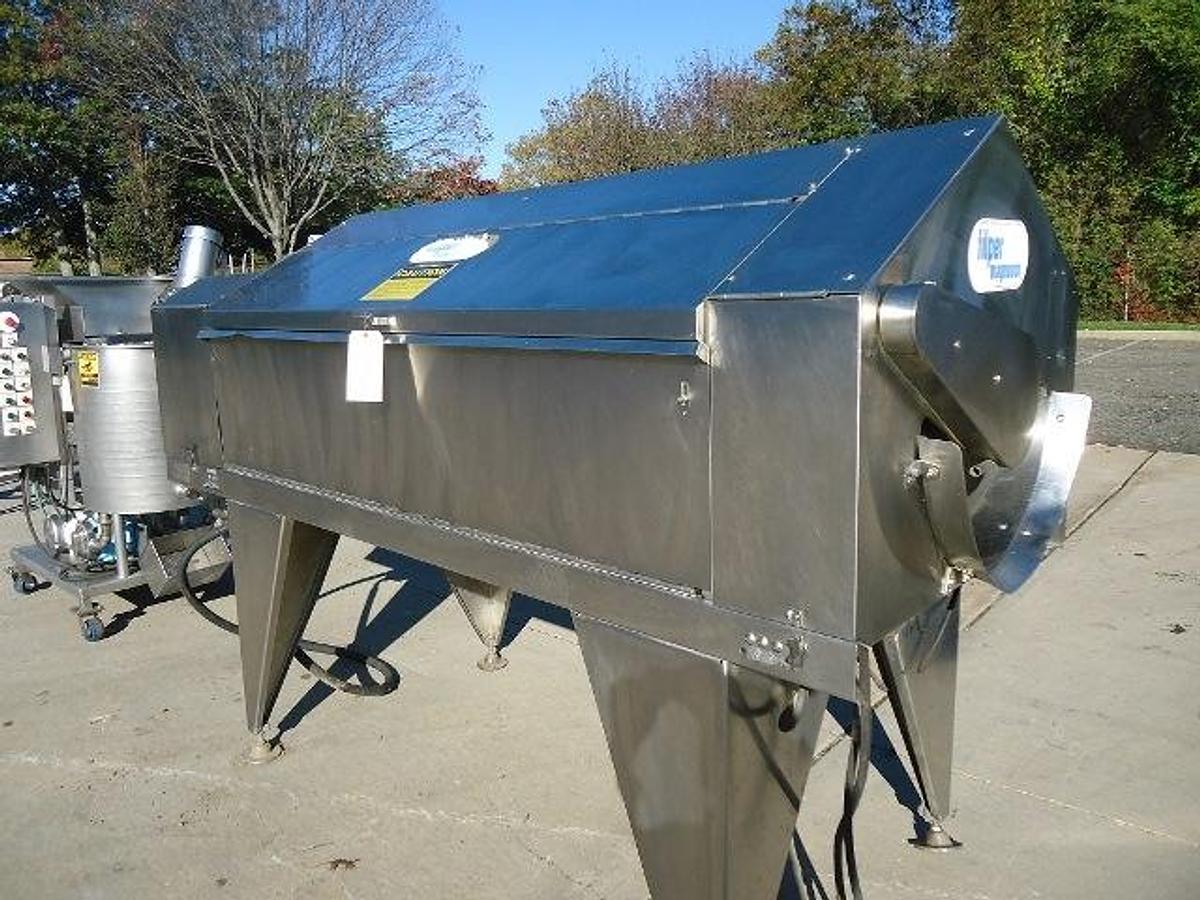
Filper-Magnuson equipment was originally manufactured for commercial food processing environments and was built to meet the sanitary design standards applicable at the time of production. Many units feature stainless steel cabinetry and food-contact surfaces, which is consistent with food-grade processing requirements. The Magnuson WSP-III Peeler, for example, is noted for its stainless cabinetry, reflecting the brand's orientation toward hygienic food processing applications.
That said, buyers sourcing used Filper-Magnuson equipment for FDA-regulated or food-grade production lines should conduct a thorough inspection of any machine before purchase. Used equipment may have wear, modifications, or condition issues that affect compliance with current sanitary standards. It is advisable to have a qualified sanitation or food safety engineer evaluate the machine alongside an equipment inspection, and to verify that the unit can be cleaned and maintained to meet the specific regulatory requirements of the intended production facility.
What is the difference between Filper Corporation and Magnuson Engineers equipment?
Filper Corporation and Magnuson Engineers were separate California-based manufacturers that operated in overlapping market segments, both producing filling and processing equipment for the food and agricultural industries. While they were distinct companies with their own product lines and engineering approaches, their equipment served similar customer bases and was used in comparable applications, which is why the two names are frequently referenced together in the used machinery market.
In practice, the distinction matters most when sourcing parts, service documentation, or technical support for a specific machine. A cup filler from Filper Corporation and a rotary filler from Magnuson Engineers may share general design philosophies but will have different components, tolerances, and maintenance requirements. Buyers should identify the exact manufacturer and model of any unit they are considering, and research parts availability and technical documentation specific to that machine before committing to a purchase.
What filling speeds or output rates can Filper-Magnuson machines achieve?
Filper-Magnuson filling equipment was engineered for high-speed commercial packaging environments, and output rates vary considerably depending on the machine type, configuration, and the product being filled. Rotary and pocket fillers in this class were typically capable of handling multiple fills per second in optimized production conditions, making them suitable for processors running continuous, high-volume lines. Checkweighers in the lineup added the ability to verify fill accuracy at speed, reducing giveaway and improving overall line efficiency.
For used machines, actual achievable output rates depend heavily on the condition of the unit, the wear on mechanical components such as fill cups and indexing mechanisms, and how well the machine has been maintained over its service life. Buyers should request a detailed inspection, including video or in-person observation of the machine running if possible, to get a realistic picture of current performance. Rated specifications from the manufacturer's era may not reflect what a used unit can deliver without refurbishment or parts replacement.
Are replacement parts still available for used Filper-Magnuson filling machines?
Sourcing replacement parts for Filper-Magnuson equipment is one of the more significant practical considerations for buyers. Because both Filper Corporation and Magnuson Engineers are legacy manufacturers and are no longer producing equipment, there is no active factory parts supply chain. Parts availability depends on what remains in the secondary market, including surplus inventory held by dealers, parts salvaged from decommissioned machines, and components that can be cross-referenced to current industrial suppliers.
For some components, custom fabrication may be the most reliable path. Buyers should consult with the manufacturer's current support resources if any exist, and speak directly with equipment dealers who specialize in food processing machinery to understand what parts are on hand or can be sourced. Evaluating parts availability before purchase is an important step in assessing total cost of ownership for any legacy machine. A thorough inspection that identifies worn or near-end-of-life components will help buyers anticipate what parts they may need to source before or shortly after putting the equipment into service.
Is technical support or service documentation available for older Filper-Magnuson models?
Technical documentation for Filper-Magnuson equipment, including operator manuals, parts diagrams, and maintenance guides, can be difficult to locate given the age of most machines on the market. Some dealers who specialize in food processing equipment maintain archives of documentation for legacy brands and may be able to provide copies of relevant materials with a machine purchase. It is worth asking any prospective seller directly what documentation they can provide before finalizing a transaction.
Buyers should also consult with the original manufacturers' successors or industry contacts to gauge what level of technical support might still be available for a specific model. Age and model can significantly affect the level of support a buyer should realistically expect. For facilities with in-house maintenance staff, having access to even partial documentation can make a meaningful difference in the ability to keep a legacy machine running. If documentation is unavailable, working with an experienced food processing equipment mechanic who has familiarity with similar vintage machinery is a practical alternative.
Can Filper-Magnuson filling equipment be integrated with existing production lines?
Filper-Magnuson filling machines were designed for integration into commercial food processing and packaging lines, and many units were originally installed as part of larger automated systems. Whether a used machine can be integrated into an existing line depends on factors including the machine's infeed and discharge configuration, its control system, the line speed it can sustain, and the physical footprint relative to available floor space. Rotary and inline fillers in this product family were generally built with standard industrial interfacing in mind, but older control systems may require updating to communicate with modern line equipment.
Buyers planning to integrate a used Filper-Magnuson machine into an active production environment should involve their production engineers and, if possible, a controls specialist familiar with legacy food processing equipment. An in-person or video inspection of the machine prior to purchase is particularly valuable in this context, as it allows the buyer's team to evaluate the actual condition of electrical panels, sensors, and mechanical interfaces. Some dealers can facilitate inspections at the location where the equipment is currently housed, including facilities where the machine may still be in active production.
What should buyers expect when inspecting used Filper-Magnuson equipment before purchase?
Inspections are a standard and important part of buying used filling equipment, and reputable dealers will typically accommodate in-person visits, video walkthroughs, or recorded video captures of the machines. The goal of any inspection is to get an accurate picture of the machine's current mechanical condition, including the state of fill mechanisms, drive components, seals, and any electrical or control systems. For Filper-Magnuson equipment specifically, buyers should pay close attention to wear on fill cups, pocket assemblies, or rotary components, as these directly affect fill accuracy and output consistency.
Some machines available through dealers may still be installed at a food processing facility, either in active production or recently decommissioned. In those cases, the dealer can often arrange an inspection at the plant. Keep in mind that most equipment dealers do not have the permitting or production infrastructure to run actual product through a machine during an inspection, so functional testing with the buyer's specific product may not be possible. Buyers should plan their evaluation accordingly, focusing on mechanical condition, completeness of components, and available documentation rather than expecting a full production trial.
What is the typical price range for used Filper-Magnuson filling machines, and what factors affect cost?
Pricing for used Filper-Magnuson filling equipment varies widely based on machine type, model, age, mechanical condition, and how complete the unit is at the time of sale. Simpler units such as standalone cup fillers or peelers will generally fall at a lower price point than fully configured rotary filling systems with integrated checkweighers or conveyors. Machines sourced directly from food processing plant closures or auctions may be priced more aggressively than units that have been inspected and cleaned by a specialty dealer.
Beyond the purchase price, buyers should factor in the full landed cost of acquiring used filling equipment. This includes freight and rigging charges, which can be substantial for larger machines that require specialized loading equipment. Packaging and crating requirements will also affect shipping costs, and buyers should ask sellers for detailed estimates before committing. Additional costs to consider include any refurbishment or parts replacement needed to bring the machine to production-ready condition, as well as integration expenses if the unit needs to be connected to an existing line. Getting a clear picture of all these costs upfront helps avoid surprises after the purchase.